
Pozycja: 78 stopni 13 minut nord / Position: 78 degrees 13 minutes North
tempertura: 3 stopnie C / temp 3 degrees C
ok. 16:00 / 4 p.m.
Z portu do miasta jest około 2 km. Szkoda, że nie wiedzieliśmy o tym wcześniej, bo zaoszczędzilibyśmy 10 dolców. Ale dla kogoś, kto ma ciężką astmę przebycie tej drogi pieszo jest niewskazane – może zostać zabity przez kurz. Kurzy się zewsząd: ze skalistych, czarno-brunatnych zboczy, z poboczy wysypanych żwirem i małymi kawałkami węgla, z okolicznych „łąk”, które porastają suche trawki, którymi mogłyby się nakarmić tylko wielbłądy, bo co do reniferów nie jestem pewna. Wzdłuż drogi stoją dziesiątki piętrowych baraków o nieciekawej architekturze, która niestety dominuje w szaro-brązowym krajobrazie. W budynkach mieszczą się firmy, a przed budynkami panuje bałagan – porozrzucane drewniane belki drewniane, porzucone betonowe słupy, pojemniki na oleje i inne substancje płynne, jakieś beczki, kontenery na śmieci… Wiem, że tu się pracuje, ale naprawdę nikomu nie zależy?
It is about 2 km from the port to the town. It’s a pity we didn’t know that before; we could have saved ten bucks. However, walking that distance is ill-advised for someone with severe asthma—the dust could kill them. Dust rises from everywhere: from the rocky, black-and-brown slopes; from verges strewn with gravel and small chunks of coal; and from the surrounding „meadows,” overgrown with dry grasses that only camels could stomach—though I’m not so sure about reindeer. Dozens of multi-story barracks line the road, featuring the drab architecture that unfortunately dominates this gray-brown landscape. These buildings house various businesses, yet the area in front of them is a mess: scattered wooden beams, abandoned concrete pillars, containers for oil and other liquids, assorted barrels, trash bins… I know work goes on here, but does no one really care?
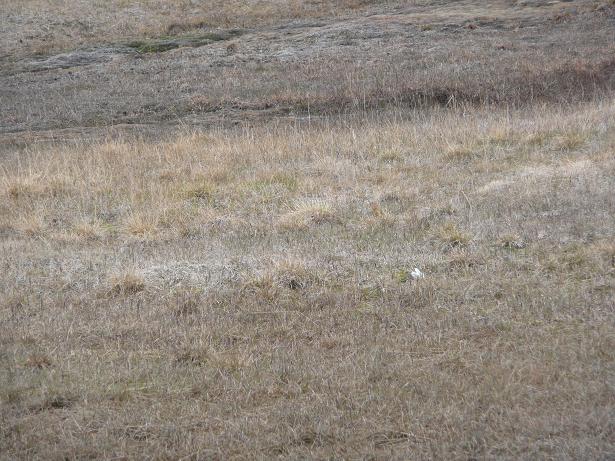
Wiosenne łąki. To malutkie, białe to ptak: / Spring meadows. That tiny white thing is a bird:
Docieramy do centrum Longyearbyen. Robi wrażenie, choć nie mogę się zdecydować jakie to wrażenie. Po pierwsze brak zieleni, nie licząc zieleni drewnianych domów. Skąd biorą drewno na budowę, skoro nie rośnie tu nic oprócz porostów? Chyba jednak wszystko muszą sprowadzać, oprócz skór reniferów, które leżą biedne na stołach i ławach przed sklepami. Myślę, że te sklepy z pamiątkami to pamiątki po reniferach.
We reach the center of Longyearbyen. It makes an impression, though I can’t quite decide what kind. For one thing, there is no greenery—unless you count the green paint on the wooden houses. Where do they get the wood for building when nothing grows here but lichen? I suppose they have to import everything—except for the reindeer hides, which lie forlornly on tables and benches outside the shops. I think these souvenir shops are actually memorials to the reindeer.
Sklepy, sklepy na głównej ulicy w Longyearbyen / Shops, shops on the main street in Longyearbyen.
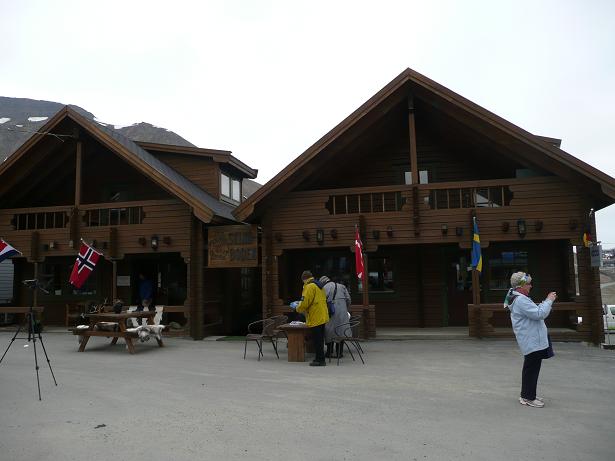
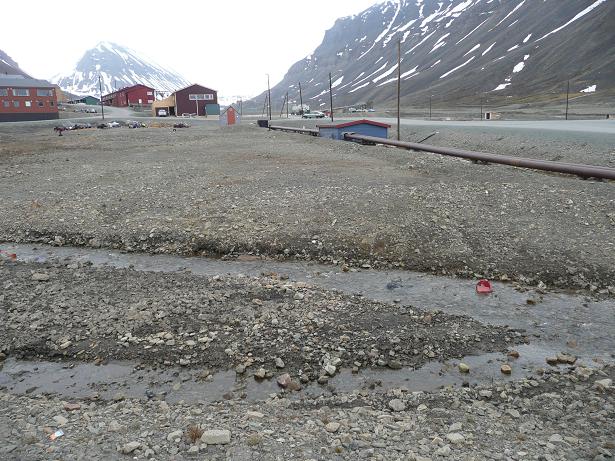
Przez miasteczko płynie strumień, zwany Longyearelva – teraz zamieniony w cienką stróżkę, w której walają się plastikowe odpadki, papiery, a obok biegną niczym nie osłonięte rury. Nie robi to dobrego wrażenia, chyba, że ktoś bardzo, bardzo lubi przemysłowe krajobrazy.
A stream known as the Longyearelva flows through the town—now reduced to a thin trickle littered with plastic waste and paper, with exposed pipes running alongside it. It does not make a good impression, unless one is very, very fond of industrial landscapes.
Nie wiem co powiedzieć: / I don’t know what to say:
Po drugiej stronie strumienia, w stronę portu, na niewielkim wzgórzu jest słynny kościół. Nie ma wspaniałych renesansowych malowideł czy rzeźb, nie ma wielkich organów i żaden wielki król nie został tu namaszczony. Jest skromny, surowy (można? można!) i od ponad 70 lat jest najbardziej wysuniętym kościołem na północ. I pewnie tak zostanie.
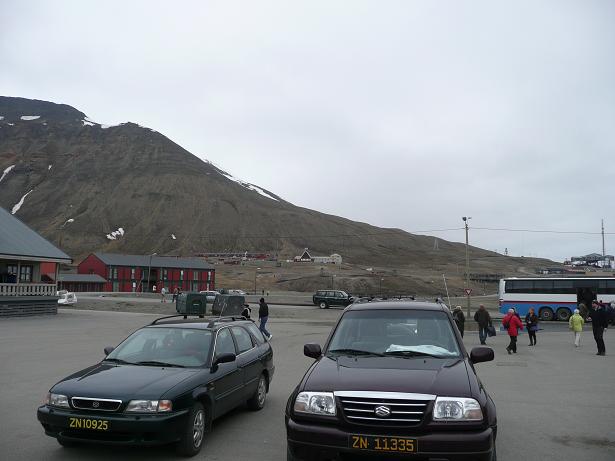
On the other side of the stream, towards the harbor, a famous church stands on a small hill. It boasts no magnificent Renaissance paintings or sculptures, no grand organ, and no great king was ever anointed here. It is modest and austere—proof that simplicity works—and for over 70 years, it has held the title of the northernmost church. And it likely always will.
Centrum Longyearbyen. W oddali kościół: / Longyearbyen city center. Church in the distance:
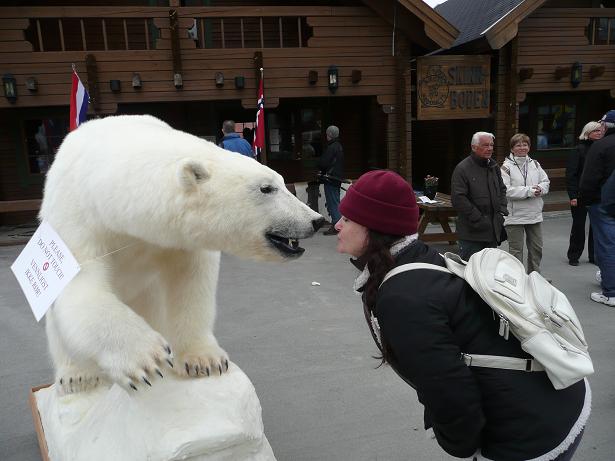
No i jest wielki niedźwiedź polarny, z którym każdy turysta robi sobie zdjęcie. Powiedziano nam, że w razie spotkania z prawdziwym niedźwiedziem raczej nie musimy uciekać – i tak nas dogoni i zabije. Wiele osób nosi broń, w tym długie karabiny z wąską lufą.
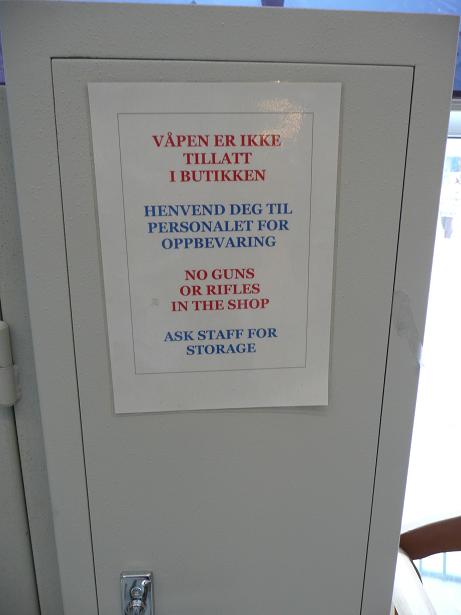
And then there’s the huge polar bear that every tourist takes a photo with. We were told that if we were to encounter a real bear, there’s really no point in trying to run—it would catch and kill us anyway. Many people carry weapons, including long-barreled rifles.
Napis w tutejszym supermarkecie: / A sign in the local supermarket:
Właściwie przestrzegają przed wychodzeniem z miasta bez broni odstraszającej niedźwiedzie i bez doświadczenia pozwalającego tej broni użyć. Zamierzam bardzo przestrzegać tych zaleceń.
They strongly advise against leaving town without a bear deterrent and the experience needed to use it. I intend to strictly follow these recommendations.
Słodki miś, który gdyby był żywy, pożarłby mnie z kościami: / A cute bear that, if it were alive, would devour me whole—bones and all:
W sklepach są głównie pamiątki: oprócz skór i rogów można kupić wyroby z wełny, polarne kurtki, nie polarne piżamy, straszliwe drzeworyty z sylwetkami zwierząt i inne rzeczy niezbędne do ekspedycji na Biegun Północny. Ceny są kosmiczne, ale satysfakcja z kupienia czegoś na Spitsbergenie – bezcenna. W dodatku wszystko „made in Norway”.
The shops mostly stock souvenirs: alongside hides and antlers, you can buy wool products, fleece jackets, non-fleece pajamas, ghastly woodcuts featuring animal silhouettes, and other essentials for a North Pole expedition. The prices are astronomical, but the satisfaction of buying something on Spitsbergen is priceless. Plus, everything is „Made in Norway.”
INFO: sklepy z pamiątkami są otwarte od 10:00 do 17:00, w soboty od 10:00 do 14:00, ale mogą być otwarte np. tylko od 1 czerwca do 15 sierpnia. Jeden z największych sklepów, Svalbardbutikken jest otwarty od 10:00 do 20:00, w sobotę do 18:00, w niedzielę od 15:00 do 18:00 przez cały rok.
INFO: Souvenir shops are open from 10:00 to 17:00 (and from 10:00 to 14:00 on Saturdays), though some may only be open, for example, from June 1st to August 15th. One of the largest shops, Svalbardbutikken, is open year-round: from 10:00 to 20:00 (until 18:00 on Saturdays) and from 15:00 to 18:00 on Sundays.
Na głównej ulicy, jak na każdej głównej ulicy mieszczą się najważniejsze instytucje konieczne do funkcjonowania miasteczka. Puby są na pewno, jest też kilka restauracji. W barze można zjeść najdalej wysuniętą na północ pizze albo kebab, w restauracji – norweską czarną gęś, lub pulpety z renifera.
The main street—like any main street—is home to the key institutions essential for the town’s functioning. There are certainly pubs, as well as a few restaurants. At a bar, you can eat the northernmost pizza or kebab, while at a restaurant, you might have Norwegian black goose or reindeer meatballs.
Jest też bank, biblioteka, przedszkole ze smutnymi słoneczkami wymalowanymi na szybach. Naprzeciwko remiza strażacka. Na wschodnim skraju jest wyciąg narciarski, latem nieczynny z wiadomych względów.
There is also a bank, a library, and a kindergarten with sad suns painted on the windows. Opposite stands the fire station. At the eastern edge, there is a ski lift—closed in summer for obvious reasons.
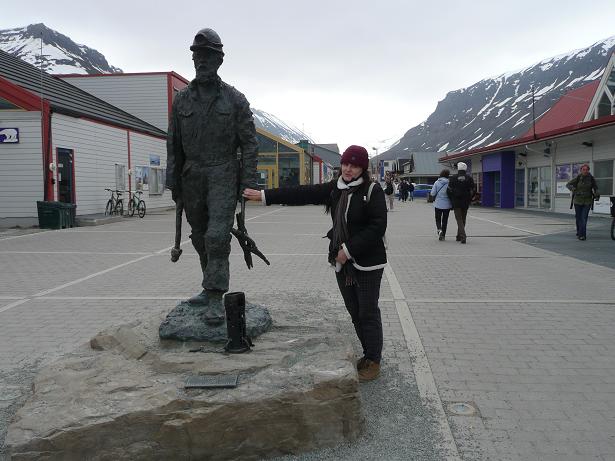
Przy głównej ulicy jest też pomnik górnika – nie jakiś monument, ale niewielka postać zmęczonego człowieka, który z kilofem w ręku wraca do domu.
On the main street, there is also a statue of a miner—not a grand monument, but a small figure of a weary man returning home with a pickaxe in his hand.
c.d.n. / to be continued