
71° 10′ 21” – this is the latitude of the North Cape (Nordkapp). It lies roughly halfway between Oslo and the North Pole. Anyone who scraped a passing grade in geography likely remembers it as the northernmost point in Europe… but that isn’t actually true. The headland of Knivskjellodden lies one kilometer further north, but because it lacked the necessary clout and publicity—and the view from there isn’t quite as spectacular—it never made the cut as a tourist attraction.
71 ° 10′ 21” – na tej szerokości geograficznej leży North Cape, Nordkapp, Przylądek Północny. To mniej więcej połowa drogi między Oslo a Biegunem Północnym. Jeśli ktoś miał chociaż tróję z geografii, to zapewne pamięta, że jest to najdalej na północ wysunięty punkt Europy… ale to nieprawda. O jeden kilometr dalej na północ leży przylądek Knivskjellodden, ale ponieważ nie miał siły przebicia i odpowiedniej reklamy, a w dodatku widok z niego nie jest tak spektakularny, więc się nie załapał na atrakcję turystyczną.

The North Cape, accessible via an undersea tunnel, sits atop a 300-meter cliff offering a sweeping view of the Barents Sea in good weather. You have to be lucky to catch such conditions, however, as the area is often shrouded in thick fog—which envelops everything, including the famous „Children of the Earth” monument. Designed by seven children from different corners of the globe (Japan, Tanzania, Brazil, Thailand, Italy, the Soviet Union, and the USA), the monument was erected in 1988 and symbolizes Hope, Joy, Harmony, and Friendship. When it does emerge from the fog, it looks magnificent.
Przylądek Północny, na który wiedzie podmorski tunel jest umieszczony” na 300-metrowym klifie, z którego przy dobrej pogodzie widać kawał Morza Barentsa. Trzeba być szczęściarzem, żeby trafić na dobrą pogodę, bo zwykle można zobaczyć tam mgłę, szczelnie otulającą wszystko, łącznie ze słynnym monumentem „Dzieci Ziemi”, zaprojektowany przez siedmioro dzieci z siedmiu zakątków świata (z Japonii, Tanzanii, Brazylii, Tajlandii, Włoch, Związku Radzieckiego i USA). Pomnik został wzniesiony w 1988 roku i symbolizuje Nadzieję, Radość, Zgodę i Przyjaźń. Jeśli go widać we mgle, to wygląda wspaniale.
If you are lucky, you might see herds of reindeer swimming across the strait connecting the mainland to the island of Magerøya—a distance of about a kilometer. Every spring (in May), around 5,000 of them arrive to graze on the rocky island, which is rich in lichens and wildflowers, before returning to the mainland in September.
Jeśli ma się szczęście, można zobaczyć stada reniferów, które płyną około kilometra, pokonując cieśninę łączącą ląd stały z wyspą Mageroy. Każdej wiosny (czyli w maju) przybywa ich tu około 5 tysięcy, żeby paść się na skalistej wyspie pełnej porostów i dzikich kwiatów, a we wrześniu wrócić na stały ląd.
Nordcapp: the statue and the mist / pomnik i mgła:
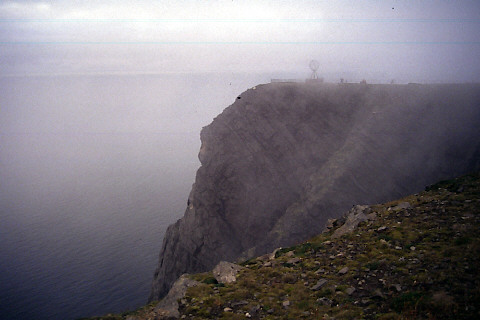
Perched on the cliff is Nordkapphallen, a year-round tourist center. There, you can buy souvenirs, dine in a 250-seat restaurant boasting the most beautiful view of the Arctic Ocean, and visit the coffee house (not to be confused with a „coffee shop”) and the post office. / Na klifie jest Nordkapphallen, centrum turystyczne otwarte cały rok. Można kupić tam pamiątki, zjeść posiłek w restauracji na 250 osób), szczycącej się najpiękniejszym widokiem na Ocean Arktyczny, jest coffee house (nie mylić z coffee shop) i poczta.
Nordkapp lies about 16 kilometers from Honningsvåg—a distance we ultimately failed to cover. The protagonist of this story is Z., who, upon boarding, became the proud owner—or rather, the renter—of a cabin safe. He would open and close it several times a day, chanting a mantra like a prayer: „Don’t mess up the combination, especially when locking it.” And mess it up he did. At first, he wouldn’t admit it; he just stood quietly in front of the vault, trying to guess the magic code. It took a long time—suspiciously long—before he finally confessed he was trying to punch in the last two digits, which he had mixed up.
Nordkapp jest w odległości około 16 kilometrów od Honningsvåg i to była to odległość, której nie udało nam się pokonać. Bohaterem historii jest Z., który w momencie zaokrętowania został szczęśliwym posiadaczem, a właściwie dzierżawcą kajutowego sejfu. Otwierał go sobie i zamykał kilka razy dziennie, klepiąc przy tym jak pacierz „nie pomylić kombinacji, zwłaszcza kiedy się zamyka”. I pomylił. Najpierw nie chciał się przyznać, stojąc cichutko przed sezamem, usiłując odgadnąć zaklęcie. Trwało to długo, podejrzanie długo, więc w końcu się przyznał, że usiłuje wklepać dwie ostatnie cyfry, które pomylił.
„Maybe I’ll ask someone from the staff to open it?” I asked hesitantly. „Oh, come on—how?”
– Może poproszę kogoś z obsługi, żeby otworzył? – spytałam nieśmiało. No co ty, jak?
„On foot, of course. I’ll go to the front desk and say we can’t open the safe. Do you think you’re the first person this has happened to?” I try to reassure him.
– No na nogach. Pójdę do recepcji i powiem, że nie możemy otworzyć sejfu. Myślisz, że tobie pierwszemu się to przydarzyło? – próbuję go pocieszyć.
-No, I’ll give it another try. / – Nie, jeszcze spróbuję.
Another ten minutes passed; I was even starting to get drawn into the movie playing on the cabin TV. Then I heard increasingly loud rumbling sounds; Z. emerged from the closet and suggested I ask at reception after all. Five minutes later, an officer arrived—a technician, judging by the ship’s-propeller insignia on his epaulettes. He opened the safe with a key card in two seconds flat, but we had already missed the bus to the North Cape.
Minęło kolejne 10 minut, zaczął mnie nawet wciągać film w pokładowej TV. Słyszę coraz głośniejsze pomruki, Z. wyłania się z szafy i sugeruje, żebym jednak spytała w recepcji. Po pięciu minutach przyszedł oficer z naszywką śruby okrętowej na pagonach, znaczy techniczny. Kartą magnetyczną otworzył sejf w dwie sekundy, ale na autobus na Nordkapp już nie zdążyliśmy.
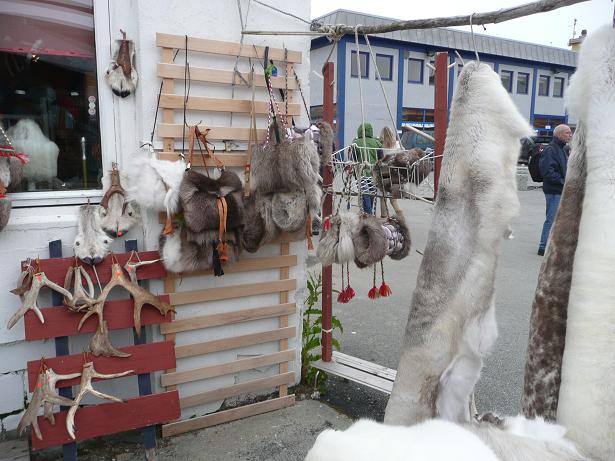
A Lappish shop in Honningsvåg: / Lapoński sklep w Honnigsvag:
CULINARY: The main culinary attraction is stockfish—dried, unsalted fish, usually cod. Cloudberries are also popular; these are fruits that resemble blackberries and raspberries in appearance but are orange.
KULINARIA: Główną atrakcją kulinarną jest stockfish, czyli suszona, niesolona ryba, zwykle dorsz. Popularne są też „cloudberries” (nie znam polskiego odpowiednika), owoce, które przypominają wyglądem jeżynę i malinę, ale są pomarańczowe.
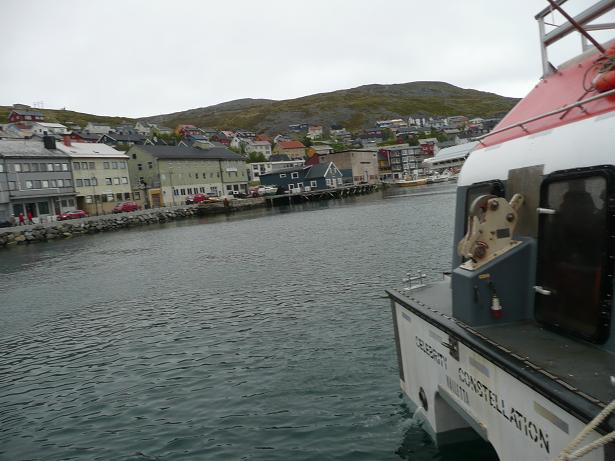
Goodbye Honnigsvag / Do widzenia Honningsvag:
SHOPPING: It is worth buying wool products—including sweaters, though the latter were not particularly impressive—at the souvenir shops. Local artists craft leather belts, shoes, and wallets, as well as bone and stone carvings. You will certainly come across stalls run by Sami women in traditional attire; they primarily sell seal and reindeer hides, antlers and other animal by-products, small carved stones, and dolls dressed in traditional Sami clothing. Many shops display „Tax Free” signs, and you can claim a VAT refund at port offices or the airport before you leave.
ZAKUPY: w sklepach z pamiątkami warto kupić wyroby z wełny, w tym swetry, choć te ostatnie nie były za ciekawe. Lokalni artyści wykonują paski, buty, portfele ze skóry, rzeźby w kości i kamieniu. Na pewno będą kramy prowadzone przez lapońskie kobiety w tradycyjnych strojach. Można u nich kupić głównie skóry fok i reniferów, rogi i inne pozostałości zwierząt, małe rzeźbione kamyczki i lalki w lapońskich strojach. Wiele sklepów ma tabliczki „tax free”, a przed odjazdem można dostać zwrot podatku VAT w biurach w porcie, albo na lotnisku.
Goodbye Mageroy / Do widzenia Mageroy: