Rejs statkiem wielkim lub małym. Kto o tym nie marzył, czytając o wielkich odkrywcach, dalekich lądach, skarbach ukrytych na bezludnych wyspach. Gdzie odnaleźć ślady romantyzmu ery żaglowców i odkrywania nowych lądów? Przecież nie w lotach samolotem.
We bid farewell to Molde, its jazz festival, and its roses. / Żegnamy Molde, jej festiwal jazzowy i róże.
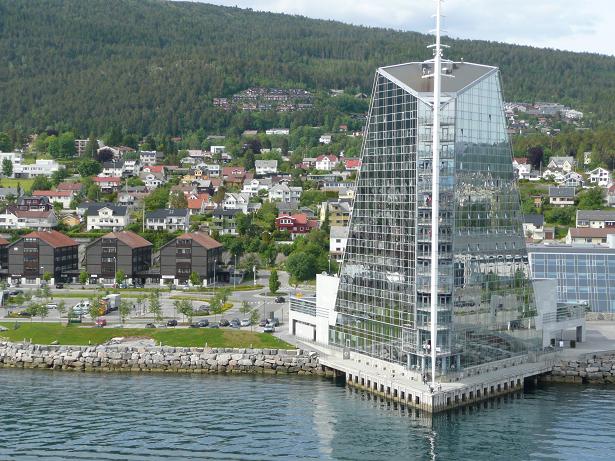
A final look at the city climbing up the hillside. The Rica Seilet Hotel is in the foreground. / Ostatnie spojrzenie na miasto wspinające się ku górze. Na pierwszym planie hotel Rica Seilet.
Molde – Rica Hotel
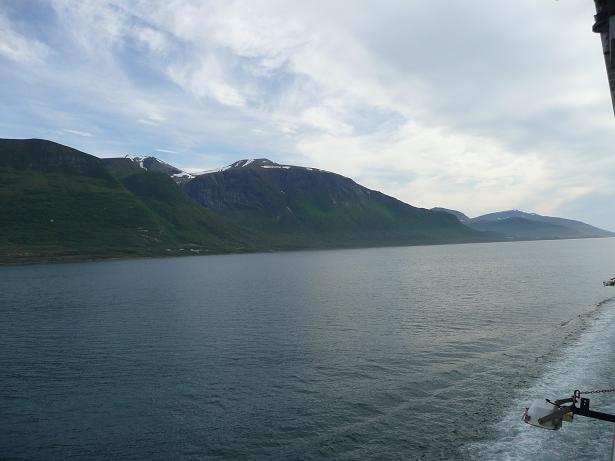
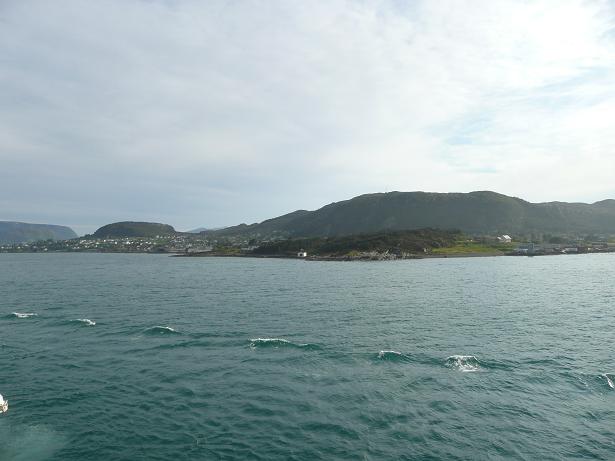
Among the dozens of islands, we must find our way to the open sea: / Wśród dziesiątek wysp musimy odnaleźć drogę na pełne morze:
Road to Alesund
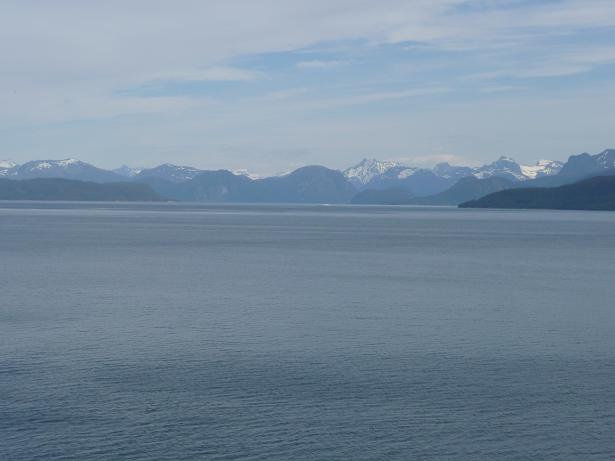
The waters of Midfiorden and the island of Otrøya: / Wody Midfiorden i wyspa Otroya:
Midifiorden waters
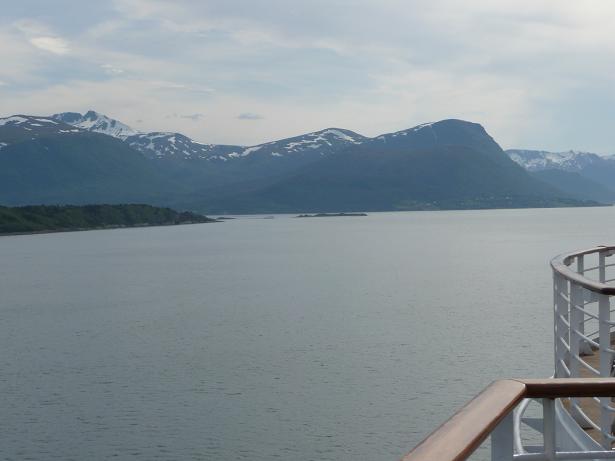
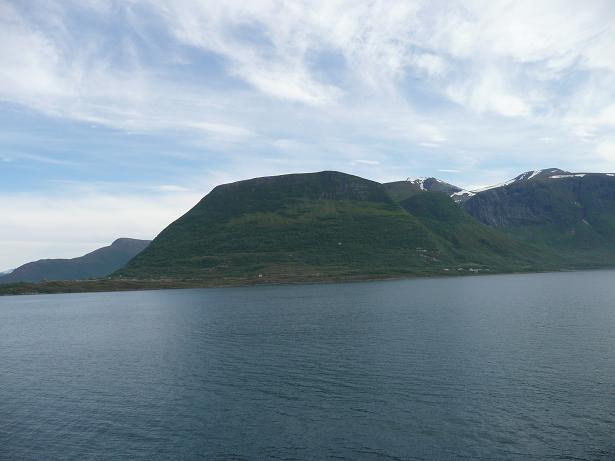
Otroya Island (I think): / Wyspa Otroya (chyba):
Otroya Island?
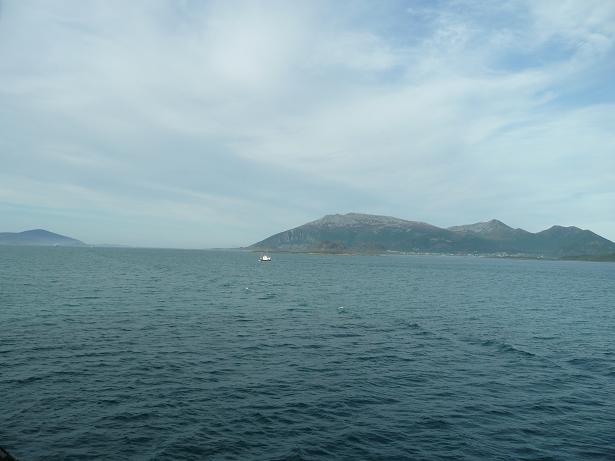
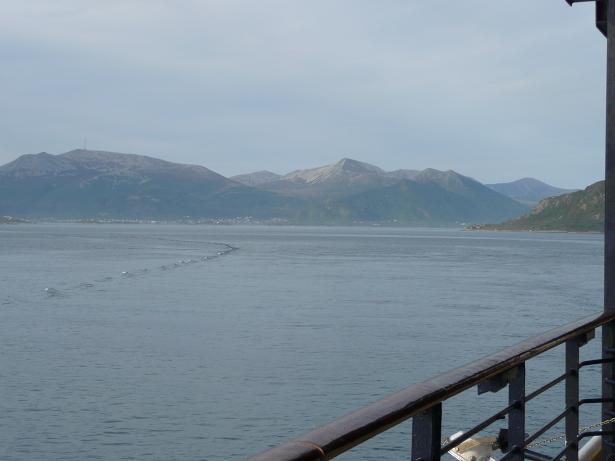
And further on, the islands of Midøya and Flemsøya, but I don’t know which is which: / I dalej wyspy Midoya i Flemsoya, ale nie wiem która jest która:
Fjords and islands on the way to Ålesund / Fiordy i wyspy w drodze do Alesund
The waters of two fjords merge here—hence the wave. / Tu zlewają się wody dwóch fiordów, stąd ta fala.
And here too – two fjords, one wave: / I tu też – dwa fiordy, jedna fala:
And once again / I jeszcze raz:
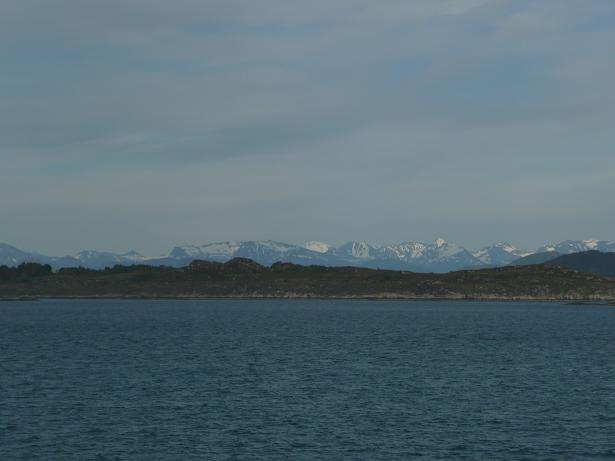
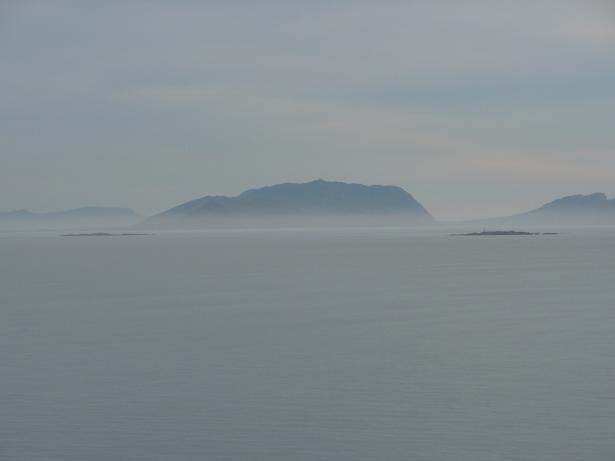
It is getting darker; the sun has slipped behind the clouds. That must be the island of Flemsoya, but really, what does the name of the next island matter? What counts is the landscape and the wonderful tranquility. / Robi się ciemniej, słońce schowało się za obłoczki. To chyba wyspa Flemsoya ale tak naprawdę jakie znaczenie ma nazwa kolejnej wyspy? Liczy się krajobraz i wspaniały spokój.
Evening mists look mysterious.Wieczorne mgły i tajemnicze fiordy
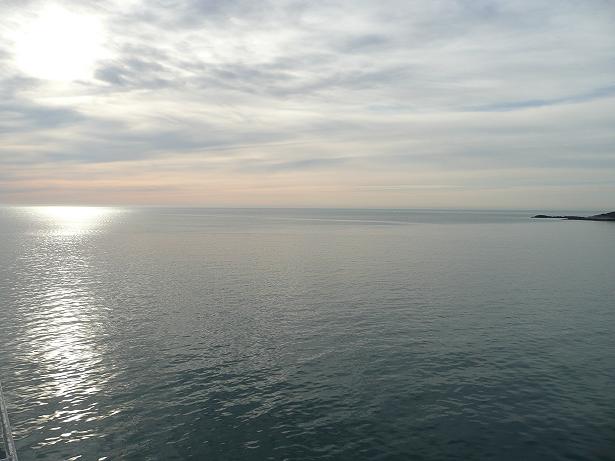
The sun had practically set, leaving a pink glow in the sky. We are passing the island of Norvoya, home to Ålesund. Here, we head out into the open sea: / Słońce już właściwie zaszło, zostawiając na niebie różową zorzę. Obok wyspy Norvoya, na której leży Alesund. Tutaj wypływamy na pełne morze:
The ship’s bow is still pointing west, but we will soon set a course for the south—to Bergen. We have only 133 nautical miles to cover. / Dziób statku skierowany jeszcze na zachód, ale wkrótce weźmiemy kurs na południe – do Bergen. Do przepłynięcia mamy tylko 133 mile morskie.
Above: the ship’s bow pointing west 🙂 / Powyżej: dziób statku skierowany na zachód 🙂
So, here’s the picture: looking west, you can see the majestic Atlantic. To the east lies a breathtaking panorama of the Romsdal Fjord, featuring forests and small villages that appear to be bathing in the water. Spread out at our feet is Molde, encircled by the Romsdal Mountains and their 222 snow-capped peaks. All of this is visible from the Varden viewpoint, situated 407 meters above sea level. You can hike there from the center of Molde—an uphill walk taking an hour and a half, or just one hour for the fitter among us (though it’s still an uphill climb).
Więc tak: kiedy patrzymy na zachód możemy zobaczyć majestatyczny Atlantyk. Na wschodzie jest zapierająca dech w piersiach panorama fiordu Romsdal z lasami i małymi wioskami, które wyglądają, jakby kąpały się w wodzie. U naszych stóp rozpościera się Molde otoczone łańcuchem Gór Romsdal i ich 222 ośnieżone szczyty. Wszystko to widać z punktu widokowego Varden, leżącego na wysokości 407 metrów n.p.m. Można tam dojść pieszo z centrum Molde w ciągu 1,5 godziny pod górę, dla bardziej wysportowanych w 1 godzinę, ale też pod górę.
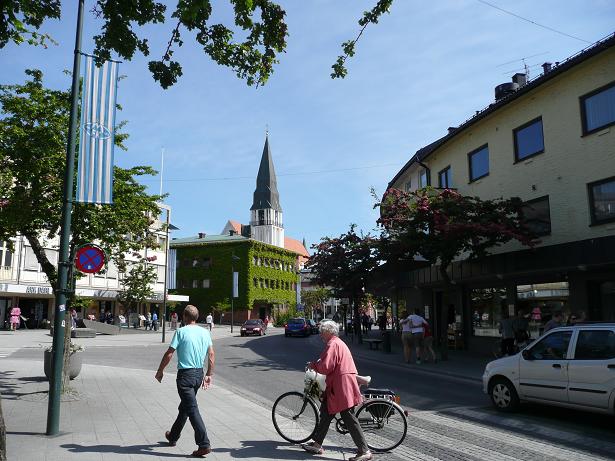
Molde: main street / główna ulica w Molde
Molde is delightful. It is attractive, generally well-kept, and pleasant. Behind the facades of its buildings lie industry (mainly textile), culture, theater, and even a jazz festival—not to mention a museum, galleries, and the makings of a university.
Molde jest milutkie. Jest ładne, w swej większości zadbane i sympatyczne. Za murami domów kryją się i przemysł (głównie tekstylny) i kultura i teatr i nawet festiwal jazzowy, nie wspominając o muzeum, galeriach i namiastce uniwersytetu.
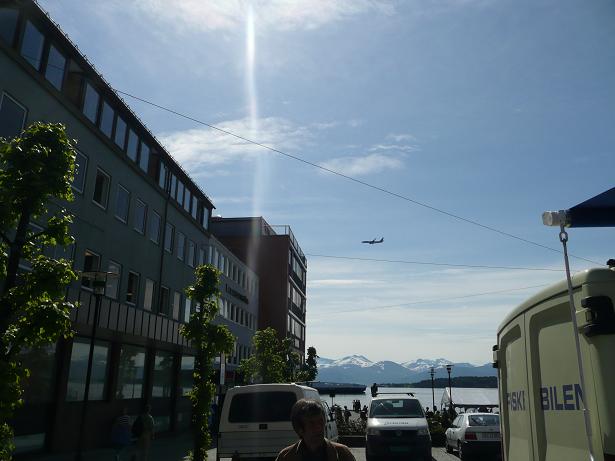
Molde, center / Centrum Molde:
About 24,000 people live there – people who likely don’t worry about the cost of heating their homes in winter. In fact, they ought to be the most laid-back people on earth, if only because they have a government that, instead of squandering oil and gas revenues on a binge, decided to invest them. And invest them it did, pouring funds into ventures worldwide – ventures that, for some reason, actually turn a profit. These profits fund things like Norwegian pensions and education – items that any self-respecting government usually views as an unavoidable burden. The Norwegian government, however, lacks such „self-respect,” allocating only about 5% of those annual profits to cover such expenses, without ever touching the principal. This makes every Norwegian a shareholder in a fortune of a magnitude that the average – well, let’s say, Pole – simply cannot imagine.
Mieszka tam ok. 24 tysiące ludzi, którzy raczej nie przejmują się cenami gazu do ogrzewania domu zimą. W ogóle powinni być najbardziej wyluzowanymi ludźmi na świecie, choćby dlatego, że mają rząd, który zamiast przepić i przehulać kasę z ropy i gazu w jak najkrótszym czasie, postanowił ją zainwestować. Jak postanowił tak zrobił, pakując wszystko w przedsięwzięcia na całym świecie, które to przedsięwzięcia nie wiedzieć czemu przynoszą zyski. Z tych zysków pochodzą między innymi emerytury Norwegów, edukacja itd., czyli rzeczy, które przez każdy szanujący się rząd są traktowane jak dopust boży. Rząd norweski nie szanuje się do tego stopnia, że na te wszystkie wydatki przeznacza rocznie około 5 % tychże zysków, nie ruszając kapitału. To czyni każdego Norwega udziałowcem w kasie, której przeciętny hm, powiedzmy Polak nie jest sobie w stanie wyobrazić.
And for some reason, the people of the country known as Norway love their country—and actually feel happy there, too. On top of that, they have damn beautiful fjords…
I nie wiedzieć dlaczego mieszkańcy kraju zwanego Norwegią kochają swój kraj i w dodatku czują się w nim szczęśliwi. I jeszcze do tego mają cholernie piękne fiordy…
Molde
Returning to Molde (molde/moldar means „skull” or „fertile soil” in Old Norse) and its roses: the famous rose garden located on the roof of the town hall is overrated. There are plenty of roses, but they don’t look impressive; they resemble neglected, straggly stalks—green, certainly, but rather timidly so. Perhaps I caught them at the wrong time, but such scrawny plants shouldn’t be the symbol of the city.
Wracając do Molde (molde/moldar w staronorweskim znaczy czaszka albo żyzna ziemia) i jej róż: sławny ogród różany znajduje się na dachu ratusza jest przereklamowany. Róż jest dużo, ale nie wyglądają imponująco, przypominają zaniedbane badylki zieleniejące się wprawdzie, ale dość nieśmiało. Może trafiłam w zły moment, ale takie badylki nie powinny zostać symbolem miasta.
Rose garden on the roof of the Molde Town Hall. Above—our ship; above that—the mountains in June. / Ogród różany na dachu ratusza w Molde. Powyżej – nasz statek, powyżej – góry w czerwcu.
Molde
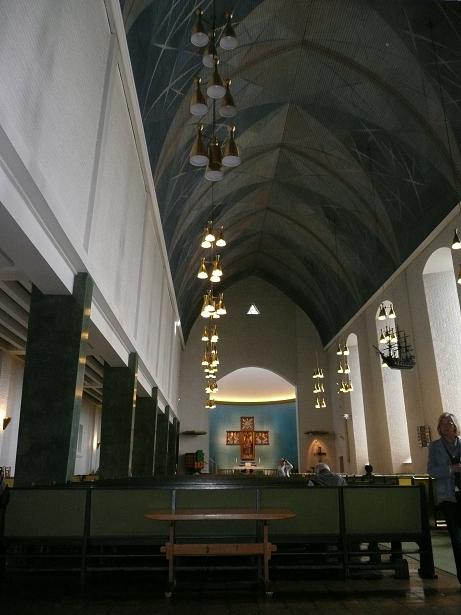
Right next to the town hall roof stands a small church with a modern bell tower. It is nothing impressive from the outside, but charming on the inside: modest and white, with a dark ceiling—devoid of gold or sculptures, yet featuring ship models suspended from the vault.
Tuż obok dachu ratusza jest niewielki kościół z nowoczesną dzwonnicą. Nic imponującego z zewnątrz, ale w środku jest czarujący: skromny, biały, z ciemnym sufitem, bez złota i rzeźb, za to z modelami okrętów zwieszającymi się ze sklepienia.
Molde – church
Another cool thing is that they have a female pastor there—she’s smiling beautifully in a photo in the church’s entrance area (I don’t go to church often, so I have no idea what that part is actually called). It was there that I discovered something that delighted me: a cross that doesn’t feature a bloodied man hanging from it—an image that always used to fill me with dread. Instead, fish hang from this Christian cross; and while I’m not sure I fully grasp the symbolism, it’s something that speaks to me far more than the sight of a tormented man.
Drugą fajną sprawą jest to, że mają tam pastorkę, która ślicznie uśmiecha się ze zdjęcia w pierwszym pomieszczeniu kościoła (nie jestem częstą bywalczynią świątyń, więc nie mam pojęcia jak się to nazywa). W tymże miejscu odkryłam coś, co mnie zachwyciło: krzyż, na którym nie wisi zakrwawiony facet, który zawsze budził we mnie grozę. Na chrześcijańskim krzyżu wiszą ryby i choć nie jestem pewna, czy dobrze rozumiem symbolikę, to jest to coś, co do mnie bardziej przemawia, niż udręczony mężczyzna.
Another attraction is the Romsdal Museum, one of the largest open-air museums in Norway. Founded in 1912, it showcases the region’s history from the 14th to the 20th century. Its collection includes residential buildings, barns and sheds, a chapel, and… outhouses.
Inną atrakcją jest Muzeum Romsdal, jedno z największych skansenów w Norwegii. Założone w 1912 przedstawia historię regionu od 14 do 20 wieku. Zgromadzono w nim budynki mieszkalne, stodoły i szopy, kaplicę i … wychodki.
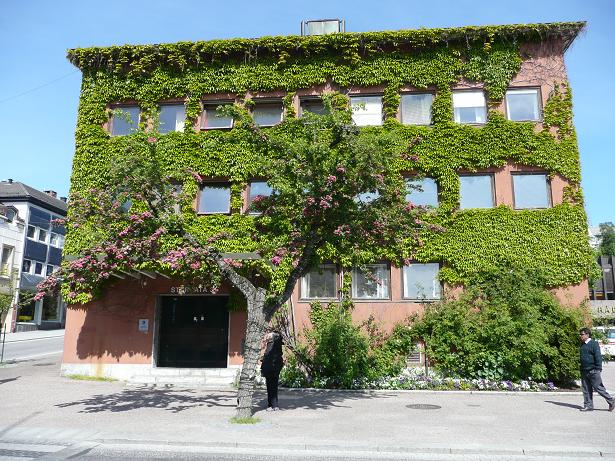
One of the most beautiful houses in Molde: / Jeden z najładniejszych domów w Molde:
Molde
On the island of Hjertøya, ten minutes from the center of Molde, lies another open-air museum—the Fisheries Museum, featuring a small fishing village preserved in its entirety, complete with fishing gear and boats. Boats to and from the island depart roughly every hour.
Na wyspie Hjertoya, 10 minut od centrum Molde jest kolejny skansen – Muzeum Rybołóstwa w postaci małej wioski rybackiej zachowanej w całości wraz ze sprzętem rybackim i łodziami. Statki na wyspę i z powrotem odpływają mniej więcej co godzinę.
22nd of June, Sunrise 3:30 a.m., Sunset 11:45 p.m. / Wschód słońca: 3:20, zachód słońca:23:45
Temperature: I don’t know, but it’s warm. It’s supposed to be 23 degrees at noon. It is incredibly sunny. / Temperatura: nie wiem, ale jest ciepło. W południe ma być 23 stopnie. Jest słonecznie jak nie wiem.
Position: Port of Molde, 62°45′ N / Pozycja: port w Molde, 62°45′ N
View of Romsdalfjord from the ship: / Widok ze statku na Romsdalfjord:
Molde – Romsdalfjord
Romsdalfjord from Molde
The mooring lines were cast off: / Cumy zostały rzucone:
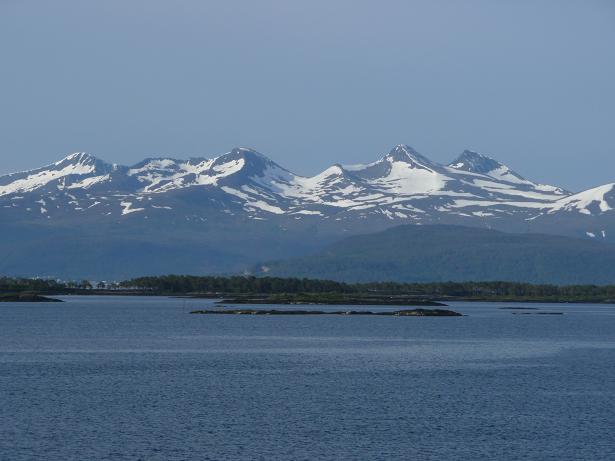
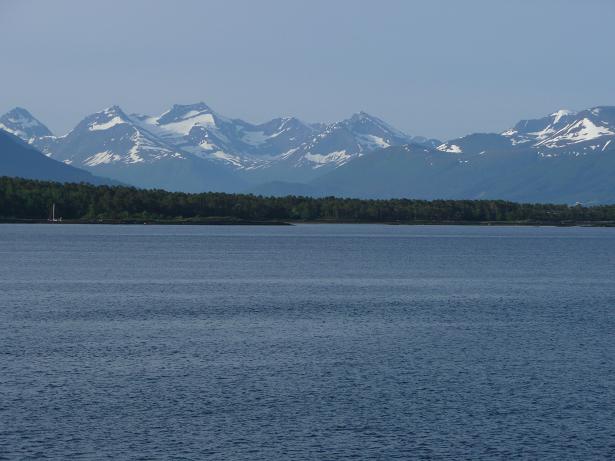
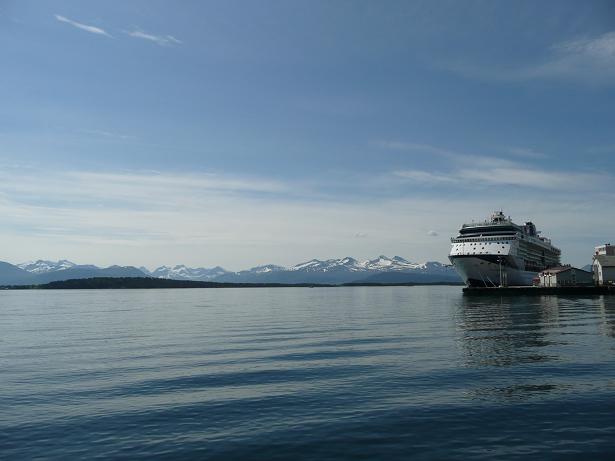
We sailed into the port of Molde—a city that serves as Norway’s rose-growing hub, a fact that might come as a surprise given its latitude. Yet appearances can be deceiving, for Molde is shielded from harsh winters by the benevolent Gulf Stream and the surrounding forest-clad hills. It is situated along one of Norway’s most picturesque fjords, the Romsdalfjord. From the hills rising above the city, one can see 87 peaks of the Romsdal mountain range (though some claim there are as many as 222 of these snow-capped summits), and the view is magnificent—especially on a day like today.
Wpłynęliśmy do portu Molde – miasta, które jest norweskim centrum hodowli róż, co na tej szerokości geograficznej może budzić małe zdziwienie. Ale pozory mylą, bo Molde chroni przed surowymi zimami błogosławiony Golfstrom i okoliczne wzgórza pokryte lasami. Jest usytuowane wzdłuż jednego z najbardziej malowniczych fiordów Norwegii – Romsdalfjord. Ze wzgórz wznoszących się nad miastem można zobaczyć 87 szczytów łańcucha górskiego Romsdal (niektórzy twierdzą, że owych ośnieżonych szczytów jest 222) i jest to widok przecudny, zwłaszcza w dzień taki jak dziś.
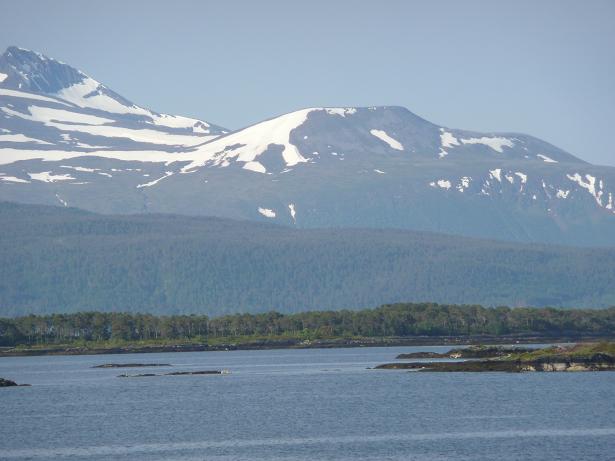
Small islands where houses and boat moorings are hidden among the trees: / Małe wyspy, na których wśród drzew kryją się domy i przystanie łodzi:
The waters of the fjord are dotted with countless islands and islets. Small houses stand among the trees on the larger ones, with boat landings along the shores—the only means of transport between the islands and the city. The smaller islets are home to birds; occasionally, one can spot a boathouse or fallen tree trunks in the marshy ground.
Na wodach fiordu są niezliczone wyspy i wysepki. Na tych większych wśród drzew stoją nieduże domy, a przy brzegach są przystanie na łodzie – jedyny środek komunikacji między wyspami i miastem. Na tych mniejszych wysepkach mieszkają ptaki, czasem widać hangar na łódź, zwalone pnie drzew w bagnistym gruncie.
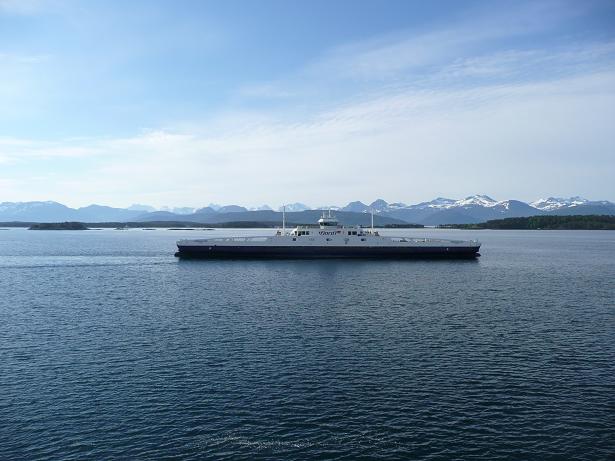
Peak hours on the water: / Godziny szczytu na wodzie:
Traffic on the fjord water
The water is bustling with activity—small white-and-blue ferries, laden with cars, construction machinery, people, and containers, glide swiftly past our port side, heading for the far shore of the fjord. Sailboats drift along, seemingly aimless, their passengers looking as though they lack absolutely nothing in life to be happy. Small motorboats hurry along; from the height of the tenth deck, they look like mice trying to escape a cat.
Ruch na wodzie jest duży – niewielkie, biało niebieskie promy wyładowane samochodami, maszynami budowlanymi, ludźmi i kontenerami suną szybko wzdłuż naszej bakburty zmierzając na drugą stronę fiordu. Żaglówki snują się pozornie bez celu, a ich pasażerowie wyglądają jakby niczego, absolutnie niczego w życiu nie brakowało im do szczęścia. Małe motorówki śpieszą się bardzo, a z wysokości 10 pokładu wyglądają jak myszki próbujące zwiać przed kotem.
Widok na miejski stadion:
Molde
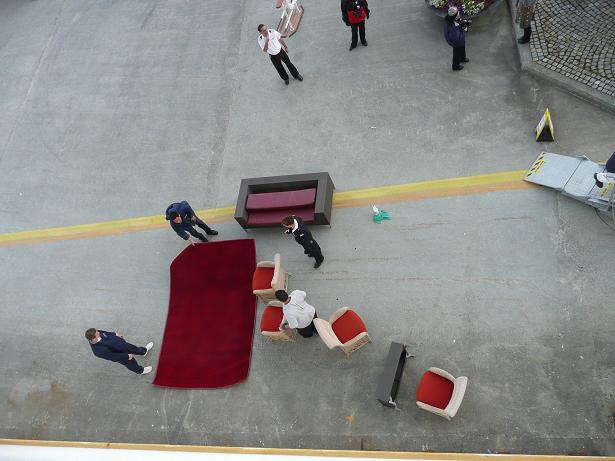
Amidst all the small craft, our ship looks like a massive mother sow. Once again, the ship is the tallest structure in town, blocking the view. Fortunately, no one minds; sailors and powerboaters wave cheerfully at us. The ship is quite a spectacle for the guests at the waterfront hotel, too. They’ve flocked to their balconies to watch the crew bring out a red carpet, a sofa, and armchairs—hot chocolate awaits those returning on board. I almost envy myself…
Wśród tego całego drobiazgu nasz statek wygląda jak wielka maciora. Znów statek jest najwyższym budynkiem w mieście i zasłania widok. Na szczęście nikt się nie gniewa, a żeglarze i motorowodniacy machają do nas radośnie. Ale statek jest widokiem dla mieszkańców hotelu, który stoi przy nabrzeżu. Mieszkańcy wylegli na balkony, przyglądając się jak załoga wynosi czerwony dywan, kanapę i fotele – znów będzie gorąca czekolada dla powracających na pokład. Eh, sama sobie zazdroszczę…
Red carpet – this is where the hot chocolate will be waiting after returning from town: / Czerwony dywan – tu będzie gorąca czekolada po powrocie z miasta:
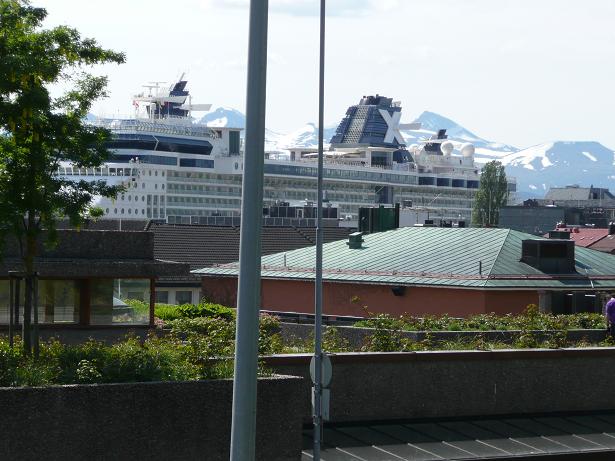
Celebrity Constellation in the port of Molde: once again the tallest building in the city: / Celebrity Constellation w porcie Molde: – znów najwyższy budynek w mieście:
The sun: it will set today—or rather, tomorrow—at 52 minutes past midnight. / Słońce: zajdzie dzisiaj, a właściwie jutro 52 minuty po północy.
Temperature: 8°C, not a trace of sun. / Tempertaura: 8° C, ani śladu słońca.
Location: Road to Molde / Pozycja: droga do Molde
Another day at sea. I like days at sea because you can do nothing and eat all day, reading or meeting new people in between. I keep running into people I’ve never seen before—but then again, when there are over 2,000 people in one place, the chances of meeting someone new are huge. Most of the passengers have relaxed by now; even the Chinese travelers have started smiling and saying „good morning.”
Kolejny dzień na morzu. Lubię dni na morzu, bo można nic nie robić i jeść cały dzień, w przerwach czytać albo poznawać nowych ludzi. Ciągle natykam się na kogoś, kogo nigdy wcześniej nie widziałam, ale kiedy w jednym miejscu jest ponad 2000 osób, to prawdopodobieństwo spotkania kogoś nowego jest ogromne. Większość pasażerów już się wyluzowała, nawet Chińczycy zaczęli się uśmiechać i mówić „dzień dobry”.
Many people traveled to Amsterdam from distant corners of the world to take part in this cruise. Australians and New Zealanders, Chinese and Singaporeans, South Africans, and a couple from Puerto Rico arrived specifically for the voyage—not to mention Jamaicans, Americans, and a large group of Canadians.
Wielu ludzi przyjechało do Amsterdamu z odległych zakątków świata, żeby uczestniczyć w tym rejsie. Przyjechali specjalnie na ten rejs Australijczycy i Nowozelandczycy, Chińczycy i mieszkańcy Singapuru, RPA i para z Puerto Rico, nie wspominając o Jamajczykach, Amerykanach i silnej grupie Kanadyjczyków.
Załoga jest super i o ile nie są to drobne, wystraszone dziewczyny mające służbę w damskich toaletach, to każdy członek załogi jest zadowolony, kiedy może sobie pogadać i opowiedzieć swoją historię. A ja lubię słuchać…
Brunch at Celebrity Constellation
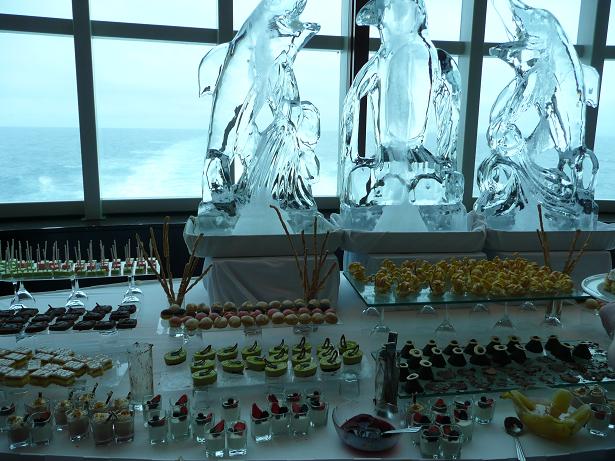
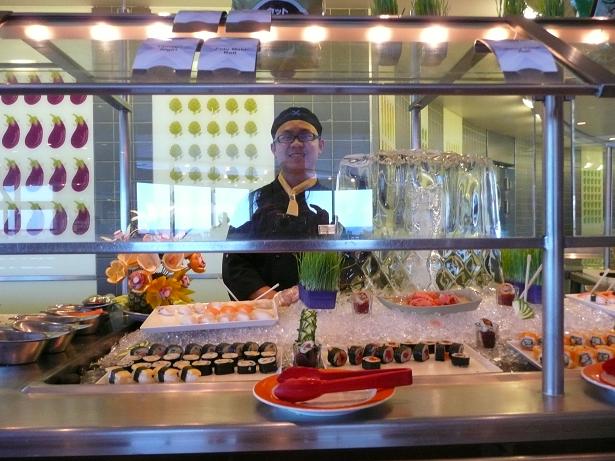
In any case, there was a slight break in the routine today: a brunch was being held in the San Marco, the ship’s largest restaurant. We spent four hours at the table eating and chatting with a Japanese-Chinese team from Singapore and a couple from Scotland about our respective countries. As for my preferences, Singapore definitely won out. Now I get what the whole brunch thing is about. The food exceeded expectations, the décor of the room and tables—and the appearance of the waiters—was magnificent, and as for the company… we could easily have happily spent another three hours with them.
W każdym razie dziś „odbyło się” małe odstępstwo od rutyny: w największej statkowej restauracji San Marco organizowany był brunch. Spędziliśmy przy stole 4 godziny jedząc i gadając z japońsko-chińskim teamem z Singapuru i parą ze Szkocji o naszych krajach. Jeśli chodzi o moje wymagania, to Singapur zdecydowanie wygrał. Teraz już wiem, o co chodzi z tymi brunchami. Żarcie przerosło oczekiwania, wystrój sali, stołów, kelnerów był wspaniały, a towarzystwo… spokojnie wytrzymalibyśmy z nimi jeszcze ze 3 godziny.
As you know, I keep an eye out for a spray of water and a massive body at every opportunity. So, there I was, sitting on Deck 10 and scanning the sea’s surface, when suddenly—amidst the dark waves—I spotted a pod of dolphins! There were about twenty of them, and they were nearly black. They were swimming very fast from west to east (swimming like dolphins, of course), surfacing only briefly before remaining visible for a moment just beneath the water. They passed the ship’s stern without paying it the slightest bit of attention; the whole encounter lasted just over ten seconds. I had no idea they were so fast, though I knew they were beautiful. I rushed to the window, gasping with delight, trying to spot any stragglers, but none appeared.
Jak wiecie, przy każdej okazji wypatruję fontanny wody i wielkiego cielska. Siedziałam więc sobie na 10 pokładzie, penetrując wzrokiem powierzchnię morza i nagle wśród ciemnych fal zobaczyłam stado delfinów! Stado miało około 20 sztuk, były prawie czarne. Płynęły bardzo szybko z zachodu na wschód (oczywiście delfinem), wynurzały się tylko na chwilę, a potem było je widać przez moment tuż pod powierzchnią wody. Minęły statek od strony rufy, nie zwracając na niego najmniejszej uwagi, a wszystko to trwało kilkanaście sekund. Nie miałam pojęcia, że są tak szybkie, ale wiedziałam, że są piękne. Rzuciłam się do okna jęcząc z zachwytu, próbując wypatrzeć jakiegoś marudera, ale nie pojawiły się więcej.
We have crossed the 66th parallel north—the Arctic Circle. Summer is returning. / Przekroczyliśmy 66 stopień szerokości geograficznej północnej, czyli krąg polarny. Wraca lato.
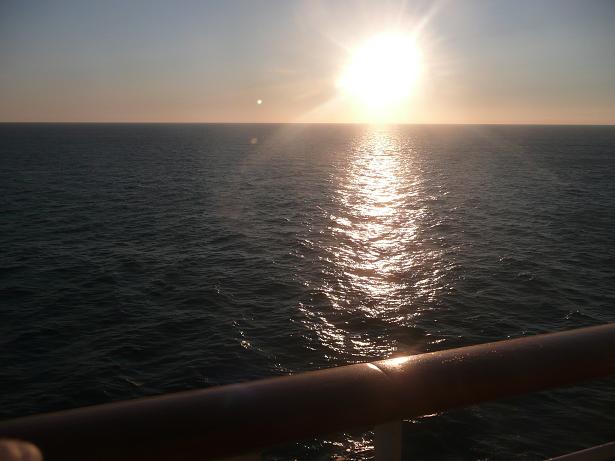
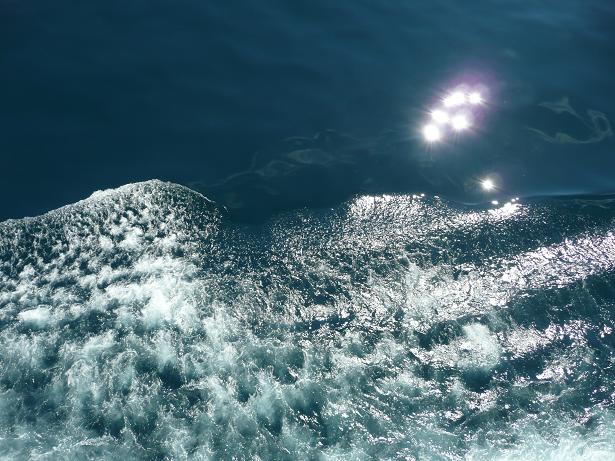
Sunshine at last! The surface of the sea glistens like a vast sheet of glitter. Emptiness all around. After a few days’ absence, this is exactly what the sun looks like: / Nareszcie słońce! Powierzchnia morza lśni jak wielka płachta brokatu. Wokół pustka. Po kilku dniach nieobecności słońce wyglada właśnie tak:
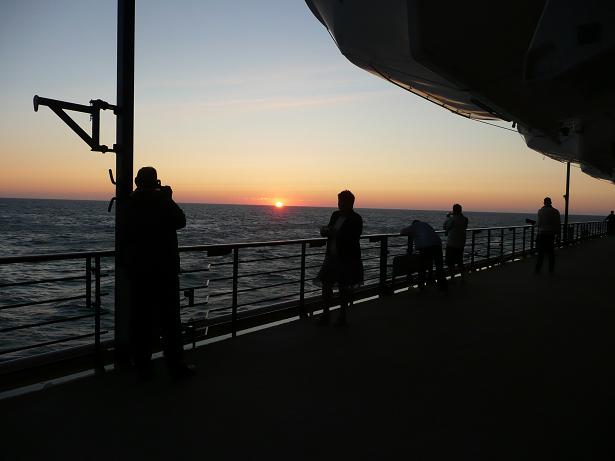
Just past midnight, off the coast of Trondheim. Sunset chasers have flocked to the deck:
Sunset on Polar Ring
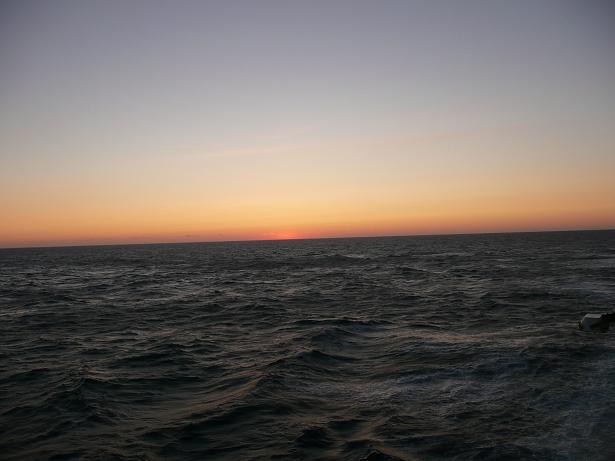
The sun has just set. For the first time in a week. Night has returned. / Właśnie zaszło słońce. Pierwszy raz od tygodnia. Wróciła noc.
wschód słońca: 3:59 zachód słońca: brak, słońce pozostaje nad horyzontem / Sunrise: 3:59 Sunset: None, sun remains above the horizon
Urodziny Zbiga / Zbig’s birthday
Ok. 10:00 / about 10:00 a.m.
Pozycja statku: na Morzu Norweskim, gdzieś na wschodzie Molde. Moja pozycja: biblioteka. / Ship’s position: In the Norwegian Sea, somewhere east of Molde. My position: library.
Morze jest niesamowicie gładkie, jakby powierzchnia pokryta była lodem. Na sterburcie ciągle widać wybrzeża Norwegii, a nad nimi białe chmury, które wyglądają jak góry lodowe i to potęguje wrażenie zimna. Nad statkiem znów latają ptaki, za to od wczoraj nie widziałam żadnych statków. Dziś wieczorem przepłyniemy za krąg polarny. I pierwsza noc bez zachodu słońca.
The sea is incredibly smooth, as if the surface were covered in ice. To starboard, the Norwegian coast is still visible, and above them, white clouds that look like icebergs, intensifying the feeling of cold. Birds are flying over the ship again, but I haven’t seen any ships since yesterday. Tonight we’ll sail beyond the Arctic Circle. And the first night without a sunset.
Spokojne Morze Norweskie:
Norway Sea
Teraz będzie o jedzeniu. Muszę o tym napisać, bo jedzenie to moja pasja, więc jeśli wam się nie podoba, to odpuśćcie sobie ten akapit. Śniadanie cudowne, czyli bez zmian. Niedługo przestanę się mieścić w jakiekolwiek ciuchy. Zostaną mi do chodzenia spodnie od piżamy na gumce. I tak nie jestem w stanie spróbować wszystkiego. Bufet podzielony jest na części: najpierw świeże owoce – arbuzy, winogrona, kilka rodzajów melonów, ananasy, grapefruity. Potem wędliny, łosoś wędzony, sery i twarożki. Tych ostatnich naliczyłam 6 rodzajów. Potem część zwana „american breakfast” – boczki, jajka w 4 postaciach i różne takie, warzywa do smażenia i kawał wiekiej szynki dopiero co wyjęty z piekarnika. Potem przedział z owsianką, kaszką manną i dodatkami: cukier trzcinowy, owoce leśne, brzoskwinie, śliwki, morele, coś, czego nie znam, ale spróbuję. Następnie święte miejsce: omlety smażone z wieloma dodatkami wedle życzenia. Potem jogurty, w końcu pieczywo – 10 koszy wypełnionych różnymi rodzajami chleba i bułek, łącznie z bajglami, które jadłam ostatnio z 15 lat temu w Montrealu (wiadomo, że montrealskie bajgle są najlepsze na świecie). No i wreszcie dział dla dzielnych ludzi ze Zjednoczonego Królestwa, czyli „english breakfast” z cała jego wspaniałością: kaszanką, fasolą, grzankami, kiełbaskami, bekonem, pieczarkami, placuszkami z ziemniaków i sama nie wiem z czym jeszcze. Kiedy mieszkałam w Anglii, takie śniadanko to była codzienna tradycja, ale tutaj… nie, raczej nie.
Now it’s about food. I have to write about it because food is my passion, so if you don’t like it, skip this paragraph. Breakfast is wonderful, meaning no changes. Soon I won’t be able to fit into any of my clothes. I’ll be stuck with pajama bottoms with elastic waistbands. I can’t try everything anyway. The buffet is divided into sections: first, fresh fruit – watermelon, grapes, several types of melon, pineapple, grapefruit. Then cold cuts, smoked salmon, cheeses, and cottage cheese. I counted six types of the latter. Then the „American breakfast” section – bacon, eggs in four different ways, and various other things, vegetables for frying, and a large piece of ham fresh out of the oven. Then a section with oatmeal, semolina, and toppings: cane sugar, forest fruits, peaches, plums, apricots, something I’m not familiar with, but will try. Next, the holy grail: fried omelets with a variety of toppings to choose from. Then yogurt, and finally, bread—10 baskets filled with various types of bread and rolls, including bagels, which I last ate about 15 years ago in Montreal (Montreal bagels are known to be the best in the world). And finally, the section for the brave folk from the United Kingdom: the „English breakfast,” with all its splendor: black pudding, beans, toast, sausages, bacon, mushrooms, potato pancakes, and who knows what else. When I lived in England, such a breakfast was a daily tradition, but here… no, not really.
Obsługa jest na każde zawołanie. Na bieżąco smażą omlety, opiekają warzywa i pieczywo, ładują na talerze wszystko, o co się poprosi. I jeszcze podają kawę do stolików, bo grubym leniom nie chce się ruszyć tyłków i przemieścić się na odległość 10 metrów.
The staff is always on call. They fry omelets, toast vegetables and bread, and pile everything you ask for onto plates. And they even serve coffee to the tables because the fat, lazy people can’t be bothered to move 10 meters.
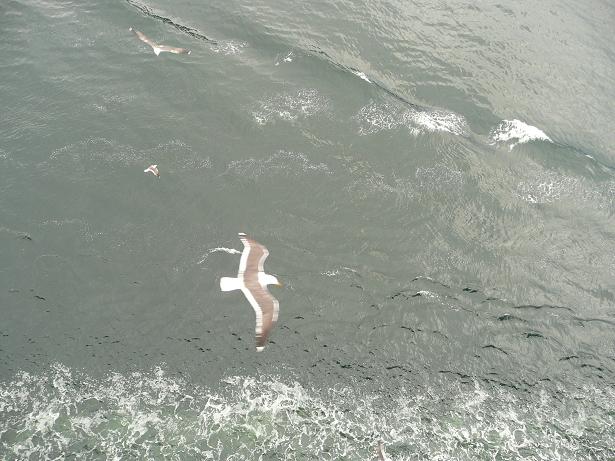
Z jadalni można wyjść prosto na pokład rufowy. Tam zwykle jest zacisznie i można nostalgicznie obserwować kilwater, czyli „przypowierzchniową warstwę wody zaburzonej przez ruch jednostki nawodnej, a przede wszystkim przez obroty śrub okrętowych (mamy dwie) oraz turbulentny charakter opływu hydrodynamicznego kadłuba jednostki pływającej” (za Wikipedią). I po co tak sobie komplikować życie?
From the dining room, you can walk straight onto the aft deck. It’s usually quiet there, and you can nostalgically observe the wake, which is „the near-surface layer of water disturbed by the motion of the vessel, primarily by the rotation of the ship’s propellers (we have two) and the turbulent nature of the hydrodynamic flow around the vessel’s hull” (according to Wikipedia). And why complicate life so much?
ok. 12:00 / about noon
Został zbudowany w St.Nazaire we Francji i zwodowany w 2002 roku. Jest statkiem klasy Millenium obecnie zarejestrowanym w Valetta na Malcie. Ma długość 294 metry, tonaż 91.000 i osiąga prędkość 24 węzłów (ok. 44 km/h), co nie dziwi przy napędzie dwóch silników o mocy 19MW. Zabiera 1950 pasażerów i 999 osób załogi.
Built in St. Nazaire, France, and launched in 2002, she is a Millennium-class vessel currently registered in Valletta, Malta. She is 294 meters long, has a gross tonnage of 91,000, and can reach a speed of 24 knots (approximately 44 km/h), which is not surprising given her twin 19MW engines. She can accommodate 1,950 passengers and a crew of 999.
Ma 13 pokładów. Dwa najniższe, to bebechy statku, kabiny załogi, zapewne mesa i wszystko to, czego pasażerowie nie powinni oglądać. Pokład #2 zwany Continental to kabiny pasażerskie i „przychodnia” lekarska. Pokład #3, zwany Plaza to (od dziobu) wielki teatr, kabiny pasażerskie, w tym nasza na sterburcie, recepcja, Grand Foyer z wielkimi schodami otoczone statkowymi biurami, sale konferencyjne i kino. Pokład #4, zwany Promenade – balkony teatru, klub urządzony w stylu angielskim, w którym to klubie nigdy nie byliśmy. Potem jest galeria fotografii uczestników rejsu i zakład fotograficzny, gdzie zawsze napada na nas gość zwany przez nas Jabba the Hutt i chce nam zrobić zdjęcie. Chodzimy tędy na kolacje, więc spotkania są nieuniknione. Potem przechodzimy przez wielką „klubokawiarnię” zwaną Randez-Vous, by w końcu dojść do świątyni pożeraczy kolacji – pięknej restauracji „San Marco”. Kolejny pokład to Entertainment – jaskółka teatru, tutejsze centrum handlowe „The Emporium”, które z masą kiczowatych zegarków i biżuterii, sweterków z futerkiem, matrioszkami i ikonami, małą perfumerią i sklepem z alkoholem powinno się raczej nazywać „Małe centrum handlowe imienia krasnali ogrodowych”.
It has 13 decks. The lowest two are the ship’s innards, crew cabins, presumably the mess hall, and everything passengers shouldn’t see. Deck #2, called the Continental, contains passenger cabins and a medical „clinic.” Deck #3, called the Plaza, is (from the bow) a grand theater, passenger cabins, including ours on the starboard side, a reception desk, a Grand Foyer with a grand staircase surrounded by ship’s offices, conference rooms, and a cinema. Deck #4, called the Promenade, contains the theater’s balconies, and a club decorated in an English style, which we’ve never been to. Then there’s the cruise photo gallery and the photo studio, where a guy we call Jabba the Hutt always attacks us and wants to take our picture. We go this way for dinner, so meetings are inevitable. Then we pass through a large „club café” called Rendez-Vous, and finally reach the temple of the diners – the beautiful restaurant „San Marco.” Next up is the Entertainment area – a theater swallow, and the local shopping mall „The Emporium,” which, with its masses of kitschy watches and jewelry, fur-trimmed sweaters, matryoshka dolls and icons, a small perfume shop, and a liquor store, should more accurately be called „The Little Shopping Mall Named After Garden Gnomes.”
Następne 4 pokłady to wyłącznie kabiny pasażerskie, oprócz pokładu # 7 i 8. Tam w środkowej części mieści się śliczna biblioteka. Im wyżej, tym drożej, im drożej, tym większe kabiny z oknami i balkonami. To jedyna rzecz, jakiej zazdroszczę bogatym pasażerom – możliwości otwarcia okna. W kabinach dla biedaków powietrze jest przerażająco suche i czasem stęchłe i nic nie jest w stanie tego zmienić.
The next four decks are exclusively passenger cabins, except for decks 7 and 8. There, in the middle section, is a lovely library. The higher the deck, the more expensive it is; the more expensive, the larger the cabins with windows and balconies. The only thing I envy wealthy passengers is the ability to open a window. In the cabins for the poor, the air is terribly dry and sometimes musty, and nothing can change that.
Pokład #10 – mój ulubiony. I nie dlatego, że jest na nim klub fitness i spa i baseny i jacuzzi. Tam jest śniadanie i drugie śniadanie i trzecie śniadanie i brunch i lunch i obiadek i podwieczorek i wieczorna herbatka i midnight snack w razie potrzeby.
Deck 10 is my favorite. And not just because it has a health club and spa and pools and jacuzzis. It serves breakfast, second breakfast, third breakfast, brunch, lunch, dinner, afternoon tea, and evening tea, plus a midnight snack if needed.
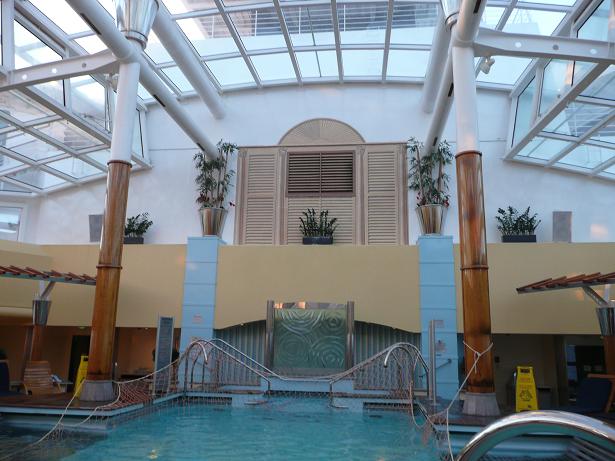
Basen wewnętrzny na 10-tym pokładzie:
Celebrity Constellation – indoor swimmingpool
Na pokładzie 11 uczymy się tańczyć i chodzimy na spacery. Jest tam restauracja „Tuscan Grill”, do której nigdy nie pójdziemy i bary, zamknięte z uwagi na zimno. Ale przede wszystkim jest to miejsce do obserwacji bliższej i dalszej okolicy. Może uda nam się zobaczyć jak wygląda ten krąg polarny.
On deck 11, we learn to dance and go for walks. There’s a restaurant called the Tuscan Grill, which we’ll never go to, and bars that are closed due to the cold. But above all, it’s a place to observe the surroundings, both near and far. Maybe we’ll even get a glimpse of the Arctic Circle.
Taki jest nasz statek, który będzie naszym domem jeszcze przez kilkanaście dni. Nazywa się Constellation. Celebrity Constellation. / This is our ship, which will be our home for the next several days. It’s called Constellation. Celebrity Constellation.