
Afternoon / Po południu
So, here’s the picture: looking west, you can see the majestic Atlantic. To the east lies a breathtaking panorama of the Romsdal Fjord, featuring forests and small villages that appear to be bathing in the water. Spread out at our feet is Molde, encircled by the Romsdal Mountains and their 222 snow-capped peaks. All of this is visible from the Varden viewpoint, situated 407 meters above sea level. You can hike there from the center of Molde—an uphill walk taking an hour and a half, or just one hour for the fitter among us (though it’s still an uphill climb).
Więc tak: kiedy patrzymy na zachód możemy zobaczyć majestatyczny Atlantyk. Na wschodzie jest zapierająca dech w piersiach panorama fiordu Romsdal z lasami i małymi wioskami, które wyglądają, jakby kąpały się w wodzie. U naszych stóp rozpościera się Molde otoczone łańcuchem Gór Romsdal i ich 222 ośnieżone szczyty. Wszystko to widać z punktu widokowego Varden, leżącego na wysokości 407 metrów n.p.m. Można tam dojść pieszo z centrum Molde w ciągu 1,5 godziny pod górę, dla bardziej wysportowanych w 1 godzinę, ale też pod górę.
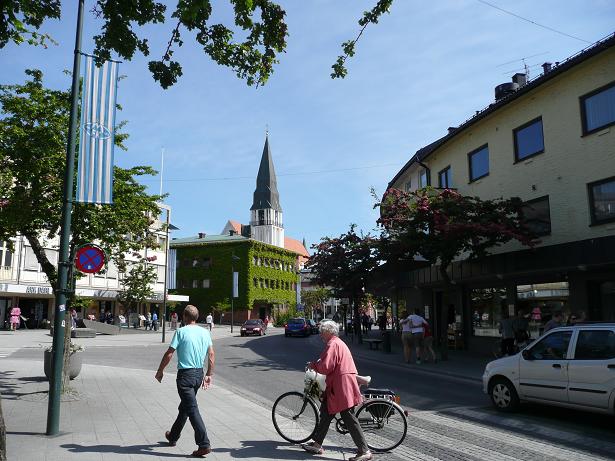
Molde is delightful. It is attractive, generally well-kept, and pleasant. Behind the facades of its buildings lie industry (mainly textile), culture, theater, and even a jazz festival—not to mention a museum, galleries, and the makings of a university.
Molde jest milutkie. Jest ładne, w swej większości zadbane i sympatyczne. Za murami domów kryją się i przemysł (głównie tekstylny) i kultura i teatr i nawet festiwal jazzowy, nie wspominając o muzeum, galeriach i namiastce uniwersytetu.
Molde, center / Centrum Molde:
About 24,000 people live there – people who likely don’t worry about the cost of heating their homes in winter. In fact, they ought to be the most laid-back people on earth, if only because they have a government that, instead of squandering oil and gas revenues on a binge, decided to invest them. And invest them it did, pouring funds into ventures worldwide – ventures that, for some reason, actually turn a profit. These profits fund things like Norwegian pensions and education – items that any self-respecting government usually views as an unavoidable burden. The Norwegian government, however, lacks such „self-respect,” allocating only about 5% of those annual profits to cover such expenses, without ever touching the principal. This makes every Norwegian a shareholder in a fortune of a magnitude that the average – well, let’s say, Pole – simply cannot imagine.
Mieszka tam ok. 24 tysiące ludzi, którzy raczej nie przejmują się cenami gazu do ogrzewania domu zimą. W ogóle powinni być najbardziej wyluzowanymi ludźmi na świecie, choćby dlatego, że mają rząd, który zamiast przepić i przehulać kasę z ropy i gazu w jak najkrótszym czasie, postanowił ją zainwestować. Jak postanowił tak zrobił, pakując wszystko w przedsięwzięcia na całym świecie, które to przedsięwzięcia nie wiedzieć czemu przynoszą zyski. Z tych zysków pochodzą między innymi emerytury Norwegów, edukacja itd., czyli rzeczy, które przez każdy szanujący się rząd są traktowane jak dopust boży. Rząd norweski nie szanuje się do tego stopnia, że na te wszystkie wydatki przeznacza rocznie około 5 % tychże zysków, nie ruszając kapitału. To czyni każdego Norwega udziałowcem w kasie, której przeciętny hm, powiedzmy Polak nie jest sobie w stanie wyobrazić.
And for some reason, the people of the country known as Norway love their country—and actually feel happy there, too. On top of that, they have damn beautiful fjords…
I nie wiedzieć dlaczego mieszkańcy kraju zwanego Norwegią kochają swój kraj i w dodatku czują się w nim szczęśliwi. I jeszcze do tego mają cholernie piękne fiordy…
Returning to Molde (molde/moldar means „skull” or „fertile soil” in Old Norse) and its roses: the famous rose garden located on the roof of the town hall is overrated. There are plenty of roses, but they don’t look impressive; they resemble neglected, straggly stalks—green, certainly, but rather timidly so. Perhaps I caught them at the wrong time, but such scrawny plants shouldn’t be the symbol of the city.
Wracając do Molde (molde/moldar w staronorweskim znaczy czaszka albo żyzna ziemia) i jej róż: sławny ogród różany znajduje się na dachu ratusza jest przereklamowany. Róż jest dużo, ale nie wyglądają imponująco, przypominają zaniedbane badylki zieleniejące się wprawdzie, ale dość nieśmiało. Może trafiłam w zły moment, ale takie badylki nie powinny zostać symbolem miasta.
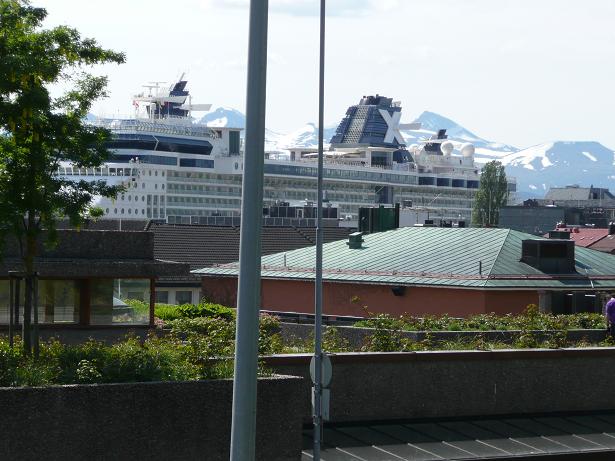
Rose garden on the roof of the Molde Town Hall. Above—our ship; above that—the mountains in June. / Ogród różany na dachu ratusza w Molde. Powyżej – nasz statek, powyżej – góry w czerwcu.
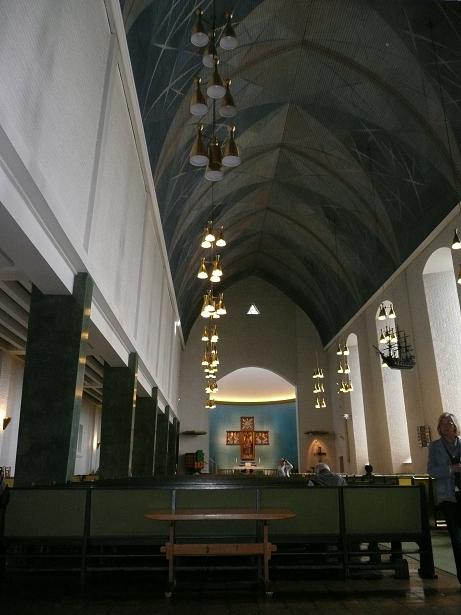
Right next to the town hall roof stands a small church with a modern bell tower. It is nothing impressive from the outside, but charming on the inside: modest and white, with a dark ceiling—devoid of gold or sculptures, yet featuring ship models suspended from the vault.
Tuż obok dachu ratusza jest niewielki kościół z nowoczesną dzwonnicą. Nic imponującego z zewnątrz, ale w środku jest czarujący: skromny, biały, z ciemnym sufitem, bez złota i rzeźb, za to z modelami okrętów zwieszającymi się ze sklepienia.
Another cool thing is that they have a female pastor there—she’s smiling beautifully in a photo in the church’s entrance area (I don’t go to church often, so I have no idea what that part is actually called). It was there that I discovered something that delighted me: a cross that doesn’t feature a bloodied man hanging from it—an image that always used to fill me with dread. Instead, fish hang from this Christian cross; and while I’m not sure I fully grasp the symbolism, it’s something that speaks to me far more than the sight of a tormented man.
Drugą fajną sprawą jest to, że mają tam pastorkę, która ślicznie uśmiecha się ze zdjęcia w pierwszym pomieszczeniu kościoła (nie jestem częstą bywalczynią świątyń, więc nie mam pojęcia jak się to nazywa). W tymże miejscu odkryłam coś, co mnie zachwyciło: krzyż, na którym nie wisi zakrwawiony facet, który zawsze budził we mnie grozę. Na chrześcijańskim krzyżu wiszą ryby i choć nie jestem pewna, czy dobrze rozumiem symbolikę, to jest to coś, co do mnie bardziej przemawia, niż udręczony mężczyzna.

Another attraction is the Romsdal Museum, one of the largest open-air museums in Norway. Founded in 1912, it showcases the region’s history from the 14th to the 20th century. Its collection includes residential buildings, barns and sheds, a chapel, and… outhouses.
Inną atrakcją jest Muzeum Romsdal, jedno z największych skansenów w Norwegii. Założone w 1912 przedstawia historię regionu od 14 do 20 wieku. Zgromadzono w nim budynki mieszkalne, stodoły i szopy, kaplicę i … wychodki.
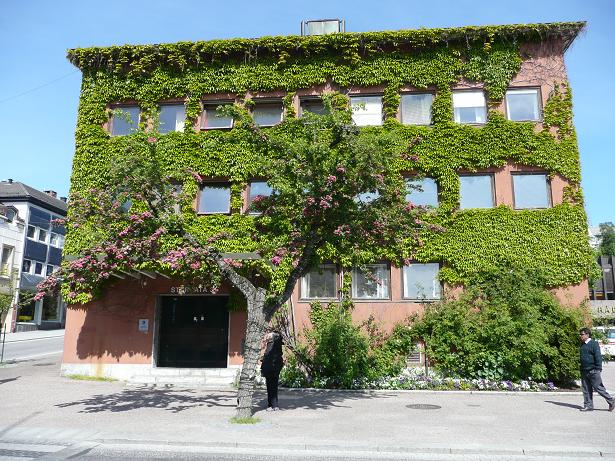
One of the most beautiful houses in Molde: / Jeden z najładniejszych domów w Molde:
On the island of Hjertøya, ten minutes from the center of Molde, lies another open-air museum—the Fisheries Museum, featuring a small fishing village preserved in its entirety, complete with fishing gear and boats. Boats to and from the island depart roughly every hour.
Na wyspie Hjertoya, 10 minut od centrum Molde jest kolejny skansen – Muzeum Rybołóstwa w postaci małej wioski rybackiej zachowanej w całości wraz ze sprzętem rybackim i łodziami. Statki na wyspę i z powrotem odpływają mniej więcej co godzinę.

