

18 czerwca, poniedziałek 18th June, Monday
W Longyearbyen żyją i pracują bardzo specyficzni ludzie, którzy przez pół roku żyją w ciemnościach polarnej nocy, rozświetlanej tylko księżycem i zorzami polarnymi, a przez pół roku w 24-godzinnym blasku słońca. Wiele okien w domach jest zasłoniętych folią odblaskową, taką jaką stosuje się na przednich szybach samochodów w obronie przed słońcem.
The people who live and work in Longyearbyen are a unique breed; for half the year, they exist in the darkness of the polar night—illuminated only by the moon and the aurora—and for the other half, they live in the 24-hour glare of the sun. Many windows in the houses are covered with reflective foil, the kind used on car windshields to block out the sun.
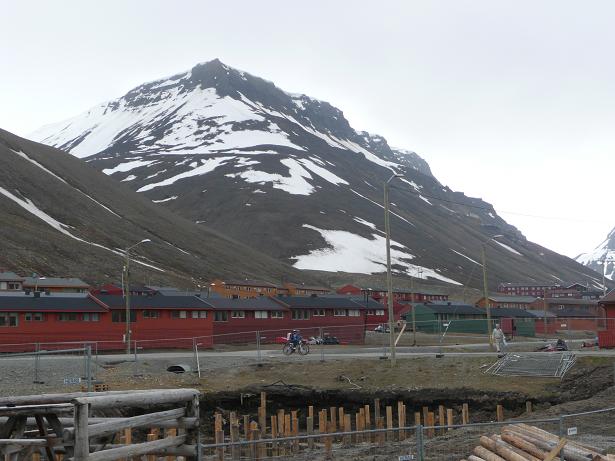
Prawie centrum Longyearbyen: / almost city center of Longyerbyen

Wracając do mieszkańców miasta… Ich liczba to około 2040 osób. 40% to Norwegowie, a około 16% to Tajlandczycy (lub Tajowie, niespodzianka), Szwedzi, Duńczycy, Niemcy i Rosjanie. Polaków naliczono 10-ciu (dane z 2010). 60% to mężczyźni, a przedział wiekowy to średnio 25 – 44 lat i prawie nie ma osób powyżej 66-go roku życia. Ciekawe jest to, że średnia długość pobytu w mieście to 4,3 roku dla obcokrajowców i 6,6 dla Norwegów. I kto tu jest Wikingiem?
Returning to the town’s residents… The population stands at around 2,040 people. 40% are Norwegian, while about 16% are Thai (or Thais—surprise!), Swedes, Danes, Germans, and Russians. Ten Poles were recorded (2010 data). 60% are men; the average age range is 25–44, and there are almost no residents over the age of 66. Interestingly, the average length of stay in the town is 4.3 years for foreigners and 6.6 years for Norwegians. So, who’s the Viking here?
Smutne jest to, że średnio w gospodarstwie domowym żyje 1,6 osoby. Muszą być nieźle samotni… Za to są bardzo wyedukowani – 54 procent z nich ma wyższe wykształcenie. Średnia kobiet to 40% z wyższym wykształceniem.
It is sad that the average household consists of 1.6 people. They must be quite lonely… On the other hand, they are highly educated—54 percent of them hold a university degree. The figure for women is 40%.
Wszyscy ci samotni, mądrzy i młodzi ludzie mieszkają w dwupiętrowych domach-blokach, trochę przypominających baraki, lub w jednopiętrowych chatach. Niektóre są pomalowane na kolor bordowy, inne na niebiesko, jeszcze inne na zielono. Nie są radosnymi plamami rozświetlającymi krajobraz. Są ponure i czasem prawie ich nie widać na tle ciemnej ziemi. Zimą na pewno wyglądają lepiej, kiedy wokół jest jasno od śniegu i światła księżyca w pełni.
All these solitary, intelligent young people live in two-story apartment blocks—resembling barracks—or in single-story cottages. Some are painted burgundy, others blue, and still others green. They are not cheerful splashes of color brightening the landscape; rather, they are somber, sometimes barely visible against the dark earth. They surely look better in winter, when the surroundings are illuminated by snow and the light of a full moon.
Domek jednorodzinny w Longyearbyen: / One-familly house in Longyearbyen:

Wszystkie domy stoją na palach. Nie takich jak w Wenecji, bo są krótsze i nie tak grube, ale nie da się tego ukryć – stoją na palach. Te „fundamenty” są sprytnie osłonięte drewnianymi deskami, ale i tak można zobaczyć wodę, w której te pale stoją. Nie dziwię się – przy wielkich ilościach wody, jaka wiosną spływa z lodowców nie ma mowy o trzymaniu kompotu i ziemniaków w piwnicy.
All the houses stand on piles. Not like the ones in Venice—these are shorter and not as thick—but there is no denying it: they stand on piles. These „foundations” are cleverly screened by wooden planks, yet you can still see the water the piles are standing in. It’s no surprise—given the massive volume of water flowing down from the glaciers in spring, there is no way to store fruit compote or potatoes in a cellar.
Domy na palach: / Houses on piles:
INFO: hotele w Longyearbyen nie są tanie. Najtańszy pokój dwuosobowy to około 950 pln, na szczęście ze śniadaniem. Średnio trzeba zapłacić 1500 pln, ale droższe też się znajdą. Hotele są tak nieliczne, że nie muszą się obawiać konkurencji, ale też nie narzekają na brak gości, więc czasem lepiej rezerwować z wyprzedzeniem.
INFO: Hotels in Longyearbyen aren’t cheap. The cheapest double room costs around 950 PLN—fortunately, that includes breakfast. You’ll pay an average of 1,500 PLN, though pricier options are available too. There are so few hotels that they face little competition, yet they certainly don’t lack guests, so it’s often best to book in advance.
CIEKAWOSTKA: niedaleko Longyearbyen jest niesamowite miejsce: Svalbard Global Seed Vault, czyli Globalny Bank Nasion. W tunelu wydrążony w wiecznej zmarzlinie umieszczonych jest 20 milionów jadalnych nasion. Przechowywane są na wypadek globalnego kryzysu, choć jeśli kryzys byłby naprawdę globalny, to nikt do tych nasion nie dotrze, nie mówiąc już o ich posadzeniu. Budowa rozpoczęła się w czerwcu 2006 roku. Placówka została sfinansowana przez rząd Norwegii. Wiele państw wysyła tu „swoje” nasiona, a za ich przechowywanie nie pobiera się opłat. Ziarenka mogą w tych warunkach wytrzymać nawet tysiące lat.
FUN FACT: Near Longyearbyen lies an amazing place—the Svalbard Global Seed Vault. Housed in a tunnel carved into the permafrost are 20 million edible seeds. They are stored there for a potential global crisis, though if such a crisis were truly global, no one would be able to reach the seeds—let alone plant them. Construction began in June 2006, and the facility was funded by the Norwegian government. Many countries send „their” seeds here, and no fees are charged for storage. Under these conditions, the seeds can remain viable for thousands of years.
c.d.n. / to be continued

