

Pieszo od Muzeum do portu idziemy około 15 minut. Trwałoby to krócej, ale muszę wszędzie zajrzeć. Poza widzianym już wcześniej bałaganem odkrywam sklep z rogami reniferów, pilnowany przez dwa psy, które na razie mnie olewają, ale nie wiadomo kiedy im podpadnę.
It takes about 15 minutes to walk from the museum to the harbor. It would take less time, but I have to poke my nose into everything. Beyond the clutter I’ve already seen, I discover a shop selling reindeer antlers, guarded by two dogs that are ignoring me for now—though there’s no telling when I might get on their bad side.
Węgiel i rogi reniferów – kwintesencja Spitsbergen:

Jest ciepło, mimo że jest zimno. Ponieważ nie ma wiatru i słońce zdecydowało się przebić przez mgliste chmury, więc nie marzniemy, ale gdzieniegdzie błyszczy szron. Zwykle wyobrażamy sobie Północ tak, jak pisywał o niej Jack London (np. w powieści „Bellew Zawierucha” – kiedy ktoś splunął, ślina zamarzała z trzaskiem w powietrzu). Mimo tego, że Longyearbyen jest dalej na północ niż Klondike, to średnie temperatury nie są bardzo niskie: w styczniu to pomiędzy -13 a -20 stopni C. Nie sądzę, żeby w tych warunkach cokolwiek zamarzało w ciągu sekundy. Wiele lat mieszkałam w Kanadzie i zima była tam o wiele sroższa. Wprawdzie nie próbowałam pluć na mrozie, ale oczy czasem zamarzały…
It feels warm, even though it is cold. Because there is no wind and the sun has decided to break through the misty clouds, we aren’t freezing, though frost glitters here and there. We usually picture the North the way Jack London described it (for instance, in the novel Smoke Bellew—where, if someone spat, the saliva would freeze with a crack in mid-air). Even though Longyearbyen lies further north than the Klondike, average temperatures aren’t extremely low: in January, they range from -13°C to -20°C. I don’t think anything would freeze instantly in these conditions. I lived in Canada for many years, and the winters there were far harsher. Admittedly, I never tried spitting in the freezing cold, but my eyes would sometimes freeze shut…
Coś dla miłośników Formuły 1 – Pole Position: / Something for Formula 1 fans – Pole Position:
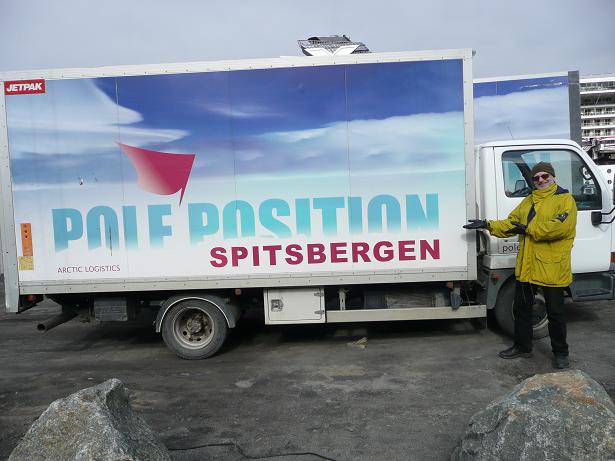
Mimo, że nie można tu liczyć na ekstremalne temperatury jak na Yukonie, to na pewno warto tu przyjechać zimą, żeby posłuchać śpiewu zorzy polarnej. Aurora borealis (czyli zorza polarna północna, bo ta na południu nazywa się aurora australis) jest na mojej krótkiej liście „rzeczy, które trzeba zobaczyć przed śmiercią”. Oczywiście zorzę można zobaczyć dużo dalej na południe, ale tutaj, w tej osadzie, w czasie trwającej 24 godziny na dobę nocy na pewno ma to większy urok.
Although you won’t encounter the extreme temperatures found in the Yukon, it is certainly worth visiting in winter to hear the „song” of the aurora borealis. The aurora borealis (the northern lights—as opposed to the aurora australis in the south) is on my short list of „things to see before I die.” Of course, the aurora can be seen much further south, but here in this settlement—amidst the 24-hour darkness—the experience undoubtedly holds a special charm.
Już widać nasz statek, gdzie czeka na nas gorąca czekolada serwowana w każdym porcie jeszcze przed wejściem na trap/szalupę. Idziemy jeszcze na kraniec miasta, żeby zrobić sobie zdjęcie przed najsłynniejszym znakiem drogowym na świecie.
Our ship is already in sight, where hot chocolate awaits us—served in every port just before we board the gangway or tender. We also head to the edge of town to take a photo in front of the most famous road sign in the world.
Here Longyearbyen ends, and the North begins: / Tu kończy się Longyearbyen, a zaczyna Północ:
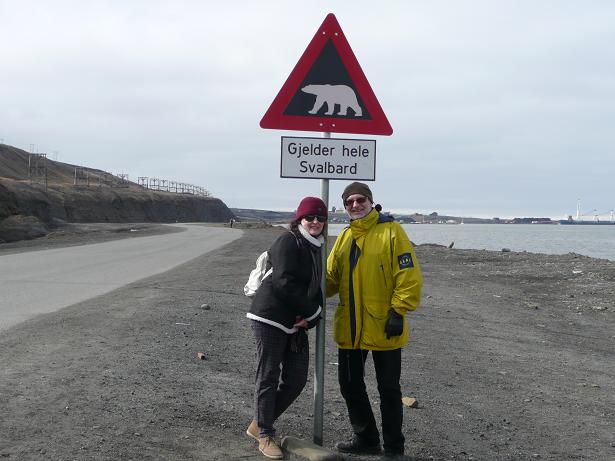
Longyearbyen’s motto is „unique, secure, and creative.” I think it’s very apt. Despite the place’s ugliness and the harsh conditions, I’d like to live here for a while. The town looks better at night…
Motto Longyearbyen to: „unique, secure and creative”. Myślę, że bardzo trafione. Mimo całej brzydoty tego miejsca i trudnych warunków chciałabym pomieszkać tu trochę. To miasto lepiej wygląda w nocy…
ok. 20:00
We set sail at 7:00 PM. Fog has once again enveloped the fjord. We are now heading south, towards the North Cape. We have 534 nautical miles to cover.
Odpłynęliśmy o 19:00. Mgła znowu ogarnęła fiord. Teraz płyniemy na południe, na Przylądek Północny. Do przepłynięcia 534 mile morskie.
Żegnaj Longyearbyen: / Bye Longyearbyen:
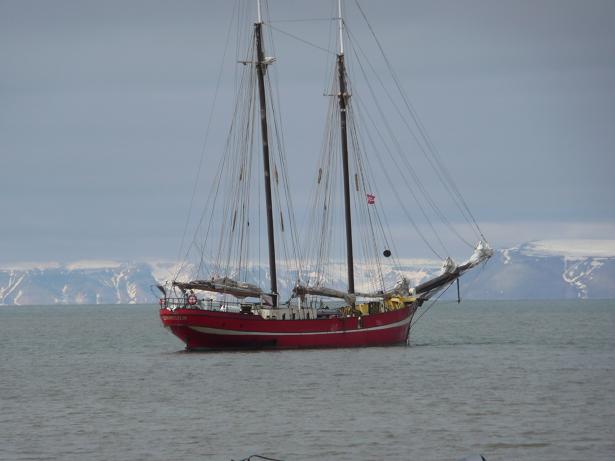
Isfjorden ends here; beyond lies only the Greenland Sea./ Tu kończy się Isfjorden, dalej tylko Morze Grenlandzkie.
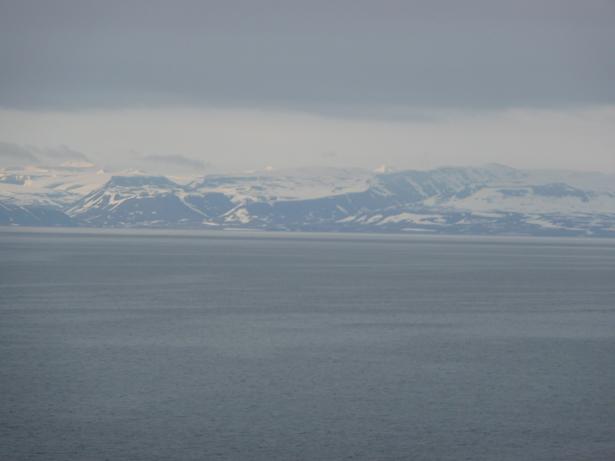
Further and further… Coraz dalej i dalej…
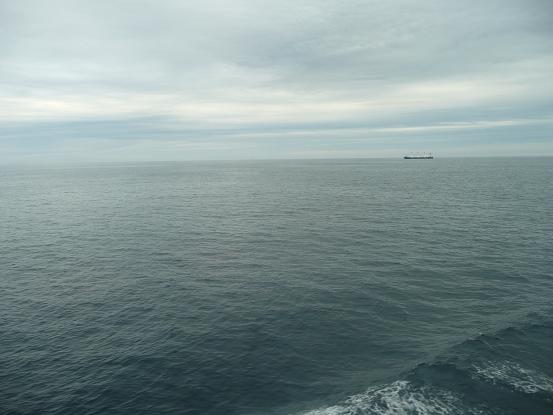
Good bye Svarbald / Żegnaj Svalbard:
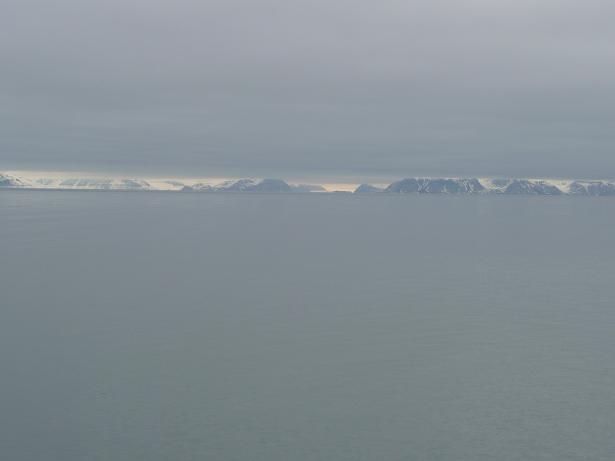
Goodbye Longyearbyen. Goodbye Spitsbergen. Goodbye Arctic. Honningsvåg lies ahead.

