
Poniedziałek, 18 czerwca / Monday, June 18
Słońce nad horyzontem / Sun above the horizon
Temperatura: zero / Temp. zero
Pozycja: Adventfjorden, archipelag Svalbard ( czyli „zimne wybrzeże”), wyspa Spitsbergen / Location: Adventfjorden, Svalbard archipelago (meaning „Cold Coast”), Spitsbergen Island
Ok. 6:30 / 6:30 a.m.
Przed 5 rano wpłynęliśmy do do fiordu Isfjorden o długości 107 kilometrów, co czyni go drugim co do wielkości fiordem na wyspie Spitsbergen. Chmury wiszą tak nisko, że nie widać szczytów nagich, stromych, czarnych gór. Powierzchnia wody jest gładka, czyli nie ma wiatru. Nawet ptaki się jeszcze nie obudziły, bo nie ma ani jednego. Chyba, że mają jakieś obfitsze poranne pastwiska.
Before 5 a.m., we sailed into Isfjorden—a 107-kilometer-long fjord, making it the second-largest on the island of Spitsbergen. The clouds hang so low that the peaks of the bare, steep, black mountains are invisible. The water’s surface is smooth, meaning there is no wind. Even the birds haven’t woken up yet; there isn’t a single one in sight—unless, of course, they have richer morning feeding grounds elsewhere.
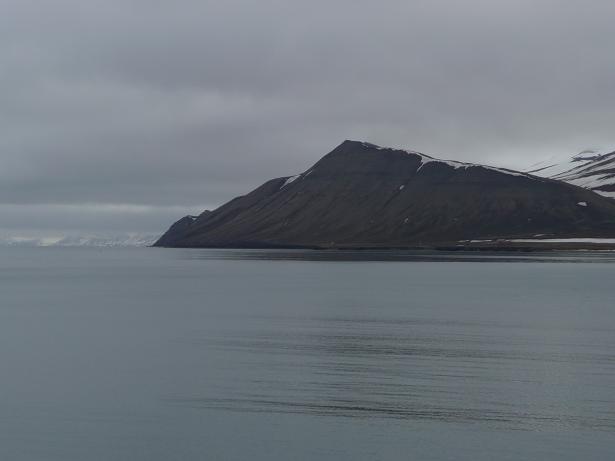
Ponure wody Isfjorden. Jest około 5 rano, wszyscy jeszcze śpią, ale na mostku ktoś czuwa?
The gloomy waters of Isfjorden. It is around 5 a.m.; everyone is still asleep, but is someone keeping watch on the bridge?
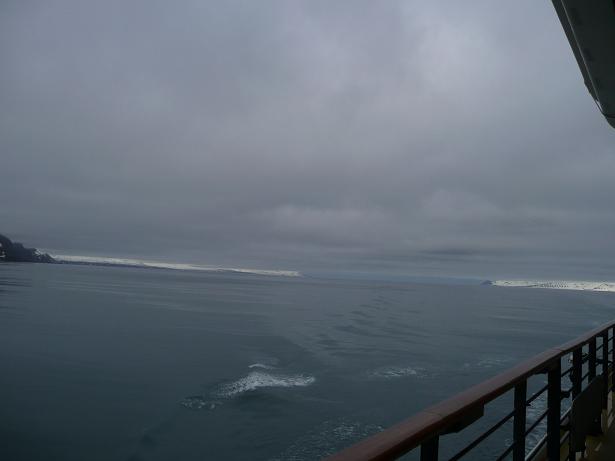
Strome zbocza Spitsbergenu: / The steep slopes of Spitsbergen:
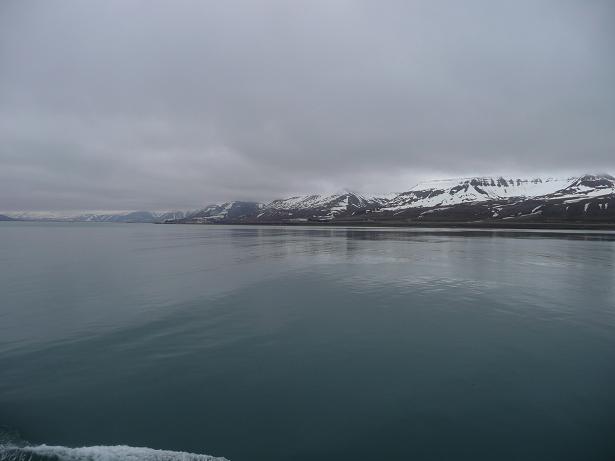
Mijamy małe przystanie kutrów i coś, co wygląda na manufaktury do przetwarzania ryb i małe doki. Jest bardzo cicho, jakbyśmy płynęli przez martwe wody. / We pass small fishing-boat moorings, what look like fish-processing workshops, and small docks. It is very quiet, as if we were sailing through dead waters.
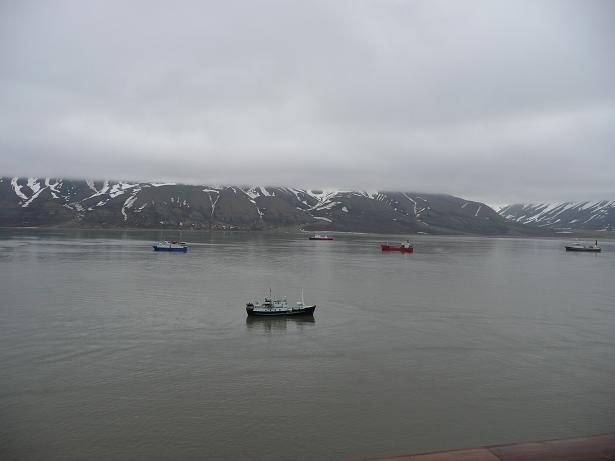
Zbliżamy się do portu Bykaia, Adventfjorden: / We are approaching the port of Bykaia, Adventfjorden:

Ciekawe jaką pogodę miał John Munroe Longyear, kiedy latem 1901 roku przybył jako turysta na Spitsbergen, gdzie właśnie odkryto pokłady węgla. John wraz z przyjacielem Frederickiem Ayer (teść gen. Pattona, notabene) kupili norweską firmę górniczą i w 1905 założyli Arctic Coal Company z siedzibą w Bostonie, Massachusetts. Górnicy pochodzący głównie z Norwegii i Szwecji, żyjąc w bardzo ciężkich warunkach wybudowali osadę, w której osiedliło się 500 osób. Potem osada, zwana Longyear City rozrosła się i dzisiaj jest centrum administracyjnym i handlowym z 2040 mieszkańcami, zatrudnionymi głównie w górnictwie węgla, w arktycznych ośrodkach akademickich i badawczych i przemyśle turystycznym. Teraz miasto nazywa się Longyearbyen i niedługo się w nim znajdziemy.
I wonder what the weather was like for John Munroe Longyear when he arrived as a tourist on Spitsbergen in the summer of 1901—just as coal deposits were being discovered there. John and his friend Frederick Ayer (incidentally, General Patton’s father-in-law) purchased a Norwegian mining company and, in 1905, established the Arctic Coal Company, headquartered in Boston, Massachusetts. Miners—primarily from Norway and Sweden—built a settlement where 500 people made their homes, enduring very harsh conditions. That settlement, originally known as Longyear City, subsequently expanded; today, it serves as an administrative and commercial hub with a population of 2,040, employed chiefly in coal mining, Arctic academic and research institutions, and the tourism industry. The town is now called Longyearbyen, and we will be arriving there shortly.
ok. 9:00 / 9 a.m.
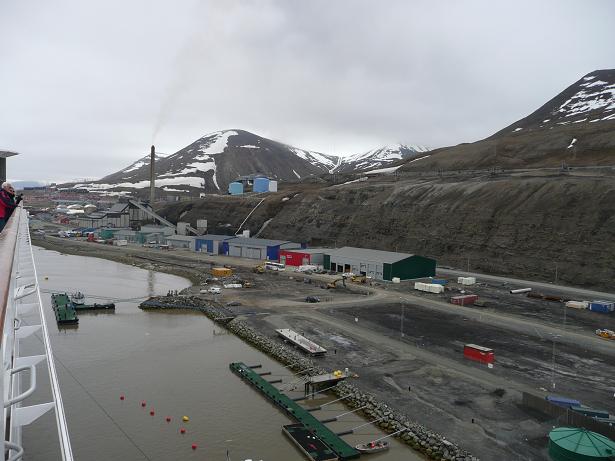
Właśnie przycumowaliśmy w porcie Bykaia w Adventfjorden. Byłam w wielu portach, ale ten jest jakiś… mały. I wydaje się… zabałaganiony. / We’ve just docked at the Bykaia port in Adventfjorden. I’ve been to many ports, but this one is sort of… small. And it seems… cluttered.
Na zboczu góry, przy której jest port widać słupy kolejki i wagoniki do transportu węgla. A swoją drogą… jeśli tu jest węgiel, to znaczy, że kiedyś musiały być tu wielkie drzewa i o wiele wyższe temperatury. Hm, czy ktoś na to już wpadł przede mną?
On the mountainside near the port, you can see the cableway pylons and the coal transport cars. And come to think of it… if there’s coal here, that means there must have once been huge trees and much higher temperatures. Hmm, has anyone else figured that out before me?
Mały kuter (?) ciągnie cumę naszego statku na brzeg: / A small cutter (?) is towing our ship’s mooring line to the shore:

Port z bliska. Właśnie zacumowaliśmy: / A close-up of the port. We’ve just docked:
Z okna na 10 pokładzie widzę też dwie budy dla psów. Kundelki leżą na dachach swoich domów i nie robi na nich wrażenia nasz okręt – znowu najwyższy budynek w mieście. Port wygląda na wymarły, czasem tylko podjeżdża jakaś furgonetka. Niedługo powinny pojawić się autokary, które mają nas zawieźć do centrum Longyearbyen. Cena biletu: 5$.
From the window on Deck 10, I can also see two dog kennels. Mongrels are lying on the roofs of their shelters, unimpressed by our ship—once again the tallest building in town. The port looks deserted; only the occasional van pulls up. The buses meant to take us to the center of Longyearbyen should be arriving soon. Ticket price: $5.
Zbig karmi fiordy, żeby mógł sie potem chwalić, że jadły mu z ręki: / Zbig feeds the fjords so he can later boast that they ate right out of his hand:

Przy okazji wypatrzyłam kogoś z załogi, kto wyprowadza małego, białego pieska na spacer. Już jakiś czas temu słyszałam szczekanie w części pokładu należącym do załogi, ale kiedy kogoś o to spytałam, to oczywiście zaprzeczył. Nie mówcie nic kapitanowi, a jeśli chodzi o mnie, to nie mam nic przeciwko zwierzętom na statku, pod warunkiem, że nie są to szczury.
While I was at it, I spotted a crew member taking a small white dog for a walk. I’d heard barking coming from the crew’s quarters a while back, but when I asked about it, the person naturally denied it. Don’t tell the captain; as for me, I don’t mind having animals on board—provided they aren’t rats.
10:00 a.m.
Zbig nakarmił fiord i nie pozostaje nam nic innego, jak wyruszyć. Słońce zaczyna znajdować sobie małe otworki w chmurach. To będzie piękny dzień. / Zbig has fed the fjord, and there is nothing left for us to do but set off. The sun is beginning to find small openings in the clouds. It’s going to be a beautiful day.
c.d.n / To be continued

