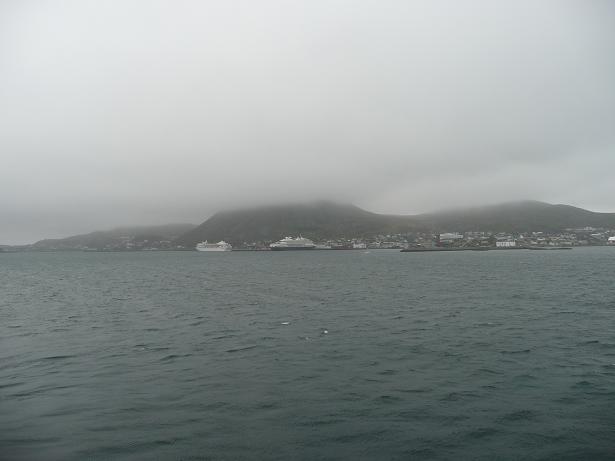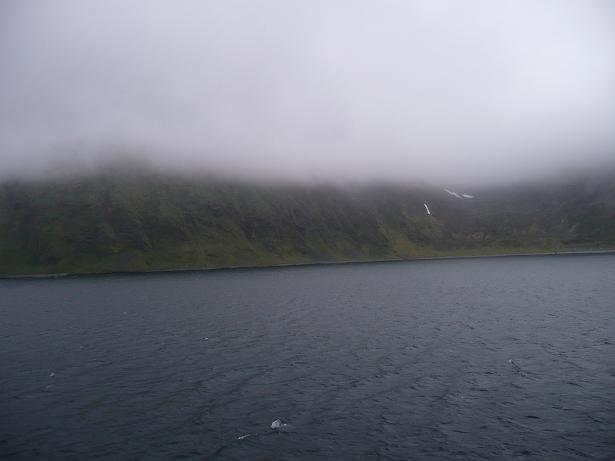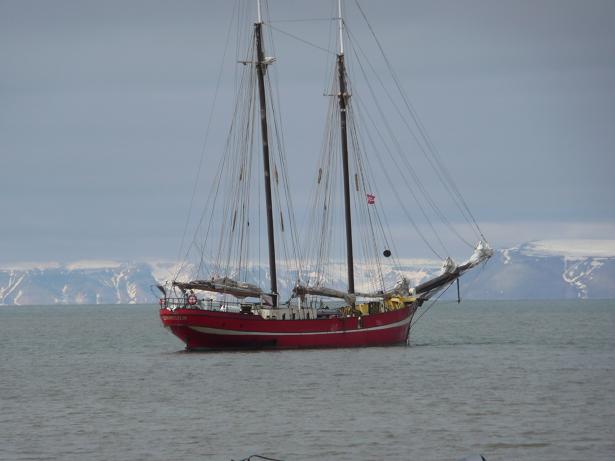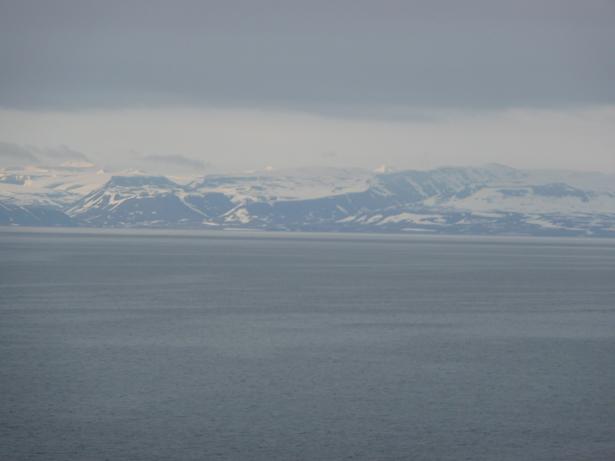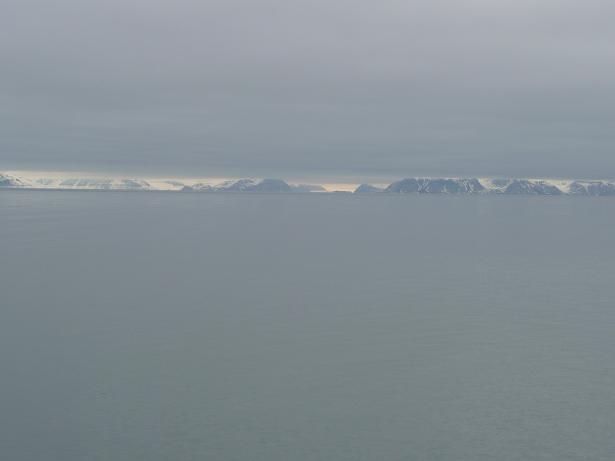

Even though it is warmer here than on Spitsbergen, it feels colder. It is the humidity—misty, cold, and grey—that is to blame. The greenery of the steep hills surrounding the town is lost within it.
Mimo że jest cieplej niż na Spitsbergenie, to jest zimniej. To sprawka wilgoci, mglistej, zimnej i szarej. Ginie w niej zieleń stromych wzgórz okalających miasteczko.
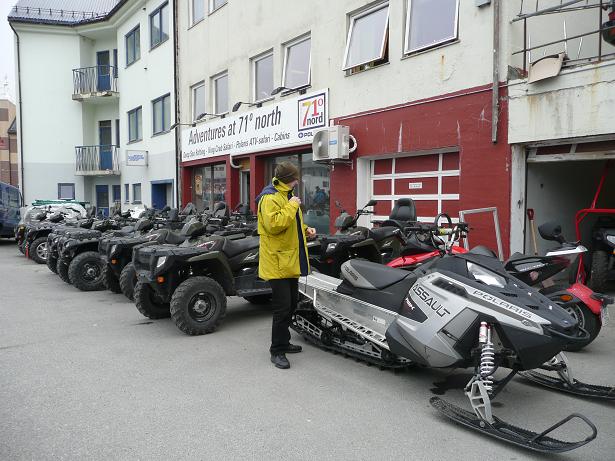
Z. admires marvels of motor sports—Ski-Doos (as they call them in Canada), and so on. The shop is called „Adventures at 71° North.” / Z. podziwia cuda motoryzacji – ski-doo (jak mówią w Kanadzie) itd. Sklep nazywa się „Przygody na 71* północ”.
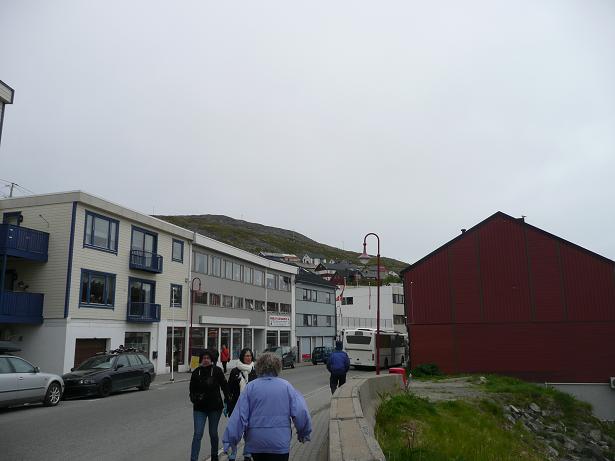
The tender boat docked at the pier right near the main street. Up close, Honningswåg doesn’t look quite so charming anymore. It is drab and grey, consisting of a single street riddled with potholes—reminiscent of Polish roads—and the colorful houses turn out not to be all that colorful after all. I may be nitpicking, but if a thousand ships packed with people arrive here during the season, and if just one in five visitors spends the equivalent of a mere five euros, that leaves at least five million euros in the settlement. For ten percent of that money, they could repair the plaster, patch the road, and paint over the unsightly stains on the walls—at least on the street-facing sides. Some windows feature pretty curtains and displays of flowers or figurines, while others are covered by old bedspreads and other hideous rags. The town could also invest in some greenery, given that the residents seem to cultivate nothing but weeds and assorted trash in their gardens.
Szalupa przybiła do pomostu prawie przy głównej ulicy. Z bliska Honningswåg nie wygląda już tak uroczo. Jest smutne i szare, składa się z jednej ulicy w której są dziury jak na polskich drogach, a kolorowe domki okazują się nie takie znów kolorowe. Czepiam się, ale jeśli przypływa tu w sezonie te 1000 statków wypełnionych ludźmi i jeśli co piąty z nich zostawi równowartość chociaż 5-ciu euro, to w tej osadzie zostaje co najmniej 5 milionów euro. Mogliby za 10 % tej kasy naprawić tynki, załatać drogę i pomalować paskudne plamy na murach chociaż od strony ulic(y). W niektórych oknach wiszą ładne firanki, stoją jakieś kwiatki czy figurki, a inne są zakryte jakimiś starymi narzutami i innymi paskudnymi szmatami. Miasto mogłoby też zainwestować w jakąś roślinność, bo mieszkańcy hodują w ogródkach chwasty i śmieci różnego pochodzenia.
The main street in Honningsvåg: / Główna ulica w Honnigsvag:
It seems like most residents couldn’t care less about aesthetics, and that really pisses me off, because this could genuinely be a lovely little town. Then again, maybe I’m just warped—spoiled by the breathtaking beauty of those German medieval gems, where every single detail is perfected to the nth degree. In this northern showcase of Norway, there’s precious little I’d call stunning.
Wygląda na to, że większość mieszkańców ma w dupie estetykę i strasznie mnie to wkurza, bo to naprawdę mogłoby być śliczne miasteczko. Ale może jestem spaczona i rozpieszczona przez zapierającą dech urodę niemieckich cudeniek średniowiecznej architektury, gdzie każdy szczegół jest dopieszczony do granic możliwości. A w tej północnej wizytówce Norwegii niewiele jest rzeczy, które uznałabym za zachwycające.
View from the hills surrounding Honningsvåg: / Widok ze wzgórz otaczających Honnigsvag:

On the other hand, right at the port, there is the Arctico Ice Bar; the alcohol there is the most expensive in the world, but everything is made from ice sourced from the lakes of Sápmi—the bar, sculptures, movie screen, fur-covered chairs, tables, and even the glasses. The ticket price includes a red thermal cape with a hood and two drinks—non-alcoholic ones, including one served in an ice glass that you cannot even keep as a souvenir.
Ale za to już w porcie mają tu Arctico Ice Bar, gdzie alkohol jest najdroższy na świecie, ale za to wszystko jest zrobione z lodu pochodzącego z jezior Sapmi: bar, rzeźby, ekran do filmów, krzesła przykryte skórami, stoliki, kieliszki… W cenę biletu wliczone jest: termiczne, czerwone ubranko w formie peleryny z kapturem i dwa drinki… bezalkoholowe, w tym jeden w szklance z lodu, której nawet nie można zabrać na pamiątkę.
INFO: Arctico Ice Bar is open: from April 1 to May 15, 11:00 AM – 4:00 PM. Between May 16 and 31: 10:00 AM – 7:00 PM. Between June 1 and August 15: 10:00 AM – 9:00 PM. Between August 16 and 31: 10:00 AM – 7:30 PM. From September 1 to October 10: 11:00 AM – 3:00 PM. The adult ticket price is 130 NOK.
INFO: Arctico Ice Bar jest otwarty: od 1 kwietnia do 15 maja w godz. 11 – 16. Między 16 a 31 maja: 10-19. Między 1 czerwca a 15 sierpnia: 10-21. Między 16 a 31 sierpnia: 10-19:30. Od 1 września do 10 października: 11-15. Cena biletu dla dorosłych to 130,- NOK.
We head right along the main street. We pass shops selling essentials for the locals, a few restaurants, and, of course, souvenir shops. Z. hates shopping, but since it’s bitterly cold, he graciously keeps me company—and discovers a beautiful, hand-woven blanket featuring stylized reindeer, but the price…
Idziemy główną ulicą w prawo. Mijamy sklepy z niezbędnymi dla mieszkańców rzeczami, kilka restauracji i oczywiście sklepy z pamiątkami. Z. nie cierpi łażenia po sklepach, ale ponieważ jest okropnie zimno, więc łaskawie towarzyszy mi i odkrywa przepiękny, ręcznie tkany koc w stylizowane renifery, ale cena…
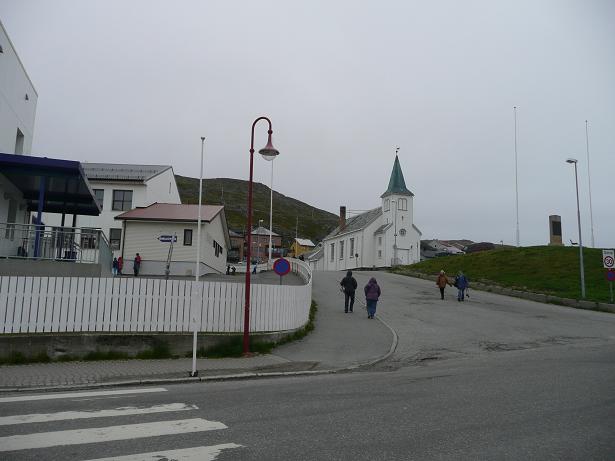
The „center” ends very quickly; the street grows narrower and more potholed. On the left stands a small white church, rebuilt after a fire during World War II.
„Centrum” kończy się szybciutko, ulica staje się węższa i bardziej dziurawa. Po lewej stronie stoi biały kościółek odbudowany po pożarze w czasie II wojny.
On the steep hillside, I spot a herd of grey-white creatures. / Na stromym stoku wzgórza dostrzegam stado siwobiałych stworzeń.
„Sheep!” I announce joyfully, for I am delighted by every live animal I encounter in its natural habitat.
– Owce! – oznajmiam radośnie, bo cieszy mnie każde napotkane żywe zwierzę w naturalnych warunkach.
„Sheep?” Zbig asks incredulously, his gaze following my finger as I point high up the hill.
– Owce? – nie dowierza Zbig, podążając wzrokiem za moim palcem, skierowanym wysoko na wzgórze.
„Not sheep?” A doubt crossed my mind, but then the synapses in my brain instantly connected with the right center. „Oh my god—reindeer!”
– Nie owce? – dopada mnie wątpliwość, ale zaraz synapsy w moim mózgu połączyły się z odpowiednim ośrodkiem. – O matko, renifery!
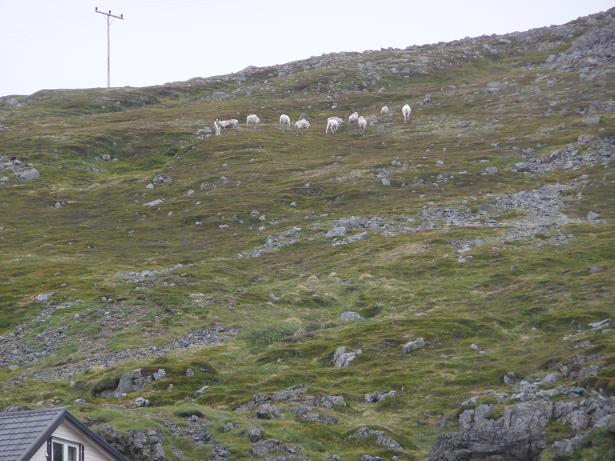
We leave the little church and the grazing herd behind and walk another kilometer to the edge of the town. The view of the bay is stunning—provided your gaze doesn’t snag on the nearby backyards (see above). The reindeer climbed to the top and soon disappeared, so that was the end of the show. We pass the marina and head in the opposite direction. Passing the port on our left, we reach the other end of town, where the landscape is wilder—and, unfortunately, the sidewalk comes to an end.
Zostawiamy kościółek i pasące się stado i idziemy kilometr dalej, aż na kraniec miasteczka. Widok na zatokę jest przepiękny, o ile nie zahacza się wzrokiem o przydomowe ogródki (patrz wyżej). Renifery wlazły na szczyt i wkrótce zniknęły, więc koniec atrakcji. Mijamy przystań i idziemy w drugą stronę. Po lewej mijamy port i dochodzimy na drugi kraniec miasta, gdzie jest bardziej dziko i niestety kończy się chodnik.
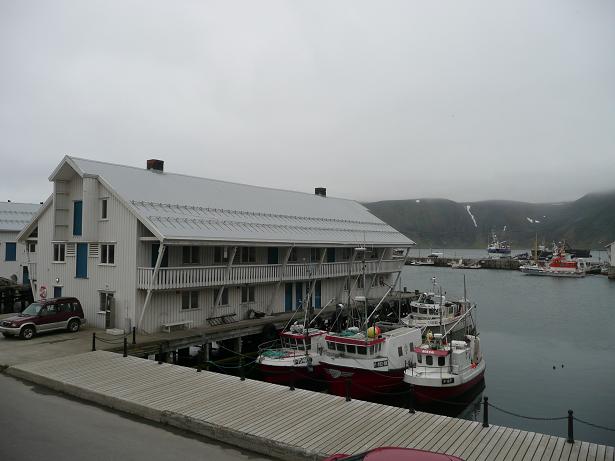
Since we don’t want to end up under the wheels of quad bikes and buses, we head to the port—a place of major attractions and unforgettable experiences. / Ponieważ my nie chcemy skończyć pod kołami quadów i autobusów, idziemy do portu – miejsca największych atrakcji i niezapomnianych wrażeń.

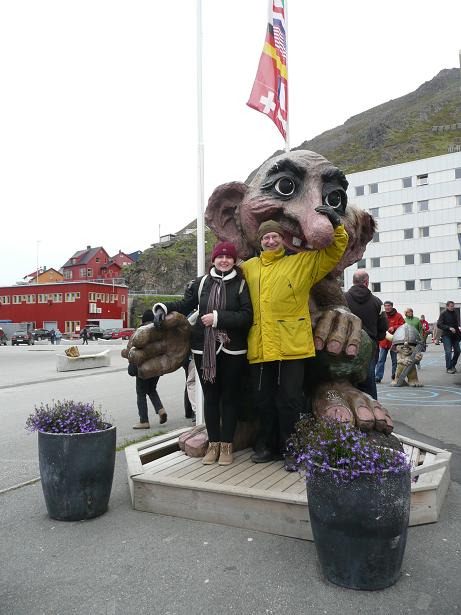
First and foremost, there is the museum, which features a single computer station. But never mind the museum! The port is teeming with trolls—creatures that presumably failed to hide from the daylight in time and turned to stone. And there they stand in the centers of many Norwegian towns, posing for tourists’ photos.
Przede wszystkim muzeum, gdzie jest jedno stanowisko z komputerem. Ale co tam muzeum! Port roi się od trolli, które zapewne nie zdążyły się schować przed światłem dnia i zamieniły się w kamień. I tak sobie stoją w centrum wielu norweskich miasteczek, dając się fotografować turystom.
And there is a monument to a legend—the heroic dog Bamse (1937 – July 22, 1944). / No i jest pomnik legendy – bohaterskiego psa Bamse (1937 – 22 lipiec 1944).
Bamse, a St. Bernard, was enlisted for service on the ship Thorodd alongside his owner, Captain Hafto, prior to the German invasion of Norway. The Thorodd was one of thirteen Norwegian vessels that escaped to Great Britain following Norway’s defeat. The ship spent the war stationed in Dundee, operating as a minesweeper. Bamse’s exploits were remarkable: he saved a drowning sailor and defended another from an attacker armed with a knife. He had a habit of breaking up fights between sailors—resting his paws on their shoulders and waiting for them to calm down before escorting them back to the ship—and would fetch sailors from local pubs when their watch was due to begin. He would take the city bus to more distant locations, and the crew had to chip in to buy him a monthly pass. The crew even fashioned a helmet for him, as he preferred to spend his time near the ship’s guns during voyages.
Bernardyn Bamse, (norweski Misiek) został powołany do służby na statku Thorodd wraz ze swoim panem, kapitanem Hafto przed inwazją niemiecką na Norwegię. Thorodd był jednym z 13 statków norweskiej floty, które po klęsce Norwegii zwiały do Wielkiej Brytanii. Wojnę statek spędził w Dundee, pływając jako trałowiec. Dokonania Bamse są niebagatelne: uratowanie tonącego marynarza, obrona innego przed napastnikiem uzbrojonym w nóż. Miał zwyczaj rozdzielania walczących marynarzy (opierał się łapami na ich ramionach i czekał, aż się uspokoją, a potem prowadził ich z powrotem na statek), zabierał z knajp marynarzy, którzy mieli zacząć wachtę. Do odleglejszych miejsc jeździł miejskim autobusem i załoga musiała się złożyć na bilet miesięczny dla niego. Załoga zrobił mu również hełm, ponieważ w czasie rejsów przebywał najchętniej przy działach.
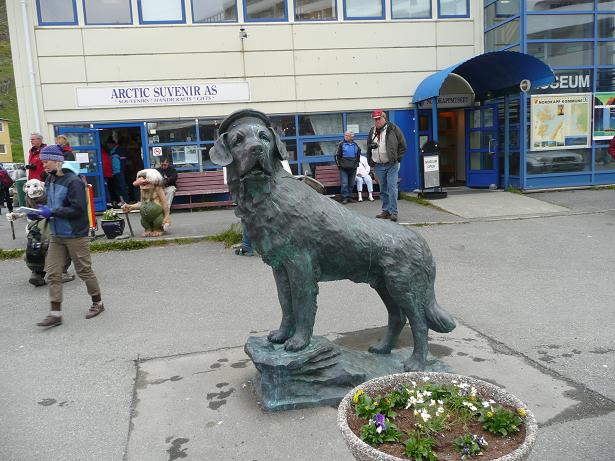
Bamse died of a heart attack in the port of Montrose, Scotland. Hundreds of Norwegian sailors, Allied soldiers, and residents of Dundee and Montrose bade him farewell with honors at his funeral. His photograph—showing him wearing a Royal Norwegian Navy sailor’s cap made especially for him—appeared on Christmas and Easter postcards sent to „lift spirits.”
Bamse zmarł na atak serca w porcie Montrose w Szkocji. Na pogrzebie żegnało go z honorami setki norweskich marynarzy, żołnierze alianccy, mieszkańcy Dundee i Montrose. Jego zdjęcie w zrobionej specjalnie dla niego marynarskiej czapce Royal Norwegian Navy znalazło się na bożonarodzeniowych i wielkanocnych pocztówkach wysyłanych „ku pokrzepieniu serc”.
The Bamse statue in Honningsvåg faces southwest, whereas his statue in Montrose looks northeast…Bamse na pomniku w Honningsvag patrzy na południowy-zachód, gdzie jego postać na pomniku w Montrose spogląda na północny-wschód…