Longyearbyen c.d

18 czerwca, poniedziałek 18th June, Monday

W Longyearbyen żyją i pracują bardzo specyficzni ludzie, którzy przez pół roku żyją w ciemnościach polarnej nocy, rozświetlanej tylko księżycem i zorzami polarnymi, a przez pół roku w 24-godzinnym blasku słońca. Wiele okien w domach jest zasłoniętych folią odblaskową, taką jaką stosuje się na przednich szybach samochodów w obronie przed słońcem.

The people who live and work in Longyearbyen are a unique breed; for half the year, they exist in the darkness of the polar night—illuminated only by the moon and the aurora—and for the other half, they live in the 24-hour glare of the sun. Many windows in the houses are covered with reflective foil, the kind used on car windshields to block out the sun.

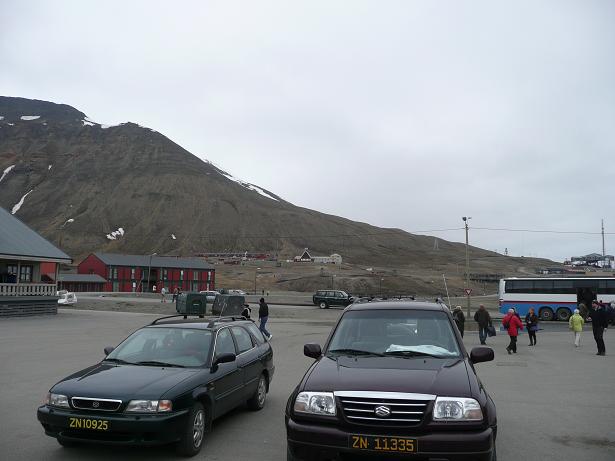
Prawie centrum Longyearbyen: / almost city center of Longyerbyen

Longyearbyen center

Wracając do mieszkańców miasta… Ich liczba to około 2040 osób. 40% to Norwegowie, a około 16% to Tajlandczycy (lub Tajowie, niespodzianka), Szwedzi, Duńczycy, Niemcy i Rosjanie. Polaków naliczono 10-ciu (dane z 2010). 60% to mężczyźni, a przedział wiekowy to średnio 25 – 44 lat i prawie nie ma osób powyżej 66-go roku życia. Ciekawe jest to, że średnia długość pobytu w mieście to 4,3 roku dla obcokrajowców i 6,6 dla Norwegów. I kto tu jest Wikingiem?

Returning to the town’s residents… The population stands at around 2,040 people. 40% are Norwegian, while about 16% are Thai (or Thais—surprise!), Swedes, Danes, Germans, and Russians. Ten Poles were recorded (2010 data). 60% are men; the average age range is 25–44, and there are almost no residents over the age of 66. Interestingly, the average length of stay in the town is 4.3 years for foreigners and 6.6 years for Norwegians. So, who’s the Viking here?

Smutne jest to, że średnio w gospodarstwie domowym żyje 1,6 osoby. Muszą być nieźle samotni… Za to są bardzo wyedukowani – 54 procent z nich ma wyższe wykształcenie. Średnia kobiet to 40% z wyższym wykształceniem. 

It is sad that the average household consists of 1.6 people. They must be quite lonely… On the other hand, they are highly educated—54 percent of them hold a university degree. The figure for women is 40%.

Wszyscy ci samotni, mądrzy i młodzi ludzie mieszkają w dwupiętrowych domach-blokach, trochę przypominających baraki, lub w jednopiętrowych chatach. Niektóre są pomalowane na kolor bordowy, inne na niebiesko, jeszcze inne na zielono. Nie są radosnymi plamami rozświetlającymi krajobraz. Są ponure i czasem prawie ich nie widać na tle ciemnej ziemi. Zimą na pewno wyglądają lepiej, kiedy wokół jest jasno od śniegu i światła księżyca w pełni.

All these solitary, intelligent young people live in two-story apartment blocks—resembling barracks—or in single-story cottages. Some are painted burgundy, others blue, and still others green. They are not cheerful splashes of color brightening the landscape; rather, they are somber, sometimes barely visible against the dark earth. They surely look better in winter, when the surroundings are illuminated by snow and the light of a full moon.

Domek jednorodzinny w Longyearbyen: / One-familly house in Longyearbyen:

Typical house in Longyearbyen

Wszystkie domy stoją na palach. Nie takich jak w Wenecji, bo są krótsze i nie tak grube, ale nie da się tego ukryć  – stoją na palach. Te „fundamenty” są sprytnie osłonięte drewnianymi deskami, ale i tak można zobaczyć wodę, w której te pale stoją. Nie dziwię się – przy wielkich ilościach wody, jaka wiosną spływa z lodowców nie ma mowy o trzymaniu kompotu i ziemniaków w piwnicy.

All the houses stand on piles. Not like the ones in Venice—these are shorter and not as thick—but there is no denying it: they stand on piles. These „foundations” are cleverly screened by wooden planks, yet you can still see the water the piles are standing in. It’s no surprise—given the massive volume of water flowing down from the glaciers in spring, there is no way to store fruit compote or potatoes in a cellar.

Domy na palach: / Houses on piles:
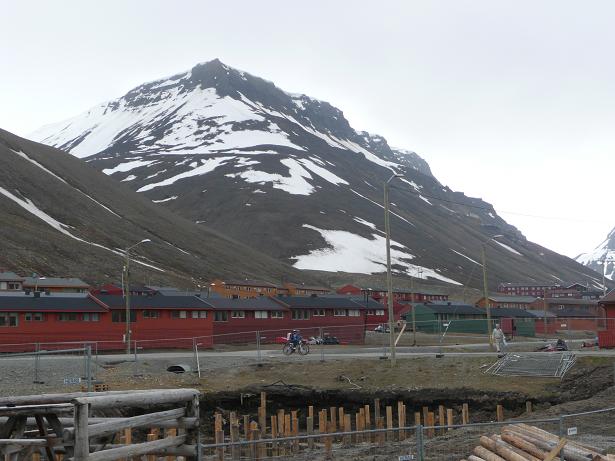
Houses on stilts – Longyearbyen

INFO: hotele w Longyearbyen nie są tanie. Najtańszy pokój dwuosobowy to około 950 pln, na szczęście ze śniadaniem. Średnio trzeba zapłacić 1500 pln, ale droższe też się znajdą. Hotele są tak nieliczne, że nie muszą się obawiać konkurencji, ale też nie narzekają na brak gości, więc czasem lepiej rezerwować z wyprzedzeniem.

INFO: Hotels in Longyearbyen aren’t cheap. The cheapest double room costs around 950 PLN—fortunately, that includes breakfast. You’ll pay an average of 1,500 PLN, though pricier options are available too. There are so few hotels that they face little competition, yet they certainly don’t lack guests, so it’s often best to book in advance.

CIEKAWOSTKA: niedaleko Longyearbyen jest niesamowite miejsce: Svalbard Global Seed Vault, czyli Globalny Bank Nasion. W tunelu wydrążony w wiecznej zmarzlinie umieszczonych jest 20 milionów jadalnych nasion. Przechowywane są na wypadek globalnego kryzysu, choć jeśli kryzys byłby naprawdę globalny, to nikt do tych nasion nie dotrze, nie mówiąc już o ich posadzeniu. Budowa rozpoczęła się w czerwcu 2006 roku. Placówka została sfinansowana przez rząd Norwegii. Wiele państw wysyła tu „swoje” nasiona, a za ich przechowywanie nie pobiera się opłat. Ziarenka mogą w tych warunkach wytrzymać nawet tysiące lat.

FUN FACT: Near Longyearbyen lies an amazing place—the Svalbard Global Seed Vault. Housed in a tunnel carved into the permafrost are 20 million edible seeds. They are stored there for a potential global crisis, though if such a crisis were truly global, no one would be able to reach the seeds—let alone plant them. Construction began in June 2006, and the facility was funded by the Norwegian government. Many countries send „their” seeds here, and no fees are charged for storage. Under these conditions, the seeds can remain viable for thousands of years.

c.d.n. / to be continued
Dzika północ, czyli Longyearbyen – The Wild North: Longyearbyen

Pozycja: 78 stopni 13 minut nord / Position: 78 degrees 13 minutes North

tempertura: 3 stopnie C / temp 3 degrees C

ok. 16:00 / 4 p.m.

Z portu do miasta jest około 2 km. Szkoda, że nie wiedzieliśmy o tym wcześniej, bo zaoszczędzilibyśmy 10 dolców. Ale dla kogoś, kto ma ciężką astmę przebycie tej drogi pieszo jest niewskazane – może zostać zabity przez kurz. Kurzy się zewsząd: ze skalistych, czarno-brunatnych zboczy, z poboczy wysypanych żwirem i małymi kawałkami węgla, z okolicznych „łąk”, które porastają suche trawki, którymi mogłyby się nakarmić tylko wielbłądy, bo co do reniferów nie jestem pewna. Wzdłuż drogi stoją dziesiątki piętrowych baraków o nieciekawej architekturze, która niestety dominuje w szaro-brązowym krajobrazie. W budynkach mieszczą się firmy, a przed budynkami panuje bałagan – porozrzucane drewniane belki drewniane, porzucone betonowe słupy, pojemniki na oleje i inne substancje płynne, jakieś beczki, kontenery na śmieci… Wiem, że tu się pracuje, ale naprawdę nikomu nie zależy?

It is about 2 km from the port to the town. It’s a pity we didn’t know that before; we could have saved ten bucks. However, walking that distance is ill-advised for someone with severe asthma—the dust could kill them. Dust rises from everywhere: from the rocky, black-and-brown slopes; from verges strewn with gravel and small chunks of coal; and from the surrounding „meadows,” overgrown with dry grasses that only camels could stomach—though I’m not so sure about reindeer. Dozens of multi-story barracks line the road, featuring the drab architecture that unfortunately dominates this gray-brown landscape. These buildings house various businesses, yet the area in front of them is a mess: scattered wooden beams, abandoned concrete pillars, containers for oil and other liquids, assorted barrels, trash bins… I know work goes on here, but does no one really care?

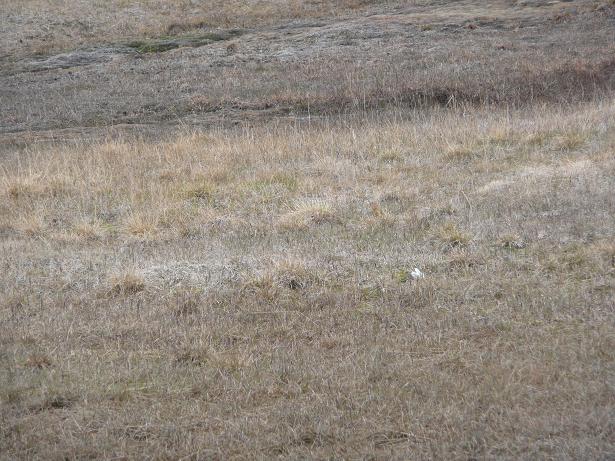
Wiosenne łąki. To malutkie, białe to ptak: / Spring meadows. That tiny white thing is a bird:

Little, white bird on spring meadows – Longyearbyen

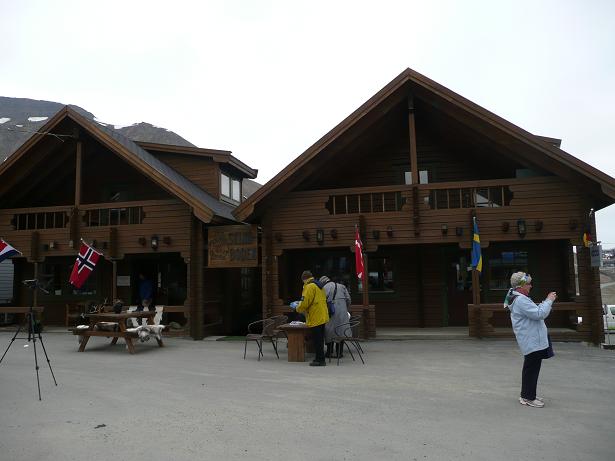
Docieramy do centrum Longyearbyen. Robi wrażenie, choć nie mogę się zdecydować jakie to wrażenie. Po pierwsze brak zieleni, nie licząc zieleni drewnianych domów. Skąd biorą drewno na budowę, skoro nie rośnie tu nic oprócz porostów? Chyba jednak wszystko muszą sprowadzać, oprócz skór reniferów, które leżą biedne na stołach i ławach przed sklepami. Myślę, że te sklepy z pamiątkami to pamiątki po reniferach.

We reach the center of Longyearbyen. It makes an impression, though I can’t quite decide what kind. For one thing, there is no greenery—unless you count the green paint on the wooden houses. Where do they get the wood for building when nothing grows here but lichen? I suppose they have to import everything—except for the reindeer hides, which lie forlornly on tables and benches outside the shops. I think these souvenir shops are actually memorials to the reindeer.

Sklepy, sklepy na głównej ulicy w Longyearbyen / Shops, shops on the main street in Longyearbyen.

Main street in Longyearbyen

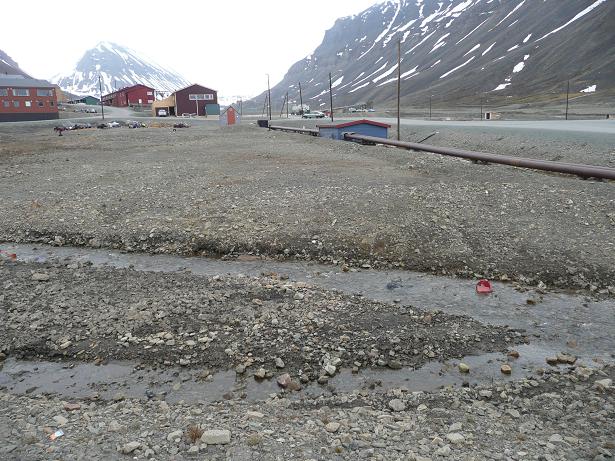
Przez miasteczko płynie strumień, zwany Longyearelva – teraz zamieniony w cienką stróżkę, w której walają się plastikowe odpadki, papiery, a obok biegną niczym nie osłonięte rury. Nie robi to dobrego wrażenia, chyba, że ktoś bardzo, bardzo lubi przemysłowe krajobrazy.  

A stream known as the Longyearelva flows through the town—now reduced to a thin trickle littered with plastic waste and paper, with exposed pipes running alongside it. It does not make a good impression, unless one is very, very fond of industrial landscapes.

Nie wiem co powiedzieć: / I don’t know what to say:

City center, Longyearbyen

Po drugiej stronie strumienia, w stronę portu, na niewielkim wzgórzu jest słynny kościół. Nie ma wspaniałych renesansowych malowideł czy rzeźb, nie ma wielkich organów i żaden wielki król nie został tu namaszczony. Jest skromny, surowy (można? można!) i od ponad 70 lat jest najbardziej wysuniętym kościołem na północ. I pewnie tak zostanie.

On the other side of the stream, towards the harbor, a famous church stands on a small hill. It boasts no magnificent Renaissance paintings or sculptures, no grand organ, and no great king was ever anointed here. It is modest and austere—proof that simplicity works—and for over 70 years, it has held the title of the northernmost church. And it likely always will.

Centrum Longyearbyen. W oddali kościół: / Longyearbyen city center. Church in the distance:

Longyearbyen center with famous church in the distance

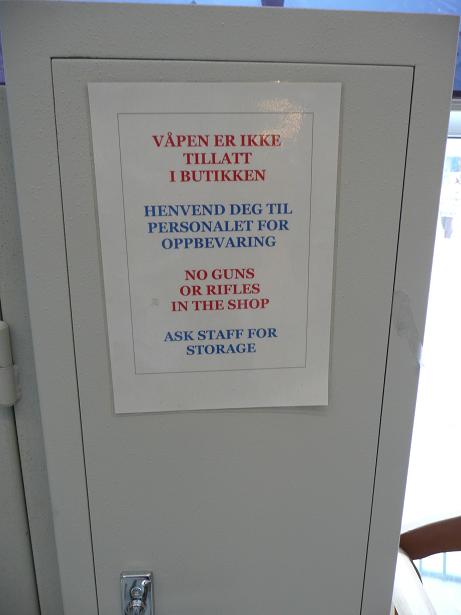
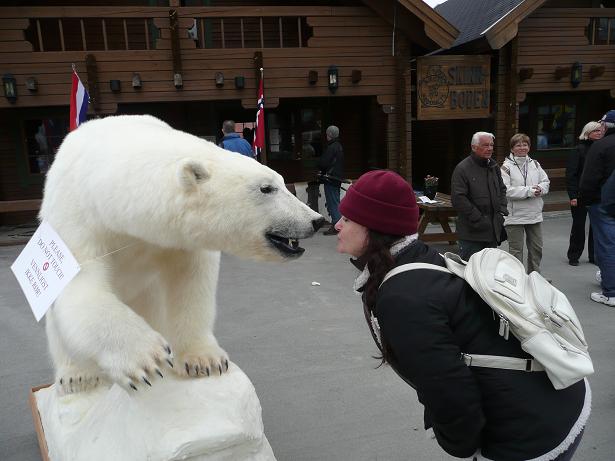
No i jest wielki niedźwiedź polarny, z którym każdy turysta robi sobie zdjęcie. Powiedziano nam, że w razie spotkania z prawdziwym niedźwiedziem raczej nie musimy uciekać – i tak nas dogoni i zabije. Wiele osób nosi broń, w tym długie karabiny z wąską lufą.

And then there’s the huge polar bear that every tourist takes a photo with. We were told that if we were to encounter a real bear, there’s really no point in trying to run—it would catch and kill us anyway. Many people carry weapons, including long-barreled rifles.

Napis w tutejszym supermarkecie: / A sign in the local supermarket:

In the local supermarket

Właściwie przestrzegają przed wychodzeniem z miasta bez broni odstraszającej niedźwiedzie i bez doświadczenia pozwalającego tej broni użyć. Zamierzam bardzo przestrzegać tych zaleceń.

They strongly advise against leaving town without a bear deterrent and the experience needed to use it. I intend to strictly follow these recommendations.

Słodki miś, który gdyby był żywy, pożarłby mnie z kościami: / A cute bear that, if it were alive, would devour me whole—bones and all:

I kissed a bear. Polar bear

W sklepach są głównie pamiątki: oprócz skór i rogów można kupić wyroby z wełny, polarne kurtki, nie polarne piżamy, straszliwe drzeworyty z sylwetkami zwierząt i inne rzeczy niezbędne do ekspedycji na Biegun Północny. Ceny są kosmiczne, ale satysfakcja z kupienia czegoś na Spitsbergenie – bezcenna. W dodatku wszystko „made in Norway”.

The shops mostly stock souvenirs: alongside hides and antlers, you can buy wool products, fleece jackets, non-fleece pajamas, ghastly woodcuts featuring animal silhouettes, and other essentials for a North Pole expedition. The prices are astronomical, but the satisfaction of buying something on Spitsbergen is priceless. Plus, everything is „Made in Norway.”

INFO: sklepy z pamiątkami są otwarte od 10:00 do 17:00, w soboty od 10:00 do 14:00, ale mogą być otwarte np. tylko od 1 czerwca do 15 sierpnia. Jeden z największych sklepów, Svalbardbutikken jest otwarty od 10:00 do 20:00, w sobotę do 18:00, w niedzielę od 15:00 do 18:00 przez cały rok.

INFO: Souvenir shops are open from 10:00 to 17:00 (and from 10:00 to 14:00 on Saturdays), though some may only be open, for example, from June 1st to August 15th. One of the largest shops, Svalbardbutikken, is open year-round: from 10:00 to 20:00 (until 18:00 on Saturdays) and from 15:00 to 18:00 on Sundays.

Na głównej ulicy, jak na każdej głównej ulicy mieszczą się najważniejsze instytucje konieczne do funkcjonowania miasteczka. Puby są na pewno, jest też kilka restauracji. W barze można zjeść najdalej wysuniętą na północ pizze albo kebab, w restauracji – norweską czarną gęś, lub pulpety z renifera. 

The main street—like any main street—is home to the key institutions essential for the town’s functioning. There are certainly pubs, as well as a few restaurants. At a bar, you can eat the northernmost pizza or kebab, while at a restaurant, you might have Norwegian black goose or reindeer meatballs.

Jest też bank, biblioteka, przedszkole ze smutnymi słoneczkami wymalowanymi na szybach. Naprzeciwko remiza strażacka. Na wschodnim skraju jest wyciąg narciarski, latem nieczynny z wiadomych względów.

There is also a bank, a library, and a kindergarten with sad suns painted on the windows. Opposite stands the fire station. At the eastern edge, there is a ski lift—closed in summer for obvious reasons.

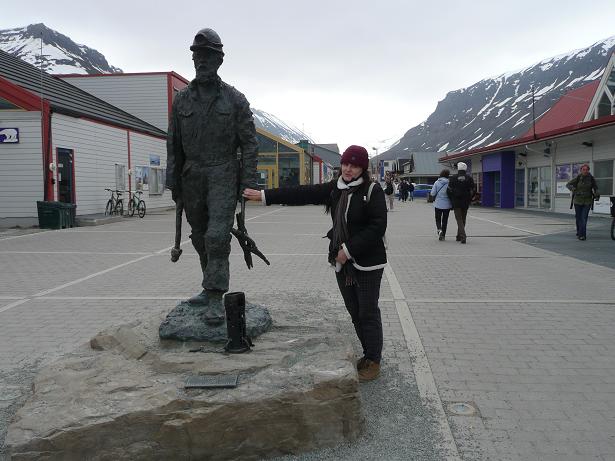
Przy głównej ulicy jest też pomnik górnika – nie jakiś monument, ale niewielka postać zmęczonego człowieka, który z kilofem w ręku wraca do domu. 

On the main street, there is also a statue of a miner—not a grand monument, but a small figure of a weary man returning home with a pickaxe in his hand.

Statue of coal miner – main street in Longyearbyen

c.d.n. / to be continued

Bykaia, czyli wrota Spitsbergenu – Bykaia or the gate to Spitsbergen

Poniedziałek, 18 czerwca / Monday, June 18

Słońce nad horyzontem / Sun above the horizon

Temperatura: zero / Temp. zero

Pozycja: Adventfjorden, archipelag Svalbard ( czyli „zimne wybrzeże”), wyspa Spitsbergen / Location: Adventfjorden, Svalbard archipelago (meaning „Cold Coast”), Spitsbergen Island

Ok. 6:30 / 6:30 a.m.

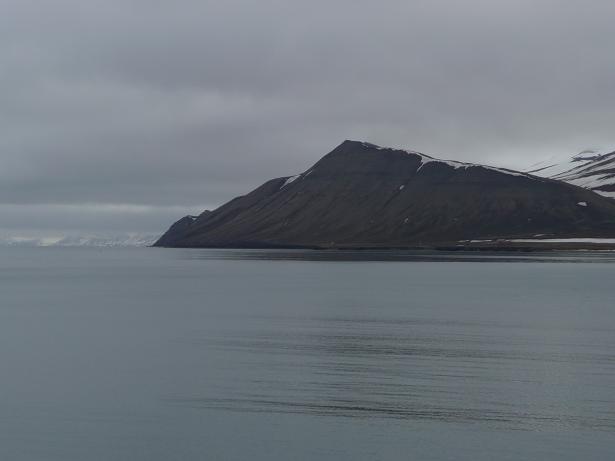
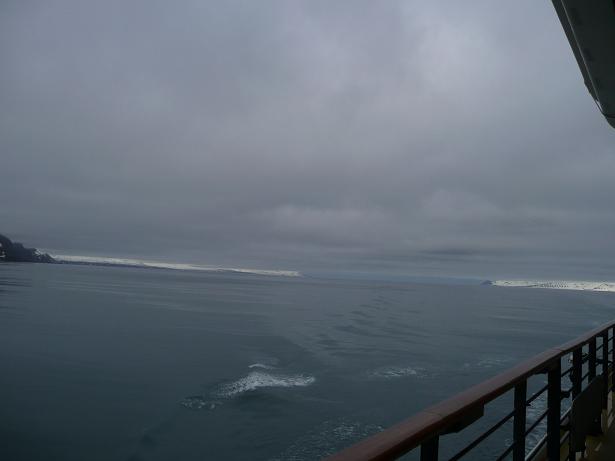
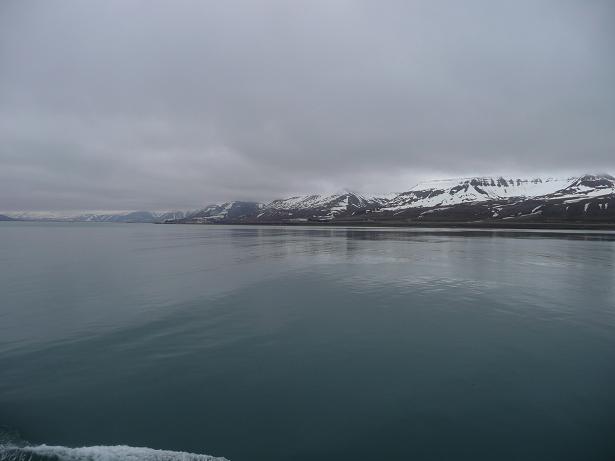
Przed 5 rano wpłynęliśmy do do fiordu Isfjorden o długości 107 kilometrów, co czyni go drugim co do wielkości fiordem na wyspie Spitsbergen. Chmury wiszą tak nisko, że nie widać szczytów nagich, stromych, czarnych gór. Powierzchnia wody jest gładka, czyli nie ma wiatru. Nawet ptaki się jeszcze nie obudziły, bo nie ma ani jednego. Chyba, że mają jakieś obfitsze poranne pastwiska.

Before 5 a.m., we sailed into Isfjorden—a 107-kilometer-long fjord, making it the second-largest on the island of Spitsbergen. The clouds hang so low that the peaks of the bare, steep, black mountains are invisible. The water’s surface is smooth, meaning there is no wind. Even the birds haven’t woken up yet; there isn’t a single one in sight—unless, of course, they have richer morning feeding grounds elsewhere.

Ponure wody Isfjorden. Jest około 5 rano, wszyscy jeszcze śpią, ale na mostku ktoś czuwa?

The gloomy waters of Isfjorden. It is around 5 a.m.; everyone is still asleep, but is someone keeping watch on the bridge?

5 a.m., Isfjorden.

Strome zbocza Spitsbergenu: / The steep slopes of Spitsbergen:

Spitsbergen and it’s steep hills

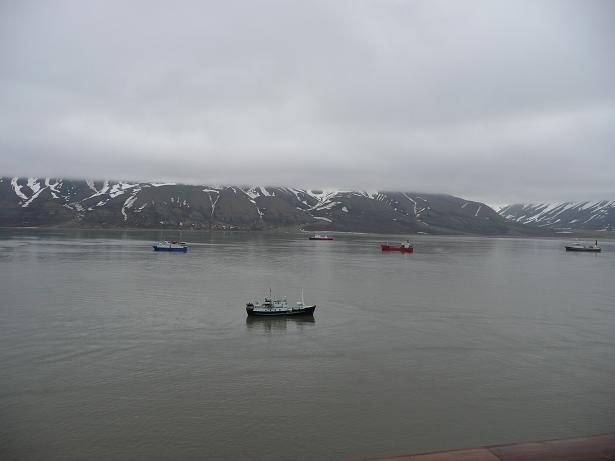
Mijamy małe przystanie kutrów i coś, co wygląda na manufaktury do przetwarzania ryb i małe doki. Jest bardzo cicho, jakbyśmy płynęli przez martwe wody. / We pass small fishing-boat moorings, what look like fish-processing workshops, and small docks. It is very quiet, as if we were sailing through dead waters.

Trawlers in Adventfjorden

Zbliżamy się do portu Bykaia, Adventfjorden: / We are approaching the port of Bykaia, Adventfjorden:

Port Bykaia, the gate of Spitsbergen

Ciekawe jaką pogodę miał John Munroe Longyear, kiedy latem 1901 roku przybył jako turysta na Spitsbergen, gdzie właśnie odkryto pokłady węgla. John wraz z przyjacielem Frederickiem Ayer (teść gen. Pattona, notabene) kupili norweską firmę górniczą i w 1905 założyli Arctic Coal Company z siedzibą w Bostonie, Massachusetts. Górnicy pochodzący głównie z Norwegii i Szwecji, żyjąc w bardzo ciężkich warunkach wybudowali osadę, w której osiedliło się 500 osób. Potem osada, zwana Longyear City rozrosła się i dzisiaj jest centrum administracyjnym i handlowym z 2040 mieszkańcami, zatrudnionymi głównie w górnictwie węgla, w arktycznych ośrodkach akademickich i badawczych i przemyśle turystycznym. Teraz miasto nazywa się Longyearbyen i niedługo się w nim znajdziemy.

I wonder what the weather was like for John Munroe Longyear when he arrived as a tourist on Spitsbergen in the summer of 1901—just as coal deposits were being discovered there. John and his friend Frederick Ayer (incidentally, General Patton’s father-in-law) purchased a Norwegian mining company and, in 1905, established the Arctic Coal Company, headquartered in Boston, Massachusetts. Miners—primarily from Norway and Sweden—built a settlement where 500 people made their homes, enduring very harsh conditions. That settlement, originally known as Longyear City, subsequently expanded; today, it serves as an administrative and commercial hub with a population of 2,040, employed chiefly in coal mining, Arctic academic and research institutions, and the tourism industry. The town is now called Longyearbyen, and we will be arriving there shortly.

ok. 9:00 / 9 a.m.

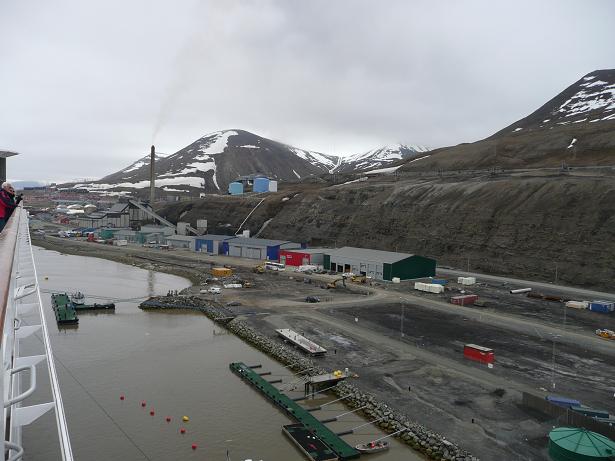
Właśnie przycumowaliśmy w porcie Bykaia w Adventfjorden. Byłam w wielu portach, ale ten jest jakiś… mały. I wydaje się… zabałaganiony. / We’ve just docked at the Bykaia port in Adventfjorden. I’ve been to many ports, but this one is sort of… small. And it seems… cluttered.

Na zboczu góry, przy której jest port widać słupy kolejki i wagoniki do transportu węgla. A swoją drogą… jeśli tu jest węgiel, to znaczy, że kiedyś musiały być tu wielkie drzewa i o wiele wyższe temperatury. Hm, czy ktoś na to już wpadł przede mną?

On the mountainside near the port, you can see the cableway pylons and the coal transport cars. And come to think of it… if there’s coal here, that means there must have once been huge trees and much higher temperatures. Hmm, has anyone else figured that out before me?

Mały kuter (?) ciągnie cumę naszego statku na brzeg: / A small cutter (?) is towing our ship’s mooring line to the shore:

Small ship is draging a rope for moor our ship

Port z bliska. Właśnie zacumowaliśmy: / A close-up of the port. We’ve just docked:

Z okna na 10 pokładzie widzę też dwie budy dla psów. Kundelki leżą na dachach swoich domów i nie robi na nich wrażenia nasz okręt – znowu najwyższy budynek w mieście. Port wygląda na wymarły, czasem tylko podjeżdża jakaś furgonetka. Niedługo powinny pojawić się autokary, które mają nas zawieźć do centrum Longyearbyen. Cena biletu: 5$.

From the window on Deck 10, I can also see two dog kennels. Mongrels are lying on the roofs of their shelters, unimpressed by our ship—once again the tallest building in town. The port looks deserted; only the occasional van pulls up. The buses meant to take us to the center of Longyearbyen should be arriving soon. Ticket price: $5.

Zbig karmi fiordy, żeby mógł sie potem chwalić, że jadły mu z ręki: / Zbig feeds the fjords so he can later boast that they ate right out of his hand:

Zbig and fjord

Przy okazji wypatrzyłam kogoś z załogi, kto wyprowadza małego, białego pieska na spacer. Już jakiś czas temu słyszałam szczekanie w części pokładu należącym do załogi, ale kiedy kogoś o to spytałam, to oczywiście zaprzeczył. Nie mówcie nic kapitanowi, a jeśli chodzi o mnie, to nie mam nic przeciwko zwierzętom na statku, pod warunkiem, że nie są to szczury.

While I was at it, I spotted a crew member taking a small white dog for a walk. I’d heard barking coming from the crew’s quarters a while back, but when I asked about it, the person naturally denied it. Don’t tell the captain; as for me, I don’t mind having animals on board—provided they aren’t rats.

10:00 a.m.

Zbig nakarmił fiord i nie pozostaje nam nic innego, jak wyruszyć. Słońce zaczyna znajdować sobie małe otworki w chmurach. To będzie piękny dzień. / Zbig has fed the fjord, and there is nothing left for us to do but set off. The sun is beginning to find small openings in the clouds. It’s going to be a beautiful day.

c.d.n / To be continued
Dalej na północ, czyli najlepsza miejscówka na świecie – Further north – the best spot in the world

17 czerwca, niedziela / Sunday, June 17

Słońce nad horyzontem / The sun above the horizon

Temperatura: 10 stopni / Temp. 10 degrees

Pozycja: na zachodzie jesteśmy na tym samym równoleżniku, co południowe wybrzeża Grenlandii. Na wschodzie, daleko, daleko, około 2000 mil mijamy straszliwą Workutę. / Position: in the west, we are at the same latitude as the southern coast of Greenland. To the east—far, far away, some 2,000 miles off—we pass the dreaded Vorkuta.
Ok. 10:00 / 10 a.m.

Całą noc wiatr uderzał w statek, który trzeszczał i kołysał się, wywołując niepokój u szczurów lądowych. Nie jest to sztorm, ale fale są wyższe niż w poprzednie dni. Z mapy wynika, że jesteśmy między Morzem Grenlandzkim a Morzem Barentsa, czyli gdzieś pośrodku Oceanu Arktycznego. 

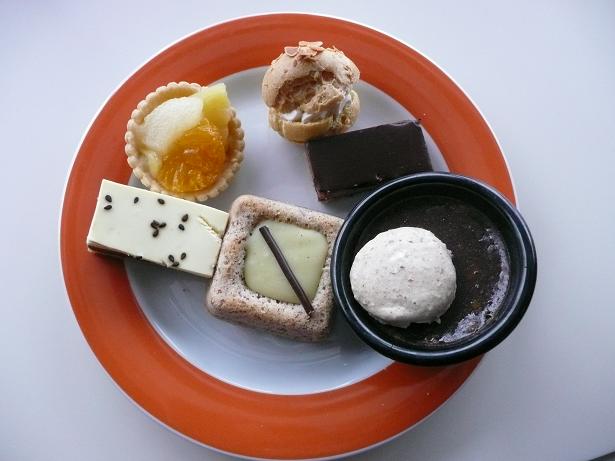
Na horyzoncie pustka – ani skał, ani okrętów, ani platform wiertniczych. Widziałam mewę latającą tuż nad falami, ale ona chyba mieszka na statku i wędruje sobie z nami po świecie. Jest szaro, chmury wiszą nisko, a nastroje może poprawić tylko obfite i pyszne jedzenie. Tego na szczęście nam tu nie brakuje. I nie mogę się oprzeć tym małym, cukierniczym cudeńkom, z których każde ma inny smak…
All night long, the wind battered the ship; it creaked and swayed, unsettling the landlubbers. It isn’t a storm, but the waves are higher than in previous days. The map shows we are between the Greenland Sea and the Barents Sea—somewhere in the middle of the Arctic Ocean. An empty horizon—no rocks, no ships, no oil rigs. I spotted a seagull flying just above the waves, though it likely lives on the ship and travels the world along with us. It’s a grey day with low-hanging clouds, and the only thing that can lift one’s spirits is a hearty, delicious meal. Fortunately, we have no shortage of that here. And I simply cannot resist those little confectionery marvels, each with a unique flavor…

You have to try this…. incredible taste. Thanks to our cooks.

ok. 12:00 / about noon

Zajrzeliśmy na wykład „Ocean ahead: how our ships move”. Było to dość ciekawe, nawet jak dla kogoś, kto tak jak ja ma niewiele wspólnego z techniką, choć wiele jej aspektów jest bardzo interesujących. Na szczęście wśród wielu bezcennych informacji przekazanych nam monotonnym głosem przez Głównego Mechanika, uzyskałam odpowiedź na nurtujące mnie pytanie: „czym do diabla powodowany jest ten powtarzający się głośny dźwięk, jakby statek miał właśnie zderzenie z małą, malutką górą lodową?”. „It’s a splash” – odpowiedział. Jasne. Pasażerom z Titanica też tak mówiono.

We dropped in on a lecture titled „Ocean Ahead: How Our Ships Move.” It was actually quite interesting—even for someone like me with little connection to engineering, though many aspects of the field are fascinating. Fortunately, amidst the wealth of invaluable information delivered in a monotone by the Chief Engineer, I got the answer to a question that had been nagging me: „What the hell is causing that recurring loud noise—the one that sounds like the ship is about to collide with a tiny, tiny iceberg?” „It’s a splash,” he replied. Right. That’s what they told the passengers on the Titanic, too.

Idziemy do kawiarenki internetowej dowiedzieć się jakie są ceny.

ok. 17:00 / 5 p.m.

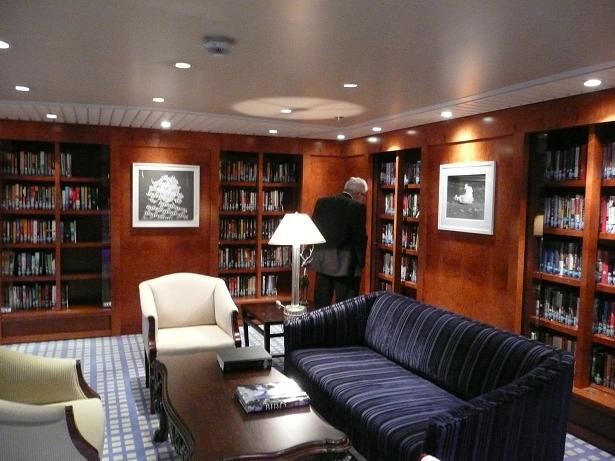
Prowadzimy dziś bardzo zdrowy tryb życia. Poza jedzeniem i wykładem wylegujemy się prawie cały dzień. Odpuściliśmy nawet lekcję foxtrota na korzyść filmu „Tower heist”. Posiedzieliśmy w bibliotece, porozmawialiśmy z bardzo sympatycznym małżeństwem z Niemiec i tak zleciał nam czas. W domu nigdy nie mamy okazji do takiego lenistwa i to przy pełnym korycie.

We are leading a very healthy lifestyle these days. Apart from meals and a lecture, we spend almost the entire day just lounging around. We even skipped our foxtrot lesson in favor of the movie Tower Heist. We spent some time in the library and chatted with a very pleasant couple from Germany—and that’s how the time flew by. Back home, we never get the chance for such idleness—and with such an abundant spread of food, no less.

Piękna biblioteka na naszym statku: / A beautiful library on our ship:

Wieje bardzo, więc nawet nie wychodziliśmy na pokład spacerowy, zresztą po co się męczyć. Jesteśmy podekscytowani jutrzejszym dniem – dotrzemy na legendarny Spitsbergen, największą wyspę archipelagu Svalbard.

It’s very windy, so we didn’t even go out onto the promenade deck—after all, why go to the trouble? We’re excited about tomorrow—we’ll be arriving at legendary Spitsbergen, the largest island in the Svalbard archipelago.

Svalbard, odkryty przez holenderskiego kapitana Willema Barentsa w 1596 jest otoczony jednymi z najbardziej niebezpiecznych wód na Ziemi. Wyspy są domem dla lisów arktycznych, niedźwiedzi polarnych, reniferów i wielu gatunków ptaków. Góry na wyspach są dzikie i strome, tworzą głębokie fiordy kształtowane przez potężne lodowce. Duża część archipelagu jest chroniona jako rezerwaty i Norweskie Parki Narodowe.

Svalbard, discovered by the Dutch captain Willem Barentsz in 1596, is surrounded by some of the most dangerous waters on Earth. The islands are home to Arctic foxes, polar bears, reindeer, and many bird species. The mountains on the islands are rugged and steep, forming deep fjords carved by massive glaciers. A large part of the archipelago is protected as nature reserves and Norwegian national parks.

Przy każdej okazji wypatruję wielorybów. Wieloryb ponoć objawia się tym, że wypuszcza wysoko fontannę wody i pokazuje kawałek ogona. Nic takiego nie udaje mi się zobaczyć na wzburzonej powierzchni.

I keep an eye out for whales at every opportunity. A whale supposedly reveals itself by sending up a high spout of water and showing a bit of its tail. I manage to see nothing of the sort on the choppy surface.

To właśnie teraz jest pora ich corocznych wędrówek z cieplejszych regionów do zimnych, ale bogatych w plankton wód północy. Pokonują ponoć 16 tysięcy kilometrów, co jest chyba rekordem wędrówek zwierząt. Choć marzę o zobaczeniu tych przepięknych stworzeń, to jednak wolałabym, żeby omijały z daleka wody Norwegii. To dziwne, ale rząd tego kraju ładuje miliardy koron w ochronę przyrody na całym świecie, a wraz z Japonią i Islandią nie chce zaprzestać polowań na wieloryby. Shame on you, Norway!

This is the time of their annual migration from warmer regions to the cold, plankton-rich waters of the north. They reportedly cover 16,000 kilometers—likely a record for animal migration. Although I dream of seeing these magnificent creatures, I would prefer them to steer clear of Norwegian waters. It is strange: the country’s government pours billions of kroner into nature conservation worldwide, yet—along with Japan and Iceland—refuses to stop whaling. Shame on you, Norway!

NOTKA: Jeśli jesteś zainteresowny/a ochroną morskich zwierząt, a w szczególności waleni, odwiedź stronę http://www.seashepherd.org „Sea Shepherd” to fantastyczna organizacja działająca na rzecz ochrony morskich zwierząt. Nie dajcie się zwieść propagandzie, która przedstawia „pasterzy morza” jako terrorystów, zagrażających porządkowi społecznemu. Nikt inny nie występuje tak mocno w obronie bezbronnych mieszkańców morza.

NOTE: If you are interested in the protection of marine animals—particularly cetaceans—visit http://www.seashepherd.org. Sea Shepherd is a fantastic organization dedicated to marine wildlife conservation. Do not be misled by propaganda portraying these „shepherds of the sea” as terrorists who threaten the social order. No one else stands up so strongly for the defenseless inhabitants of the sea.

ok. 20:00 / 8 p.m.

Wieczornych atrakcji jest bez liku: poza turniejami w kasynie możemy odwiedzić promenadę handlową i dowiedzieć się czegoś o diamentach. Możemy obejrzeć mecz Włochy : Irlandia na Euro 2012. Możemy obejrzeć występ statkowych artystów w teatrze. Możemy iść tańczyć na Midnight sun white party. Możemy iść napić się kakao, może coś przekąsić, a potem poczytać książeczki w ciepłym świetle przyłóżkowych lamp, zerkając na film w pokładowej TV.

There is a lot of evening attractions: beyond the casino tournaments, we can visit the shopping promenade and learn a thing or two about diamonds. We can watch the Italy vs. Ireland match at Euro 2012. We can catch a performance by the ship’s entertainers in the theater. We can go dancing at the Midnight Sun White Party. We can have some cocoa—perhaps a snack, too—and then read by the warm glow of bedside lamps while glancing at a movie on the cabin TV.

Mimo, że ciągle jasno wybieramy tę ostatnią opcję. / Even though we consistently and clearly choose the latter option.

RADA: Nie warto korzystać z „płatnych” restauracji. Kolacja w jednej z dwóch restauracji a la carte kosztuje średnio 30$ na głowę. To, co dostaje się do jedzenia niewiele różni się od „darmowych” kolacji w ogólnej restauracji („darmowych”, czyli w cenie rejsu). Obsługa jest równie fantastyczna jak w specjalnych restauracjach, a alkohol i tak zamawiany jest w okolicznych barach i jest dokładnie taki sam. 

TIP: It’s not worth using the „paid” restaurants. Dinner at one of the two à la carte restaurants costs an average of $30 per person. The food you get differs little from the „free” dinners in the main dining room („free” meaning included in the cruise price). The service is just as fantastic as in the specialty restaurants, and the alcohol is ordered from nearby bars anyway—so it’s exactly the same.

Lofoty, czyli Norsemen god dag!

Sobota, 16 czerwca / Saturday, 6th of June

wschód słońca: hahaha, skoro nie zaszło, to jak ma wzejść? / Sunrise: Hahaha—since it didn’t set, how is it supposed to rise?

temperatura: 12 stopni, słonecznie / 12 C, sunny

Pozycja: Lofoty / Lofoten

ok. 8:00

Welcome to Lofoten:

Lofoten – Leknes

Witamy na Lofotach:

Lofoten

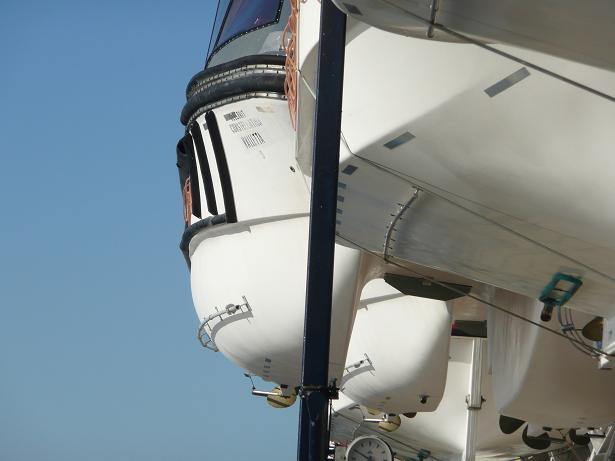
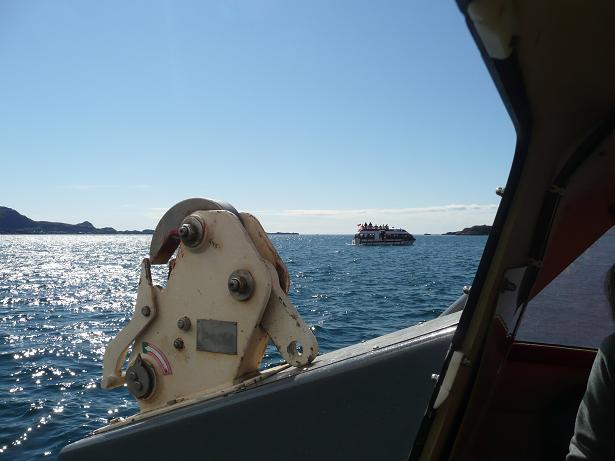
Obudził mnie głośny dźwięk łańcucha kotwicznego. Na czwartym pokładzie marynarze zaczęli spuszczać szalupy, którymi dotrzemy do portu. Szalupy, dotąd wiszące nad pokładem wydawały się małe, ale teraz, kiedy widzę jak wędrują w dół i kołyszą się niebezpiecznie nad pokładem, to widzę, jakie są wielkie. Dowiaduję się, że mogą zabrać do 120 osób i wydają mi się jeszcze większe.

I was awakened by the loud sound of the anchor chain. On the fourth deck, sailors had begun lowering the lifeboats that would take us to port. The lifeboats—which, until now, had hung suspended above the deck—had seemed small; but now, as I watch them descend and sway precariously overhead, I realize just how massive they are. I learn that they can carry up to 120 people, and they seem even larger to me.

Zdejmowanie szalupy z wieszaka:

Launch off

Szalupy welcome to – do portu Leknes / To the Leknes harbour

From ship to the harbour

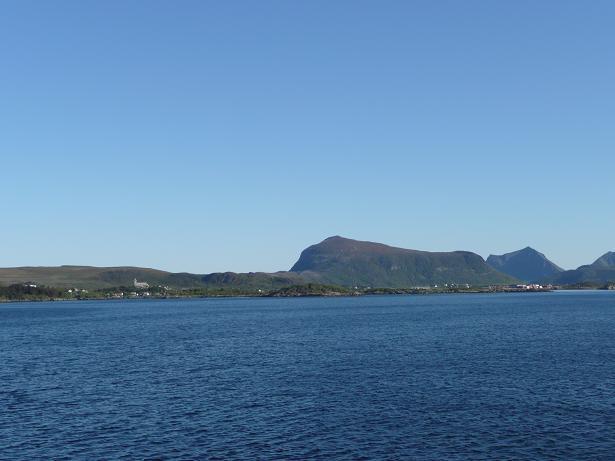
Nie zdecydowaliśmy się na kupno wycieczki krajoznawczej. Za to wczoraj kupiliśmy bilety na autobus (7$ od osoby, mają jeździć co 20 minut, przystanek koło kościoła, możemy jeździć tyle razy, ile chcemy), który z portu ma nas zawieźć do Leknes – największego miasta archipelagu Lofotów, na wyspie Vestvagoy (nad „a” powinno być małe kółeczko, a „o” powinno być przekreślone). Trudno to sobie wyobrazić bo z pokładu widzę kilkanaście rozrzuconych domostw i coś, co wygląda na kościół albo remizę strażacką, a w tle niewielkie góry pokryte resztkami śniegu i rzadkimi lasami.

We decided against purchasing a sightseeing tour. Instead, yesterday we bought bus tickets ($7 per person—they are scheduled to run every 20 minutes from a stop near the church, and we can ride as often as we like) to take us from the port to Leknes—the largest town in the Lofoten archipelago, located on the island of Vestvågøy (the „a” should have a small circle above it, and the „o” should be crossed out). It is hard to imagine, though, because from the deck I can see only a dozen or so scattered houses and something that looks like a church or a fire station, set against a backdrop of small mountains covered in patches of lingering snow and sparse forests.

Lofoty są ponoć siedzibą wielu milionerów – ludzi, którzy dorobili się na hodowli łososi. Osiedlają się właśnie tu, ze względu na „balsamiczny” klimat, który niewątpliwie jest zasługą Golfstromu, czyli Prądu Zatokowego. Oczywiście tutejsza ekonomia oparta jest na rybołówstwie, zresztą po co zmieniać coś, co istnieje tutaj od setek, jeśli nie tysięcy lat?

The Lofoten Islands are reportedly home to many millionaires—individuals who made their fortunes in salmon farming. They choose to settle here specifically because of the „balmy” climate, which is undoubtedly owed to the Gulf Stream. Naturally, the local economy is based on fishing—and, after all, why change something that has existed here for hundreds, if not thousands, of years?

ok. 11.00

Wypiliśmy herbatę, zjedliśmy drugie śniadanie i rozleniwieni patrzymy na kursujące ze statku na ląd i z lądu na statek szalupy. Trzeba się zbierać, to pierwsze zejście na ten tajemniczy ląd, zamieszkany od pokoleń przez Wikingów („Norsemen” jest ponoć bardziej poprawne politycznie). I nie zapomnieć paszportów!

We drank our tea, had a mid-morning snack, and—feeling pleasantly languid—watched the tenders shuttling back and forth between the ship and the shore. Time to get moving; this marks our first landing on this mysterious land—inhabited for generations by Vikings (though „Norsemen” is, apparently, considered more politically correct). And don’t forget our passports!

15:30

Z pokładu #1 wsiedliśmy do szalupy, która malowniczo okrążyła statek i po 10 minutach przycumowała w porcie. / From Deck #1, we boarded a lifeboat that picturesquely circled the ship and, after 10 minutes, docked in the port.

Witamy w Leknes na Lofotach

Leknes Port – Lofoten

Port to drewniany pomost, przy którym nie zmieściłyby się trzy końskie furmanki, a co dopiero nasz statek. Port to także 3 budyneczki wielkości garaży, w których są głównie sklepy z pamiątkami. Tuż za portem jest mała górka, na którą nie wiadomo czemu wszyscy postanowili wejść. Trochę dalej małe domki przycupnięte na brzegu z niskimi drzewami owocowymi.

The port consists of a wooden pier—too small to accommodate even three horse-drawn carts, let alone our ship. It also features three tiny buildings, about the size of garages, housing mostly souvenir shops. Just beyond the port lies a small hill—one that, for some inexplicable reason, everyone decided to climb. A little further on, small cottages huddle along the shore, nestled amidst low-growing fruit trees.

Okazuje się, że Leknes leży w głębi lądu, około 5 km. od portu, więc podróż trwa krótko. Mijamy przydrożne bagienka, w których brodzą mewy, kilkanaście domów z drewna, które raczej nie świadczą o zamożności ich mieszkańców. / It turns out that Leknes lies inland, about 5 km from the port, so the journey is brief. We pass roadside wetlands where seagulls are wading, and a dozen or so wooden houses that hardly speak to the affluence of their inhabitants.

Uliczka w Leknes: /Leknes street:

Little street in Leknes

Miasteczko typu „knajpa/kościół”, choć knajp tu raczej niewiele. Kilka ładnych domów przy uliczkach ze żwirową nawierzchnią, kwitną tulipany, czyli wiosna wreszcie nadeszła. Główna ulica to kilkanaście sklepów z różnościami: chiński market, włóczki, suknie ślubne, bank, poczta, kwiaciarnia, optyk.

A quintessential „bar-and-church” town—though, truth be told, there aren’t actually many bars here. A few pretty houses line the gravel streets; the tulips are in bloom, meaning spring has finally arrived. The main street features a dozen or so shops offering an eclectic mix: a Chinese variety store, yarn supplies, wedding dresses, a bank, a post office, a florist, and an optician.

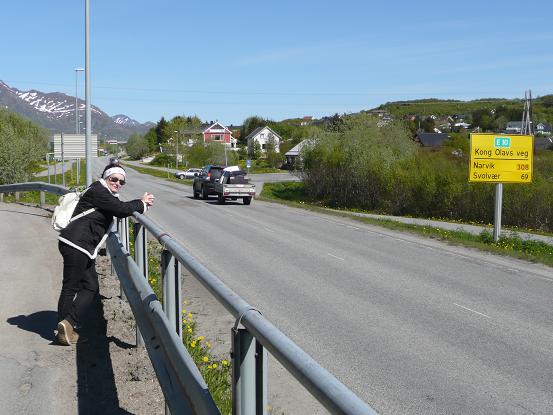
Lokalna autostrada i droga na Ostrołękę, tfu, na Narwik / Local highway:

Local highway – Lofoten

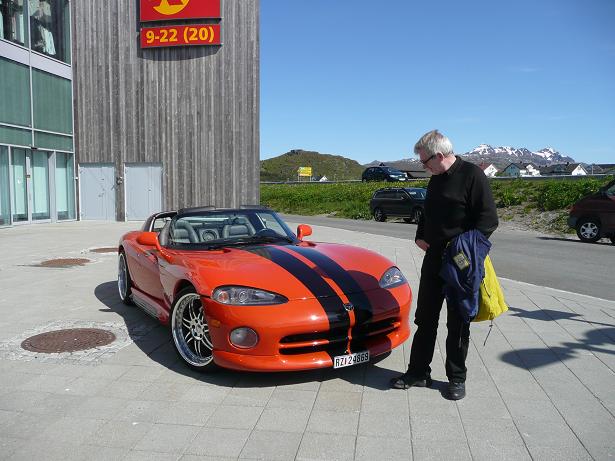
Dodge Viper przed domem towarowym i Zbig już chce tu zostać:

Zbig and Dodge Viper – Leknes

Na końcu miasteczka małe centrum handlowe z dwoma supermarketami (jeden to dyskont) i ładnie urządzonymi sklepami z wyposażeniem domów, trochę ciuchów, księgarnia, apteka. Za centrum, na parkingu kilka straganów z ciuchami i zabawkami, ale tandeta niesamowita. Zbig za to namierza największą dla niego atrakcję Lofotów: Dodge Viper, w dodatku pomarańczowy. 

At the edge of town lies a small shopping center featuring two supermarkets (one of which is a discount store) and tastefully appointed home furnishings shops, along with a few clothing stores, a bookstore, and a pharmacy. Behind the center, in the parking lot, stand several stalls selling clothes and toys—though the wares are incredibly tacky. Zbig, however, spots what he considers the greatest attraction of the Lofotens: a Dodge Viper—and an orange one, at that.

Wróciliśmy po dwóch godzinach. Naprawdę nie było już co oglądać. / We returned after two hours. There really wasn’t anything left to see.

LOKALNE PRZYSMAKI: / Local treats

Torrfisk – suszony na drewnianych półkach dorsz. Klippfisk – solona ryba, znana od XVII wieku, kiedy do rozsądnego poziomu spadły ceny soli. Fiskeboller – zawijasy z ryby, często podawane ze śmietaną. I najbardziej chyba znana norweska potrawa – lutefisk – suszony dorsz albo łupacz moczony i doprowadzony do fermentacji, najczęściej jedzony na Boże Narodzenie. Fiskepudding to puszysty pudding rybny.

Torrfisk—cod dried on wooden racks. Klippfisk—salted fish, known since the 17th century, when salt prices dropped to a reasonable level. Fiskeboller—fish dumplings, often served with cream. And perhaps the most famous Norwegian dish—lutefisk—dried cod or haddock that has been soaked and fermented, most commonly eaten at Christmas. Fiskepudding is a fluffy fish pudding.

Aquavit – do popicia tych wszystkich rybich delicji. Bardzo popularna w Skandynawii wódka, destylowana z ziemniaków, przechowywana w drewnianych beczkach, aromatyzowana kminkiem i koprem. Produkowana od XIV wieku.

Aquavit—to wash down all those fish delicacies. A highly popular spirit in Scandinavia, distilled from potatoes, aged in wooden barrels, and flavored with caraway and dill. Produced since the 14th century.

WARTO ZWIEDZIĆ: Muzeum Wikingów – około 15 km na północny wschód od Leknes. Mieści się w największym budynku ery Wikingów odkrytym kiedykolwiek. Dzięki bogatym znaleziskom artefaktów, archeolodzy odtworzyli dom w pełnym wymiarze. Dzięki temu można wkroczyć prosto do świata ery brązu i zobaczyć, że nie byli to tylko barbarzyńscy brutale uganiający się z toporami. Ich społeczeństwo było wysoce zorganizowane, a największą wartością był honor. Królowie i inni przywódcy byli wybierani przez społeczność i to zwykli ludzie decydowali o prawach i zasadach. 

WORTH VISITING: The Viking Museum—located approximately 15 km northeast of Leknes. It is housed within the largest Viking-era building ever discovered. Thanks to a wealth of artifactual finds, archaeologists have reconstructed the longhouse to its full scale. This allows visitors to step directly into the world of the Viking Age and see that its people were not merely barbaric brutes running around with axes. Their society was highly organized, and honor was held as the highest value. Kings and other leaders were elected by the community, and it was the common people who determined the laws and rules.

INFO: W Laknes jest kilka kafejek internetowych. Informacja turystyczna znajduje się przy ulicy Storgata 31, w centrum handlowym.

INFO: There are several internet cafes in Laknes. The tourist information office is located at Storgata 31, in the shopping center.

SŁOWNICZEK: Tak – Ja; Nie – Nei; Dzień dobry – God Dag; Dziękuję bardzo – Tusen takk. / GLOSSARY: Yes – Ja; No – Nei; Good morning – God Dag; Thank you very much – Tusen takk.

ok. 22:00

Kolacja jak marzenie. Musiałam oddać Zbigowi zupę kokosową, bo okazała się jak żyleta. No i znowu dostaliśmy specjalny deser po deserze – suflet czekoladowy z biała czekoladą z Grand Marnier. Cieszę się, że jesteśmy specjalnymi gośćmi, ale… Nie, żadne ale. Bardzo, bardzo warte grzechu.

A dream dinner. I had to hand my coconut soup over to Zbig, as it turned out to be razor-sharp. And once again, we received a special dessert after our dessert—a chocolate soufflé with white chocolate and Grand Marnier. I’m glad we’re being treated as special guests, but… No—no „buts.” It was very, very worth the sin.

Leknes pożegnaliśmy o 17:00. Teraz płyniemy prosto na północ, ale nadal wzdłuż wybrzeża. Widać ośnieżone, strome góry wyrastające prosto z morza. Następny port – Longyearbyen. Mamy do przepłynięcia 706 mil morskich.

We bade farewell to Leknes at 5:00 PM. We are now sailing straight north, though still hugging the coast. Snow-capped, steep mountains can be seen rising directly from the sea. Our next port of call is Longyearbyen. We have 706 nautical miles to cover.

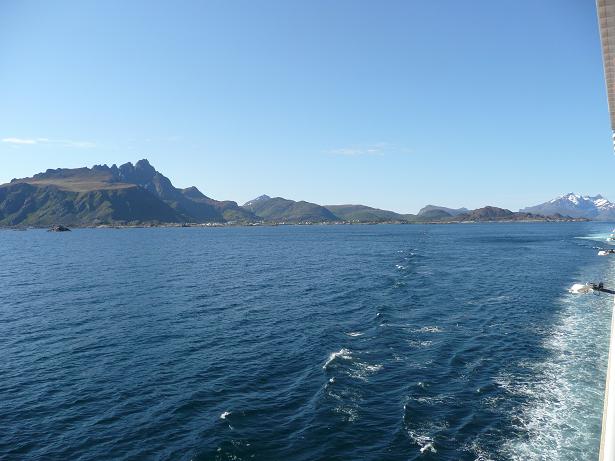
Nasz statek przyczajony w fiordzie za skałką. Myśli, że go nie widać: /Our ship, hunkered down in the fjord behind a small rock. It thinks it can’t be seen.

Our ship hidden in fjord – Lofoten
Lofoty, do widzenia
Good by Lofoten!

RADA: Nie jestem pewna, czy warto płacić za zorganizowane wycieczki lądowe. Ta do Leknes kosztowała 169$ od osoby, trwała 3 godziny i obejmowała mały rejs na Vestfjord, lub wędrówkę po okolicznych muzeach i przejazd przez podwodny tunel do Flakstadoey. Sama nie wiem, ale tyle kasy za 3 godziny…

Jak przekroczyć krąg polarny, c.d. / How to Cross the Arctic Circle (Continued)

ok. 14:50

Ptaki i Norwegia zniknęły, za to na zachodzie mijamy dużo platform wiertniczych. Jedne wyglądają jak zamczyska z wieżą pośrodku, inne jak dziwne zwierzęta z długimi szyjami i ogonkiem. Morze nadal jest gładkie, chmury odbijają się w nim jak w jeziorze.

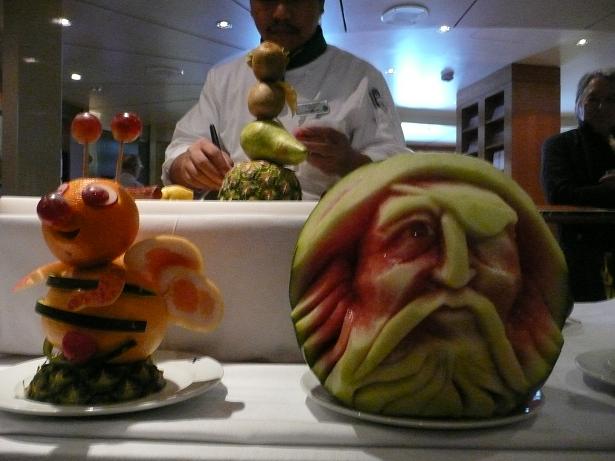
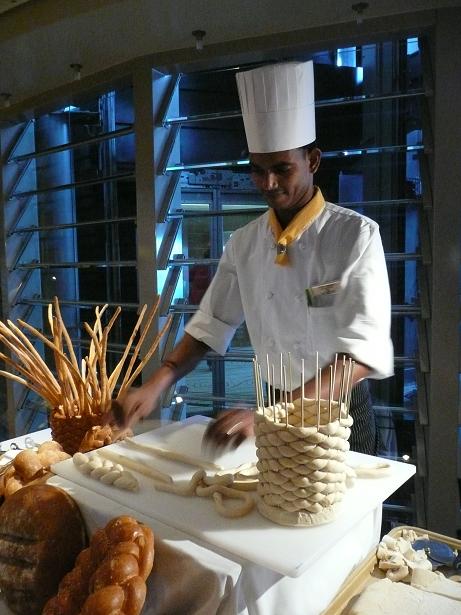
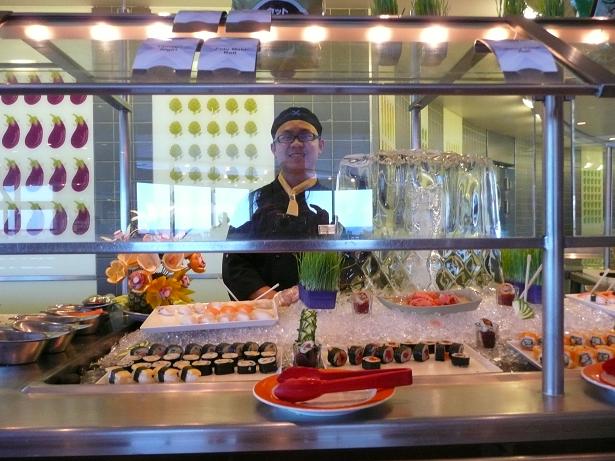
Niedawno w głównym hallu na 3 pokładzie zakończyły się pokazy kulinarne. Można było zobaczyć jak się robi sushi, jak plecie się kosze z ciasta chlebowego, jak robi się róże z marcepanu, jak się rzeźbi w owocach i warzywach.

The birds and Norway have vanished; instead, to the west, we are passing many oil rigs. Some look like castles with a tower in the center, others like strange animals with long necks and a little tail. The sea remains smooth, with the clouds reflecting in it as if in a lake.

Culinary demonstrations recently concluded in the main hall on Deck 3. Visitors could watch how sushi is made, how baskets are woven from bread dough, how marzipan roses are crafted, and how fruits and vegetables are carved.

Fantastyczne rzeźby z owoców i warzyw:

Carving on Celebrity Constellation

Nauczyłam się składania serwetek i pojęłam wreszcie na czym polega różnica między sushi a sushimi. Na pewno ta wiedza przyda mi się bardzo w domu i w zagrodzie. A swoją drogą, jak daleko trzeba wyjechać, żeby nauczyć się składania serwetek?

I learned how to fold napkins and finally grasped the difference between sushi and sashimi. This knowledge will certainly come in very handy back home. And by the way—just how far do you have to travel to learn how to fold napkins?

Kosz wyplatany z ciasta chlebowego, gotowy widać w tle:

Bread basket

ok. 17.00

Uczyliśmy się tańczyć tango. W ten sposób chciałam uczcić urodziny Zbiga, nawet wbrew jego woli. I co się okazało? W tangu jesteśmy świetni. To pierwszy taniec, który potrafiliśmy zatańczyć nie depcząc sobie po stopach!

We learned to dance the tango. That was how I wanted to celebrate Zbig’s birthday—even against his wishes. And what did it turn out? We’re great at the tango. It’s the first dance we’ve managed to dance without stepping on each other’s feet!

Morze nadal jest spokojne, choć pojawiły się długie, boczne fale. Niebieskie Morze Norweskie:

Norvegian sea

ok. 23:30

Słońce świeci jak o 16-stej latem. To pierwsza noc, kiedy słońce nie zajdzie wcale. Znów widać ląd – bardzo ostre skały w kształcie kłów wyrastają prosto z morza. Nie dziwię się, że żeglarskie opowieści pełne są potworów z głębin, pożerających wielkie statki.

Linie Celebrity zafundowały Zbigowi torcik z dwoma świeczkami, a siedmiu kelnerów odśpiewało „Happy birthday”. Torcik i odśpiewanie odbyły się już po kolacji i deserze i mimo, że obżarta straszliwie, nie mogłam porzucić niezjedzonej czekoladowej pyszności. Teraz jestem na cukrowym haju i nie mogę spać. Za około pół godziny przekroczymy krąg polarny. Będzie się działo.

The sun is shining as if it were 4 p.m. in the summer. This is the first night the sun won’t set at all. Land is visible once again—very sharp, fang-shaped rocks rising straight out of the sea. It comes as no surprise that sailors’ tales are full of monsters from the deep that devour great ships.

Celebrity Cruises treated Zbig to a small cake with two candles, while a group of seven waiters sang „Happy Birthday.” The cake and serenade took place after dinner and dessert were already finished—and even though I was absolutely stuffed, I simply couldn’t bring myself to leave that delicious chocolate treat uneaten. Now I’m on a sugar high and can’t sleep. In about half an hour, we’ll cross the Arctic Circle. Things are about to get exciting.

ok. północy / about Midnight

Południową granicę regionu arktycznego wyznacza Krąg Polarny (Arctic Circle), geograficzny pierścień otaczający glob, w odległości około 1650 mil od Bieguna Północnego. Ta umowna linia leży na Oceanie Arktycznym, przechodzi przez tysiące wysp i północne części Europy, Azji i Ameryki Północnej. I przez osiem krajów: Norwegię, Szwecję, Finlandię, Rosję, Stany Zjednoczone na Alasce, Kanadę, Grenlandię i Islandię.

The southern boundary of the Arctic region is marked by the Arctic Circle—a geographic ring encircling the globe, situated approximately 1,650 miles from the North Pole. This imaginary line lies within the Arctic Ocean and passes through thousands of islands, as well as the northern parts of Europe, Asia, and North America. It also traverses eight countries: Norway, Sweden, Finland, Russia, the United States (in Alaska), Canada, Greenland, and Iceland.

Jesteśmy na szerokości geograficznej północnej 66 stopni 33′ 44″. Właśnie przekroczyliśmy krąg polarny i życie już nigdy nie będzie takie samo. 

We are at 66 degrees 33 minutes 44 seconds North latitude. We have just crossed the Arctic Circle, and life will never be the same.

Jutro, a właściwie już dziś dopłyniemy do Lofotów i ich stolicy – Leknes. / Tomorrow—or rather, already today—we will arrive at the Lofoten Islands and their capital, Leknes.

Jak przekroczyć krąg polarny, czyli dalej na morzu / How to cross the Arctic Circle, or further out at sea

Piątek, 15 czerwca / Friday, June 15

wschód słońca: 3:59 zachód słońca: brak, słońce pozostaje nad horyzontem / Sunrise: 3:59 Sunset: None, sun remains above the horizon

Urodziny Zbiga / Zbig’s birthday

Ok. 10:00 / about 10:00 a.m.

Pozycja statku: na Morzu Norweskim, gdzieś na wschodzie Molde. Moja pozycja: biblioteka. / Ship’s position: In the Norwegian Sea, somewhere east of Molde. My position: library.

Morze jest niesamowicie gładkie, jakby powierzchnia pokryta była lodem. Na sterburcie ciągle widać wybrzeża Norwegii, a nad nimi białe chmury, które wyglądają jak góry lodowe i to potęguje wrażenie zimna. Nad statkiem znów latają ptaki, za to od wczoraj nie widziałam żadnych statków. Dziś wieczorem przepłyniemy za krąg polarny. I pierwsza noc bez zachodu słońca.

The sea is incredibly smooth, as if the surface were covered in ice. To starboard, the Norwegian coast is still visible, and above them, white clouds that look like icebergs, intensifying the feeling of cold. Birds are flying over the ship again, but I haven’t seen any ships since yesterday. Tonight we’ll sail beyond the Arctic Circle. And the first night without a sunset.

Spokojne Morze Norweskie:

Norway Sea

Teraz będzie o jedzeniu. Muszę o tym napisać, bo jedzenie to moja pasja, więc jeśli wam się nie podoba, to odpuśćcie sobie ten akapit. Śniadanie cudowne, czyli bez zmian. Niedługo przestanę się mieścić w jakiekolwiek ciuchy. Zostaną mi do chodzenia spodnie od piżamy na gumce. I tak nie jestem w stanie spróbować wszystkiego. Bufet podzielony jest na części: najpierw świeże owoce – arbuzy, winogrona, kilka rodzajów melonów, ananasy, grapefruity. Potem wędliny, łosoś wędzony, sery i twarożki. Tych ostatnich naliczyłam 6 rodzajów. Potem część zwana „american breakfast” – boczki, jajka w 4 postaciach i różne takie, warzywa do smażenia i kawał wiekiej szynki dopiero co wyjęty z piekarnika. Potem przedział z owsianką, kaszką manną i dodatkami: cukier trzcinowy, owoce leśne, brzoskwinie, śliwki, morele, coś, czego nie znam, ale spróbuję. Następnie święte miejsce: omlety smażone z wieloma dodatkami wedle życzenia. Potem jogurty, w końcu pieczywo – 10 koszy wypełnionych różnymi rodzajami chleba i bułek, łącznie z bajglami, które jadłam ostatnio z 15 lat temu w Montrealu (wiadomo, że montrealskie bajgle są najlepsze na świecie). No i wreszcie dział dla dzielnych ludzi ze Zjednoczonego Królestwa, czyli „english breakfast” z cała jego wspaniałością: kaszanką, fasolą, grzankami, kiełbaskami, bekonem, pieczarkami, placuszkami z ziemniaków i sama nie wiem z czym jeszcze. Kiedy mieszkałam w Anglii, takie śniadanko to była codzienna tradycja, ale tutaj… nie, raczej nie.

Now it’s about food. I have to write about it because food is my passion, so if you don’t like it, skip this paragraph. Breakfast is wonderful, meaning no changes. Soon I won’t be able to fit into any of my clothes. I’ll be stuck with pajama bottoms with elastic waistbands. I can’t try everything anyway. The buffet is divided into sections: first, fresh fruit – watermelon, grapes, several types of melon, pineapple, grapefruit. Then cold cuts, smoked salmon, cheeses, and cottage cheese. I counted six types of the latter. Then the „American breakfast” section – bacon, eggs in four different ways, and various other things, vegetables for frying, and a large piece of ham fresh out of the oven. Then a section with oatmeal, semolina, and toppings: cane sugar, forest fruits, peaches, plums, apricots, something I’m not familiar with, but will try. Next, the holy grail: fried omelets with a variety of toppings to choose from. Then yogurt, and finally, bread—10 baskets filled with various types of bread and rolls, including bagels, which I last ate about 15 years ago in Montreal (Montreal bagels are known to be the best in the world). And finally, the section for the brave folk from the United Kingdom: the „English breakfast,” with all its splendor: black pudding, beans, toast, sausages, bacon, mushrooms, potato pancakes, and who knows what else. When I lived in England, such a breakfast was a daily tradition, but here… no, not really.

Obsługa jest na każde zawołanie. Na bieżąco smażą omlety, opiekają warzywa i pieczywo, ładują na talerze wszystko, o co się poprosi. I jeszcze podają kawę do stolików, bo grubym leniom nie chce się ruszyć tyłków i przemieścić się na odległość 10 metrów.

The staff is always on call. They fry omelets, toast vegetables and bread, and pile everything you ask for onto plates. And they even serve coffee to the tables because the fat, lazy people can’t be bothered to move 10 meters.

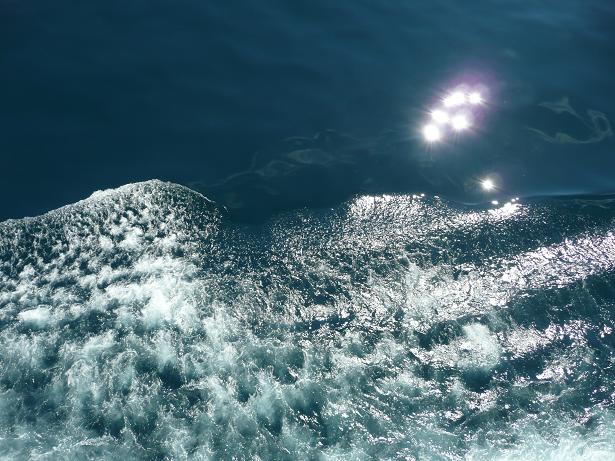
Z jadalni można wyjść prosto na pokład rufowy. Tam zwykle jest zacisznie i można nostalgicznie obserwować kilwater, czyli „przypowierzchniową warstwę wody zaburzonej przez ruch jednostki nawodnej, a przede wszystkim przez obroty śrub okrętowych (mamy dwie) oraz turbulentny charakter opływu hydrodynamicznego kadłuba jednostki pływającej” (za Wikipedią). I po co tak sobie komplikować życie?

From the dining room, you can walk straight onto the aft deck. It’s usually quiet there, and you can nostalgically observe the wake, which is „the near-surface layer of water disturbed by the motion of the vessel, primarily by the rotation of the ship’s propellers (we have two) and the turbulent nature of the hydrodynamic flow around the vessel’s hull” (according to Wikipedia). And why complicate life so much?

 ok. 12:00 / about noon

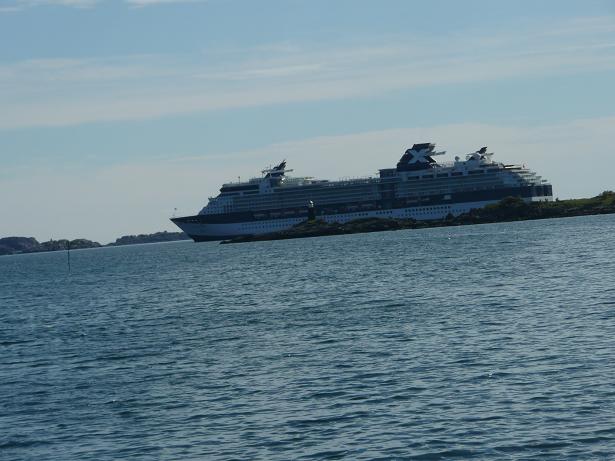
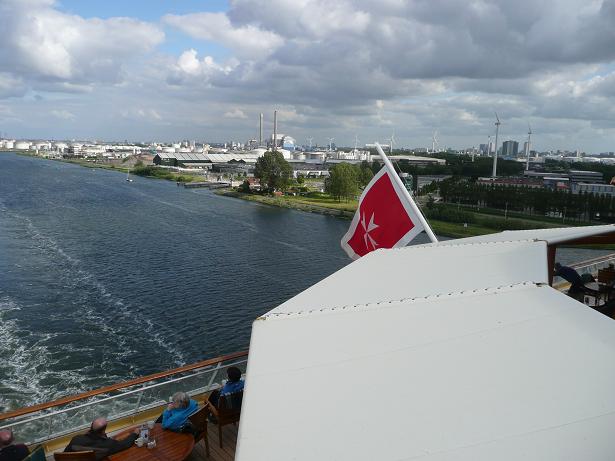
Został zbudowany w St.Nazaire we Francji i zwodowany w 2002 roku. Jest statkiem klasy Millenium obecnie zarejestrowanym w Valetta na Malcie. Ma długość 294 metry, tonaż 91.000 i osiąga prędkość 24 węzłów (ok. 44 km/h), co nie dziwi przy napędzie dwóch silników o mocy 19MW. Zabiera 1950 pasażerów i 999 osób załogi.

Built in St. Nazaire, France, and launched in 2002, she is a Millennium-class vessel currently registered in Valletta, Malta. She is 294 meters long, has a gross tonnage of 91,000, and can reach a speed of 24 knots (approximately 44 km/h), which is not surprising given her twin 19MW engines. She can accommodate 1,950 passengers and a crew of 999.

Ma 13 pokładów. Dwa najniższe, to bebechy statku, kabiny załogi, zapewne mesa i wszystko to, czego pasażerowie nie powinni oglądać. Pokład #2 zwany Continental to kabiny pasażerskie i „przychodnia” lekarska. Pokład #3, zwany Plaza to (od dziobu) wielki teatr, kabiny pasażerskie, w tym nasza na sterburcie, recepcja, Grand Foyer z wielkimi schodami otoczone statkowymi biurami, sale konferencyjne i kino. Pokład #4, zwany Promenade – balkony teatru, klub urządzony w stylu angielskim, w którym to klubie nigdy nie byliśmy. Potem jest galeria fotografii uczestników rejsu i zakład fotograficzny, gdzie zawsze napada na nas gość zwany przez nas Jabba the Hutt i chce nam zrobić zdjęcie. Chodzimy tędy na kolacje, więc spotkania są nieuniknione. Potem przechodzimy przez wielką „klubokawiarnię” zwaną Randez-Vous, by w końcu dojść do świątyni pożeraczy kolacji – pięknej restauracji „San Marco”. Kolejny pokład to Entertainment – jaskółka teatru, tutejsze centrum handlowe „The Emporium”, które z masą kiczowatych zegarków i biżuterii, sweterków z futerkiem, matrioszkami i ikonami, małą perfumerią i sklepem z alkoholem powinno się raczej nazywać „Małe centrum handlowe imienia krasnali ogrodowych”.

It has 13 decks. The lowest two are the ship’s innards, crew cabins, presumably the mess hall, and everything passengers shouldn’t see. Deck #2, called the Continental, contains passenger cabins and a medical „clinic.” Deck #3, called the Plaza, is (from the bow) a grand theater, passenger cabins, including ours on the starboard side, a reception desk, a Grand Foyer with a grand staircase surrounded by ship’s offices, conference rooms, and a cinema. Deck #4, called the Promenade, contains the theater’s balconies, and a club decorated in an English style, which we’ve never been to. Then there’s the cruise photo gallery and the photo studio, where a guy we call Jabba the Hutt always attacks us and wants to take our picture. We go this way for dinner, so meetings are inevitable. Then we pass through a large „club café” called Rendez-Vous, and finally reach the temple of the diners – the beautiful restaurant „San Marco.” Next up is the Entertainment area – a theater swallow, and the local shopping mall „The Emporium,” which, with its masses of kitschy watches and jewelry, fur-trimmed sweaters, matryoshka dolls and icons, a small perfume shop, and a liquor store, should more accurately be called „The Little Shopping Mall Named After Garden Gnomes.”

Następne 4 pokłady to wyłącznie kabiny pasażerskie, oprócz pokładu # 7 i 8. Tam w środkowej części mieści się śliczna biblioteka. Im wyżej, tym drożej, im drożej, tym większe kabiny z oknami i balkonami. To jedyna rzecz, jakiej zazdroszczę bogatym pasażerom – możliwości otwarcia okna. W kabinach dla biedaków powietrze jest przerażająco suche i czasem stęchłe i nic nie jest w stanie tego zmienić. 

The next four decks are exclusively passenger cabins, except for decks 7 and 8. There, in the middle section, is a lovely library. The higher the deck, the more expensive it is; the more expensive, the larger the cabins with windows and balconies. The only thing I envy wealthy passengers is the ability to open a window. In the cabins for the poor, the air is terribly dry and sometimes musty, and nothing can change that.

Pokład #10 – mój ulubiony. I nie dlatego, że jest na nim klub fitness i spa i baseny i jacuzzi. Tam jest śniadanie i drugie śniadanie i trzecie śniadanie i brunch i lunch i obiadek i podwieczorek i wieczorna herbatka i midnight snack w razie potrzeby.

Deck 10 is my favorite. And not just because it has a health club and spa and pools and jacuzzis. It serves breakfast, second breakfast, third breakfast, brunch, lunch, dinner, afternoon tea, and evening tea, plus a midnight snack if needed.

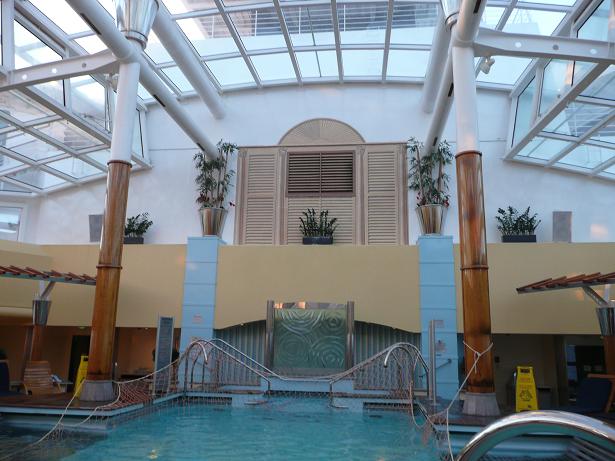
Basen wewnętrzny na 10-tym pokładzie:

Celebrity Constellation – indoor swimmingpool

Na pokładzie 11 uczymy się tańczyć i chodzimy na spacery. Jest tam restauracja „Tuscan Grill”, do której nigdy nie pójdziemy i bary, zamknięte z uwagi na zimno. Ale przede wszystkim jest to miejsce do obserwacji bliższej i dalszej okolicy. Może uda nam się zobaczyć jak wygląda ten krąg polarny.

On deck 11, we learn to dance and go for walks. There’s a restaurant called the Tuscan Grill, which we’ll never go to, and bars that are closed due to the cold. But above all, it’s a place to observe the surroundings, both near and far. Maybe we’ll even get a glimpse of the Arctic Circle.

Taki jest nasz statek, który będzie naszym domem jeszcze przez kilkanaście dni. Nazywa się Constellation. Celebrity Constellation. / This is our ship, which will be our home for the next several days. It’s called Constellation. Celebrity Constellation.

Midnight snack, a każdy ma inny smack

Midnight snack

Na morzu, czyli jak zdążyć ze wszystkim / At sea, or how to get everything done on time

Czwartek, 14 czerwca / Thursday, June 14

wschód słońca: 5:03  zachód słońca: 23:05 / sunrise: 5:03 sunset: 23:05

Ok. 5:45, gdzieś na Morzu Północnym / somewhere on North Sea, 5:45 a.m.

Najwyższy czas wstawać. Pan i Władca śpi, więc powinnam być cicho, ale jak tu być cicho, skoro jestem podekscytowana jak dziecko czekające na Świętego Mikołaja. No i chce mi się pić i jeść. Trzeba poszukać jakiegoś pokarmu. Idę na 10 pokład na kakao i może coś na ząb. Hm, na pewno coś na ząb.

It’s high time to get up. The Lord and Master is asleep, so I should be quiet, but how can I be quiet when I’m as excited as a child waiting for Santa Claus? And I’m thirsty. I need to find something to eat. I’m going to the 10th floor for cocoa and maybe a snack. Hmm, definitely a snack.

Oj chmury. / Oh clouds.

ok. 7:00 / about 7:00 a.m.

Wieje bardzo, jest dużo chmur, a słońce robi sobie w nich małe dziurki i oświetla reflektorkami kawałeczki morza. Fale nieduże, bez białych grzyw i kołysze umiarkowanie. W restauracji mimo wczesnej pory siedziało już mnóstwo Chińczyków. „Early risers breakfast” serwują od 6:30, więc jestem prawie na czas. Na pokładzie 11 jest ścieżka do biegania, jedno okrążenie to 1/3 kilometra. Kilkoro ludzi biegało, zmagając się z wiatrem. 

It’s very windy, there are a lot of clouds, and the sun is making small holes in them, illuminating patches of sea with its spotlights. The waves are small, without white crests, and the swaying is moderate. Despite the early hour, there were already a lot of Chinese people in the restaurant. „Early risers breakfast” is served from 6:30, so I’m almost there. There’s a jogging track on deck 11; one lap is a third of a kilometer. Several people were jogging, struggling with the wind.

11th deck, so cold

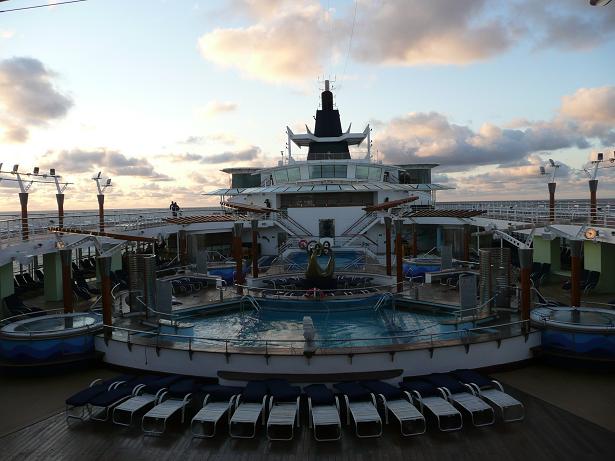
Powyżej – zdjęcie z 11 pokładu na okrętowe atrakcje (brr, zimno)

Wieczorem (każdego wieczora, aż do końca rejsu) dostajemy gazetkę pokładową z informacjami na temat atrakcji nadchodzącego dnia, godzinami otwarcia restauracji, sklepów i barów, programu kinowego, lekcji tańca i tematów seminariów. Wszystko jest ekscytujące, a czasu tak mało…

In the evening (every evening until the end of the cruise), we receive an onboard newsletter with information about the upcoming day’s attractions, restaurant, shop, and bar opening hours, movie schedules, dance classes, and seminar topics. Everything is so exciting, yet so little time…

ok. 9:00 / about 9:00 a.m.

Temperatura 12 st., gdzieś na wschodzie jest północna Dania, na zachodzie – Edinborough. Lecę na Spa Seminar  „Right hairstyle for your face”. Wreszcie się dowiem.

Temperature: 12 degrees Celsius, northern Denmark somewhere to the east, Edinborough to the west. I’m off to the Spa Seminar „Right hairstyle for your face.” I’ll finally find out.

od 10:30 do 16:00 / from 10:30 a.m. to 4 p.m.

Dowiedziałam się, jaka jest najlepsza dla mnie fryzura: taka, w której nigdy nie pokazałabym się publicznie. Cały kit po to, żeby zwabić mnie do fryzjera. No way. Nie z tymi cenami: czesanie od 39$ (zawsze osłabia mnie to „od”; powinni choćby orientacyjnie podawać jakieś „do”, na przykład od 39 do 999.999$, przynajmniej wiedziałabym czego się spodziewać), farbowanie odrostów od 69$, pasemka od 89$. Wprawdzie nie byłam u fryzjera od 1994 roku, ale nie mówcie mi, że to jest tanio!

I figured out what the best hairstyle for me is: one I’d never wear in public. It’s all a ploy to lure me into a hairdresser. No way. Not with these prices: a haircut from $39 (that „from” always makes me cringe; they should at least give a rough estimate, like from $39 to $999,999, so I’d know what to expect), root dye from $69, highlights from $89. I haven’t been to a hairdresser since 1994, but don’t tell me it’s cheap!

Ceny zabiegów kosmetycznych tez są dla mnie wstrząsające: masaż szwedzki 119$, wosk bikini 59$ (jasne, bikini, tu nawet nie można zdjąć swetra, choć niektórzy siedzą w wirówkach na odkrytym pokładzie), botox na czoło 400$, manicure 50$, pedicure 70$.

The prices of cosmetic treatments are also shocking to me: Swedish massage $119, bikini wax $59 (yes, bikini, you can’t even take off your sweater here, even though some people sit in whirlpool baths on the open deck), forehead botox $400, manicure $50, pedicure $70.

Idę z nowopoznaną parą z Singapuru na herbatę. Przegapiłam zajęcia ze scrapookingu, ale muszę zdążyć na 13:15 na kurs country line dance. Potem trzeba będzie znaleźć Zbiga (ciekawe co robi swoją drogą, mam nadzieję, że nie przepuszcza kasy w kasynie, choć od tego kasy-na są) i udać się na jakiś, najlepiej obfity lunch. Potem będę musiała tupnąć nóżką i zmusić Zbiga siłą i perswazją do pójścia ze mną na kurs walca angielskiego o 15:00. W tym samym czasie jest pokaz ozdabiania ciast… 

I’m going for tea with a couple from Singapore I just met. I missed the scrapooking class, but I have to make it to the country line dancing class at 1:15 PM. Then I’ll have to find Zbig (I wonder what he’s doing, by the way; I hope he’s not blowing money at the casino, although that’s what casinos are for) and go get some, preferably a hearty, lunch. Then I’ll have to put my foot down and force Zbig to come with me to the English waltz class at 3:00 PM. There’s a cake decorating demonstration at the same time…

Spotykam w korytarzu jednego z naszych dwóch stewartów. Pochodzi z Goa, gdzie jak mnie przekonywał jest bardzo bezpiecznie i jest mnóstwo turystów i na pewno będę zadowolona z pobytu. Jasne, zwłaszcza mnóstwo turystów mnie rajcuje.

I meet one of our two stewards in the hallway. He’s from Goa, where he assured me it’s very safe and full of tourists, and I’m sure I’ll enjoy my stay. Sure, I’m especially excited about the crowds of tourists.

ok. 17:30 / about 5:30 p.m.

Zaliczyliśmy tego angielskiego walca, choć szczerze mówiąc już w drodze powrotnej zapomnieliśmy kroków. Cóż, my nie dansiory, jak twierdzi Zbig. Na kursie country line dance też się nie popisałam, bo opanowałam tylko połowę.

We did the English waltz, though to be honest, we forgot the steps on the way back. Well, we’re not danseurs, as Zbig claims. I didn’t do well in the country line dancing class either, only mastering half of them.

Bardzo, bardzo wyczerpujący dzień. A przecież teraz trzeba się szykować na galową kolację, a potem kapitan zaprasza na szampana. Nie lubię szampana, ale skoro kapitan zaprasza… No i w co się ubrać?!!! Po krótkim ataku paniki wybieram małą czarną, Zbig biała koszula i garnitur. Wyglądamy jak pasażerowie z 8 pokładu!

A very, very exhausting day. And now we have to get ready for the gala dinner, and then the captain invites us for champagne. I don’t like champagne, but since the captain invites us… So what should I wear?!!! After a brief panic attack, I choose a little black dress, Zbig a white shirt and a suit. We look like passengers from deck 8!

ok. 21:30 / about 9:30 p.m.

Słońce świeci w najlepsze, jakby była 4 po południu w letni dzień. Galowa kolacja … nie potrafię opisać boskiego smaku łososia pieczonego na kawałku drewna, wraz z tym wędzonym drewnem podanego. A na deser najlepsza tarta Tatin, jaką kiedykolwiek w życiu jadłam. 

The sun was shining brightly, as if it were 4 p.m. on a summer day. A gala dinner… I can’t describe the divine taste of salmon roasted on a piece of wood, served with that wood-smoked sauce. And for dessert, the best tarte Tatin I’ve ever eaten.

Właśnie zakończył się godzinny show, najpierw z udziałem kapitana i starszych (stopniem) oficerów. Ciekawe, kto wtedy prowadził statek? Czy historia Titanica niczego ich nie nauczyła?

The hour-long show, first featuring the captain and senior officers, has just ended. I wonder who was running the ship back then? Didn’t the Titanic’s story teach them anything?

Po zakończeniu prezentacji oficerów w galowych mundurach (mniam) przez kapitana Athanasiosa Peppas na scenę wkroczył zespół taneczno-wokalny i zaprezentował show iHollywood – musical oparty na muzyce filmowej. Muszę przyznać, choć nie jestem miłośniczką tego typu rozrywki, że młodzi ludzie dali z siebie wszystko. Widownia też.

After Captain Athanasios Peppas presented the officers in their dress uniforms (yummy), a dance and vocal group took the stage and presented the iHollywood show – a musical based on film music. I must admit, even though I’m not a fan of this type of entertainment, that the young people gave it their all. The audience did too.

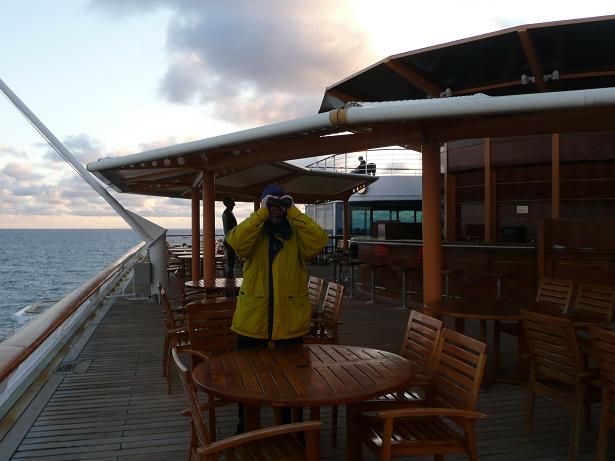
Idziemy robić zdjęcia na 11 pokład, zwany Sunrise. Po schodach. / We’re going to take photos on deck 11, called Sunrise. Up the stairs.

Poniżej: Zbig czujnie obserwuje morze

Zbig on the sea

ok. 23:20 / about 11:20 p.m.

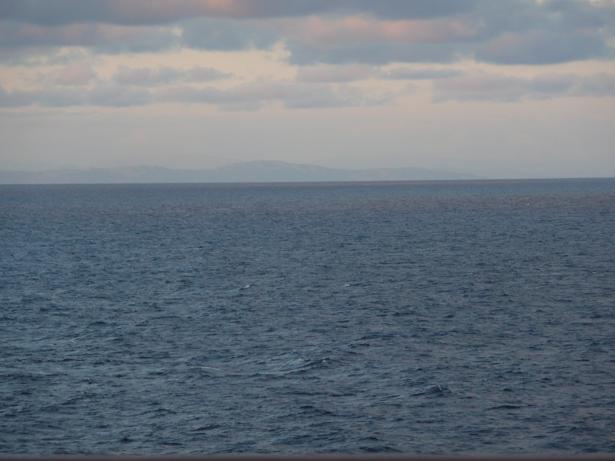
Jeszcze jest jasno. Na wschodzie, czyli od sterburty (starboard), gdzie mieści się nasza kabina, widać brzeg Norwegii, a przez lornetkę nawet całkiem wyraźną Norwegię. Jakoś tak przyjemniej, kiedy zamiast bezmiaru wód majaczy zamglony ląd. A, i mamy norweską sieć w telefonach komórkowych.

It’s still light. To the east, from the starboard side (where our cabin is located), we can see the Norwegian coast, and even Norway quite clearly through binoculars. It’s somehow nicer when, instead of vast waters, there’s a misty land looming. Oh, and we have Norwegian network on our cell phones.

Poniżej: przez lornetkę widać norweskie domki, przyklejone do niegościnnie wylądającego wybrzeża. / Below: Through binoculars, Norwegian cottages can be seen, clinging to the inhospitable shoreline.

LEKCJA: Taniec zwany Canadian Stomp, najlepiej tańczy się przy piosenkach Shania Twain

Palce prawej nogi, pięta, tupnąć. Palce lewej nogi, pięta, tupnąć x 2

Krok do tyłu prawą nogą (powoli), lewą nogą (powoli), 

prawą do tyłu (szybko), lewą do tyłu (szybko), prawa (powoli)

Przeplatanka w prawo, przeplatanka w lewo, prawą nogę przekładamy nad lewą, robiąc 1/4 obrotu w lewo, i w tymże kierunku skręcamy lewą nogę i resztę ciała. I znowu od początku.

Odmianą tego tańca jest The Achy Breaky Dance i megatrudny (dla mnie) Chattahoochee dance. 

Amsterdam – wrota oceanu, czyli welcome aboard / the gates of the ocean, or welcome aboard

13.06 – ok. 11.00

– Widzisz ten wieżowiec, tam, za oknem? – pytam Pana i Władcę i otwieram usta ze zdziwienia.

– Tamten?

– Tak, to nasz statek, extra, co? – piszczę z radości.

  • Do you see that skyscraper there, outside the window? – I ask Master and Commander, my mouth dropping open in surprise. – That one?
  • Yes, that’s our ship, cool, huh? – I squeal with joy.

Jest ogromny. Jest tak ogromny, że widać tylko kawałek środkowej części. I jest biały i śliczny. Nie wierzymy w reklamy, ani w kit wciskany przez różne agencje turystyczne, ale potwór za oknem naprawdę wygląda nieźle.

It’s huge. So huge that only a sliver of the center is visible. And it’s white and beautiful. We don’t believe the advertising or the nonsense pushed by various travel agencies, but the monster outside the window really does look pretty.

Przed chwilą oddaliśmy naszą limuzynę w ręce nieznanego faceta z nieznanej firmy parkingowej. Nie mamy wyjścia – nie stać nas na parking za 45 euro/dzień, a ich oferta na 2 tygodnie to 190 euro. Niby wszystko jest legalnie, ale nikt na Passenger Terminal o nich nie słyszał… Oprócz jednej pani z informacji. I tego musimy się trzymać. W każdym razie samochód odjechał w nieznane, a w bagażniku zostały kanapki z wędliną, serek wiejski lekki i bułeczka z serem. Dobra, zapomniałam. Trzeba będzie zrobić kwarantannę samochodu przed jazdą powrotną. O ile kiedyś odzyskamy nasze Audi.

We just handed our limousine over to an unknown man from an unknown parking company. We have no choice – we can’t afford the 45 euro/day parking, and their offer for two weeks is 190 euro. It’s supposedly legal, but no one at the Passenger Terminal has heard of them… Except for one woman at the information desk. And we have to stick to that. In any case, the car drove off into the unknown, leaving behind cold cut sandwiches, light cottage cheese, and a cheese roll in the trunk. Okay, I forgot. We’ll have to quarantine the car before driving back. If we ever get our Audi back.

ok. 12:30

Odprawa trwała półtorej godziny, wyglądało to podobnie jak na lotnisku. Bagaże oddaliśmy wcześniej na parterze i to przebiegło błyskawicznie. Siedzimy i czekamy, aż na ekranie pojawi się przypisany nam wcześniej numer. Ludzi jest mnóstwo, a 90 procent to tzw. Golden Age. Ja i PiW też nie jesteśmy tacy młodzi, razem mamy ponad 100 lat, ale tutaj średnia wieku to ok. 65, wliczając w to nieliczne (na szczęście!) dzieci. Zaczynam być głodna, przypominam sobie kanapki, ale mam nadzieję, że niedługo zjemy coś lepszego.

Check-in took an hour and a half, similar to airport check-in. We’d already checked in our bags on the ground floor, and it went by quickly. We sat and waited for our assigned number to appear on the screen. There were a lot of people, and 90 percent were from the Golden Age. MC and I aren’t that young either; we’re over 100 between us, but the average age here is around 65, including the few (thankfully!) children. I’m starting to get hungry, I remember the sandwiches, but I hope we’ll have something better soon.

Po odstaniu dłuuugiej kolejki dostajemy kartę pokładową (sea pass), która upoważnia nas do wejścia na nasz statek w każdym porcie, do otwierania drzwi naszej kajuty (pokoju? kabiny?) i do opłacania wszystkich rzeczy, które będą na statku płatne: alkoholu, zakupów w sklepach, posiłków w płatnych restauracjach i wielu innych rzeczy, o których nie mamy na razie pojęcia.

After waiting in a looong queue, we receive a boarding pass (sea pass), which authorizes us to board our ship at any port, to open the door of our cabin (room? stateroom?) and to pay for all the things that will be charged on the ship: alcohol, purchases in shops, meals in paid restaurants and many other things that we have no idea about yet.

Na statek weszliśmy przez rękaw, zaraz zrobiono nam zdjęcie, które będzie przypisane do karty pokładowej. W recepcji na trzecim pokładzie powitalny szampan/sok pomarańczowy. Kabiny jeszcze nie gotowe, więc zwiedzamy: odkrywamy kino, śliczną bibliotekę na dwóch poziomach, windy, baseny i czynną restaurację – pożeram gaspacho, wędzoną rybę z pięknymi bułeczkami, deserek (wcale nie malutki) i kawka na koniec. Żyć nie umierać.

We boarded the ship through a jet bridge and were immediately photographed, which would be added to our boarding pass. At the reception desk on the third deck, we received a welcome drink of champagne and orange juice. Our cabins weren’t ready yet, so we explored: we discovered a cinema, a lovely library on two levels, elevators, swimming pools, and an open restaurant – I devoured a gazpacho, smoked fish with beautiful rolls, a dessert (not small at all), and coffee at the end. Life is wonderful.

ok. 14:30

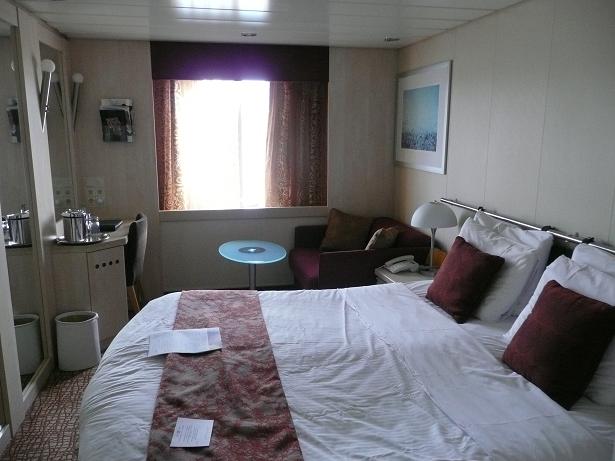
Kajuty gotowe. Nasza (i pewnie każda inna) jest śliczna – wielkie łóżko, wielkie okno, na jednej ze ścian wielkie lustra. Trzy szafy, telewizor, biurko szafki z obu stron łóżka (koi?), lampy, telefon – naprawdę nic więcej do szczęścia nie trzeba. Łazienka malutka, ale jest w niejwszystko, co łazienka mieć powinna. Przynajmniej według moich standartów. 

The cabins are ready. Ours (and probably every other cabin) is lovely – a large bed, a large window, large mirrors on one wall. Three wardrobes, a TV, a desk, cabinets on either side of the bed (or bunk?), lamps, a telephone – that’s all you really need to be happy. The bathroom is tiny, but it has everything a bathroom should have. At least by my standards.

Nasza kajuta przytulna i niebrzydka / home away from home.

ok. 15:45

Ćwiczenia ewakuacyjne. Spodziewałam się większych emocji, a tu nie dość, że nie kazali zakładać kamizelek ratunkowych, to jeszcze wszystko odbyło się na scenie w teatrze. A teatr mają ogromny. W każdym razie zostaliśmy przeszkoleni. Już nic nam nie grozi.

Evacuation drills. I expected more excitement, but not only were they not telling us to wear life jackets, but it all took place on a theater stage. And they have a huge theater. At least we’ve been trained. We’re out of danger now.

Żeglujemy, żeglujemy!

We are sailing, we are sailing – Amsterdam from the water

16:30

Odpływamy! Odpływamy! Kiedy widzę jak zwiększa się dystans między nabrzeżem a statkiem, to jak zwykle w takich doniosłych chwilach chce mi się ryczeć, ale nie ma czasu! Trzeba biec na najwyższy pokład (jedenasty) i krzyknąć gdzieś na dziobie „Jestem królem świata!”. 

We’re sailing away! We’re sailing away! When I see the distance between the quay and the ship increasing, as always in such momentous moments, I want to cry, but there’s no time! I have to run to the top deck (the eleventh) and shout from somewhere in the bow, „I am the king of the world!”

Jest słonecznie, ale zimno. Brzegi kanału z kamienicami, magazynami, dokami wyglądają jak miniaturki. Statek buczy na pożegnanie, ludzie machają, wieje wiatr, robimy zdjęcia i udajemy starych marynarzy.

It’s sunny but cold. The banks of the canal, with their tenement houses, warehouses, and docks, look like miniatures. A ship hums its farewell, people wave, the wind blows, we take photos and pretend to be old sailors.

po 18:00 / after 6 p.m.

Pierwsza kolacja. Kolacje będą się dzielić na formalne i „smart casual”. Dziś nie trzeba się stroić, ale i tak wrzucamy na siebie coś lepszego niż dżinsy i swetry. Przy stole mamy parę Amerykanów i parę Słoweńców, wszyscy oprocz nas na emeryturze. Nie ma świetnej zabawy, ale jedzenie wynagradza nam wszystkie trudy dzisiejszego dnia. Jest pysznie i obficie, a profiterolki z czekoladą… 

First dinner. Dinners will be divided into formal and „smart casual.” There’s no need to dress up today, but we still wear something better than jeans and sweaters. At the table are an American couple and a Slovenian couple, all retired except us. It’s not a huge party, but the food makes up for all the hardships of the day. It’s delicious and plentiful, and the chocolate profiteroles…

Po kolacji zwiedzamy dalej. Mamy plan statku, ale i tak musimy wszystko odkryc  – miejsca do tańczenia, kasyno, siłownię i spa. A przede wszystkim miejsce najbardziej magiczne, najwspanialsze, najbardziej ulubione – na 10 pokładzie jest restauracja, gdzie można jeść 24/7 to co się chce i ile się chce. Gdzie można się napić różnych herbatek (naliczyłam 15 rodzajów), egzotycznych i swojskich soczków, gorącej czekolady i wody z lodem. Siedząc przy stolikach można przez wielkie okna obserwować morze/ocean, czytać, rozmawiać, poznawać ludzi. Chyba się tu przeniosę na stale.

After dinner, we continue exploring. We have a map of the ship, but we still have to explore everything – the dancing spots, the casino, the gym, and the spa. And above all, the most magical, the most wonderful, the most beloved place – on deck 10, there’s a restaurant where you can eat whatever you want, as much as you want, 24/7. There you can drink a variety of teas (I counted 15 kinds), exotic and home-made juices, hot chocolate, and ice water. Sitting at the tables, you can watch the sea/ocean through the large windows, read, chat, and meet people. I think I’ll move here permanently.

Na razie kurs na Lofoty. Dystans do przebycia: 1017 mil morskich. / For now, we’re on course for Lofoten. Distance to cover: 1,017 nautical miles.

RADA: Strzeżcie się fotografów „statkowych”. Zdybią was wszędzie. Zrobione przez nich najtańsze zdjęcie to 19,90 $. Na szczęście nie trzeba tych zdjęć wykupywać – wiszą sobie w galerii foto do końca rejsu. Nie martwcie się – grzeczne „nie, dziękuję” załatwia sprawę. Niegrzecznego nie próbowałam. 

TIP: Beware of „ship photographers.” They’ll catch you everywhere. The cheapest photo they take is $19.90. Fortunately, you don’t have to buy these photos—they’ll hang in the photo gallery until the end of the cruise. Don’t worry—a polite „no, thank you” will do the trick. I haven’t tried the rude one.

RADA: Bądźcie mili dla wszystkich członków załogi, nawet tych najniższych rangą: sprzątaczy kabin i obsługujących toalety. Pochodzą często z małych wiosek gdzieś w Azji i strasznie tęsknią za domem. I są strasznie grzeczni i mili i odnoszą się do was z szacunkiem. Nie stosujcie nigdy zasady „płacę i wymagam”, bo oni i tak robią wszystko, żebyś był zadowolony.

TIP: Be nice to all crew members, even the lowest-ranking ones: cabin cleaners and restroom attendants. They often come from small villages somewhere in Asia and are terribly homesick. They are also incredibly polite and kind, treating you with respect. Never adopt the „pay and demand” approach, as they will do everything they can to please you anyway.