Rejs statkiem wielkim lub małym. Kto o tym nie marzył, czytając o wielkich odkrywcach, dalekich lądach, skarbach ukrytych na bezludnych wyspach. Gdzie odnaleźć ślady romantyzmu ery żaglowców i odkrywania nowych lądów? Przecież nie w lotach samolotem.
Sun: 24 hours above the horizon / Słońce: 24 godziny nad horyzontem
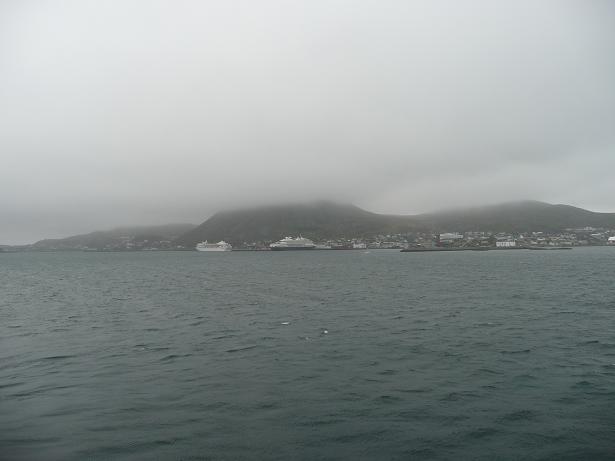
Temperature: 5°C, heavy cloud cover, and fog as thick as cream. / Temperatura: 5 st. C, duże zachmurzenie i mgła jak śmietana
Location: Port of Honningsvåg, Norway / Pozycja: port Honningsvag, Norwegia
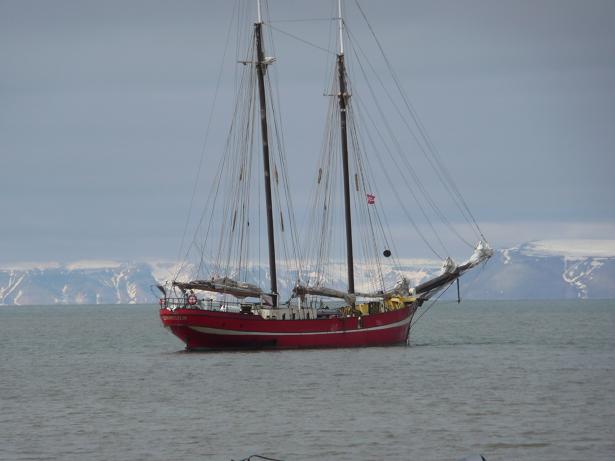
Honningsvåg roadstead: / Reda portu Honnigsvag:
Honnigsvag Harbour
We’ve been anchored off the port of Honningsvåg since 7:00 a.m. Unfortunately, there was no space at the quay because tourists had flocked in from everywhere. I counted four large passenger ships and several smaller ones. That means another trip by tender. It would be great—if only it didn’t smell so strongly of exhaust fumes.
Od 7:00 stoimy na redzie w porcie Honningsvag. Niestety, nie było miejsca przy nabrzeżu, bo nazjeżdżało się turystów zewsząd. Naliczyłam 4 wielkie statki pasażerskie i kilka mniejszych. Czyli znów czeka nas podróż szalupą. Byłoby super, gdyby tylko tak bardzo nie śmierdziało spalinami.
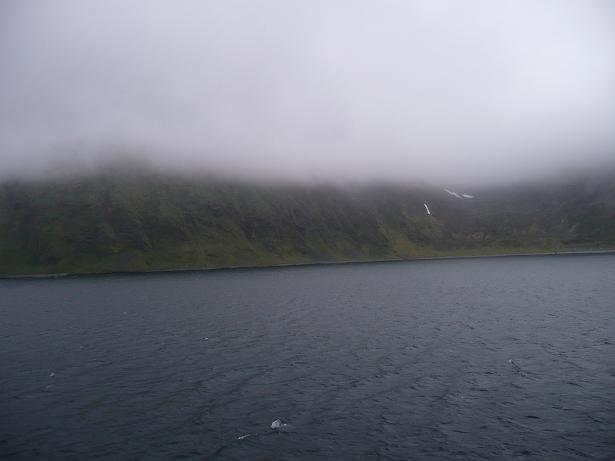
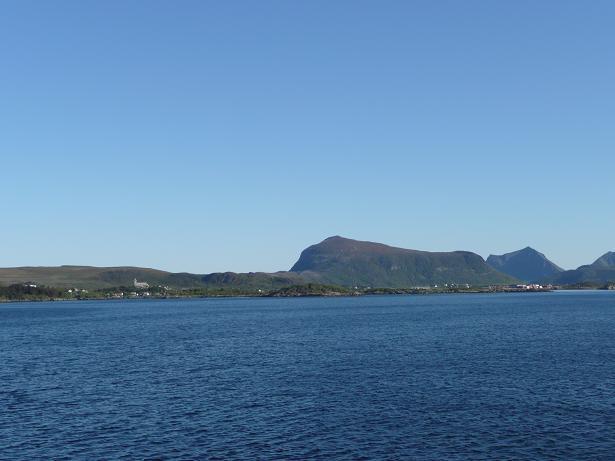
The city looks lovely from a distance. It sits picturesquely on steep, rocky slopes. There are no trees, but lichens are in full bloom. This gives the surrounding hills a dark green hue, making them appear more inviting than they actually are.
Miasto wygląda ładnie z daleka. Leży sobie malowniczo na stromych, skalistych zboczach. Nie ma drzew, za to porosty są w pełnym rozkwicie. To nadaje okolicznym wzgórzom ciemnozielony odcień, który sprawia, że wyglądają bardziej gościnnie, niż są w rzeczywistości.
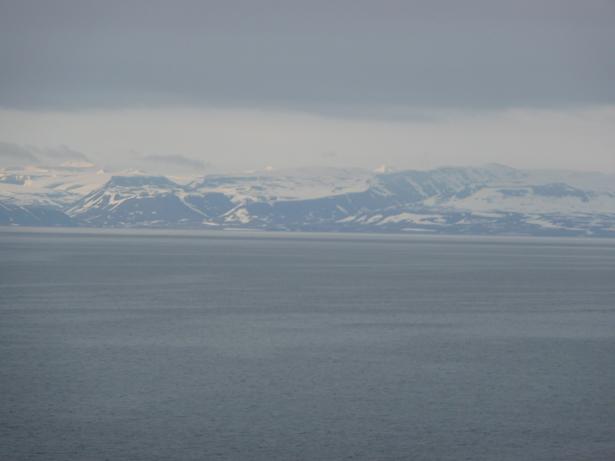
The hills around Honningsvåg: / Wzgórza wokół Honnigsvag:
Hills around Honnigsvag
Honningsvåg became a city in 1996—even though, strictly speaking, it shouldn’t have. Norwegian law requires a city to have a population of at least 5,000, yet Honningsvåg has only half that number. Perhaps the designation is based on the tourists visiting the North Cape; they arrive in such vast numbers that it reportedly takes 1,000 ships a year to transport them all. This makes the town one of Northern Europe’s hottest destinations.
Honningsvag stało się miastem w 1996 roku. Stało się miastem, choć nie powinno się nim stać. Norweskie prawo nakazuje, aby miasto liczyło co najmniej 5.000 mieszkańców. Honningsvag ma ich o połowę mniej. Być może chodzi tu o liczbę turystów, którzy co roku odwiedzają Nordkapp, a jest ich takie mnóstwo, że potrzebują ponoć 1.000 statków rocznie, żeby tu przybyć. To czyni miasto jednym z najgorętszych miejsc północnej Europy.
It all began in the 16th century, when Richard Chancellor—captain of the English ship Edward Bonaventure—was searching for a northern route to China. A storm drove him to this spot (1553), and he named it North Cape. Christian IV, King of Denmark, visited the site in 1599; Louis Philippe, King of France, in 1795; and Oscar II, King of Sweden, in 1873. He was followed shortly by Emperor Wilhelm II and, not long after, by King Rama of Siam. And in 2012, here we are.
A zaczęło się w XVI wieku, kiedy Richard Chancellor, angielski kapitan statku „Edward Bonaventure” szukał północnej drogi do Chin. Sztorm zapędził go w to miejsce (1553). Nazwał je North Cape. W 1599 roku odwiedził to miejsce Christian IV, król Danii, w 1795 Ludwik Filip, król Francji, w 1873 Oskar II, król Szwecji, zaraz po nim był cesarz Wilhelm II i niedługo potem król Syjamu Rama. A w 2012 jesteśmy my.
The mysterious island of Magerøy: / Tajemnicza wyspa Mageroy:
Honningsvåg is located on the island of Magerøya, at the same latitude as Siberia and Alaska, yet the climate here is much milder. The entire coast is warmed by the powerful Gulf Stream, making it possible—for instance—to raise reindeer at the mouths of the fjords. In summer, temperatures can reach as high as 20 degrees!
Honningsvag leży na wyspie Mageroy, na tej samej szerokości geograficznej co Syberia i Alaska, ale klimat jest tu dużo łagodniejszy. Całe to wybrzeże ogrzewane jest potężnym prądem Golfstrom i dzięki temu przy ujściu fiordów można tu np. hodować renifery. Latem temperatura może dochodzić do 20 stopni!!!
But not today. Today it is cold, foggy, and gloomy. / Ale nie dzisiaj. Dziś jest zimno, mgliście i ponuro.
I was woken by the rocking and creaking of the ship. Through the spray-splattered porthole, I could see huge waves and clouds of water whipped up by the strong wind. But was it a storm yet? My inner ear said yes, but my reason said no. The only thing that came to mind was:
Obudziło mnie kołysanie i skrzypienie statku. Przez zachlapany wodą bulaj/okno widać wielkie fale i chmury wody unoszone przez silny wiatr. Ale czy to już jest sztorm? Mój błędnik mówi, że tak, a rozum, że nie. Jedyne, co mi przychodzi do głowy to:
Way hay and up she rises, way hay and up she rises, way hay and up she rises early in the morning
What will we do with a drunken sailor, what will we do with the drunken sailor, what will we do with the drunken sailor early in the morning?
Shave is belly with the rusty razor, shave his belly with the rusty razor, shave his belly with the rusty razor early in the morning.
Way hay and up she rises, way hay and up she risies, way hay and up she rises early in the morning.
Put him in the bed with the capitain’s daugther, put him in the bed with the capitain’s daugther, put him in the bed with the capitain’s daughter early in the morning.
Way hay and up she risies, way hay and up she risies, way hay and up she rises early in the morning…
I have to get up soon and go scrub the deck. / Zaraz trzeba wstawać i iść szorować pokład.
8:10
Smaller waves, oh yes. But the fog is thick as milk. The ship lets out a deep, booming blast every ten minutes or so—I feel like they can hear it all the way in Nuuk. Still, I’m hoping this route isn’t too busy.
Fale mniejsze, o tak. Za to mgła jak mleko. Statek buczy basem co kilkanaście minut i mam wrażenie, że słyszą go nawet w Nuuk. Ale mam też nadzieję, że ta trasa nie jest zbyt uczęszczana.
For now, one needs to eat one’s fill. Grandfather used to say that a well-fed person has an easier time surviving than a hungry one. He was undoubtedly right.
Póki co trzeba się najeść. Dziadek mawiał, że najedzony człowiek przeżyje łatwiej niż głodny. Niewątpliwie miał rację.
I’ve discovered another place to stuff my face: they serve waffles, pancakes, and crêpes—but thankfully, they aren’t amazing! You can easily skip them and comfortably make room for another croissant au chocolat.
Odkryłam jeszcze jedno miejsce do nażarcia się: dają tam gofry, pacakes i naleśniki, ale na szczęście! Na szczęście nie są fantastyczne! Można odpuścić i spokojnie zmieścić kolejnego croissant au chocolat.
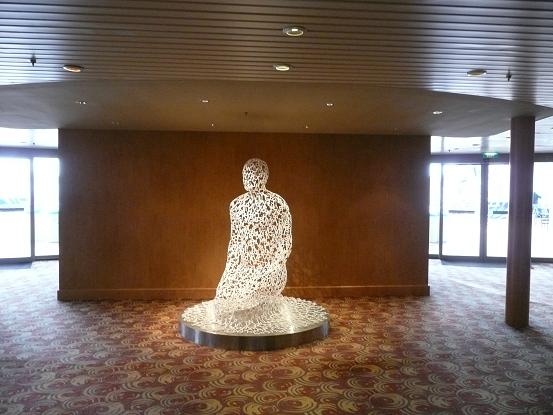
Celebrity Constellation – one of sculptures / jedna z rzeźb:
Celebrity Constellation – sculpture
ok. 12:00
We took a salsa lesson, but we aren’t satisfied. The Chinese, on the other hand—who learn classical dances en masse—are always happy, even though they lack a sense of rhythm. Unlike us—the sultans of merengue! Since we’ve lost our enthusiasm for physical activity, it’s time to head to Deck 10 and see if—just like every day at this hour—they’re serving Asian cuisine, pasta, and pizza, along with, of course, those dream-worthy soups, salads, and sandwiches.
Zaliczyliśmy lekcję salsy, ale nie jesteśmy usatysfakcjonowani. Chińczycy natomiast, którzy gremialnie i hurtowo uczą się klasycznych tańców są zawsze zadowoleni, mimo, że nie mają wyczucia rytmu. Nie to co my, sułtani merengue! Ponieważ jesteśmy zniechęceni do aktywności fizycznej, więc pora iść na 10 pokład i zobaczyć czy tak jak codziennie o tej porze będzie kuchnia azjatycka, pasty i pizze, oraz niewątpliwie rzecz jasna zupki, sałatki i kanapeczki jak marzenie.
21:20
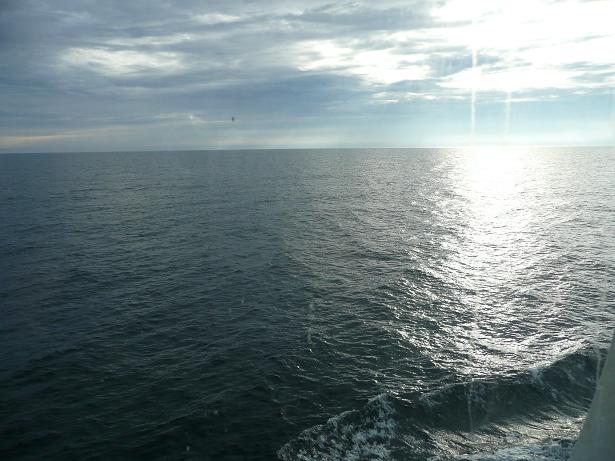
We are roughly halfway to the North Cape. The temperature is around 5 degrees, and a strong wind is blowing. The fog has lifted, and the horizon is visible. And whales. If there were any.
Jesteśmy mniej więcej w połowie drogi na Przylądek Północny. Temperatura około 5 stopni, wieje silny wiatr. Mgła się rozwiała, można zobaczyć horyzont. I walenie. Gdyby były.
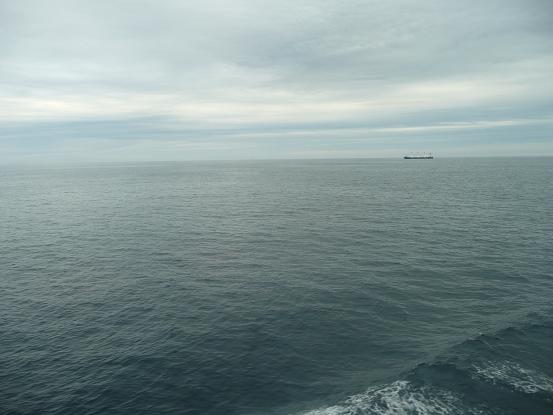
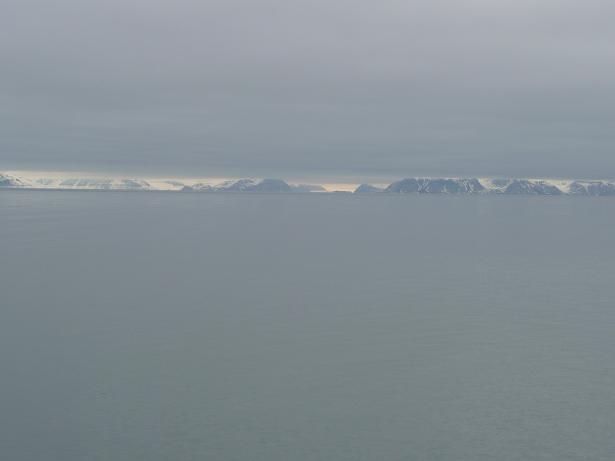
The horizon on the way to the North Cape: / Horyzont w drodze na Przylądek Północny:
Barents Sea
Dinner tonight was a formal affair, so I had to wear my stretchiest dress. What they do with the food here goes beyond anything I could have imagined in terms of culinary wonders. Today’s menu: celeriac cream soup with caramelized apple, goat cheese cannelloni, and pistachio clafoutis with peaches.
Kolacja dziś była „formal” i musiałam włożyć najbardziej rozciągliwą kieckę. To, co robią tu z żarciem przechodzi moje wyobrażenia o kulinarnych cudach. Dziś: krem z selera z karmelizowanym jabłkiem, canelloni z kozim serem i pistacjowe clafoutis z brzoskwiniami.
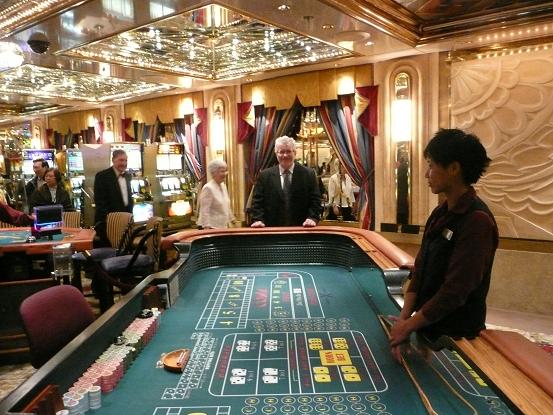
Z. plays roulette or baccarat at the casino: / Z. gra w ruletę, czy bakarata w kasynie:
We also caught the performances by the young artists in the Celebrity Constellation theater. I would have preferred to go for a walk, but Z. has recently developed a passion for so-called high culture and isn’t keen on skipping the daily shows. Oh well. As for me, today I attended a napkin-folding class and a lecture on navigation. I know everything there is to know about compasses now, so—heya, Norway!
Zaliczyliśmy też występy młodych ludzi w Teatrze Celebrity Constellation. Wolałabym w tym czasie pospacerować, ale Z. zapałał ostatnio miłością do kultury tzw. wysokiej i nie za bardzo chce odpuścić codzienne przedstawienia. Niech będzie. Ja dziś byłam na lekcji składania serwetek i na wykładzie o nawigacji. O kompasie wiem wszystko, więc heya Norge!
Pieszo od Muzeum do portu idziemy około 15 minut. Trwałoby to krócej, ale muszę wszędzie zajrzeć. Poza widzianym już wcześniej bałaganem odkrywam sklep z rogami reniferów, pilnowany przez dwa psy, które na razie mnie olewają, ale nie wiadomo kiedy im podpadnę.
It takes about 15 minutes to walk from the museum to the harbor. It would take less time, but I have to poke my nose into everything. Beyond the clutter I’ve already seen, I discover a shop selling reindeer antlers, guarded by two dogs that are ignoring me for now—though there’s no telling when I might get on their bad side.
Węgiel i rogi reniferów – kwintesencja Spitsbergen:
Coal and reindeer horns – all we want from Spitsbergen
Jest ciepło, mimo że jest zimno. Ponieważ nie ma wiatru i słońce zdecydowało się przebić przez mgliste chmury, więc nie marzniemy, ale gdzieniegdzie błyszczy szron. Zwykle wyobrażamy sobie Północ tak, jak pisywał o niej Jack London (np. w powieści „Bellew Zawierucha” – kiedy ktoś splunął, ślina zamarzała z trzaskiem w powietrzu). Mimo tego, że Longyearbyen jest dalej na północ niż Klondike, to średnie temperatury nie są bardzo niskie: w styczniu to pomiędzy -13 a -20 stopni C. Nie sądzę, żeby w tych warunkach cokolwiek zamarzało w ciągu sekundy. Wiele lat mieszkałam w Kanadzie i zima była tam o wiele sroższa. Wprawdzie nie próbowałam pluć na mrozie, ale oczy czasem zamarzały…
It feels warm, even though it is cold. Because there is no wind and the sun has decided to break through the misty clouds, we aren’t freezing, though frost glitters here and there. We usually picture the North the way Jack London described it (for instance, in the novel Smoke Bellew—where, if someone spat, the saliva would freeze with a crack in mid-air). Even though Longyearbyen lies further north than the Klondike, average temperatures aren’t extremely low: in January, they range from -13°C to -20°C. I don’t think anything would freeze instantly in these conditions. I lived in Canada for many years, and the winters there were far harsher. Admittedly, I never tried spitting in the freezing cold, but my eyes would sometimes freeze shut…
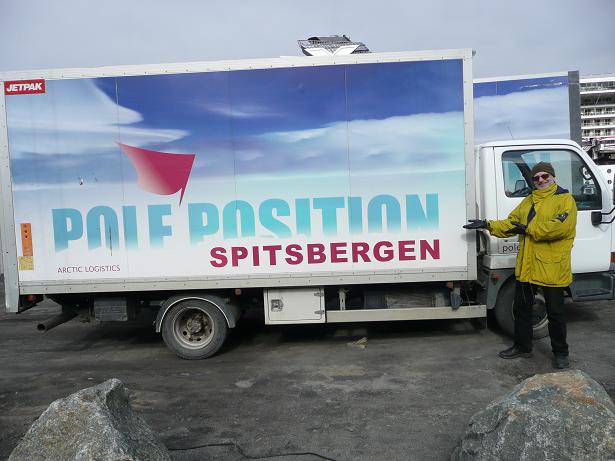
Coś dla miłośników Formuły 1 – Pole Position: / Something for Formula 1 fans – Pole Position:
Spitsbergen – Pole Position
Mimo, że nie można tu liczyć na ekstremalne temperatury jak na Yukonie, to na pewno warto tu przyjechać zimą, żeby posłuchać śpiewu zorzy polarnej. Aurora borealis (czyli zorza polarna północna, bo ta na południu nazywa się aurora australis) jest na mojej krótkiej liście „rzeczy, które trzeba zobaczyć przed śmiercią”. Oczywiście zorzę można zobaczyć dużo dalej na południe, ale tutaj, w tej osadzie, w czasie trwającej 24 godziny na dobę nocy na pewno ma to większy urok.
Although you won’t encounter the extreme temperatures found in the Yukon, it is certainly worth visiting in winter to hear the „song” of the aurora borealis. The aurora borealis (the northern lights—as opposed to the aurora australis in the south) is on my short list of „things to see before I die.” Of course, the aurora can be seen much further south, but here in this settlement—amidst the 24-hour darkness—the experience undoubtedly holds a special charm.
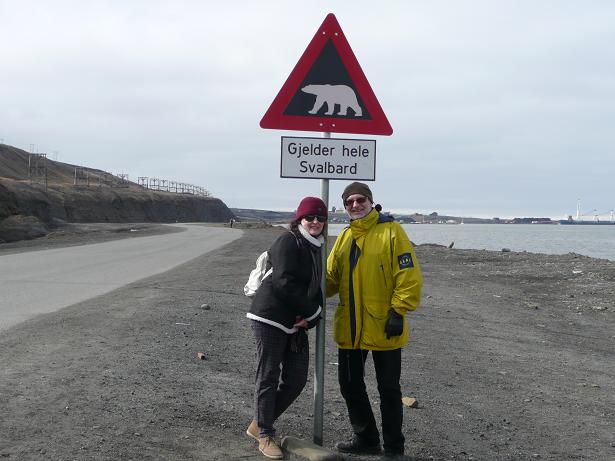
Już widać nasz statek, gdzie czeka na nas gorąca czekolada serwowana w każdym porcie jeszcze przed wejściem na trap/szalupę. Idziemy jeszcze na kraniec miasta, żeby zrobić sobie zdjęcie przed najsłynniejszym znakiem drogowym na świecie.
Our ship is already in sight, where hot chocolate awaits us—served in every port just before we board the gangway or tender. We also head to the edge of town to take a photo in front of the most famous road sign in the world.
Here Longyearbyen ends, and the North begins: / Tu kończy się Longyearbyen, a zaczyna Północ:
Me and Zbig and the most famous road sign in the world
Longyearbyen’s motto is „unique, secure, and creative.” I think it’s very apt. Despite the place’s ugliness and the harsh conditions, I’d like to live here for a while. The town looks better at night…
Motto Longyearbyen to: „unique, secure and creative”. Myślę, że bardzo trafione. Mimo całej brzydoty tego miejsca i trudnych warunków chciałabym pomieszkać tu trochę. To miasto lepiej wygląda w nocy…
ok. 20:00
We set sail at 7:00 PM. Fog has once again enveloped the fjord. We are now heading south, towards the North Cape. We have 534 nautical miles to cover.
Odpłynęliśmy o 19:00. Mgła znowu ogarnęła fiord. Teraz płyniemy na południe, na Przylądek Północny. Do przepłynięcia 534 mile morskie.
Żegnaj Longyearbyen: / Bye Longyearbyen:
Good by Longyearbyen
Isfjorden ends here; beyond lies only the Greenland Sea./ Tu kończy się Isfjorden, dalej tylko Morze Grenlandzkie.
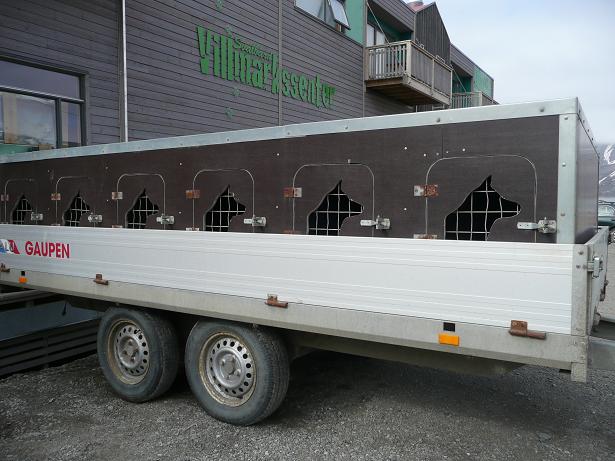
Kilka kilometrów od Longyearbyen jest Basecamp Trapper’s Station. Jest to miejsce, gdzie można poczuć klimat czasów, w których dobry psi zaprzęg był kluczową sprawą dla przetrwania podróżnika, czy trapera.
Przyczepa do przewozu psów:
Dog trailer in Spitsbergen
Można tam zobaczyć jak wyglądało życie myśliwych i ich psów. Psów mieszka tam ponoć 90, ale nie ma możliwości się z nimi zaprzyjaźnić. Rasy pierwotne nie łaszą się do obcych.
Jest tam kilka chatek, gdzie można spędzić na przykład miesiąc miodowy w towarzystwie martwych zwierząt, a właściwie ich skór. Nie jest to miejsce dla fundamentalistycznych estetów, bo wygląda to dosyć przaśnie, ale w noc polarną na pewno ma swój urok. Można też stamtąd wyruszyć na wyprawę psim zaprzęgiem, zimą na płozach, latem na kołach, na cały dzień (8 godzin), lub na pół dnia (4 godziny), ale też na trzy, lub siedem dni, na prawdziwą, arktyczną wyprawę. Ceny od 950,- NOK (ok. 530,- PLN) za pół dnia, do 29.900,- NOK (ok. 16.800 PLN) za 7-dniową wyprawę pod hasłem „Dead or the west coast”. Są to słowa legendarnego podróżnika Fridtjov Nansena, ale … hm… sama nie wiem. Nie ma jeszcze jakiejś innej alternatywy?
Ale trzeba wrócić do codzienności w Longyearbyen, a nie mam pojęcia jak wygląda codzienność żyjących tu ludzi. Dzieci wracają ze szkoły z plecakami, najczęściej na rowerach. Para na oko 40-letnia wraca ze sklepu z zakupami. Dwie kobiety rozmawiają przed sklepem, kilku młodzieńców siedzi przed pizzerią, jakiś młody człowiek grzebie w silniku swojego skutera śnieżnego. Właściwie tak jak w każdym małym miasteczku na świecie, no może poza tym, że pod koniec czerwca wszyscy mają na sobie zimowe kurtki (nie wiem w czym w takim razie chodzą w zimie) i tym skuterem śnieżnym…
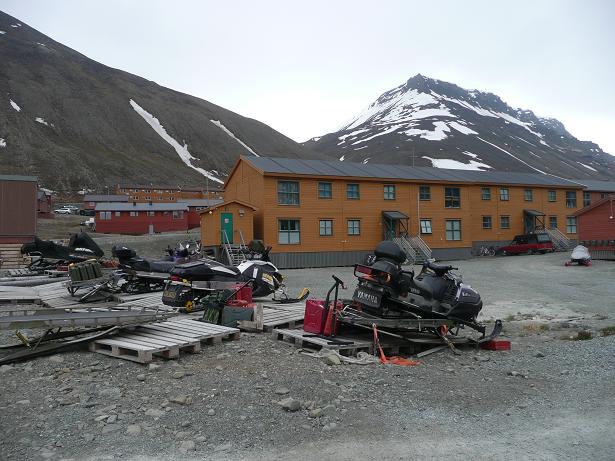
Parking przed blokiem mieszkalnym:
Car/ ski-doo parkng
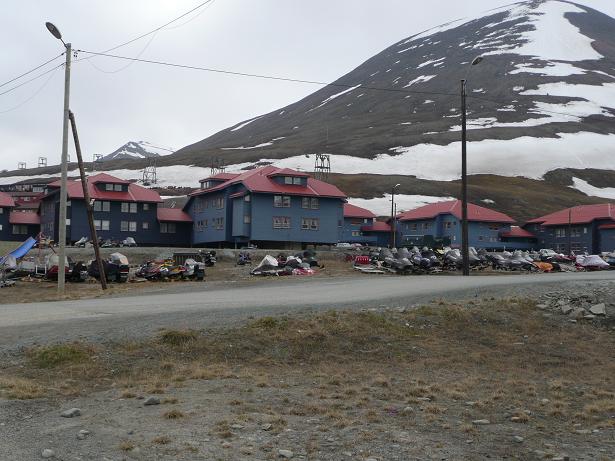
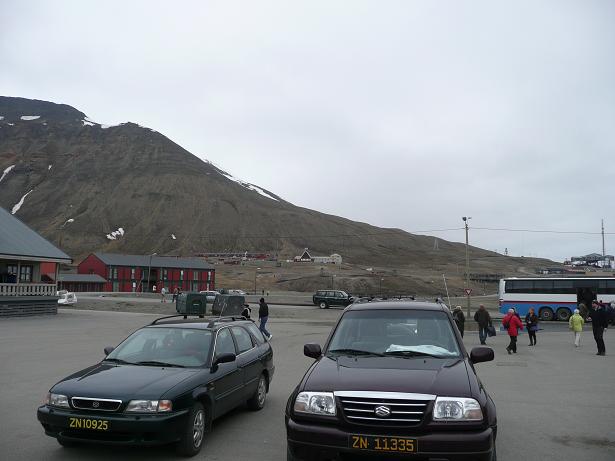
Tak, problem zbyt rozdmuchanej motoryzacji nijak się ma do Longyearbyen. Przed „blokami” parkują głównie „snowmobiles”, niektóre z potężnymi silnikami. Samochody są, głównie SUV i wielkie pick-up, trochę osobowych, ale nie wygląda na to, żeby nie mieli gdzie zaparkować przed bankiem czy pocztą w centrum. Wiodąca marka to Toyota.
Parking przed blokami:
Parking lots
CIEKAWOSTKA: w Longyearbyen nie ma przestępstw!
Pora ruszać do Svalbard Museum. Jest to ogromny, brunatny budynek prawie nad brzegiem fiordu, w północnej części miasta. Jak to w muzeum – artefakty dotyczące kultury materialnej ludzi zamieszkujących Svalbard, historia wielorybnictwa i górnictwa, flora i fauna archipelagu, ta ostatnia w postaci wypchanej. To mnie zresztą odstraszyło skutecznie – przy wejściu na sale ekspozycyjne stoi wielka głowa morsa i patrzy z wyrzutem.
Fiord i Svalbard Museum:
Fjord and Svalbard Museum
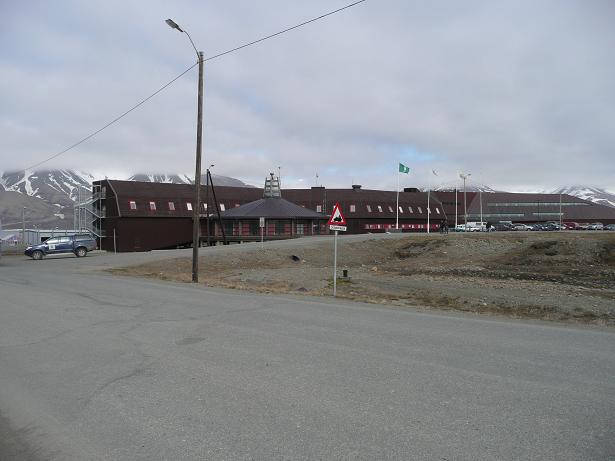
Slalbard Museum z innej perspektywy i znak drogowy dot. skuterów śnieżnych:
Svalbard Museum
Ale w hallu można się ogrzać, skorzystać z toalety (sic!), obejrzeć filmy o przyrodzie Svalbardu, kupić książki w różnych językach, mapy, plakaty, kubki, pocztówki, zdjęcia, skóry różnych biedaków, breloczki i inne rzeczy, które prawdziwy turysta kupić musi.
INFO: muzeum jest otwarte od 10:00 do 17:00. Cena biletu – 75,- NOK (ok. 12,50,- Euro). Akceptują wszystkie karty kredytowe, euro i dolary US.
W tym samym budynku mieści się Centrum Uniwersyteckie, Norweski Instytut Polarny i Środowiskowe Centrum Informacyjne.
Wracamy do domu, czyli na statek. Przynajmniej nie ma obawy, że zrobi się ciemno i nie trafimy z powrotem…
W Longyearbyen żyją i pracują bardzo specyficzni ludzie, którzy przez pół roku żyją w ciemnościach polarnej nocy, rozświetlanej tylko księżycem i zorzami polarnymi, a przez pół roku w 24-godzinnym blasku słońca. Wiele okien w domach jest zasłoniętych folią odblaskową, taką jaką stosuje się na przednich szybach samochodów w obronie przed słońcem.
The people who live and work in Longyearbyen are a unique breed; for half the year, they exist in the darkness of the polar night—illuminated only by the moon and the aurora—and for the other half, they live in the 24-hour glare of the sun. Many windows in the houses are covered with reflective foil, the kind used on car windshields to block out the sun.
Prawie centrum Longyearbyen: / almost city center of Longyerbyen
Longyearbyen center
Wracając do mieszkańców miasta… Ich liczba to około 2040 osób. 40% to Norwegowie, a około 16% to Tajlandczycy (lub Tajowie, niespodzianka), Szwedzi, Duńczycy, Niemcy i Rosjanie. Polaków naliczono 10-ciu (dane z 2010). 60% to mężczyźni, a przedział wiekowy to średnio 25 – 44 lat i prawie nie ma osób powyżej 66-go roku życia. Ciekawe jest to, że średnia długość pobytu w mieście to 4,3 roku dla obcokrajowców i 6,6 dla Norwegów. I kto tu jest Wikingiem?
Returning to the town’s residents… The population stands at around 2,040 people. 40% are Norwegian, while about 16% are Thai (or Thais—surprise!), Swedes, Danes, Germans, and Russians. Ten Poles were recorded (2010 data). 60% are men; the average age range is 25–44, and there are almost no residents over the age of 66. Interestingly, the average length of stay in the town is 4.3 years for foreigners and 6.6 years for Norwegians. So, who’s the Viking here?
Smutne jest to, że średnio w gospodarstwie domowym żyje 1,6 osoby. Muszą być nieźle samotni… Za to są bardzo wyedukowani – 54 procent z nich ma wyższe wykształcenie. Średnia kobiet to 40% z wyższym wykształceniem.
It is sad that the average household consists of 1.6 people. They must be quite lonely… On the other hand, they are highly educated—54 percent of them hold a university degree. The figure for women is 40%.
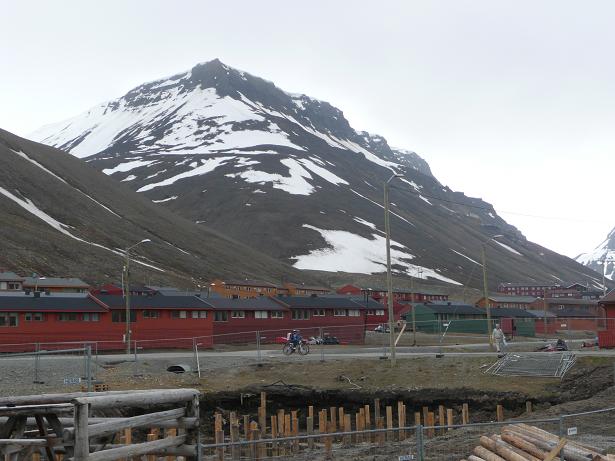
Wszyscy ci samotni, mądrzy i młodzi ludzie mieszkają w dwupiętrowych domach-blokach, trochę przypominających baraki, lub w jednopiętrowych chatach. Niektóre są pomalowane na kolor bordowy, inne na niebiesko, jeszcze inne na zielono. Nie są radosnymi plamami rozświetlającymi krajobraz. Są ponure i czasem prawie ich nie widać na tle ciemnej ziemi. Zimą na pewno wyglądają lepiej, kiedy wokół jest jasno od śniegu i światła księżyca w pełni.
All these solitary, intelligent young people live in two-story apartment blocks—resembling barracks—or in single-story cottages. Some are painted burgundy, others blue, and still others green. They are not cheerful splashes of color brightening the landscape; rather, they are somber, sometimes barely visible against the dark earth. They surely look better in winter, when the surroundings are illuminated by snow and the light of a full moon.
Domek jednorodzinny w Longyearbyen: / One-familly house in Longyearbyen:
Typical house in Longyearbyen
Wszystkie domy stoją na palach. Nie takich jak w Wenecji, bo są krótsze i nie tak grube, ale nie da się tego ukryć – stoją na palach. Te „fundamenty” są sprytnie osłonięte drewnianymi deskami, ale i tak można zobaczyć wodę, w której te pale stoją. Nie dziwię się – przy wielkich ilościach wody, jaka wiosną spływa z lodowców nie ma mowy o trzymaniu kompotu i ziemniaków w piwnicy.
All the houses stand on piles. Not like the ones in Venice—these are shorter and not as thick—but there is no denying it: they stand on piles. These „foundations” are cleverly screened by wooden planks, yet you can still see the water the piles are standing in. It’s no surprise—given the massive volume of water flowing down from the glaciers in spring, there is no way to store fruit compote or potatoes in a cellar.
Domy na palach: / Houses on piles:
Houses on stilts – Longyearbyen
INFO: hotele w Longyearbyen nie są tanie. Najtańszy pokój dwuosobowy to około 950 pln, na szczęście ze śniadaniem. Średnio trzeba zapłacić 1500 pln, ale droższe też się znajdą. Hotele są tak nieliczne, że nie muszą się obawiać konkurencji, ale też nie narzekają na brak gości, więc czasem lepiej rezerwować z wyprzedzeniem.
INFO: Hotels in Longyearbyen aren’t cheap. The cheapest double room costs around 950 PLN—fortunately, that includes breakfast. You’ll pay an average of 1,500 PLN, though pricier options are available too. There are so few hotels that they face little competition, yet they certainly don’t lack guests, so it’s often best to book in advance.
CIEKAWOSTKA: niedaleko Longyearbyen jest niesamowite miejsce: Svalbard Global Seed Vault, czyli Globalny Bank Nasion. W tunelu wydrążony w wiecznej zmarzlinie umieszczonych jest 20 milionów jadalnych nasion. Przechowywane są na wypadek globalnego kryzysu, choć jeśli kryzys byłby naprawdę globalny, to nikt do tych nasion nie dotrze, nie mówiąc już o ich posadzeniu. Budowa rozpoczęła się w czerwcu 2006 roku. Placówka została sfinansowana przez rząd Norwegii. Wiele państw wysyła tu „swoje” nasiona, a za ich przechowywanie nie pobiera się opłat. Ziarenka mogą w tych warunkach wytrzymać nawet tysiące lat.
FUN FACT: Near Longyearbyen lies an amazing place—the Svalbard Global Seed Vault. Housed in a tunnel carved into the permafrost are 20 million edible seeds. They are stored there for a potential global crisis, though if such a crisis were truly global, no one would be able to reach the seeds—let alone plant them. Construction began in June 2006, and the facility was funded by the Norwegian government. Many countries send „their” seeds here, and no fees are charged for storage. Under these conditions, the seeds can remain viable for thousands of years.
Pozycja: 78 stopni 13 minut nord / Position: 78 degrees 13 minutes North
tempertura: 3 stopnie C / temp 3 degrees C
ok. 16:00 / 4 p.m.
Z portu do miasta jest około 2 km. Szkoda, że nie wiedzieliśmy o tym wcześniej, bo zaoszczędzilibyśmy 10 dolców. Ale dla kogoś, kto ma ciężką astmę przebycie tej drogi pieszo jest niewskazane – może zostać zabity przez kurz. Kurzy się zewsząd: ze skalistych, czarno-brunatnych zboczy, z poboczy wysypanych żwirem i małymi kawałkami węgla, z okolicznych „łąk”, które porastają suche trawki, którymi mogłyby się nakarmić tylko wielbłądy, bo co do reniferów nie jestem pewna. Wzdłuż drogi stoją dziesiątki piętrowych baraków o nieciekawej architekturze, która niestety dominuje w szaro-brązowym krajobrazie. W budynkach mieszczą się firmy, a przed budynkami panuje bałagan – porozrzucane drewniane belki drewniane, porzucone betonowe słupy, pojemniki na oleje i inne substancje płynne, jakieś beczki, kontenery na śmieci… Wiem, że tu się pracuje, ale naprawdę nikomu nie zależy?
It is about 2 km from the port to the town. It’s a pity we didn’t know that before; we could have saved ten bucks. However, walking that distance is ill-advised for someone with severe asthma—the dust could kill them. Dust rises from everywhere: from the rocky, black-and-brown slopes; from verges strewn with gravel and small chunks of coal; and from the surrounding „meadows,” overgrown with dry grasses that only camels could stomach—though I’m not so sure about reindeer. Dozens of multi-story barracks line the road, featuring the drab architecture that unfortunately dominates this gray-brown landscape. These buildings house various businesses, yet the area in front of them is a mess: scattered wooden beams, abandoned concrete pillars, containers for oil and other liquids, assorted barrels, trash bins… I know work goes on here, but does no one really care?
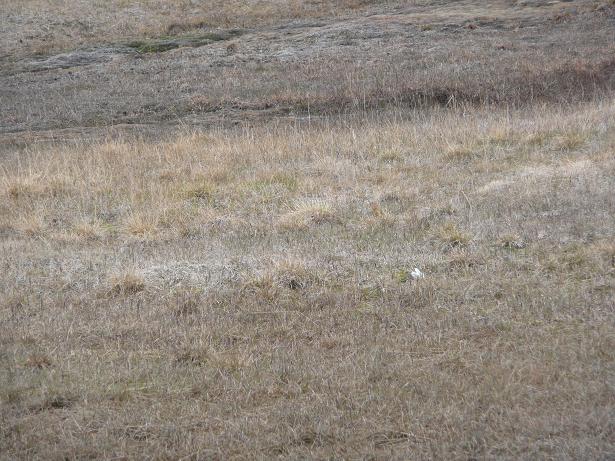
Wiosenne łąki. To malutkie, białe to ptak: / Spring meadows. That tiny white thing is a bird:
Little, white bird on spring meadows – Longyearbyen
Docieramy do centrum Longyearbyen. Robi wrażenie, choć nie mogę się zdecydować jakie to wrażenie. Po pierwsze brak zieleni, nie licząc zieleni drewnianych domów. Skąd biorą drewno na budowę, skoro nie rośnie tu nic oprócz porostów? Chyba jednak wszystko muszą sprowadzać, oprócz skór reniferów, które leżą biedne na stołach i ławach przed sklepami. Myślę, że te sklepy z pamiątkami to pamiątki po reniferach.
We reach the center of Longyearbyen. It makes an impression, though I can’t quite decide what kind. For one thing, there is no greenery—unless you count the green paint on the wooden houses. Where do they get the wood for building when nothing grows here but lichen? I suppose they have to import everything—except for the reindeer hides, which lie forlornly on tables and benches outside the shops. I think these souvenir shops are actually memorials to the reindeer.
Sklepy, sklepy na głównej ulicy w Longyearbyen / Shops, shops on the main street in Longyearbyen.
Main street in Longyearbyen
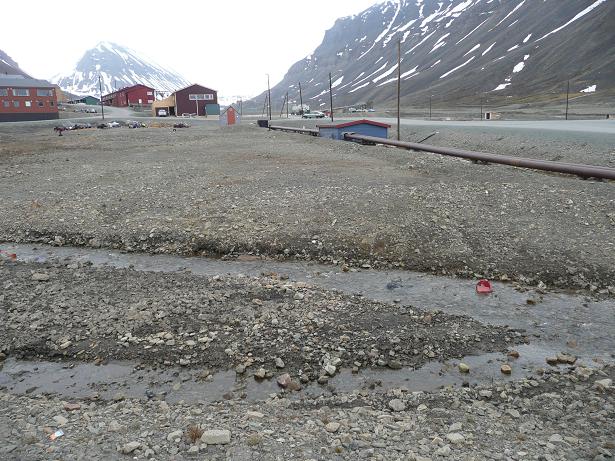
Przez miasteczko płynie strumień, zwany Longyearelva – teraz zamieniony w cienką stróżkę, w której walają się plastikowe odpadki, papiery, a obok biegną niczym nie osłonięte rury. Nie robi to dobrego wrażenia, chyba, że ktoś bardzo, bardzo lubi przemysłowe krajobrazy.
A stream known as the Longyearelva flows through the town—now reduced to a thin trickle littered with plastic waste and paper, with exposed pipes running alongside it. It does not make a good impression, unless one is very, very fond of industrial landscapes.
Nie wiem co powiedzieć: / I don’t know what to say:
City center, Longyearbyen
Po drugiej stronie strumienia, w stronę portu, na niewielkim wzgórzu jest słynny kościół. Nie ma wspaniałych renesansowych malowideł czy rzeźb, nie ma wielkich organów i żaden wielki król nie został tu namaszczony. Jest skromny, surowy (można? można!) i od ponad 70 lat jest najbardziej wysuniętym kościołem na północ. I pewnie tak zostanie.
On the other side of the stream, towards the harbor, a famous church stands on a small hill. It boasts no magnificent Renaissance paintings or sculptures, no grand organ, and no great king was ever anointed here. It is modest and austere—proof that simplicity works—and for over 70 years, it has held the title of the northernmost church. And it likely always will.
Centrum Longyearbyen. W oddali kościół: / Longyearbyen city center. Church in the distance:
Longyearbyen center with famous church in the distance
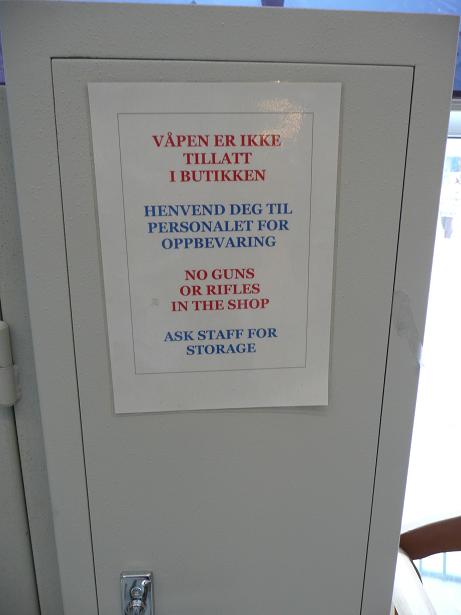
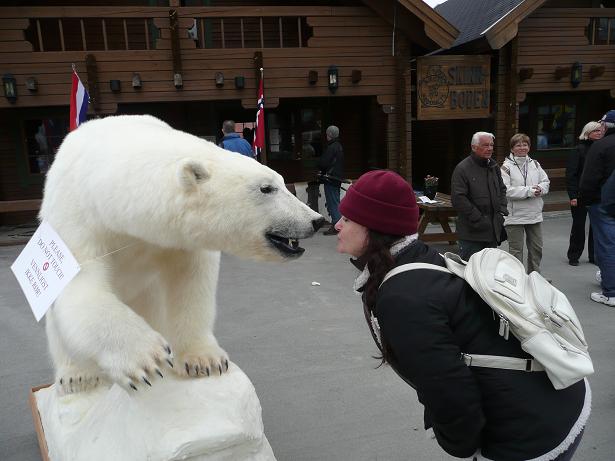
No i jest wielki niedźwiedź polarny, z którym każdy turysta robi sobie zdjęcie. Powiedziano nam, że w razie spotkania z prawdziwym niedźwiedziem raczej nie musimy uciekać – i tak nas dogoni i zabije. Wiele osób nosi broń, w tym długie karabiny z wąską lufą.
And then there’s the huge polar bear that every tourist takes a photo with. We were told that if we were to encounter a real bear, there’s really no point in trying to run—it would catch and kill us anyway. Many people carry weapons, including long-barreled rifles.
Napis w tutejszym supermarkecie: / A sign in the local supermarket:
In the local supermarket
Właściwie przestrzegają przed wychodzeniem z miasta bez broni odstraszającej niedźwiedzie i bez doświadczenia pozwalającego tej broni użyć. Zamierzam bardzo przestrzegać tych zaleceń.
They strongly advise against leaving town without a bear deterrent and the experience needed to use it. I intend to strictly follow these recommendations.
Słodki miś, który gdyby był żywy, pożarłby mnie z kościami: / A cute bear that, if it were alive, would devour me whole—bones and all:
I kissed a bear. Polar bear
W sklepach są głównie pamiątki: oprócz skór i rogów można kupić wyroby z wełny, polarne kurtki, nie polarne piżamy, straszliwe drzeworyty z sylwetkami zwierząt i inne rzeczy niezbędne do ekspedycji na Biegun Północny. Ceny są kosmiczne, ale satysfakcja z kupienia czegoś na Spitsbergenie – bezcenna. W dodatku wszystko „made in Norway”.
The shops mostly stock souvenirs: alongside hides and antlers, you can buy wool products, fleece jackets, non-fleece pajamas, ghastly woodcuts featuring animal silhouettes, and other essentials for a North Pole expedition. The prices are astronomical, but the satisfaction of buying something on Spitsbergen is priceless. Plus, everything is „Made in Norway.”
INFO: sklepy z pamiątkami są otwarte od 10:00 do 17:00, w soboty od 10:00 do 14:00, ale mogą być otwarte np. tylko od 1 czerwca do 15 sierpnia. Jeden z największych sklepów, Svalbardbutikken jest otwarty od 10:00 do 20:00, w sobotę do 18:00, w niedzielę od 15:00 do 18:00 przez cały rok.
INFO: Souvenir shops are open from 10:00 to 17:00 (and from 10:00 to 14:00 on Saturdays), though some may only be open, for example, from June 1st to August 15th. One of the largest shops, Svalbardbutikken, is open year-round: from 10:00 to 20:00 (until 18:00 on Saturdays) and from 15:00 to 18:00 on Sundays.
Na głównej ulicy, jak na każdej głównej ulicy mieszczą się najważniejsze instytucje konieczne do funkcjonowania miasteczka. Puby są na pewno, jest też kilka restauracji. W barze można zjeść najdalej wysuniętą na północ pizze albo kebab, w restauracji – norweską czarną gęś, lub pulpety z renifera.
The main street—like any main street—is home to the key institutions essential for the town’s functioning. There are certainly pubs, as well as a few restaurants. At a bar, you can eat the northernmost pizza or kebab, while at a restaurant, you might have Norwegian black goose or reindeer meatballs.
Jest też bank, biblioteka, przedszkole ze smutnymi słoneczkami wymalowanymi na szybach. Naprzeciwko remiza strażacka. Na wschodnim skraju jest wyciąg narciarski, latem nieczynny z wiadomych względów.
There is also a bank, a library, and a kindergarten with sad suns painted on the windows. Opposite stands the fire station. At the eastern edge, there is a ski lift—closed in summer for obvious reasons.
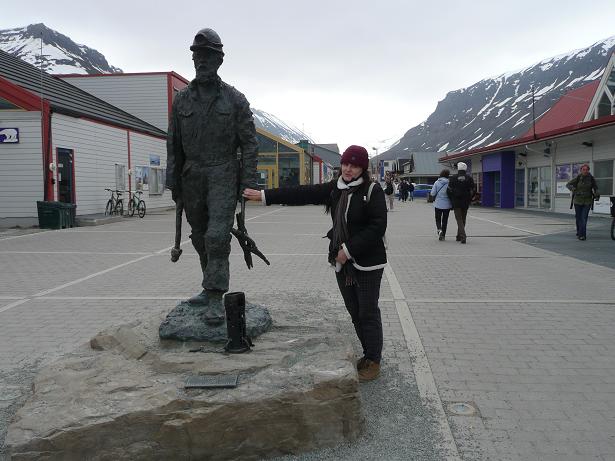
Przy głównej ulicy jest też pomnik górnika – nie jakiś monument, ale niewielka postać zmęczonego człowieka, który z kilofem w ręku wraca do domu.
On the main street, there is also a statue of a miner—not a grand monument, but a small figure of a weary man returning home with a pickaxe in his hand.
Statue of coal miner – main street in Longyearbyen
Pozycja: Adventfjorden, archipelag Svalbard ( czyli „zimne wybrzeże”), wyspa Spitsbergen / Location: Adventfjorden, Svalbard archipelago (meaning „Cold Coast”), Spitsbergen Island
Ok. 6:30 / 6:30 a.m.
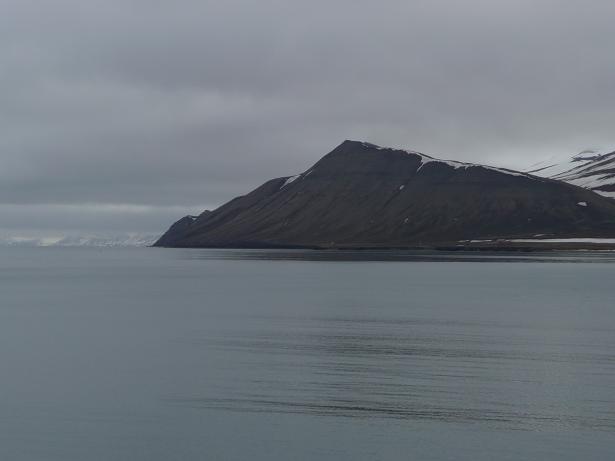
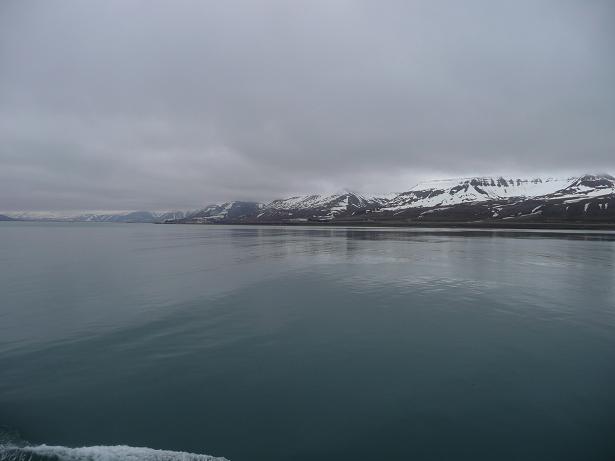
Przed 5 rano wpłynęliśmy do do fiordu Isfjorden o długości 107 kilometrów, co czyni go drugim co do wielkości fiordem na wyspie Spitsbergen. Chmury wiszą tak nisko, że nie widać szczytów nagich, stromych, czarnych gór. Powierzchnia wody jest gładka, czyli nie ma wiatru. Nawet ptaki się jeszcze nie obudziły, bo nie ma ani jednego. Chyba, że mają jakieś obfitsze poranne pastwiska.
Before 5 a.m., we sailed into Isfjorden—a 107-kilometer-long fjord, making it the second-largest on the island of Spitsbergen. The clouds hang so low that the peaks of the bare, steep, black mountains are invisible. The water’s surface is smooth, meaning there is no wind. Even the birds haven’t woken up yet; there isn’t a single one in sight—unless, of course, they have richer morning feeding grounds elsewhere.
Ponure wody Isfjorden. Jest około 5 rano, wszyscy jeszcze śpią, ale na mostku ktoś czuwa?
The gloomy waters of Isfjorden. It is around 5 a.m.; everyone is still asleep, but is someone keeping watch on the bridge?
5 a.m., Isfjorden.
Strome zbocza Spitsbergenu: / The steep slopes of Spitsbergen:
Spitsbergen and it’s steep hills
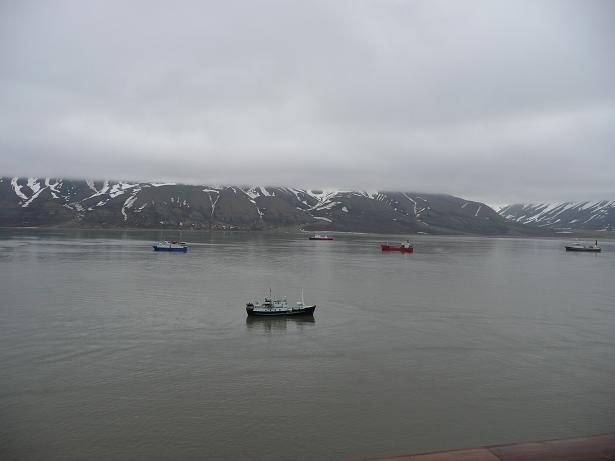
Mijamy małe przystanie kutrów i coś, co wygląda na manufaktury do przetwarzania ryb i małe doki. Jest bardzo cicho, jakbyśmy płynęli przez martwe wody. / We pass small fishing-boat moorings, what look like fish-processing workshops, and small docks. It is very quiet, as if we were sailing through dead waters.
Trawlers in Adventfjorden
Zbliżamy się do portu Bykaia, Adventfjorden: / We are approaching the port of Bykaia, Adventfjorden:
Port Bykaia, the gate of Spitsbergen
Ciekawe jaką pogodę miał John Munroe Longyear, kiedy latem 1901 roku przybył jako turysta na Spitsbergen, gdzie właśnie odkryto pokłady węgla. John wraz z przyjacielem Frederickiem Ayer (teść gen. Pattona, notabene) kupili norweską firmę górniczą i w 1905 założyli Arctic Coal Company z siedzibą w Bostonie, Massachusetts. Górnicy pochodzący głównie z Norwegii i Szwecji, żyjąc w bardzo ciężkich warunkach wybudowali osadę, w której osiedliło się 500 osób. Potem osada, zwana Longyear City rozrosła się i dzisiaj jest centrum administracyjnym i handlowym z 2040 mieszkańcami, zatrudnionymi głównie w górnictwie węgla, w arktycznych ośrodkach akademickich i badawczych i przemyśle turystycznym. Teraz miasto nazywa się Longyearbyen i niedługo się w nim znajdziemy.
I wonder what the weather was like for John Munroe Longyear when he arrived as a tourist on Spitsbergen in the summer of 1901—just as coal deposits were being discovered there. John and his friend Frederick Ayer (incidentally, General Patton’s father-in-law) purchased a Norwegian mining company and, in 1905, established the Arctic Coal Company, headquartered in Boston, Massachusetts. Miners—primarily from Norway and Sweden—built a settlement where 500 people made their homes, enduring very harsh conditions. That settlement, originally known as Longyear City, subsequently expanded; today, it serves as an administrative and commercial hub with a population of 2,040, employed chiefly in coal mining, Arctic academic and research institutions, and the tourism industry. The town is now called Longyearbyen, and we will be arriving there shortly.
ok. 9:00 / 9 a.m.
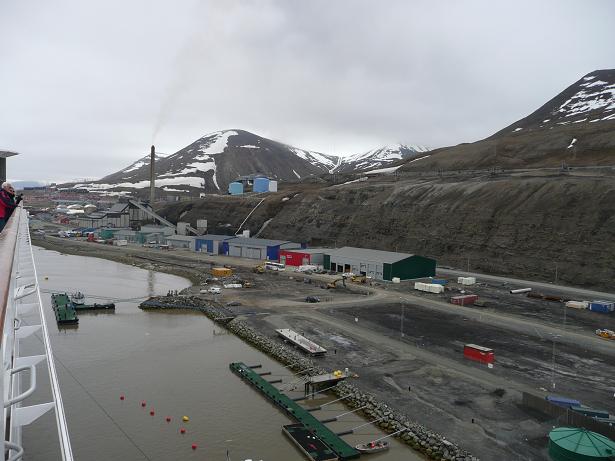
Właśnie przycumowaliśmy w porcie Bykaia w Adventfjorden. Byłam w wielu portach, ale ten jest jakiś… mały. I wydaje się… zabałaganiony. / We’ve just docked at the Bykaia port in Adventfjorden. I’ve been to many ports, but this one is sort of… small. And it seems… cluttered.
Na zboczu góry, przy której jest port widać słupy kolejki i wagoniki do transportu węgla. A swoją drogą… jeśli tu jest węgiel, to znaczy, że kiedyś musiały być tu wielkie drzewa i o wiele wyższe temperatury. Hm, czy ktoś na to już wpadł przede mną?
On the mountainside near the port, you can see the cableway pylons and the coal transport cars. And come to think of it… if there’s coal here, that means there must have once been huge trees and much higher temperatures. Hmm, has anyone else figured that out before me?
Mały kuter (?) ciągnie cumę naszego statku na brzeg: / A small cutter (?) is towing our ship’s mooring line to the shore:
Small ship is draging a rope for moor our ship
Port z bliska. Właśnie zacumowaliśmy: / A close-up of the port. We’ve just docked:
Z okna na 10 pokładzie widzę też dwie budy dla psów. Kundelki leżą na dachach swoich domów i nie robi na nich wrażenia nasz okręt – znowu najwyższy budynek w mieście. Port wygląda na wymarły, czasem tylko podjeżdża jakaś furgonetka. Niedługo powinny pojawić się autokary, które mają nas zawieźć do centrum Longyearbyen. Cena biletu: 5$.
From the window on Deck 10, I can also see two dog kennels. Mongrels are lying on the roofs of their shelters, unimpressed by our ship—once again the tallest building in town. The port looks deserted; only the occasional van pulls up. The buses meant to take us to the center of Longyearbyen should be arriving soon. Ticket price: $5.
Zbig karmi fiordy, żeby mógł sie potem chwalić, że jadły mu z ręki: / Zbig feeds the fjords so he can later boast that they ate right out of his hand:
Zbig and fjord
Przy okazji wypatrzyłam kogoś z załogi, kto wyprowadza małego, białego pieska na spacer. Już jakiś czas temu słyszałam szczekanie w części pokładu należącym do załogi, ale kiedy kogoś o to spytałam, to oczywiście zaprzeczył. Nie mówcie nic kapitanowi, a jeśli chodzi o mnie, to nie mam nic przeciwko zwierzętom na statku, pod warunkiem, że nie są to szczury.
While I was at it, I spotted a crew member taking a small white dog for a walk. I’d heard barking coming from the crew’s quarters a while back, but when I asked about it, the person naturally denied it. Don’t tell the captain; as for me, I don’t mind having animals on board—provided they aren’t rats.
10:00 a.m.
Zbig nakarmił fiord i nie pozostaje nam nic innego, jak wyruszyć. Słońce zaczyna znajdować sobie małe otworki w chmurach. To będzie piękny dzień. / Zbig has fed the fjord, and there is nothing left for us to do but set off. The sun is beginning to find small openings in the clouds. It’s going to be a beautiful day.
Pozycja: na zachodzie jesteśmy na tym samym równoleżniku, co południowe wybrzeża Grenlandii. Na wschodzie, daleko, daleko, około 2000 mil mijamy straszliwą Workutę. / Position: in the west, we are at the same latitude as the southern coast of Greenland. To the east—far, far away, some 2,000 miles off—we pass the dreaded Vorkuta.
Ok. 10:00 / 10 a.m.
Całą noc wiatr uderzał w statek, który trzeszczał i kołysał się, wywołując niepokój u szczurów lądowych. Nie jest to sztorm, ale fale są wyższe niż w poprzednie dni. Z mapy wynika, że jesteśmy między Morzem Grenlandzkim a Morzem Barentsa, czyli gdzieś pośrodku Oceanu Arktycznego.
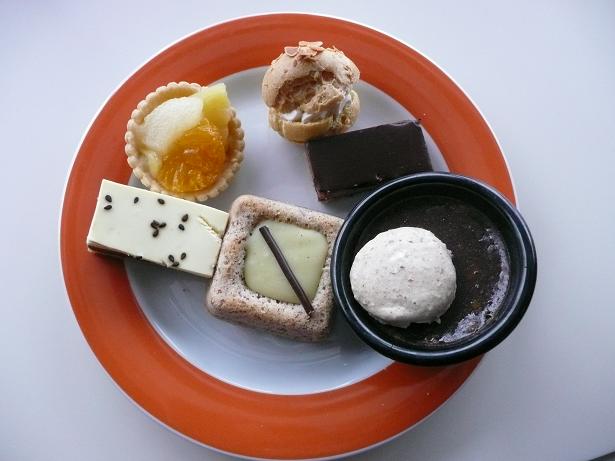
Na horyzoncie pustka – ani skał, ani okrętów, ani platform wiertniczych. Widziałam mewę latającą tuż nad falami, ale ona chyba mieszka na statku i wędruje sobie z nami po świecie. Jest szaro, chmury wiszą nisko, a nastroje może poprawić tylko obfite i pyszne jedzenie. Tego na szczęście nam tu nie brakuje. I nie mogę się oprzeć tym małym, cukierniczym cudeńkom, z których każde ma inny smak…
All night long, the wind battered the ship; it creaked and swayed, unsettling the landlubbers. It isn’t a storm, but the waves are higher than in previous days. The map shows we are between the Greenland Sea and the Barents Sea—somewhere in the middle of the Arctic Ocean. An empty horizon—no rocks, no ships, no oil rigs. I spotted a seagull flying just above the waves, though it likely lives on the ship and travels the world along with us. It’s a grey day with low-hanging clouds, and the only thing that can lift one’s spirits is a hearty, delicious meal. Fortunately, we have no shortage of that here. And I simply cannot resist those little confectionery marvels, each with a unique flavor…
You have to try this…. incredible taste. Thanks to our cooks.
ok. 12:00 / about noon
Zajrzeliśmy na wykład „Ocean ahead: how our ships move”. Było to dość ciekawe, nawet jak dla kogoś, kto tak jak ja ma niewiele wspólnego z techniką, choć wiele jej aspektów jest bardzo interesujących. Na szczęście wśród wielu bezcennych informacji przekazanych nam monotonnym głosem przez Głównego Mechanika, uzyskałam odpowiedź na nurtujące mnie pytanie: „czym do diabla powodowany jest ten powtarzający się głośny dźwięk, jakby statek miał właśnie zderzenie z małą, malutką górą lodową?”. „It’s a splash” – odpowiedział. Jasne. Pasażerom z Titanica też tak mówiono.
We dropped in on a lecture titled „Ocean Ahead: How Our Ships Move.” It was actually quite interesting—even for someone like me with little connection to engineering, though many aspects of the field are fascinating. Fortunately, amidst the wealth of invaluable information delivered in a monotone by the Chief Engineer, I got the answer to a question that had been nagging me: „What the hell is causing that recurring loud noise—the one that sounds like the ship is about to collide with a tiny, tiny iceberg?” „It’s a splash,” he replied. Right. That’s what they told the passengers on the Titanic, too.
Idziemy do kawiarenki internetowej dowiedzieć się jakie są ceny.
ok. 17:00 / 5 p.m.
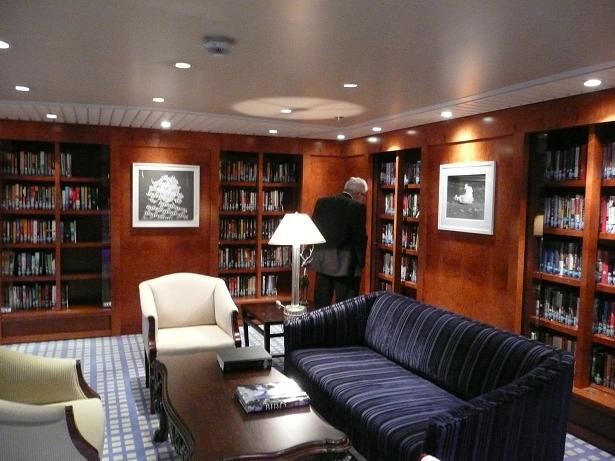
Prowadzimy dziś bardzo zdrowy tryb życia. Poza jedzeniem i wykładem wylegujemy się prawie cały dzień. Odpuściliśmy nawet lekcję foxtrota na korzyść filmu „Tower heist”. Posiedzieliśmy w bibliotece, porozmawialiśmy z bardzo sympatycznym małżeństwem z Niemiec i tak zleciał nam czas. W domu nigdy nie mamy okazji do takiego lenistwa i to przy pełnym korycie.
We are leading a very healthy lifestyle these days. Apart from meals and a lecture, we spend almost the entire day just lounging around. We even skipped our foxtrot lesson in favor of the movie Tower Heist. We spent some time in the library and chatted with a very pleasant couple from Germany—and that’s how the time flew by. Back home, we never get the chance for such idleness—and with such an abundant spread of food, no less.
Piękna biblioteka na naszym statku: / A beautiful library on our ship:
Wieje bardzo, więc nawet nie wychodziliśmy na pokład spacerowy, zresztą po co się męczyć. Jesteśmy podekscytowani jutrzejszym dniem – dotrzemy na legendarny Spitsbergen, największą wyspę archipelagu Svalbard.
It’s very windy, so we didn’t even go out onto the promenade deck—after all, why go to the trouble? We’re excited about tomorrow—we’ll be arriving at legendary Spitsbergen, the largest island in the Svalbard archipelago.
Svalbard, odkryty przez holenderskiego kapitana Willema Barentsa w 1596 jest otoczony jednymi z najbardziej niebezpiecznych wód na Ziemi. Wyspy są domem dla lisów arktycznych, niedźwiedzi polarnych, reniferów i wielu gatunków ptaków. Góry na wyspach są dzikie i strome, tworzą głębokie fiordy kształtowane przez potężne lodowce. Duża część archipelagu jest chroniona jako rezerwaty i Norweskie Parki Narodowe.
Svalbard, discovered by the Dutch captain Willem Barentsz in 1596, is surrounded by some of the most dangerous waters on Earth. The islands are home to Arctic foxes, polar bears, reindeer, and many bird species. The mountains on the islands are rugged and steep, forming deep fjords carved by massive glaciers. A large part of the archipelago is protected as nature reserves and Norwegian national parks.
Przy każdej okazji wypatruję wielorybów. Wieloryb ponoć objawia się tym, że wypuszcza wysoko fontannę wody i pokazuje kawałek ogona. Nic takiego nie udaje mi się zobaczyć na wzburzonej powierzchni.
I keep an eye out for whales at every opportunity. A whale supposedly reveals itself by sending up a high spout of water and showing a bit of its tail. I manage to see nothing of the sort on the choppy surface.
To właśnie teraz jest pora ich corocznych wędrówek z cieplejszych regionów do zimnych, ale bogatych w plankton wód północy. Pokonują ponoć 16 tysięcy kilometrów, co jest chyba rekordem wędrówek zwierząt. Choć marzę o zobaczeniu tych przepięknych stworzeń, to jednak wolałabym, żeby omijały z daleka wody Norwegii. To dziwne, ale rząd tego kraju ładuje miliardy koron w ochronę przyrody na całym świecie, a wraz z Japonią i Islandią nie chce zaprzestać polowań na wieloryby. Shame on you, Norway!
This is the time of their annual migration from warmer regions to the cold, plankton-rich waters of the north. They reportedly cover 16,000 kilometers—likely a record for animal migration. Although I dream of seeing these magnificent creatures, I would prefer them to steer clear of Norwegian waters. It is strange: the country’s government pours billions of kroner into nature conservation worldwide, yet—along with Japan and Iceland—refuses to stop whaling. Shame on you, Norway!
NOTKA: Jeśli jesteś zainteresowny/a ochroną morskich zwierząt, a w szczególności waleni, odwiedź stronę http://www.seashepherd.org „Sea Shepherd” to fantastyczna organizacja działająca na rzecz ochrony morskich zwierząt. Nie dajcie się zwieść propagandzie, która przedstawia „pasterzy morza” jako terrorystów, zagrażających porządkowi społecznemu. Nikt inny nie występuje tak mocno w obronie bezbronnych mieszkańców morza.
NOTE: If you are interested in the protection of marine animals—particularly cetaceans—visit http://www.seashepherd.org. Sea Shepherd is a fantastic organization dedicated to marine wildlife conservation. Do not be misled by propaganda portraying these „shepherds of the sea” as terrorists who threaten the social order. No one else stands up so strongly for the defenseless inhabitants of the sea.
ok. 20:00 / 8 p.m.
Wieczornych atrakcji jest bez liku: poza turniejami w kasynie możemy odwiedzić promenadę handlową i dowiedzieć się czegoś o diamentach. Możemy obejrzeć mecz Włochy : Irlandia na Euro 2012. Możemy obejrzeć występ statkowych artystów w teatrze. Możemy iść tańczyć na Midnight sun white party. Możemy iść napić się kakao, może coś przekąsić, a potem poczytać książeczki w ciepłym świetle przyłóżkowych lamp, zerkając na film w pokładowej TV.
There is a lot of evening attractions: beyond the casino tournaments, we can visit the shopping promenade and learn a thing or two about diamonds. We can watch the Italy vs. Ireland match at Euro 2012. We can catch a performance by the ship’s entertainers in the theater. We can go dancing at the Midnight Sun White Party. We can have some cocoa—perhaps a snack, too—and then read by the warm glow of bedside lamps while glancing at a movie on the cabin TV.
Mimo, że ciągle jasno wybieramy tę ostatnią opcję. / Even though we consistently and clearly choose the latter option.
RADA: Nie warto korzystać z „płatnych” restauracji. Kolacja w jednej z dwóch restauracji a la carte kosztuje średnio 30$ na głowę. To, co dostaje się do jedzenia niewiele różni się od „darmowych” kolacji w ogólnej restauracji („darmowych”, czyli w cenie rejsu). Obsługa jest równie fantastyczna jak w specjalnych restauracjach, a alkohol i tak zamawiany jest w okolicznych barach i jest dokładnie taki sam.
TIP: It’s not worth using the „paid” restaurants. Dinner at one of the two à la carte restaurants costs an average of $30 per person. The food you get differs little from the „free” dinners in the main dining room („free” meaning included in the cruise price). The service is just as fantastic as in the specialty restaurants, and the alcohol is ordered from nearby bars anyway—so it’s exactly the same.
wschód słońca: hahaha, skoro nie zaszło, to jak ma wzejść? / Sunrise: Hahaha—since it didn’t set, how is it supposed to rise?
temperatura: 12 stopni, słonecznie / 12 C, sunny
Pozycja: Lofoty / Lofoten
ok. 8:00
Welcome to Lofoten:
Lofoten – Leknes
Witamy na Lofotach:
Lofoten
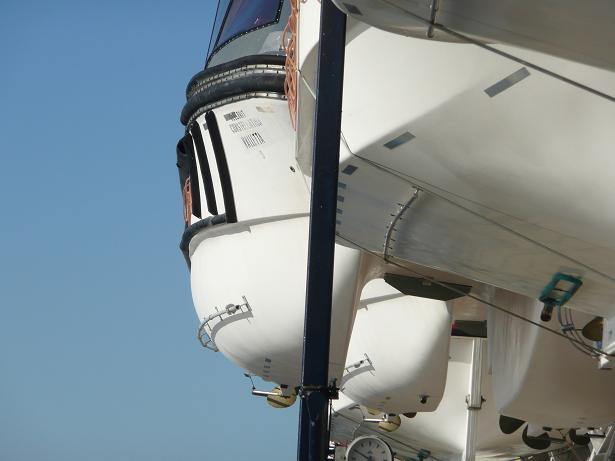
Obudził mnie głośny dźwięk łańcucha kotwicznego. Na czwartym pokładzie marynarze zaczęli spuszczać szalupy, którymi dotrzemy do portu. Szalupy, dotąd wiszące nad pokładem wydawały się małe, ale teraz, kiedy widzę jak wędrują w dół i kołyszą się niebezpiecznie nad pokładem, to widzę, jakie są wielkie. Dowiaduję się, że mogą zabrać do 120 osób i wydają mi się jeszcze większe.
I was awakened by the loud sound of the anchor chain. On the fourth deck, sailors had begun lowering the lifeboats that would take us to port. The lifeboats—which, until now, had hung suspended above the deck—had seemed small; but now, as I watch them descend and sway precariously overhead, I realize just how massive they are. I learn that they can carry up to 120 people, and they seem even larger to me.
Zdejmowanie szalupy z wieszaka:
Launch off
Szalupy welcome to – do portu Leknes / To the Leknes harbour
From ship to the harbour
Nie zdecydowaliśmy się na kupno wycieczki krajoznawczej. Za to wczoraj kupiliśmy bilety na autobus (7$ od osoby, mają jeździć co 20 minut, przystanek koło kościoła, możemy jeździć tyle razy, ile chcemy), który z portu ma nas zawieźć do Leknes – największego miasta archipelagu Lofotów, na wyspie Vestvagoy (nad „a” powinno być małe kółeczko, a „o” powinno być przekreślone). Trudno to sobie wyobrazić bo z pokładu widzę kilkanaście rozrzuconych domostw i coś, co wygląda na kościół albo remizę strażacką, a w tle niewielkie góry pokryte resztkami śniegu i rzadkimi lasami.
We decided against purchasing a sightseeing tour. Instead, yesterday we bought bus tickets ($7 per person—they are scheduled to run every 20 minutes from a stop near the church, and we can ride as often as we like) to take us from the port to Leknes—the largest town in the Lofoten archipelago, located on the island of Vestvågøy (the „a” should have a small circle above it, and the „o” should be crossed out). It is hard to imagine, though, because from the deck I can see only a dozen or so scattered houses and something that looks like a church or a fire station, set against a backdrop of small mountains covered in patches of lingering snow and sparse forests.
Lofoty są ponoć siedzibą wielu milionerów – ludzi, którzy dorobili się na hodowli łososi. Osiedlają się właśnie tu, ze względu na „balsamiczny” klimat, który niewątpliwie jest zasługą Golfstromu, czyli Prądu Zatokowego. Oczywiście tutejsza ekonomia oparta jest na rybołówstwie, zresztą po co zmieniać coś, co istnieje tutaj od setek, jeśli nie tysięcy lat?
The Lofoten Islands are reportedly home to many millionaires—individuals who made their fortunes in salmon farming. They choose to settle here specifically because of the „balmy” climate, which is undoubtedly owed to the Gulf Stream. Naturally, the local economy is based on fishing—and, after all, why change something that has existed here for hundreds, if not thousands, of years?
ok. 11.00
Wypiliśmy herbatę, zjedliśmy drugie śniadanie i rozleniwieni patrzymy na kursujące ze statku na ląd i z lądu na statek szalupy. Trzeba się zbierać, to pierwsze zejście na ten tajemniczy ląd, zamieszkany od pokoleń przez Wikingów („Norsemen” jest ponoć bardziej poprawne politycznie). I nie zapomnieć paszportów!
We drank our tea, had a mid-morning snack, and—feeling pleasantly languid—watched the tenders shuttling back and forth between the ship and the shore. Time to get moving; this marks our first landing on this mysterious land—inhabited for generations by Vikings (though „Norsemen” is, apparently, considered more politically correct). And don’t forget our passports!
15:30
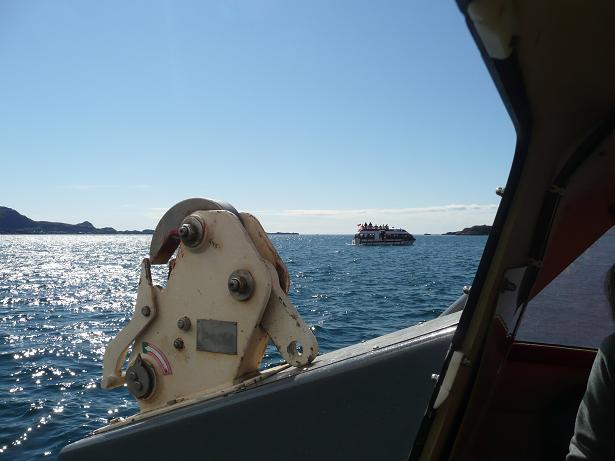
Z pokładu #1 wsiedliśmy do szalupy, która malowniczo okrążyła statek i po 10 minutach przycumowała w porcie. / From Deck #1, we boarded a lifeboat that picturesquely circled the ship and, after 10 minutes, docked in the port.
Witamy w Leknes na Lofotach
Leknes Port – Lofoten
Port to drewniany pomost, przy którym nie zmieściłyby się trzy końskie furmanki, a co dopiero nasz statek. Port to także 3 budyneczki wielkości garaży, w których są głównie sklepy z pamiątkami. Tuż za portem jest mała górka, na którą nie wiadomo czemu wszyscy postanowili wejść. Trochę dalej małe domki przycupnięte na brzegu z niskimi drzewami owocowymi.
The port consists of a wooden pier—too small to accommodate even three horse-drawn carts, let alone our ship. It also features three tiny buildings, about the size of garages, housing mostly souvenir shops. Just beyond the port lies a small hill—one that, for some inexplicable reason, everyone decided to climb. A little further on, small cottages huddle along the shore, nestled amidst low-growing fruit trees.
Okazuje się, że Leknes leży w głębi lądu, około 5 km. od portu, więc podróż trwa krótko. Mijamy przydrożne bagienka, w których brodzą mewy, kilkanaście domów z drewna, które raczej nie świadczą o zamożności ich mieszkańców. / It turns out that Leknes lies inland, about 5 km from the port, so the journey is brief. We pass roadside wetlands where seagulls are wading, and a dozen or so wooden houses that hardly speak to the affluence of their inhabitants.
Uliczka w Leknes: /Leknes street:
Little street in Leknes
Miasteczko typu „knajpa/kościół”, choć knajp tu raczej niewiele. Kilka ładnych domów przy uliczkach ze żwirową nawierzchnią, kwitną tulipany, czyli wiosna wreszcie nadeszła. Główna ulica to kilkanaście sklepów z różnościami: chiński market, włóczki, suknie ślubne, bank, poczta, kwiaciarnia, optyk.
A quintessential „bar-and-church” town—though, truth be told, there aren’t actually many bars here. A few pretty houses line the gravel streets; the tulips are in bloom, meaning spring has finally arrived. The main street features a dozen or so shops offering an eclectic mix: a Chinese variety store, yarn supplies, wedding dresses, a bank, a post office, a florist, and an optician.
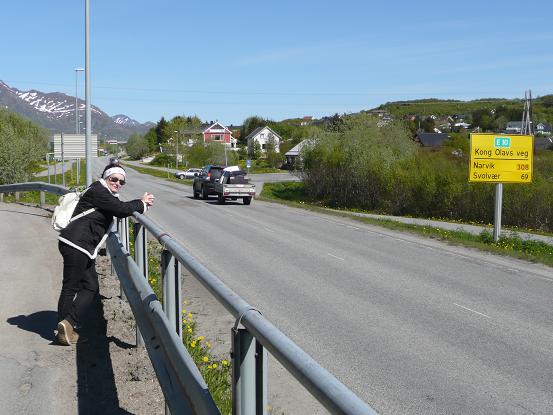
Lokalna autostrada i droga na Ostrołękę, tfu, na Narwik / Local highway:
Local highway – Lofoten
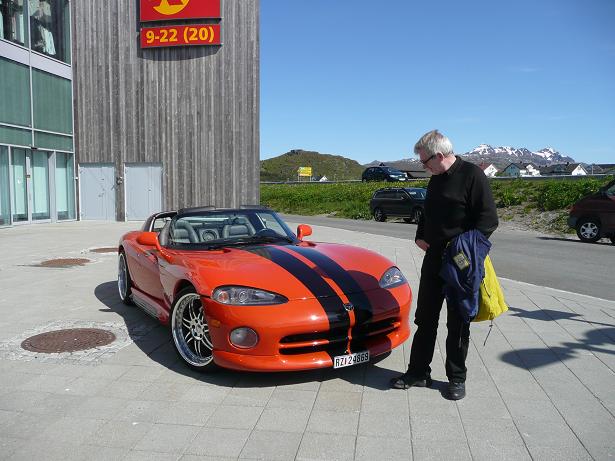
Dodge Viper przed domem towarowym i Zbig już chce tu zostać:
Zbig and Dodge Viper – Leknes
Na końcu miasteczka małe centrum handlowe z dwoma supermarketami (jeden to dyskont) i ładnie urządzonymi sklepami z wyposażeniem domów, trochę ciuchów, księgarnia, apteka. Za centrum, na parkingu kilka straganów z ciuchami i zabawkami, ale tandeta niesamowita. Zbig za to namierza największą dla niego atrakcję Lofotów: Dodge Viper, w dodatku pomarańczowy.
At the edge of town lies a small shopping center featuring two supermarkets (one of which is a discount store) and tastefully appointed home furnishings shops, along with a few clothing stores, a bookstore, and a pharmacy. Behind the center, in the parking lot, stand several stalls selling clothes and toys—though the wares are incredibly tacky. Zbig, however, spots what he considers the greatest attraction of the Lofotens: a Dodge Viper—and an orange one, at that.
Wróciliśmy po dwóch godzinach. Naprawdę nie było już co oglądać. / We returned after two hours. There really wasn’t anything left to see.
LOKALNE PRZYSMAKI: / Local treats
Torrfisk – suszony na drewnianych półkach dorsz. Klippfisk – solona ryba, znana od XVII wieku, kiedy do rozsądnego poziomu spadły ceny soli. Fiskeboller – zawijasy z ryby, często podawane ze śmietaną. I najbardziej chyba znana norweska potrawa – lutefisk – suszony dorsz albo łupacz moczony i doprowadzony do fermentacji, najczęściej jedzony na Boże Narodzenie. Fiskepudding to puszysty pudding rybny.
Torrfisk—cod dried on wooden racks. Klippfisk—salted fish, known since the 17th century, when salt prices dropped to a reasonable level. Fiskeboller—fish dumplings, often served with cream. And perhaps the most famous Norwegian dish—lutefisk—dried cod or haddock that has been soaked and fermented, most commonly eaten at Christmas. Fiskepudding is a fluffy fish pudding.
Aquavit – do popicia tych wszystkich rybich delicji. Bardzo popularna w Skandynawii wódka, destylowana z ziemniaków, przechowywana w drewnianych beczkach, aromatyzowana kminkiem i koprem. Produkowana od XIV wieku.
Aquavit—to wash down all those fish delicacies. A highly popular spirit in Scandinavia, distilled from potatoes, aged in wooden barrels, and flavored with caraway and dill. Produced since the 14th century.
WARTO ZWIEDZIĆ: Muzeum Wikingów – około 15 km na północny wschód od Leknes. Mieści się w największym budynku ery Wikingów odkrytym kiedykolwiek. Dzięki bogatym znaleziskom artefaktów, archeolodzy odtworzyli dom w pełnym wymiarze. Dzięki temu można wkroczyć prosto do świata ery brązu i zobaczyć, że nie byli to tylko barbarzyńscy brutale uganiający się z toporami. Ich społeczeństwo było wysoce zorganizowane, a największą wartością był honor. Królowie i inni przywódcy byli wybierani przez społeczność i to zwykli ludzie decydowali o prawach i zasadach.
WORTH VISITING: The Viking Museum—located approximately 15 km northeast of Leknes. It is housed within the largest Viking-era building ever discovered. Thanks to a wealth of artifactual finds, archaeologists have reconstructed the longhouse to its full scale. This allows visitors to step directly into the world of the Viking Age and see that its people were not merely barbaric brutes running around with axes. Their society was highly organized, and honor was held as the highest value. Kings and other leaders were elected by the community, and it was the common people who determined the laws and rules.
INFO: W Laknes jest kilka kafejek internetowych. Informacja turystyczna znajduje się przy ulicy Storgata 31, w centrum handlowym.
INFO: There are several internet cafes in Laknes. The tourist information office is located at Storgata 31, in the shopping center.
SŁOWNICZEK: Tak – Ja; Nie – Nei; Dzień dobry – God Dag; Dziękuję bardzo – Tusen takk. / GLOSSARY: Yes – Ja; No – Nei; Good morning – God Dag; Thank you very much – Tusen takk.
ok. 22:00
Kolacja jak marzenie. Musiałam oddać Zbigowi zupę kokosową, bo okazała się jak żyleta. No i znowu dostaliśmy specjalny deser po deserze – suflet czekoladowy z biała czekoladą z Grand Marnier. Cieszę się, że jesteśmy specjalnymi gośćmi, ale… Nie, żadne ale. Bardzo, bardzo warte grzechu.
A dream dinner. I had to hand my coconut soup over to Zbig, as it turned out to be razor-sharp. And once again, we received a special dessert after our dessert—a chocolate soufflé with white chocolate and Grand Marnier. I’m glad we’re being treated as special guests, but… No—no „buts.” It was very, very worth the sin.
Leknes pożegnaliśmy o 17:00. Teraz płyniemy prosto na północ, ale nadal wzdłuż wybrzeża. Widać ośnieżone, strome góry wyrastające prosto z morza. Następny port – Longyearbyen. Mamy do przepłynięcia 706 mil morskich.
We bade farewell to Leknes at 5:00 PM. We are now sailing straight north, though still hugging the coast. Snow-capped, steep mountains can be seen rising directly from the sea. Our next port of call is Longyearbyen. We have 706 nautical miles to cover.
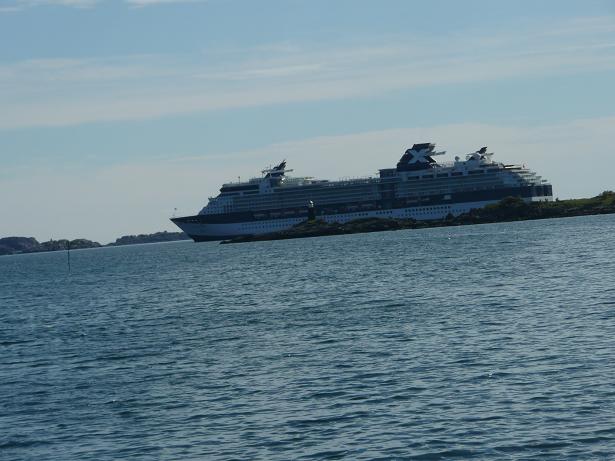
Nasz statek przyczajony w fiordzie za skałką. Myśli, że go nie widać: /Our ship, hunkered down in the fjord behind a small rock. It thinks it can’t be seen.
Our ship hidden in fjord – Lofoten
Good by Lofoten!
RADA: Nie jestem pewna, czy warto płacić za zorganizowane wycieczki lądowe. Ta do Leknes kosztowała 169$ od osoby, trwała 3 godziny i obejmowała mały rejs na Vestfjord, lub wędrówkę po okolicznych muzeach i przejazd przez podwodny tunel do Flakstadoey. Sama nie wiem, ale tyle kasy za 3 godziny…
Ptaki i Norwegia zniknęły, za to na zachodzie mijamy dużo platform wiertniczych. Jedne wyglądają jak zamczyska z wieżą pośrodku, inne jak dziwne zwierzęta z długimi szyjami i ogonkiem. Morze nadal jest gładkie, chmury odbijają się w nim jak w jeziorze.
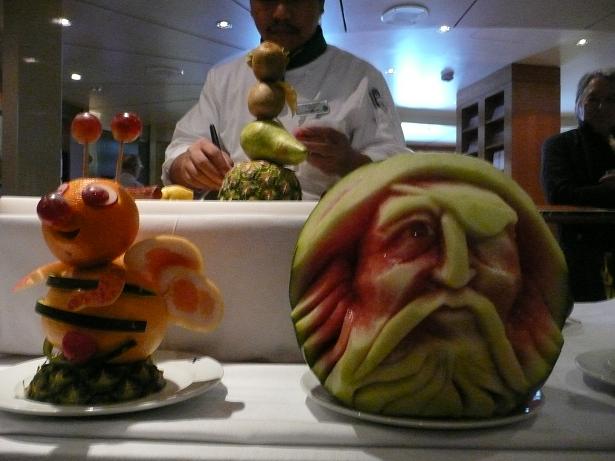
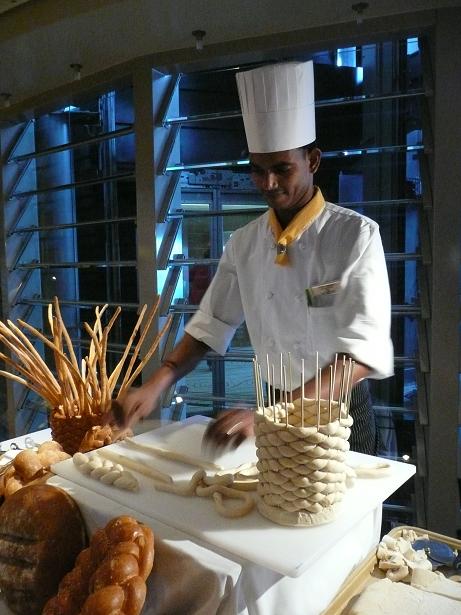
Niedawno w głównym hallu na 3 pokładzie zakończyły się pokazy kulinarne. Można było zobaczyć jak się robi sushi, jak plecie się kosze z ciasta chlebowego, jak robi się róże z marcepanu, jak się rzeźbi w owocach i warzywach.
The birds and Norway have vanished; instead, to the west, we are passing many oil rigs. Some look like castles with a tower in the center, others like strange animals with long necks and a little tail. The sea remains smooth, with the clouds reflecting in it as if in a lake.
Culinary demonstrations recently concluded in the main hall on Deck 3. Visitors could watch how sushi is made, how baskets are woven from bread dough, how marzipan roses are crafted, and how fruits and vegetables are carved.
Fantastyczne rzeźby z owoców i warzyw:
Carving on Celebrity Constellation
Nauczyłam się składania serwetek i pojęłam wreszcie na czym polega różnica między sushi a sushimi. Na pewno ta wiedza przyda mi się bardzo w domu i w zagrodzie. A swoją drogą, jak daleko trzeba wyjechać, żeby nauczyć się składania serwetek?
I learned how to fold napkins and finally grasped the difference between sushi and sashimi. This knowledge will certainly come in very handy back home. And by the way—just how far do you have to travel to learn how to fold napkins?
Kosz wyplatany z ciasta chlebowego, gotowy widać w tle:
Bread basket
ok. 17.00
Uczyliśmy się tańczyć tango. W ten sposób chciałam uczcić urodziny Zbiga, nawet wbrew jego woli. I co się okazało? W tangu jesteśmy świetni. To pierwszy taniec, który potrafiliśmy zatańczyć nie depcząc sobie po stopach!
We learned to dance the tango. That was how I wanted to celebrate Zbig’s birthday—even against his wishes. And what did it turn out? We’re great at the tango. It’s the first dance we’ve managed to dance without stepping on each other’s feet!
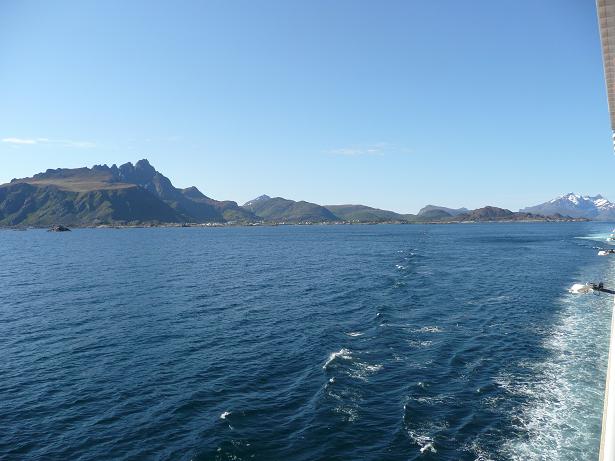
Morze nadal jest spokojne, choć pojawiły się długie, boczne fale. Niebieskie Morze Norweskie:
Norvegian sea
ok. 23:30
Słońce świeci jak o 16-stej latem. To pierwsza noc, kiedy słońce nie zajdzie wcale. Znów widać ląd – bardzo ostre skały w kształcie kłów wyrastają prosto z morza. Nie dziwię się, że żeglarskie opowieści pełne są potworów z głębin, pożerających wielkie statki.
Linie Celebrity zafundowały Zbigowi torcik z dwoma świeczkami, a siedmiu kelnerów odśpiewało „Happy birthday”. Torcik i odśpiewanie odbyły się już po kolacji i deserze i mimo, że obżarta straszliwie, nie mogłam porzucić niezjedzonej czekoladowej pyszności. Teraz jestem na cukrowym haju i nie mogę spać. Za około pół godziny przekroczymy krąg polarny. Będzie się działo.
The sun is shining as if it were 4 p.m. in the summer. This is the first night the sun won’t set at all. Land is visible once again—very sharp, fang-shaped rocks rising straight out of the sea. It comes as no surprise that sailors’ tales are full of monsters from the deep that devour great ships.
Celebrity Cruises treated Zbig to a small cake with two candles, while a group of seven waiters sang „Happy Birthday.” The cake and serenade took place after dinner and dessert were already finished—and even though I was absolutely stuffed, I simply couldn’t bring myself to leave that delicious chocolate treat uneaten. Now I’m on a sugar high and can’t sleep. In about half an hour, we’ll cross the Arctic Circle. Things are about to get exciting.
ok. północy / about Midnight
Południową granicę regionu arktycznego wyznacza Krąg Polarny (Arctic Circle), geograficzny pierścień otaczający glob, w odległości około 1650 mil od Bieguna Północnego. Ta umowna linia leży na Oceanie Arktycznym, przechodzi przez tysiące wysp i północne części Europy, Azji i Ameryki Północnej. I przez osiem krajów: Norwegię, Szwecję, Finlandię, Rosję, Stany Zjednoczone na Alasce, Kanadę, Grenlandię i Islandię.
The southern boundary of the Arctic region is marked by the Arctic Circle—a geographic ring encircling the globe, situated approximately 1,650 miles from the North Pole. This imaginary line lies within the Arctic Ocean and passes through thousands of islands, as well as the northern parts of Europe, Asia, and North America. It also traverses eight countries: Norway, Sweden, Finland, Russia, the United States (in Alaska), Canada, Greenland, and Iceland.
Jesteśmy na szerokości geograficznej północnej 66 stopni 33′ 44″. Właśnie przekroczyliśmy krąg polarny i życie już nigdy nie będzie takie samo.
We are at 66 degrees 33 minutes 44 seconds North latitude. We have just crossed the Arctic Circle, and life will never be the same.
Jutro, a właściwie już dziś dopłyniemy do Lofotów i ich stolicy – Leknes. / Tomorrow—or rather, already today—we will arrive at the Lofoten Islands and their capital, Leknes.