

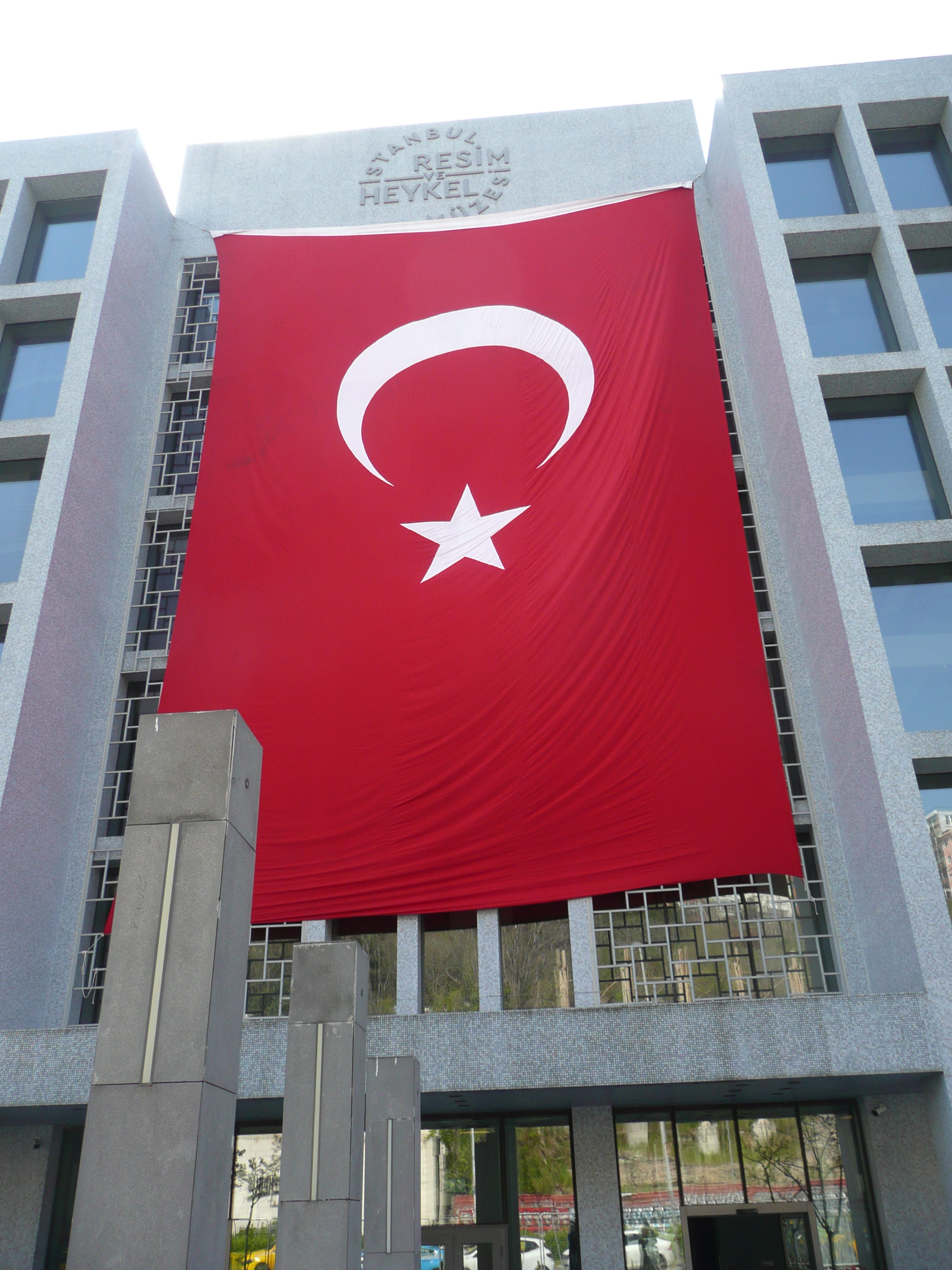
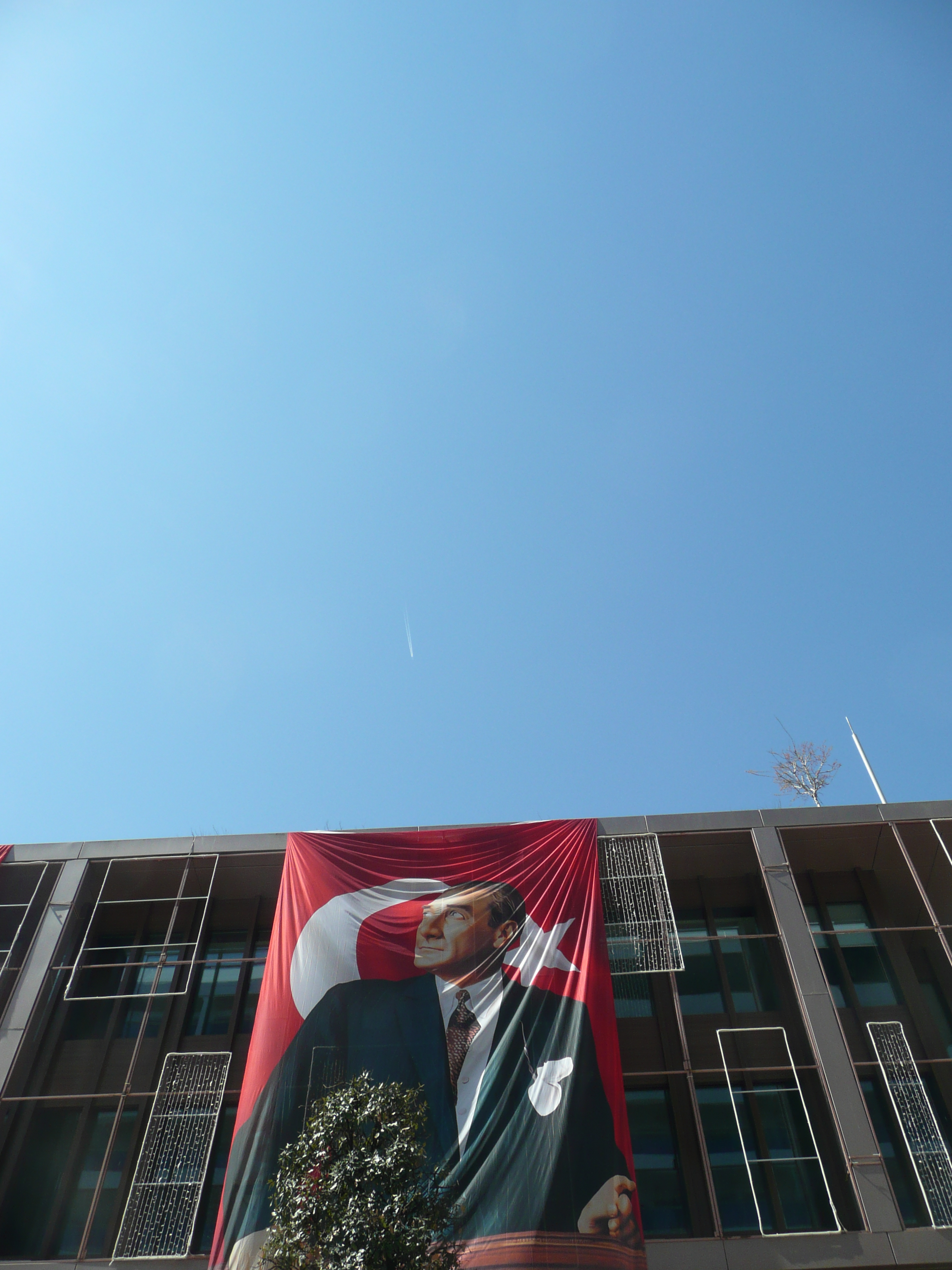
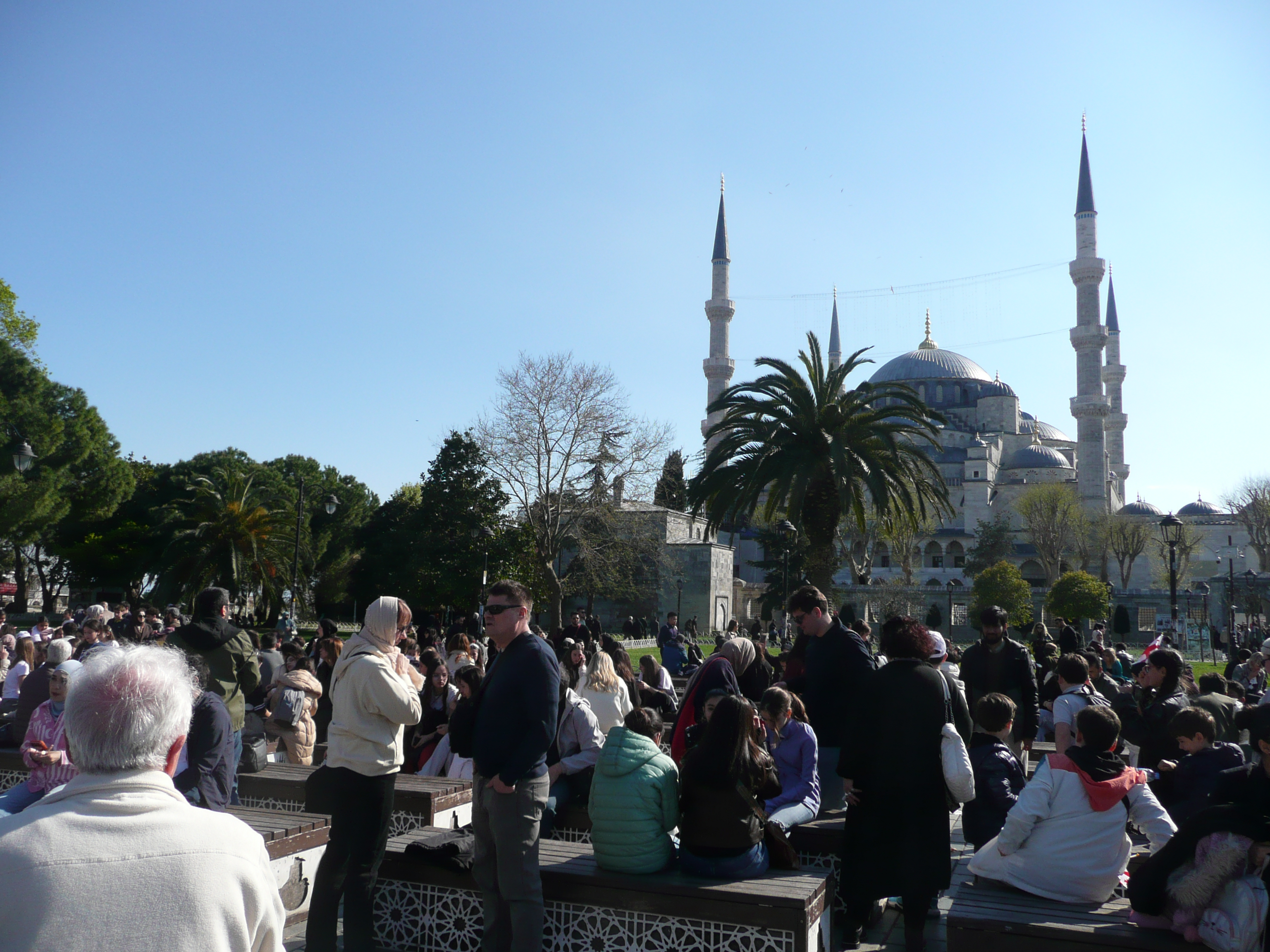
Zanim rozpoczniemy wędrówkę po Istambule, najpierw musimy odstać bardzo długą kolejkę do statkowej Recepcji, ponieważ według informacji na naszej karcie wizowej (Mürettebat geçici giriş belgesi) jesteśmy obywatelami Szwajcarii. Nie my jedni mamy problem ze źle wypełnionymi formularzami, stąd tłum ludzi. Kiedy wychodzimy na zalaną słońcem ulicę, okazuje się, że tego dnia w Turcji jest wielkie święto – Dzień Suwerenności Narodowej i Dzień Dziecka! Wszędzie są tłumy – ulice, parki, skwery, place są pełne ludzi, wielu urządza pikniki na trawie, jest gwarno i radośnie. Wszędzie, na prawie wszystkich budynkach wiszą ogromne flagi i równie ogromne portrety niebieskookiego mężczyzny… Ale o tym później, bo teraz jedziemy zobaczyć dwa najważniejsze meczety, których nie zdołałam zobaczyć czterdzieści lat temu – Błękitny i oczywiście Hagia Sophia.
Before we set off to explore Istanbul, we first have to wait in a very long line at the ship’s reception desk because, according to our temporary entry permits (Mürettebat geçici giriş belgesi), we are listed as Swiss citizens. We aren’t the only ones dealing with incorrectly filled-out forms—hence the crowd. When we step out onto the sun-drenched street, we discover that it is a major holiday in Turkey: National Sovereignty and Children’s Day! There are crowds everywhere—streets, parks, and squares are packed with people; many are picnicking on the grass, and the atmosphere is lively and joyful. Huge flags and equally massive portraits of a blue-eyed man hang from almost every building… But more on that later, because right now we are heading to see the two most important mosques—ones I missed out on seeing forty years ago: the Blue Mosque and, of course, the Hagia Sophia.
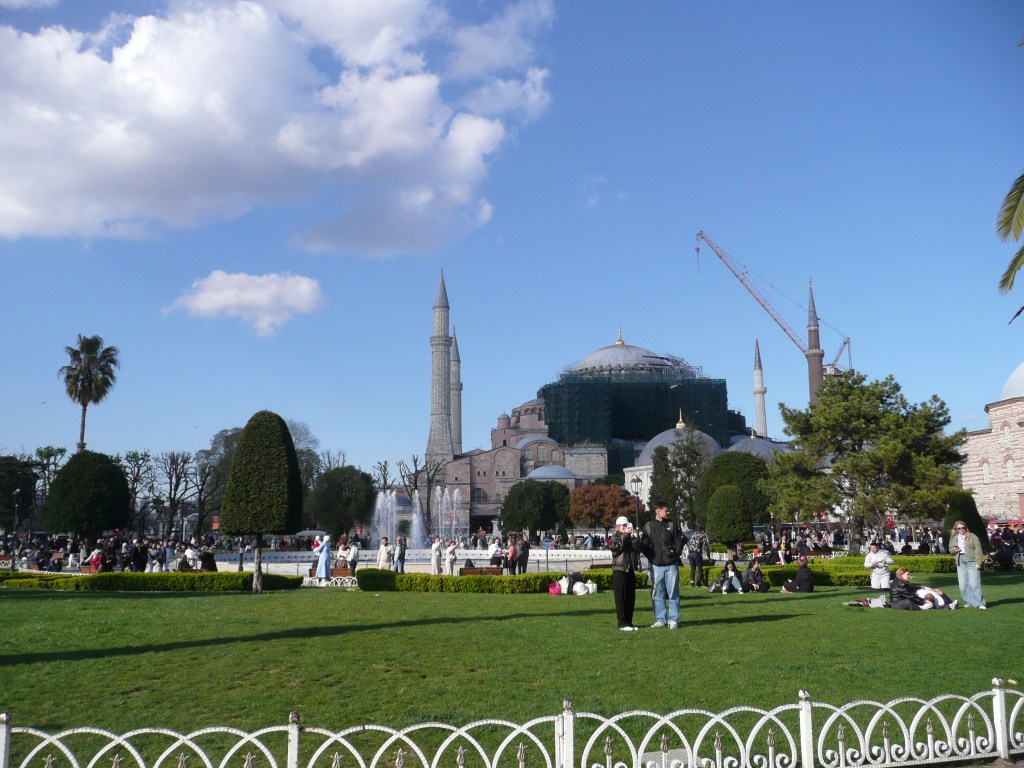
W historycznej dzielnicy Sultanahmet tłum jest jeszcze większy. Oba meczety są blisko siebie, ale okazuje się, że Hagia Sophia jest w remoncie, obstawiony rusztowaniami i niedostępny, więc niestety jeden mamy z głowy.
The crowd is even larger in the historic Sultanahmet district. The two mosques are close to each other, but it turns out the Hagia Sophia is undergoing renovations—surrounded by scaffolding and inaccessible—so, unfortunately, we can cross that one off the list.
Niestety! Muszę iść siusiu, po prostu muszę! Umawiam się z Panem i Władcą przed wejściem do meczetu i biegnę w poszukiwaniu toalety. Pytam kilku kobiet o drogę, żadna nie zna angielskiego. W końcu jakiś młody chłopak wskazuje kierunek, więc pędzę tam, za meczet, daleko jak dla mnie, ale wreszcie docieram do wielkiego pawilonu, gdzie w kolejce czekają zastępy kobiet. Staję zaskoczona, bo w tym tłumie jestem jedyną bez hidżabu, więc uśmiecham się do nich, bo nie wiem jak mam się zachować. A one otaczają mnie i zagadują wesoło. Jedna z nich zna trochę angielski i pyta skąd jestem, inne chcą wiedzieć czy mam męża i ile mam dzieci (pytają tej, która zna angielski, a ona tłumaczy reszcie), czy mam ogród… Ja pytam o to, skąd przyjechały, czy mają duże rodziny i o wszystko, co mi przychodzi naprędce do głowy, mówię im że tureckie kobiety są bardzo piękne, odpowiadają mi okrzyki radości. Moja tłumaczka pyta, czy jej angielski jest dobry, chwalę ją bardzo. Pokazują mi ostatnie drzwi w długim korytarzu, gdzie jest „normalna” toaleta, pozwalając mi wejść poza kolejką. Potem dziękuję im bardzo i ściskam dziewczynę, która tłumaczyła. I teraz strasznie mi przykro, że nie zapamiętałam jej imienia.
Oh dear! I need to pee—I simply have to! I arrange to meet my Lord and Master outside the mosque entrance and run off in search of a restroom. I ask a few women for directions, but none of them speak English. Finally, a young boy points the way, so I rush over—past the mosque, quite a distance for me—until I reach a large pavilion where throngs of women are waiting in line. I stop, taken aback, realizing I am the only one in the crowd without a hijab; unsure of how to act, I simply smile at them. They crowd around me, chatting cheerfully. One of them speaks a little English and asks where I’m from; others want to know if I have a husband and how many children I have (they ask the English speaker, who translates for the rest), or if I have a garden… I ask where they’ve come from, if they have large families, and anything else that pops into my head; I tell them Turkish women are beautiful, and they respond with joyful cheers. My translator asks if her English is good, and I praise her highly. They point out the last door in the long corridor—where there is a „normal” toilet—and let me skip the line. Afterward, I thank them profusely and give the woman who translated, a hug. Now, I feel terrible that I didn’t remember her name.
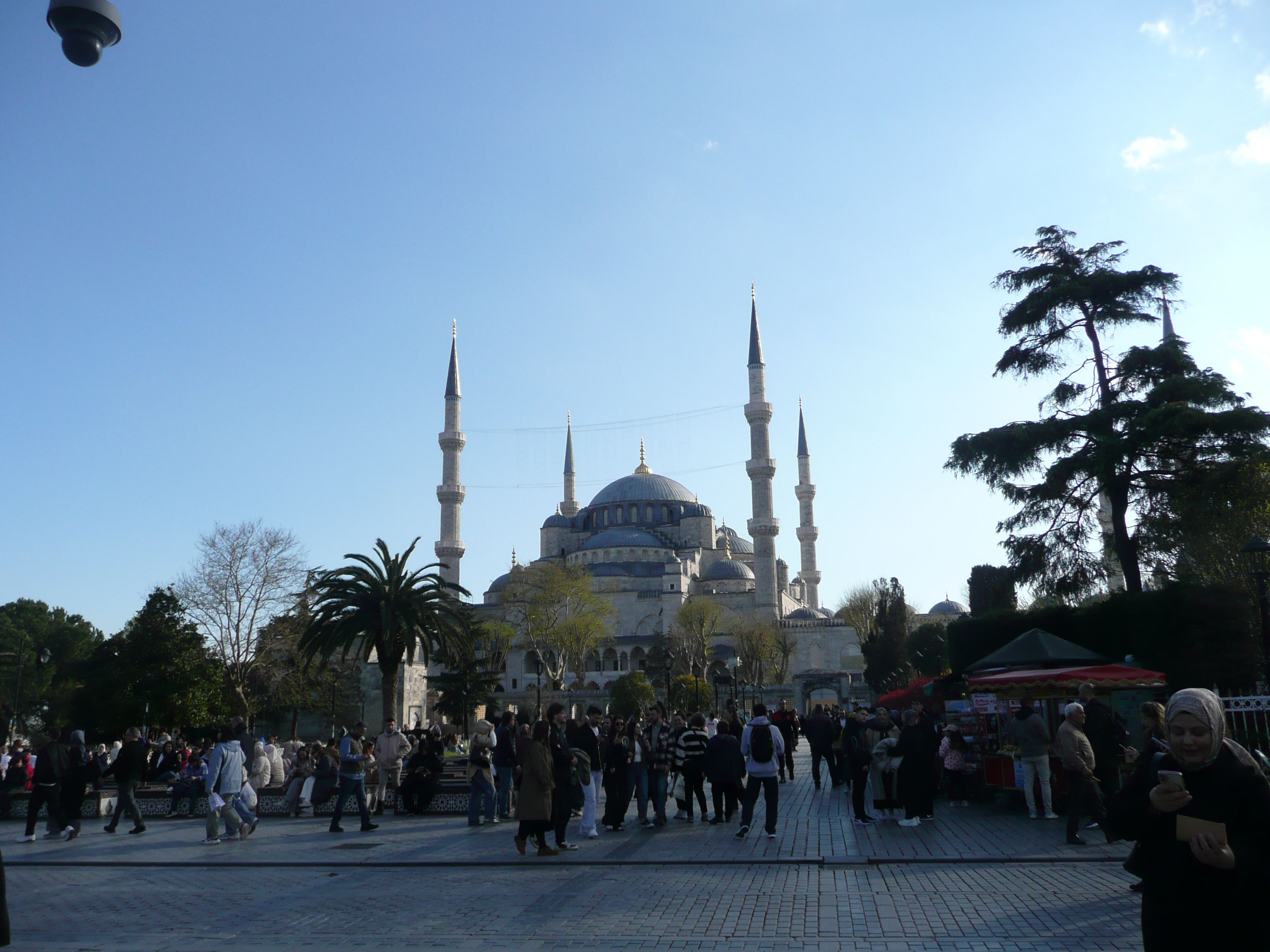
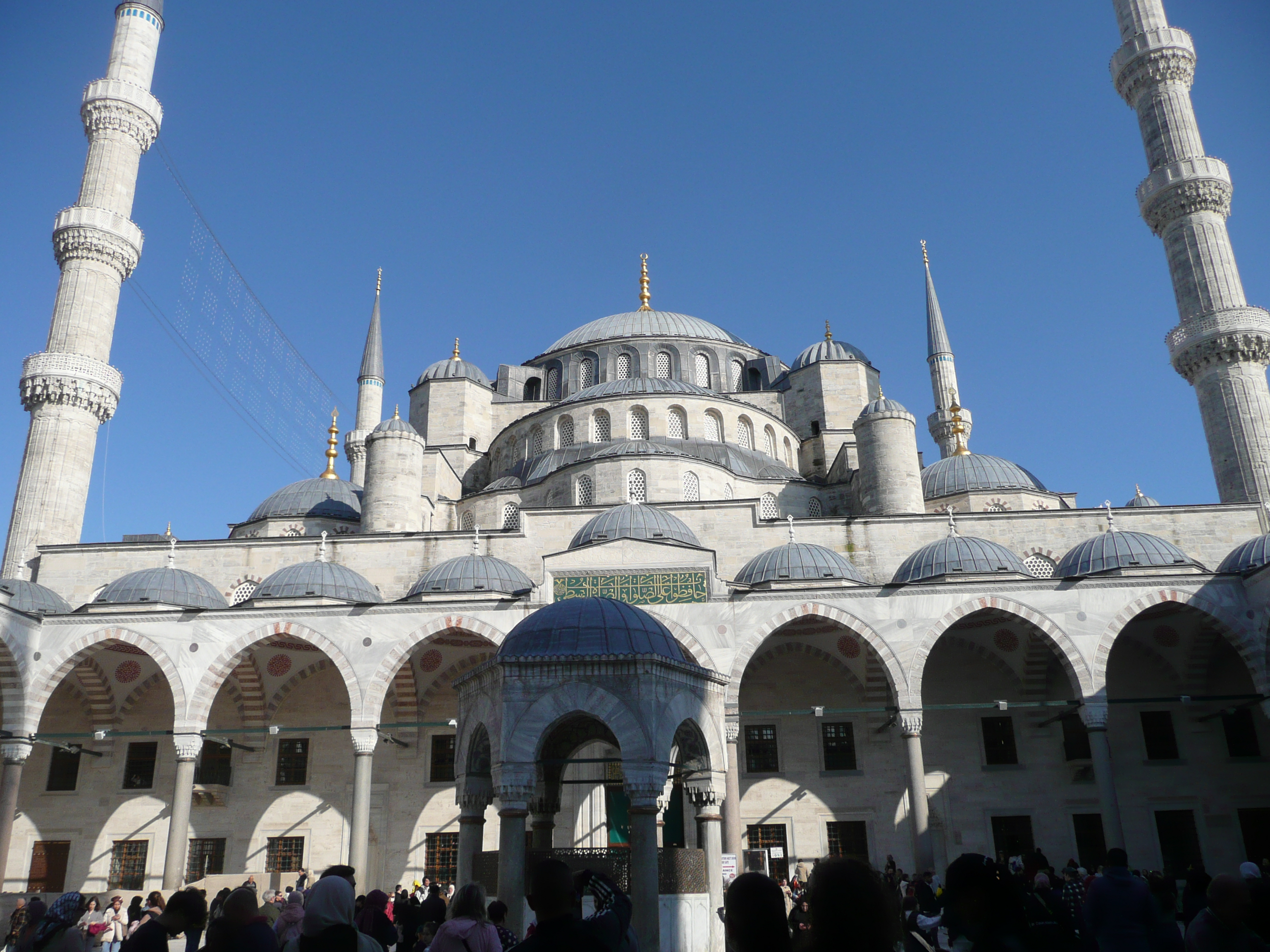
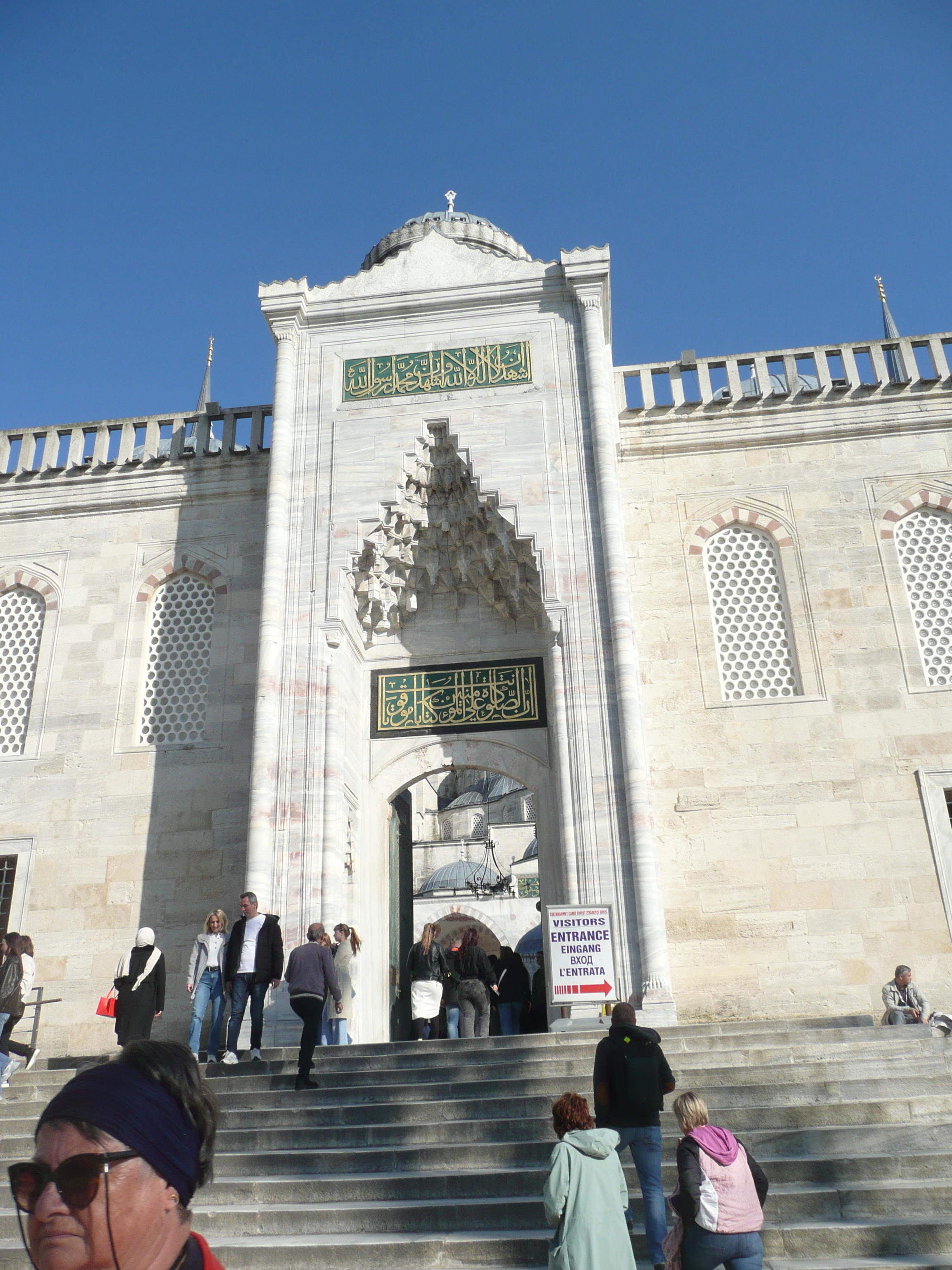
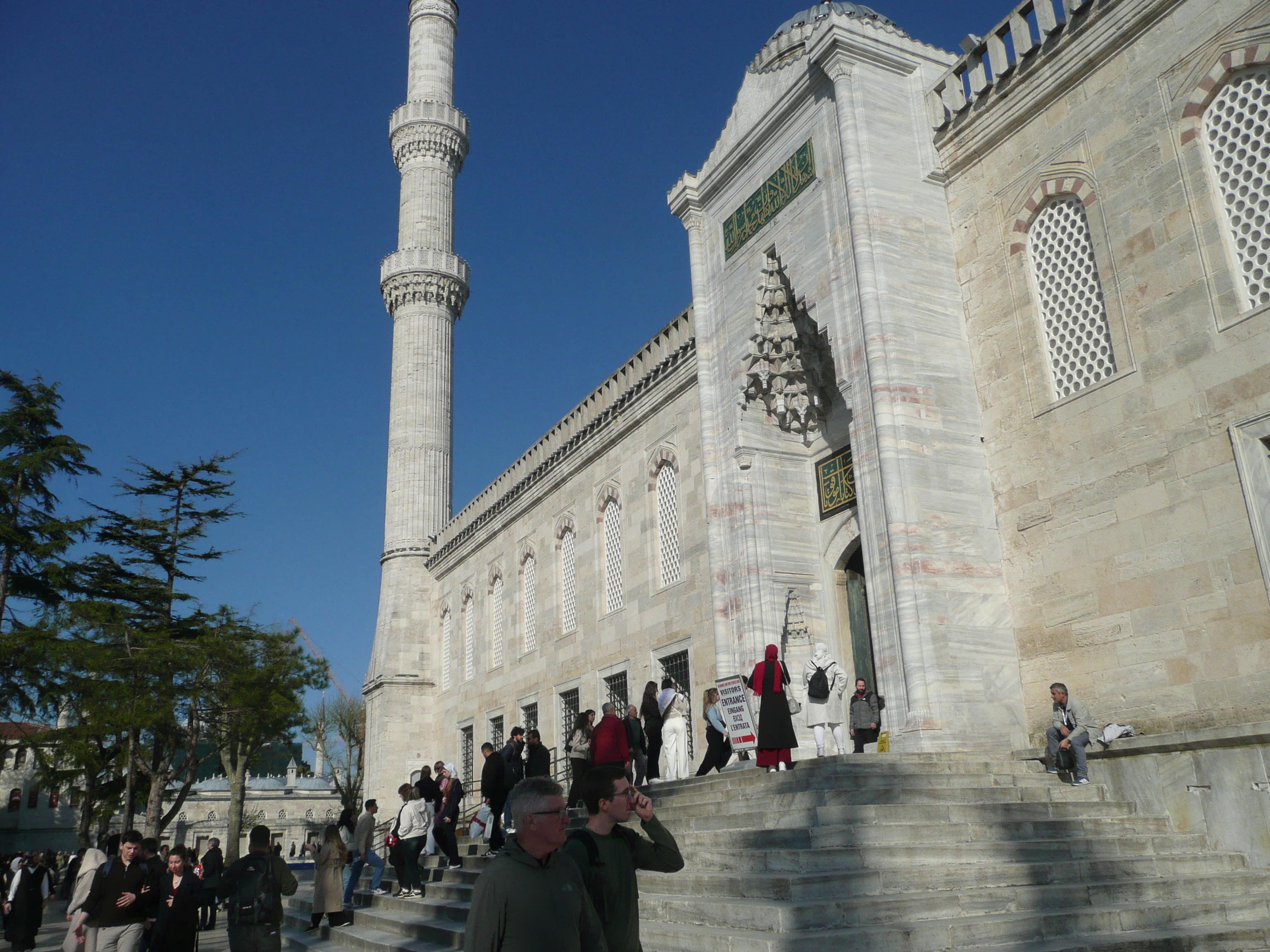
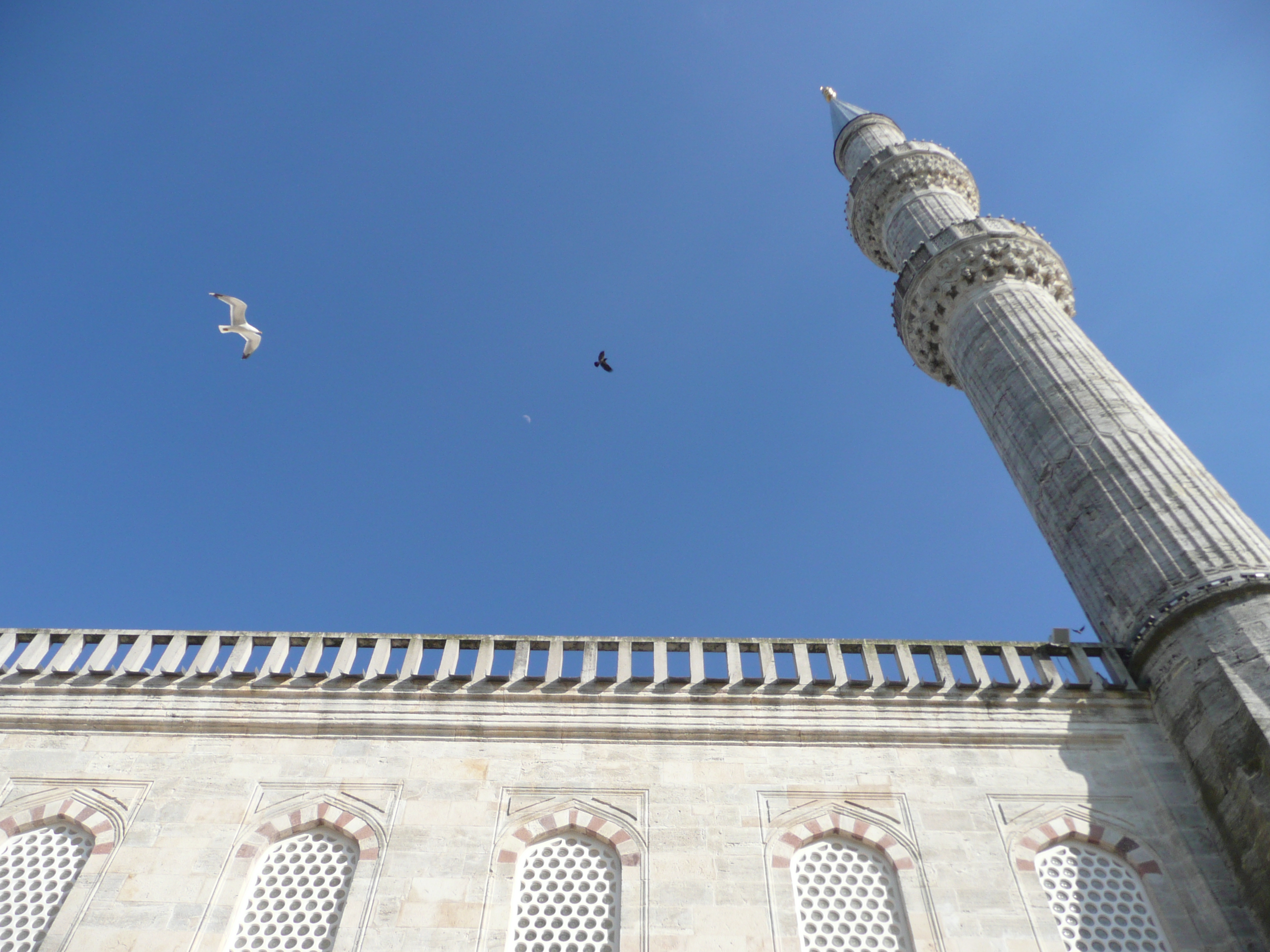
Odnajduję Pana i Władcę w tłumie przypadkiem – wcale nie czekał w umówionym miejscu. Słuchając śpiewu muezina idziemy na dziedziniec świątyni, gdzie niekończące się geometryczne wzory przypominają o wieczności, a kaligraficzne ornamenty zmieniają słowa w żywą sztukę, a mihrab wskazuje kierunek modlitwy…
I find the Lord and Master in the crowd by chance—he was not waiting at the agreed-upon spot at all. Listening to the muezzin’s chant, we walk into the temple courtyard, where endless geometric patterns evoke eternity, calligraphic ornaments transform words into living art, and the mihrab points the direction of prayer…
to be continued / c.d.n.


Jakie spotkanie! Czytam o tych samych miejscach także u Teatralnej, bo była tam w długi czerwcowy weekend. Opowieść każdej z Was jest inna:-)
Ja kiedyś spotkałam japońską wycieczkę w kolejce do toalety. Same panie, czekały cierpliwie, a toaleta męska pusta. Gdy skorzystałam z męskiej kabiny, po wyjściu spotkały mnie oburzone miny Japonek…
PolubieniePolubione przez 1 osoba
Jotko, czasem najlepsze spotkania odbywają się w takich hm.. nieformalnych miejscach 🙂
PolubieniePolubienie
Płynę i zwiedzam z Tobą wszystkie przybytki Istanbulu, sama bowiem w Turcji nie byłam. Cieszę się razem z Tobą, gdy oglądam fantastyczne zdjęcia!
Zasyłam serdeczności
PolubieniePolubione przez 1 osoba
Ultro, bardzo się cieszę że jesteś ze mną w tej podróży 🙂 Bardzo ci życzę, żebyś miała kiedyś okazję odwiedzić to miasto. Ze wszystkich wielkich miast na świecie (w których byłam), to wydaje mi się najwspanialsze. Całsuki
PolubieniePolubienie