Rejs statkiem wielkim lub małym. Kto o tym nie marzył, czytając o wielkich odkrywcach, dalekich lądach, skarbach ukrytych na bezludnych wyspach. Gdzie odnaleźć ślady romantyzmu ery żaglowców i odkrywania nowych lądów? Przecież nie w lotach samolotem.
Bergen greeted us with light rain and grey skies, and somehow it didn’t exactly inspire optimism. Z. decided to lug an umbrella around, as if we didn’t have warm jackets or anything. I’m more worried about the heat than a bit of drizzle.
Bergen przywitało nas lekkim deszczem i szarością i jakoś tak nie nastrajało optymistycznie. Z. postanowił targać parasol, jakbyśmy nie mieli ciepłych kurtek ani nic. Bardziej obawiam się gorąca niż jakiejś mżawki.
Not far from the harbor, on Slottsgate, lies Bergen’s first attraction: /Niedaleko portu, przy ulicy Slottsgate jest pierwsza atrakcja Bergen:
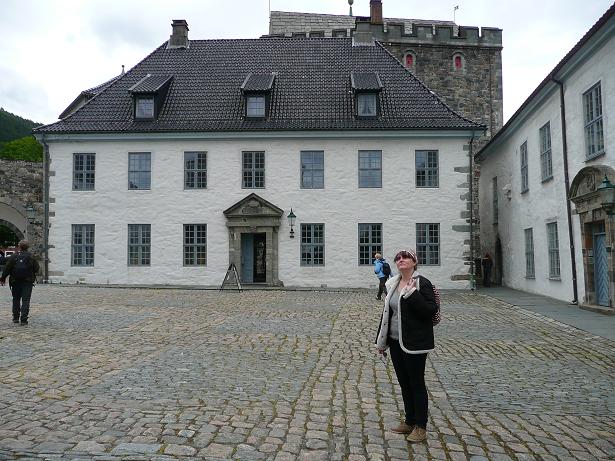
Håkonshallen is part of the Bergen fortress, built in the 13th century as a royal ceremonial hall. It was first used for such events by King Magnus Håkonsson and the Danish Princess Ingeborg; the celebration was quite a bash, lasting three days and two nights and attended by over a thousand guests. In the 16th century, the Danish governor Erik Rosenkrantz commissioned Scottish architects to build a stone tower housing both dungeons (grim) and the governor’s apartments (cozy), with cannon emplacements on the upper level. In 1944, a Danish ammunition ship exploded in the nearby harbor, causing extensive damage. Both the tower and the hall were subsequently rebuilt, and since 1966, the site has been one of Bergen’s tourist attractions.
Håkonshallen: część fortecy Bergen, zbudowana w 13 wieku jako dwór królewski służący do ceremonii. Pierwszy raz został użyty do tych celów przez króla Magnusa Håkonsson i księżniczkę duńską Ingeborg. Imprezka była niezła, bo trwała 3 dni i 2 noce, a gości przybyło ponad 1000. W 16 wieku duński gubernator Erik Rozenkrantz zlecił szkockim architektom budowę kamiennej wieży, w której zmieściły się i lochy (dzikie), i gubernatorskie apartamenty (przytulne), a na wyższym poziomie stanowiska armat. W 1944 roku duński statek z amunicją eksplodował w pobliskim porcie, co spowodowało ogromne szkody. Wieżę i dwór odbudowano, a od 1966 roku jest jedną z atrakcji turystycznych Bergen.
Below: Håkon’s Hall in Bergen. I’m staring at the Rosenkrantz Tower. / Poniżej: Bergen Hakonshallen. Gapię się na wieżę Rosenktantza.
Bergen – Hakonshallen
Near the fortress, also on the northern side of Vågen, stands the oldest building in Bergen: / Nieopodal fortecy, również po północnej stronie Vågen stoi najstarsza budowla w Bergen:
Mariakirke – St. Mary’s Church – was built in the 12th century in the Romanesque style, the only one considered proper and prevailing at the time. Over the centuries, it acquired a Gothic choir and a Baroque pulpit. For three centuries, it served as the parish church for Hanseatic merchants.
Mariakirke – kościół św. Marii. Zbudowano go w 12 wieku, w stylu romańskim, czyli jedynym słusznym i obowiązującym w tamtych czasach. W ciągu wieków istnienia dostał gotycki chór i barokową ambonę. Przez 3 wieki był kościłem parafialnym dla hanzeatyckich kupców.
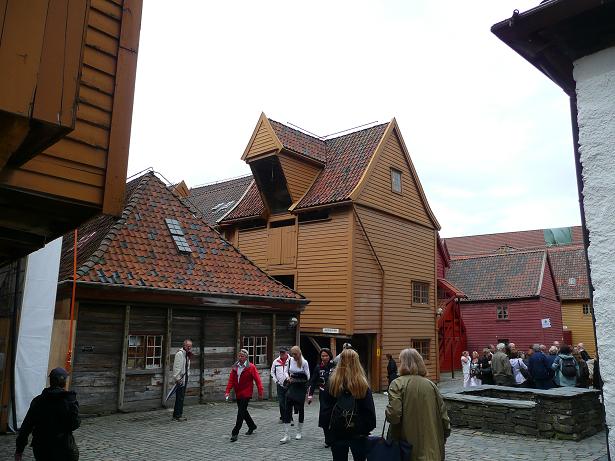
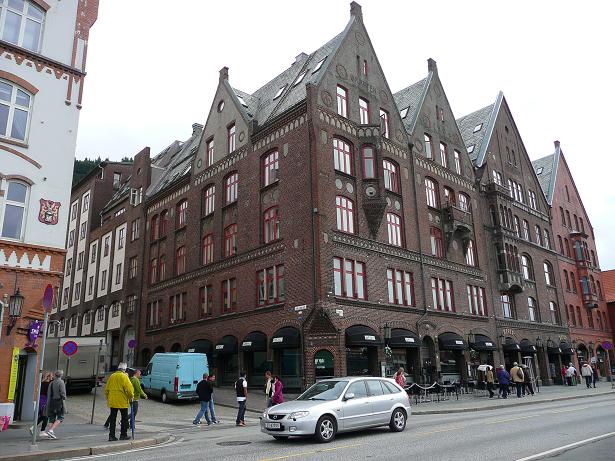
We continue along the northern side of the harbor and unexpectedly find ourselves at Bergen’s biggest tourist attraction: the waterfront known as Bryggen. These are the warehouses and merchant houses from the era of the Hanseatic League. The original structures were destroyed by fire; the current ones are stone replicas. The Hanseatic Museum is housed in the only original building, which dates back to the 18th century. The ground floor served as a storage area for goods, while the first floor contained the living room and offices. The top floor held the merchants’ sleeping quarters—tiny cubicles that could fit nothing more than a bed.
Idziemy dalej wzdłuż północnej strony portu i niespodziewanie wkraczamy do największej atrakcji turystycznej Bergen: nabrzeża zwanego Bryggen. Są to magazyny i domy kupców z czasów Ligi Hanzeatyckiej. Te stare zostały zniszczone przez ogień, te obecne są ich replikami z kamienia. W jedynym oryginalnym budynku z 18 wieku mieści się Muzeum Hanzeatyckie. Parter był składnicą towarów, na pierwszym piętrze mieścił się pokój dzienny i biura. Na najwyższym piętrze były sypialnie kupców – malutkie kliteczki, w których mieściło się tylko łóżko.
Below: behind Bryggen. / Poniżej: na tyłach Bryggen.
The guests were forbidden to heat their quarters or even light them, for fear of fire. Merchants remained celibate throughout their entire stay in Bergen. Well, it was a harsh law, but the law nonetheless.
Gościom nie wolno było ogrzewać pomieszczeń, ani nawet ich oświetlać, w obawie przed ogniem. Kupcy pozostawali w celibacie przez cały okres pobytu Bergen. Cóż, twarde prawo, ale prawo.
The city is known as the „Gateway to the Fjords,” though I prefer the name „City Between Seven Mountains”—a moniker intended to evoke a literary parallel to the seven hills of Rome. I am not sure if the comparison holds, however, as there is much debate about exactly which hills are meant; there seem to be more than seven of them.
Miasto nazywane jest „wrotami fiordów”, choć mnie bardziej podoba się „miasto między siedmioma górami”, co miało literacko nawiązywać do siedmiu wzgórz Rzymu. Nie wiem, czy nawiązało, bo wielu spiera się o to, o które właściwie wzgórza chodzi, bo jest ich chyba więcej niż siedem.
Like many Hanseatic cities, Bergen boasts a rich history. It was founded by Olav Kyrre (son of Harald—a detail for Scandinavian history enthusiasts) in 1070, reportedly five years after the end of the Viking Age (whatever that might mean, given that for some, the Viking Age never truly ends). In the 12th and 13th centuries, it served as the capital of Norway. This status was cemented by at least five royal coronations in the local cathedral—events of undeniable significance.
Bergen ma, jak wiele miast hanzeatyckich, bogatą historię. Zostało założone przez Olava Kyrre (syna Haralda – wiadomość dla pasjonatów historii Skandynawii) w 1070 roku, ponoć pięć lat po zakończeniu ery Wikingów (Cokolwiek to znaczy, bo dla niektórych era Wikingów nie kończy się nigdy). W 12 i 13 wieku stało się stolicą Norwegii. Fakt ten przypieczętowało co najmniej pięć koronacji królewskich w miejscowej katedrze, a obok takich wydarzeń nie można przejść obojętnie.
In the 14th century, Bergen became one of the major cities of the Hanseatic League, which was controlled by wealthy merchants from northern Germany. Even when the national capital was moved to Oslo and the Hanseatic League was in decline, nothing stopped the shrewd Norwegians from taking over the cod trade. The city flourished thanks to Catholics… but not in the way you might think.
W 14 wieku Bergen stało się jednym z największych miast Ligi Hanzeatyckiej, kontrolowanej przez bogatych kupców z północnych Niemiec. Kiedy stolica kraju została przeniesiona do Oslo, a Hanza chyliła się ku upadkowi nie przeszkodziło to sprytnym Norwegom w przejęciu handlu dorszem. Miasto rozkwitło dzięki katolikom… ale to nie to, co myślicie.
Bergen
Catholics in Europe were required to fast on Fridays. Since fasting called for fish, and having settled on cod for their Friday penance, they inadvertently lined the pockets of those nasty Lutherans and Protestants. Today, fish remain important to Bergen, but the city’s primary wealth comes from tourism and—who would have thought—oil extracted from the North Sea.
Katolicy w Europie musieli pościć w piątki. Do postu zaś potrzebowali ryb, a upatrzywszy sobie dorsza na piątkowe umartwienie się, niechcący nabijali kabzę tym brzydkim luteranom i ewangelikom. Dzisiaj ryby są nadal ważne dla Bergen, ale główne bogactwo pochodzi z turystyki i… kto by pomyślał – z ropy wydobywanej na Morzu Północnym.
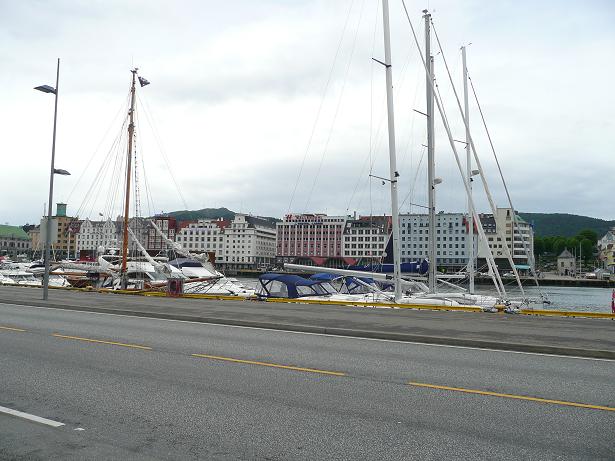
Below: the Vagen marina and bay, and on the opposite side, the rest of Bergen: / Poniżej: marina i zatoka Vagen, a po przeciwnej stronie jest dalszy ciąg Bergen:
We bid farewell to Molde, its jazz festival, and its roses. / Żegnamy Molde, jej festiwal jazzowy i róże.
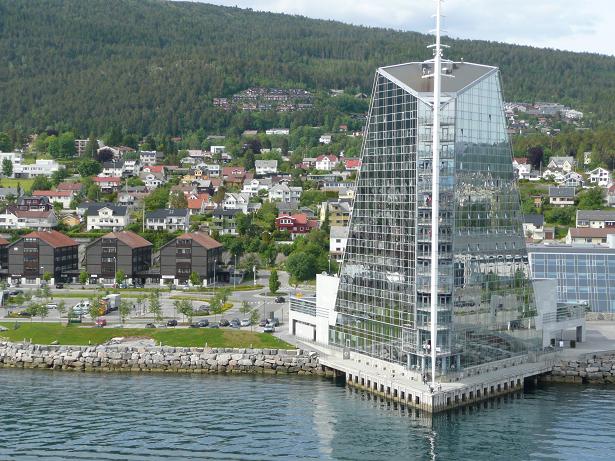
A final look at the city climbing up the hillside. The Rica Seilet Hotel is in the foreground. / Ostatnie spojrzenie na miasto wspinające się ku górze. Na pierwszym planie hotel Rica Seilet.
Molde – Rica Hotel
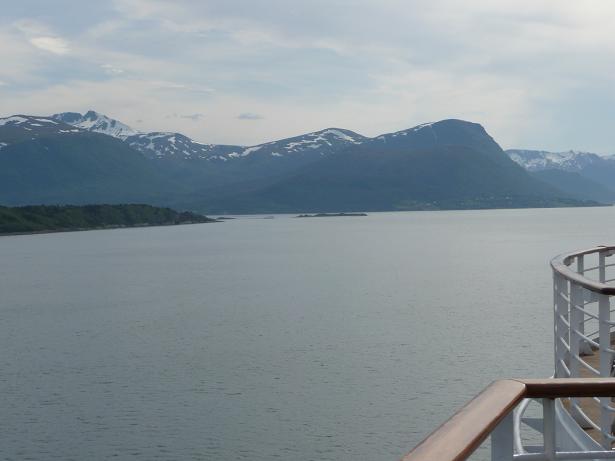
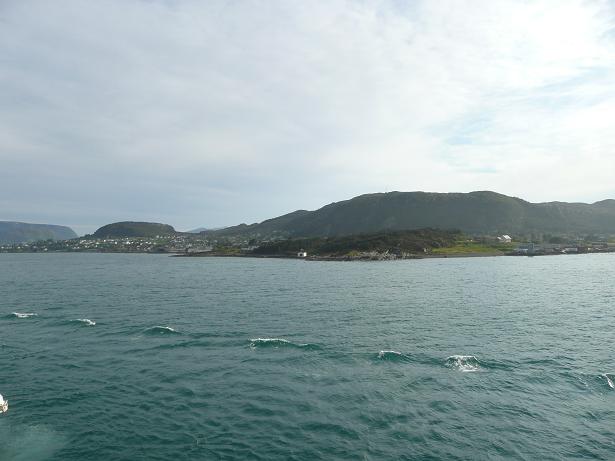
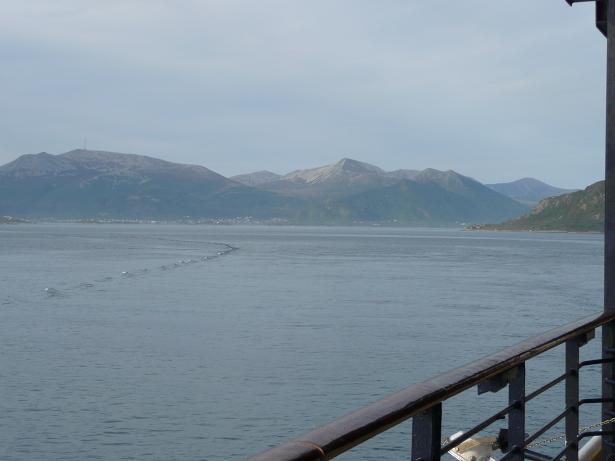
Among the dozens of islands, we must find our way to the open sea: / Wśród dziesiątek wysp musimy odnaleźć drogę na pełne morze:
Road to Alesund
The waters of Midfiorden and the island of Otrøya: / Wody Midfiorden i wyspa Otroya:
Midifiorden waters
Otroya Island (I think): / Wyspa Otroya (chyba):
Otroya Island?
And further on, the islands of Midøya and Flemsøya, but I don’t know which is which: / I dalej wyspy Midoya i Flemsoya, ale nie wiem która jest która:
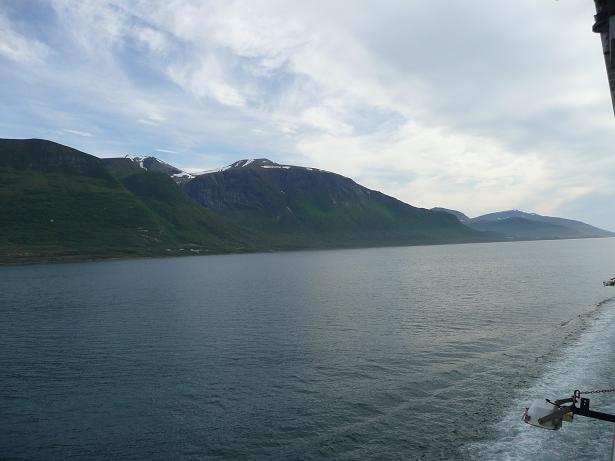
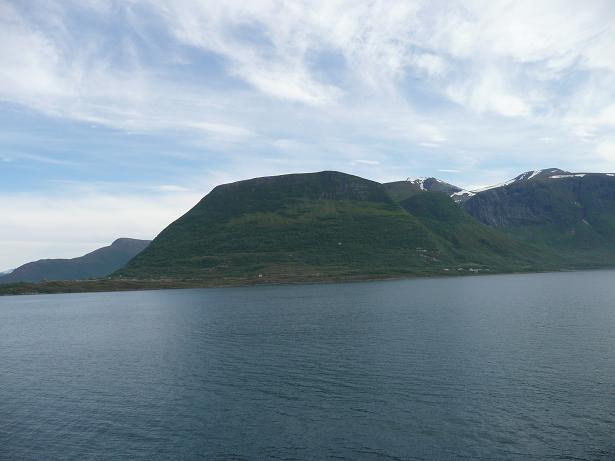
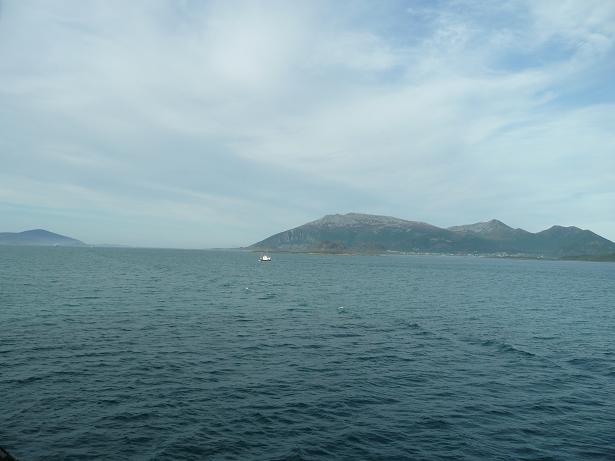
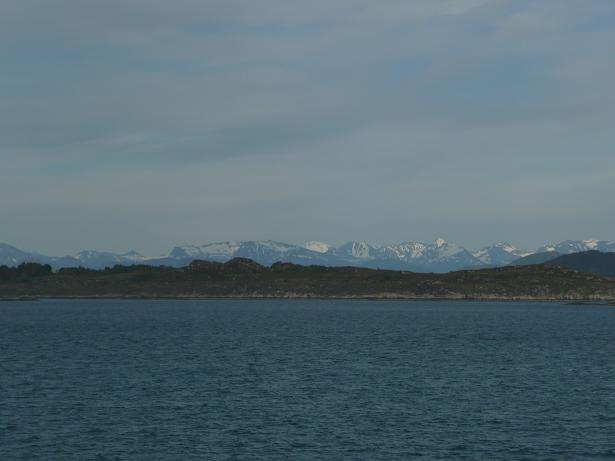
Fjords and islands on the way to Ålesund / Fiordy i wyspy w drodze do Alesund
The waters of two fjords merge here—hence the wave. / Tu zlewają się wody dwóch fiordów, stąd ta fala.
And here too – two fjords, one wave: / I tu też – dwa fiordy, jedna fala:
And once again / I jeszcze raz:
It is getting darker; the sun has slipped behind the clouds. That must be the island of Flemsoya, but really, what does the name of the next island matter? What counts is the landscape and the wonderful tranquility. / Robi się ciemniej, słońce schowało się za obłoczki. To chyba wyspa Flemsoya ale tak naprawdę jakie znaczenie ma nazwa kolejnej wyspy? Liczy się krajobraz i wspaniały spokój.
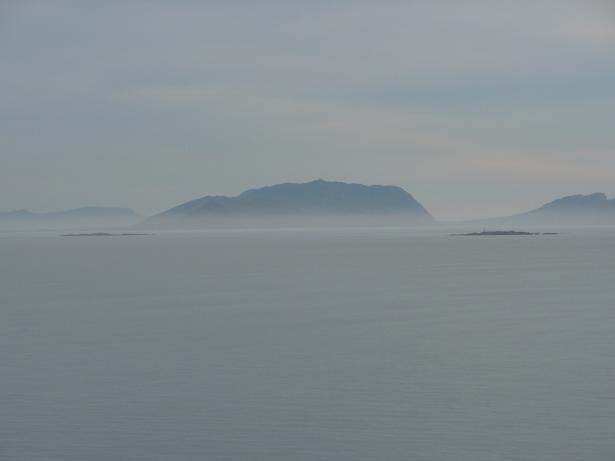
Evening mists look mysterious.Wieczorne mgły i tajemnicze fiordy
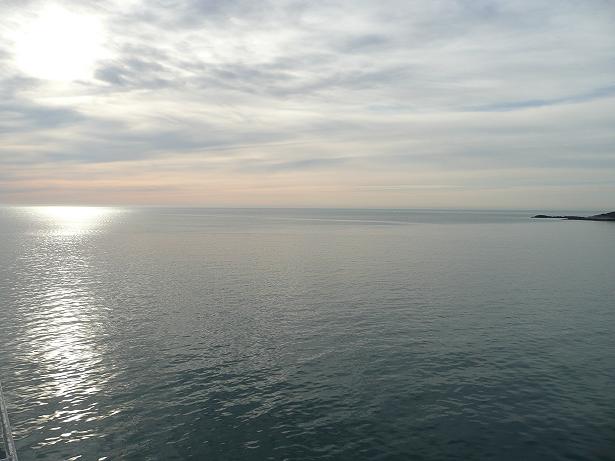
The sun had practically set, leaving a pink glow in the sky. We are passing the island of Norvoya, home to Ålesund. Here, we head out into the open sea: / Słońce już właściwie zaszło, zostawiając na niebie różową zorzę. Obok wyspy Norvoya, na której leży Alesund. Tutaj wypływamy na pełne morze:
The ship’s bow is still pointing west, but we will soon set a course for the south—to Bergen. We have only 133 nautical miles to cover. / Dziób statku skierowany jeszcze na zachód, ale wkrótce weźmiemy kurs na południe – do Bergen. Do przepłynięcia mamy tylko 133 mile morskie.
Above: the ship’s bow pointing west 🙂 / Powyżej: dziób statku skierowany na zachód 🙂
So, here’s the picture: looking west, you can see the majestic Atlantic. To the east lies a breathtaking panorama of the Romsdal Fjord, featuring forests and small villages that appear to be bathing in the water. Spread out at our feet is Molde, encircled by the Romsdal Mountains and their 222 snow-capped peaks. All of this is visible from the Varden viewpoint, situated 407 meters above sea level. You can hike there from the center of Molde—an uphill walk taking an hour and a half, or just one hour for the fitter among us (though it’s still an uphill climb).
Więc tak: kiedy patrzymy na zachód możemy zobaczyć majestatyczny Atlantyk. Na wschodzie jest zapierająca dech w piersiach panorama fiordu Romsdal z lasami i małymi wioskami, które wyglądają, jakby kąpały się w wodzie. U naszych stóp rozpościera się Molde otoczone łańcuchem Gór Romsdal i ich 222 ośnieżone szczyty. Wszystko to widać z punktu widokowego Varden, leżącego na wysokości 407 metrów n.p.m. Można tam dojść pieszo z centrum Molde w ciągu 1,5 godziny pod górę, dla bardziej wysportowanych w 1 godzinę, ale też pod górę.
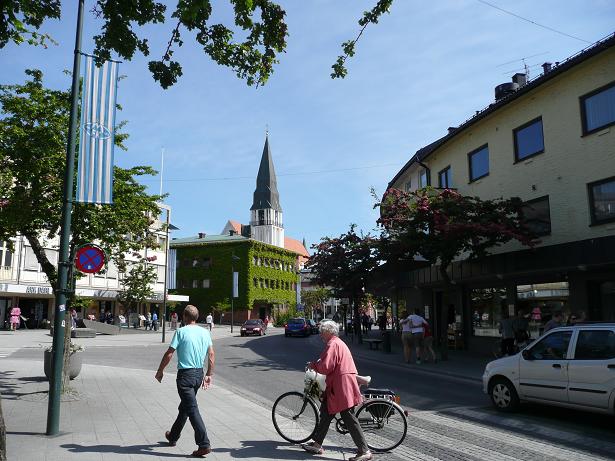
Molde: main street / główna ulica w Molde
Molde is delightful. It is attractive, generally well-kept, and pleasant. Behind the facades of its buildings lie industry (mainly textile), culture, theater, and even a jazz festival—not to mention a museum, galleries, and the makings of a university.
Molde jest milutkie. Jest ładne, w swej większości zadbane i sympatyczne. Za murami domów kryją się i przemysł (głównie tekstylny) i kultura i teatr i nawet festiwal jazzowy, nie wspominając o muzeum, galeriach i namiastce uniwersytetu.
Molde, center / Centrum Molde:
About 24,000 people live there – people who likely don’t worry about the cost of heating their homes in winter. In fact, they ought to be the most laid-back people on earth, if only because they have a government that, instead of squandering oil and gas revenues on a binge, decided to invest them. And invest them it did, pouring funds into ventures worldwide – ventures that, for some reason, actually turn a profit. These profits fund things like Norwegian pensions and education – items that any self-respecting government usually views as an unavoidable burden. The Norwegian government, however, lacks such „self-respect,” allocating only about 5% of those annual profits to cover such expenses, without ever touching the principal. This makes every Norwegian a shareholder in a fortune of a magnitude that the average – well, let’s say, Pole – simply cannot imagine.
Mieszka tam ok. 24 tysiące ludzi, którzy raczej nie przejmują się cenami gazu do ogrzewania domu zimą. W ogóle powinni być najbardziej wyluzowanymi ludźmi na świecie, choćby dlatego, że mają rząd, który zamiast przepić i przehulać kasę z ropy i gazu w jak najkrótszym czasie, postanowił ją zainwestować. Jak postanowił tak zrobił, pakując wszystko w przedsięwzięcia na całym świecie, które to przedsięwzięcia nie wiedzieć czemu przynoszą zyski. Z tych zysków pochodzą między innymi emerytury Norwegów, edukacja itd., czyli rzeczy, które przez każdy szanujący się rząd są traktowane jak dopust boży. Rząd norweski nie szanuje się do tego stopnia, że na te wszystkie wydatki przeznacza rocznie około 5 % tychże zysków, nie ruszając kapitału. To czyni każdego Norwega udziałowcem w kasie, której przeciętny hm, powiedzmy Polak nie jest sobie w stanie wyobrazić.
And for some reason, the people of the country known as Norway love their country—and actually feel happy there, too. On top of that, they have damn beautiful fjords…
I nie wiedzieć dlaczego mieszkańcy kraju zwanego Norwegią kochają swój kraj i w dodatku czują się w nim szczęśliwi. I jeszcze do tego mają cholernie piękne fiordy…
Molde
Returning to Molde (molde/moldar means „skull” or „fertile soil” in Old Norse) and its roses: the famous rose garden located on the roof of the town hall is overrated. There are plenty of roses, but they don’t look impressive; they resemble neglected, straggly stalks—green, certainly, but rather timidly so. Perhaps I caught them at the wrong time, but such scrawny plants shouldn’t be the symbol of the city.
Wracając do Molde (molde/moldar w staronorweskim znaczy czaszka albo żyzna ziemia) i jej róż: sławny ogród różany znajduje się na dachu ratusza jest przereklamowany. Róż jest dużo, ale nie wyglądają imponująco, przypominają zaniedbane badylki zieleniejące się wprawdzie, ale dość nieśmiało. Może trafiłam w zły moment, ale takie badylki nie powinny zostać symbolem miasta.
Rose garden on the roof of the Molde Town Hall. Above—our ship; above that—the mountains in June. / Ogród różany na dachu ratusza w Molde. Powyżej – nasz statek, powyżej – góry w czerwcu.
Molde
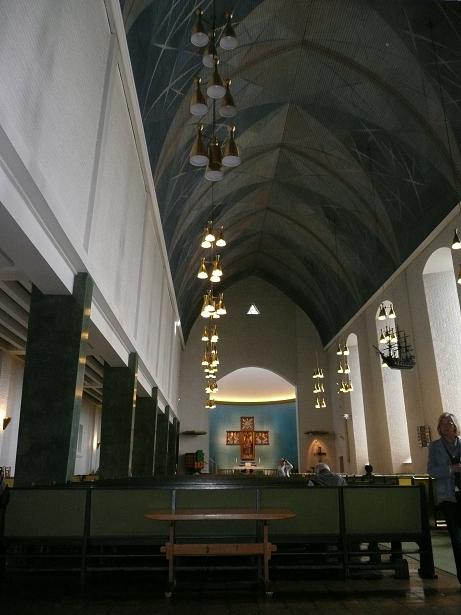
Right next to the town hall roof stands a small church with a modern bell tower. It is nothing impressive from the outside, but charming on the inside: modest and white, with a dark ceiling—devoid of gold or sculptures, yet featuring ship models suspended from the vault.
Tuż obok dachu ratusza jest niewielki kościół z nowoczesną dzwonnicą. Nic imponującego z zewnątrz, ale w środku jest czarujący: skromny, biały, z ciemnym sufitem, bez złota i rzeźb, za to z modelami okrętów zwieszającymi się ze sklepienia.
Molde – church
Another cool thing is that they have a female pastor there—she’s smiling beautifully in a photo in the church’s entrance area (I don’t go to church often, so I have no idea what that part is actually called). It was there that I discovered something that delighted me: a cross that doesn’t feature a bloodied man hanging from it—an image that always used to fill me with dread. Instead, fish hang from this Christian cross; and while I’m not sure I fully grasp the symbolism, it’s something that speaks to me far more than the sight of a tormented man.
Drugą fajną sprawą jest to, że mają tam pastorkę, która ślicznie uśmiecha się ze zdjęcia w pierwszym pomieszczeniu kościoła (nie jestem częstą bywalczynią świątyń, więc nie mam pojęcia jak się to nazywa). W tymże miejscu odkryłam coś, co mnie zachwyciło: krzyż, na którym nie wisi zakrwawiony facet, który zawsze budził we mnie grozę. Na chrześcijańskim krzyżu wiszą ryby i choć nie jestem pewna, czy dobrze rozumiem symbolikę, to jest to coś, co do mnie bardziej przemawia, niż udręczony mężczyzna.
Another attraction is the Romsdal Museum, one of the largest open-air museums in Norway. Founded in 1912, it showcases the region’s history from the 14th to the 20th century. Its collection includes residential buildings, barns and sheds, a chapel, and… outhouses.
Inną atrakcją jest Muzeum Romsdal, jedno z największych skansenów w Norwegii. Założone w 1912 przedstawia historię regionu od 14 do 20 wieku. Zgromadzono w nim budynki mieszkalne, stodoły i szopy, kaplicę i … wychodki.
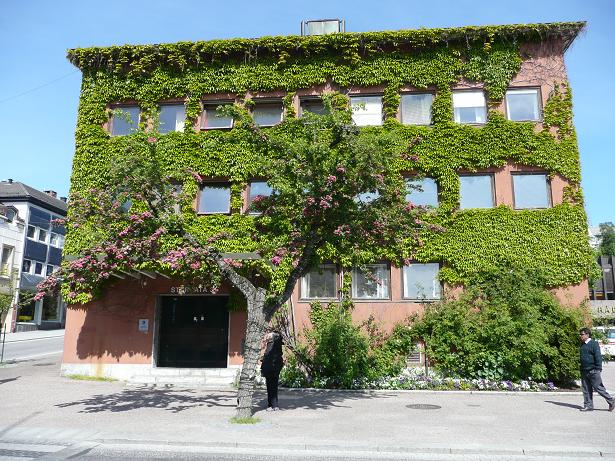
One of the most beautiful houses in Molde: / Jeden z najładniejszych domów w Molde:
Molde
On the island of Hjertøya, ten minutes from the center of Molde, lies another open-air museum—the Fisheries Museum, featuring a small fishing village preserved in its entirety, complete with fishing gear and boats. Boats to and from the island depart roughly every hour.
Na wyspie Hjertoya, 10 minut od centrum Molde jest kolejny skansen – Muzeum Rybołóstwa w postaci małej wioski rybackiej zachowanej w całości wraz ze sprzętem rybackim i łodziami. Statki na wyspę i z powrotem odpływają mniej więcej co godzinę.
22nd of June, Sunrise 3:30 a.m., Sunset 11:45 p.m. / Wschód słońca: 3:20, zachód słońca:23:45
Temperature: I don’t know, but it’s warm. It’s supposed to be 23 degrees at noon. It is incredibly sunny. / Temperatura: nie wiem, ale jest ciepło. W południe ma być 23 stopnie. Jest słonecznie jak nie wiem.
Position: Port of Molde, 62°45′ N / Pozycja: port w Molde, 62°45′ N
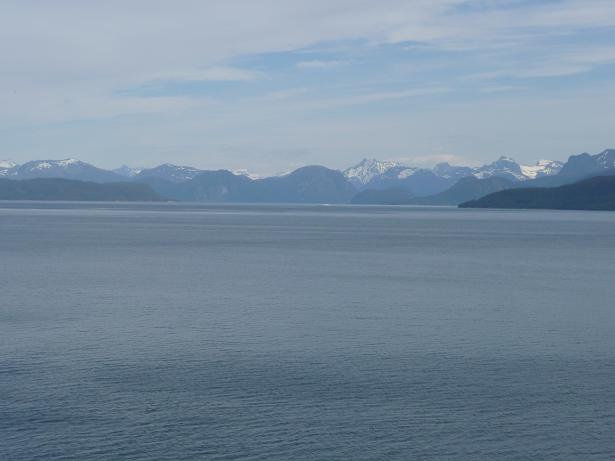
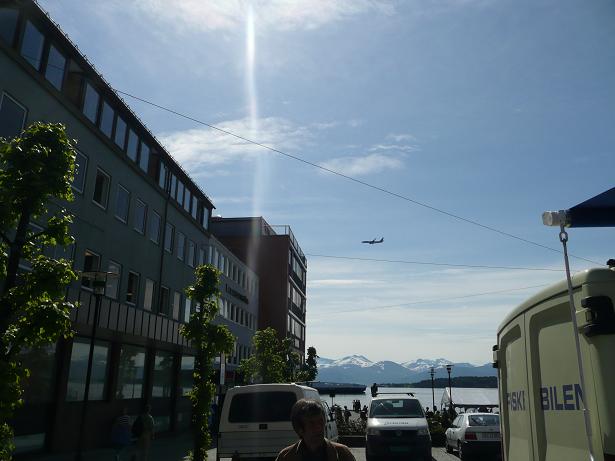
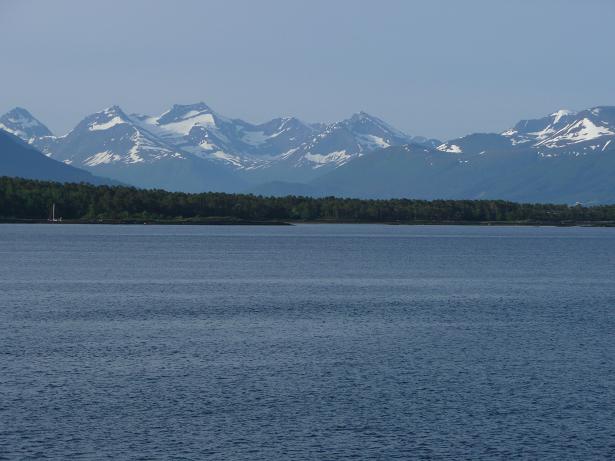
View of Romsdalfjord from the ship: / Widok ze statku na Romsdalfjord:
Molde – Romsdalfjord
Romsdalfjord from Molde
The mooring lines were cast off: / Cumy zostały rzucone:
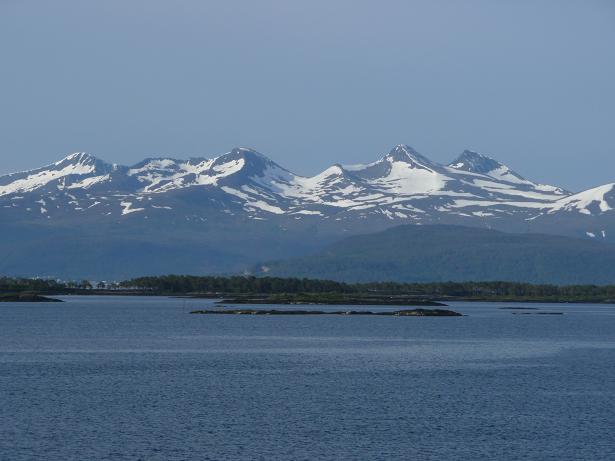
We sailed into the port of Molde—a city that serves as Norway’s rose-growing hub, a fact that might come as a surprise given its latitude. Yet appearances can be deceiving, for Molde is shielded from harsh winters by the benevolent Gulf Stream and the surrounding forest-clad hills. It is situated along one of Norway’s most picturesque fjords, the Romsdalfjord. From the hills rising above the city, one can see 87 peaks of the Romsdal mountain range (though some claim there are as many as 222 of these snow-capped summits), and the view is magnificent—especially on a day like today.
Wpłynęliśmy do portu Molde – miasta, które jest norweskim centrum hodowli róż, co na tej szerokości geograficznej może budzić małe zdziwienie. Ale pozory mylą, bo Molde chroni przed surowymi zimami błogosławiony Golfstrom i okoliczne wzgórza pokryte lasami. Jest usytuowane wzdłuż jednego z najbardziej malowniczych fiordów Norwegii – Romsdalfjord. Ze wzgórz wznoszących się nad miastem można zobaczyć 87 szczytów łańcucha górskiego Romsdal (niektórzy twierdzą, że owych ośnieżonych szczytów jest 222) i jest to widok przecudny, zwłaszcza w dzień taki jak dziś.
Small islands where houses and boat moorings are hidden among the trees: / Małe wyspy, na których wśród drzew kryją się domy i przystanie łodzi:
The waters of the fjord are dotted with countless islands and islets. Small houses stand among the trees on the larger ones, with boat landings along the shores—the only means of transport between the islands and the city. The smaller islets are home to birds; occasionally, one can spot a boathouse or fallen tree trunks in the marshy ground.
Na wodach fiordu są niezliczone wyspy i wysepki. Na tych większych wśród drzew stoją nieduże domy, a przy brzegach są przystanie na łodzie – jedyny środek komunikacji między wyspami i miastem. Na tych mniejszych wysepkach mieszkają ptaki, czasem widać hangar na łódź, zwalone pnie drzew w bagnistym gruncie.
Peak hours on the water: / Godziny szczytu na wodzie:
Traffic on the fjord water
The water is bustling with activity—small white-and-blue ferries, laden with cars, construction machinery, people, and containers, glide swiftly past our port side, heading for the far shore of the fjord. Sailboats drift along, seemingly aimless, their passengers looking as though they lack absolutely nothing in life to be happy. Small motorboats hurry along; from the height of the tenth deck, they look like mice trying to escape a cat.
Ruch na wodzie jest duży – niewielkie, biało niebieskie promy wyładowane samochodami, maszynami budowlanymi, ludźmi i kontenerami suną szybko wzdłuż naszej bakburty zmierzając na drugą stronę fiordu. Żaglówki snują się pozornie bez celu, a ich pasażerowie wyglądają jakby niczego, absolutnie niczego w życiu nie brakowało im do szczęścia. Małe motorówki śpieszą się bardzo, a z wysokości 10 pokładu wyglądają jak myszki próbujące zwiać przed kotem.
Widok na miejski stadion:
Molde
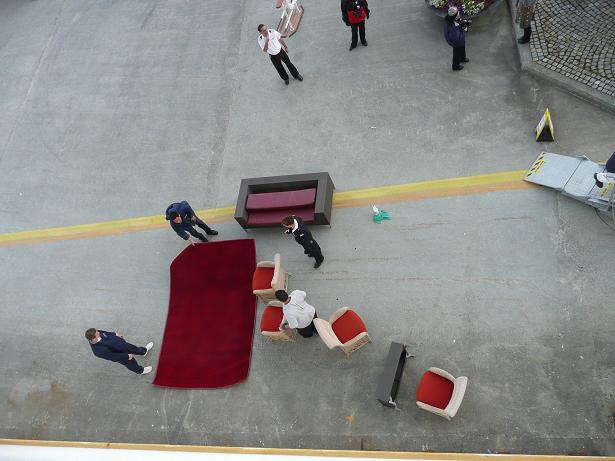
Amidst all the small craft, our ship looks like a massive mother sow. Once again, the ship is the tallest structure in town, blocking the view. Fortunately, no one minds; sailors and powerboaters wave cheerfully at us. The ship is quite a spectacle for the guests at the waterfront hotel, too. They’ve flocked to their balconies to watch the crew bring out a red carpet, a sofa, and armchairs—hot chocolate awaits those returning on board. I almost envy myself…
Wśród tego całego drobiazgu nasz statek wygląda jak wielka maciora. Znów statek jest najwyższym budynkiem w mieście i zasłania widok. Na szczęście nikt się nie gniewa, a żeglarze i motorowodniacy machają do nas radośnie. Ale statek jest widokiem dla mieszkańców hotelu, który stoi przy nabrzeżu. Mieszkańcy wylegli na balkony, przyglądając się jak załoga wynosi czerwony dywan, kanapę i fotele – znów będzie gorąca czekolada dla powracających na pokład. Eh, sama sobie zazdroszczę…
Red carpet – this is where the hot chocolate will be waiting after returning from town: / Czerwony dywan – tu będzie gorąca czekolada po powrocie z miasta:
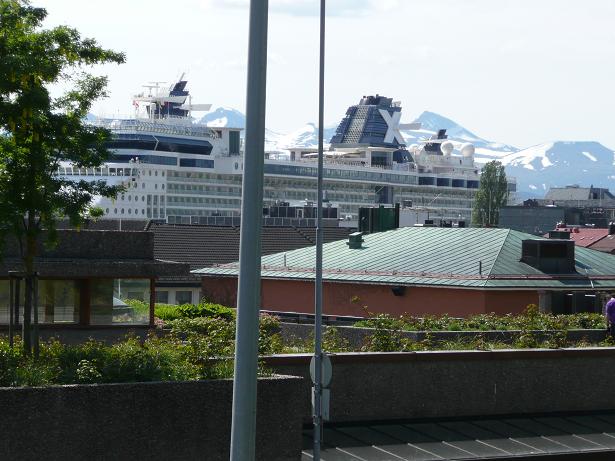
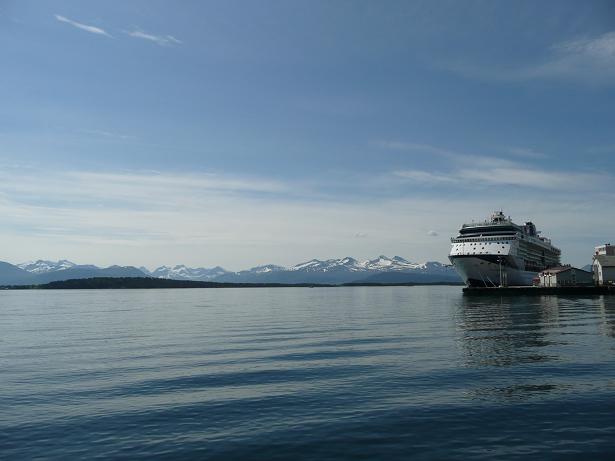
Celebrity Constellation in the port of Molde: once again the tallest building in the city: / Celebrity Constellation w porcie Molde: – znów najwyższy budynek w mieście:
The sun: it will set today—or rather, tomorrow—at 52 minutes past midnight. / Słońce: zajdzie dzisiaj, a właściwie jutro 52 minuty po północy.
Temperature: 8°C, not a trace of sun. / Tempertaura: 8° C, ani śladu słońca.
Location: Road to Molde / Pozycja: droga do Molde
Another day at sea. I like days at sea because you can do nothing and eat all day, reading or meeting new people in between. I keep running into people I’ve never seen before—but then again, when there are over 2,000 people in one place, the chances of meeting someone new are huge. Most of the passengers have relaxed by now; even the Chinese travelers have started smiling and saying „good morning.”
Kolejny dzień na morzu. Lubię dni na morzu, bo można nic nie robić i jeść cały dzień, w przerwach czytać albo poznawać nowych ludzi. Ciągle natykam się na kogoś, kogo nigdy wcześniej nie widziałam, ale kiedy w jednym miejscu jest ponad 2000 osób, to prawdopodobieństwo spotkania kogoś nowego jest ogromne. Większość pasażerów już się wyluzowała, nawet Chińczycy zaczęli się uśmiechać i mówić „dzień dobry”.
Many people traveled to Amsterdam from distant corners of the world to take part in this cruise. Australians and New Zealanders, Chinese and Singaporeans, South Africans, and a couple from Puerto Rico arrived specifically for the voyage—not to mention Jamaicans, Americans, and a large group of Canadians.
Wielu ludzi przyjechało do Amsterdamu z odległych zakątków świata, żeby uczestniczyć w tym rejsie. Przyjechali specjalnie na ten rejs Australijczycy i Nowozelandczycy, Chińczycy i mieszkańcy Singapuru, RPA i para z Puerto Rico, nie wspominając o Jamajczykach, Amerykanach i silnej grupie Kanadyjczyków.
Załoga jest super i o ile nie są to drobne, wystraszone dziewczyny mające służbę w damskich toaletach, to każdy członek załogi jest zadowolony, kiedy może sobie pogadać i opowiedzieć swoją historię. A ja lubię słuchać…
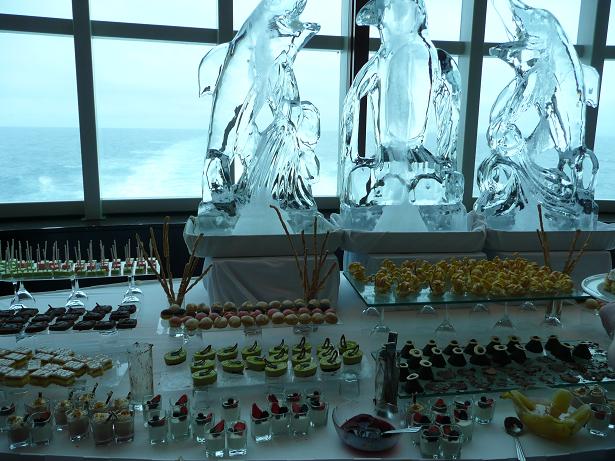
Brunch at Celebrity Constellation
In any case, there was a slight break in the routine today: a brunch was being held in the San Marco, the ship’s largest restaurant. We spent four hours at the table eating and chatting with a Japanese-Chinese team from Singapore and a couple from Scotland about our respective countries. As for my preferences, Singapore definitely won out. Now I get what the whole brunch thing is about. The food exceeded expectations, the décor of the room and tables—and the appearance of the waiters—was magnificent, and as for the company… we could easily have happily spent another three hours with them.
W każdym razie dziś „odbyło się” małe odstępstwo od rutyny: w największej statkowej restauracji San Marco organizowany był brunch. Spędziliśmy przy stole 4 godziny jedząc i gadając z japońsko-chińskim teamem z Singapuru i parą ze Szkocji o naszych krajach. Jeśli chodzi o moje wymagania, to Singapur zdecydowanie wygrał. Teraz już wiem, o co chodzi z tymi brunchami. Żarcie przerosło oczekiwania, wystrój sali, stołów, kelnerów był wspaniały, a towarzystwo… spokojnie wytrzymalibyśmy z nimi jeszcze ze 3 godziny.
As you know, I keep an eye out for a spray of water and a massive body at every opportunity. So, there I was, sitting on Deck 10 and scanning the sea’s surface, when suddenly—amidst the dark waves—I spotted a pod of dolphins! There were about twenty of them, and they were nearly black. They were swimming very fast from west to east (swimming like dolphins, of course), surfacing only briefly before remaining visible for a moment just beneath the water. They passed the ship’s stern without paying it the slightest bit of attention; the whole encounter lasted just over ten seconds. I had no idea they were so fast, though I knew they were beautiful. I rushed to the window, gasping with delight, trying to spot any stragglers, but none appeared.
Jak wiecie, przy każdej okazji wypatruję fontanny wody i wielkiego cielska. Siedziałam więc sobie na 10 pokładzie, penetrując wzrokiem powierzchnię morza i nagle wśród ciemnych fal zobaczyłam stado delfinów! Stado miało około 20 sztuk, były prawie czarne. Płynęły bardzo szybko z zachodu na wschód (oczywiście delfinem), wynurzały się tylko na chwilę, a potem było je widać przez moment tuż pod powierzchnią wody. Minęły statek od strony rufy, nie zwracając na niego najmniejszej uwagi, a wszystko to trwało kilkanaście sekund. Nie miałam pojęcia, że są tak szybkie, ale wiedziałam, że są piękne. Rzuciłam się do okna jęcząc z zachwytu, próbując wypatrzeć jakiegoś marudera, ale nie pojawiły się więcej.
We have crossed the 66th parallel north—the Arctic Circle. Summer is returning. / Przekroczyliśmy 66 stopień szerokości geograficznej północnej, czyli krąg polarny. Wraca lato.
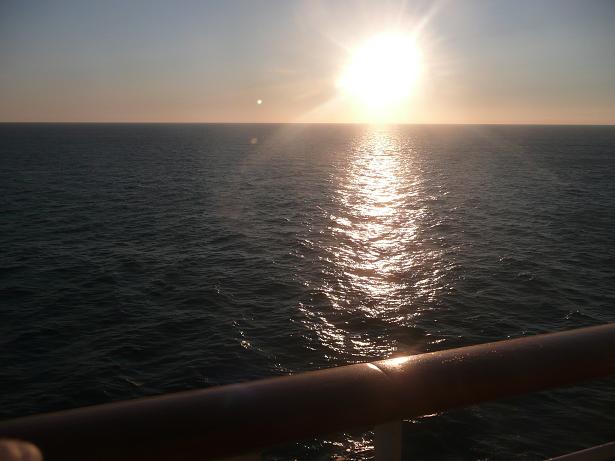
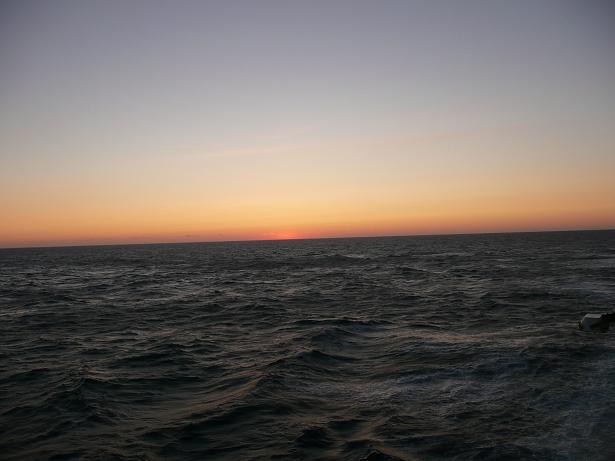
Sunshine at last! The surface of the sea glistens like a vast sheet of glitter. Emptiness all around. After a few days’ absence, this is exactly what the sun looks like: / Nareszcie słońce! Powierzchnia morza lśni jak wielka płachta brokatu. Wokół pustka. Po kilku dniach nieobecności słońce wyglada właśnie tak:
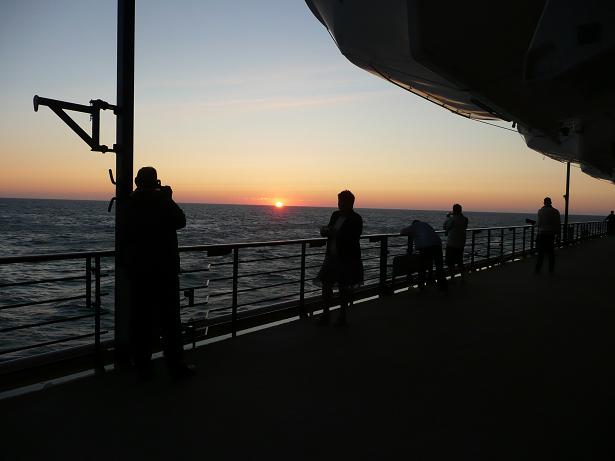
Just past midnight, off the coast of Trondheim. Sunset chasers have flocked to the deck:
Sunset on Polar Ring
The sun has just set. For the first time in a week. Night has returned. / Właśnie zaszło słońce. Pierwszy raz od tygodnia. Wróciła noc.
71° 10′ 21” – this is the latitude of the North Cape (Nordkapp). It lies roughly halfway between Oslo and the North Pole. Anyone who scraped a passing grade in geography likely remembers it as the northernmost point in Europe… but that isn’t actually true. The headland of Knivskjellodden lies one kilometer further north, but because it lacked the necessary clout and publicity—and the view from there isn’t quite as spectacular—it never made the cut as a tourist attraction.
71 ° 10′ 21” – na tej szerokości geograficznej leży North Cape, Nordkapp, Przylądek Północny. To mniej więcej połowa drogi między Oslo a Biegunem Północnym. Jeśli ktoś miał chociaż tróję z geografii, to zapewne pamięta, że jest to najdalej na północ wysunięty punkt Europy… ale to nieprawda. O jeden kilometr dalej na północ leży przylądek Knivskjellodden, ale ponieważ nie miał siły przebicia i odpowiedniej reklamy, a w dodatku widok z niego nie jest tak spektakularny, więc się nie załapał na atrakcję turystyczną.
View from Honnigsvag
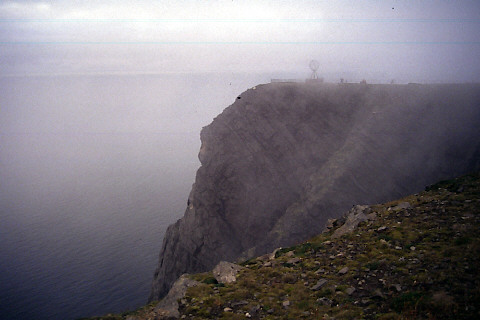
The North Cape, accessible via an undersea tunnel, sits atop a 300-meter cliff offering a sweeping view of the Barents Sea in good weather. You have to be lucky to catch such conditions, however, as the area is often shrouded in thick fog—which envelops everything, including the famous „Children of the Earth” monument. Designed by seven children from different corners of the globe (Japan, Tanzania, Brazil, Thailand, Italy, the Soviet Union, and the USA), the monument was erected in 1988 and symbolizes Hope, Joy, Harmony, and Friendship. When it does emerge from the fog, it looks magnificent.
Przylądek Północny, na który wiedzie podmorski tunel jest umieszczony” na 300-metrowym klifie, z którego przy dobrej pogodzie widać kawał Morza Barentsa. Trzeba być szczęściarzem, żeby trafić na dobrą pogodę, bo zwykle można zobaczyć tam mgłę, szczelnie otulającą wszystko, łącznie ze słynnym monumentem „Dzieci Ziemi”, zaprojektowany przez siedmioro dzieci z siedmiu zakątków świata (z Japonii, Tanzanii, Brazylii, Tajlandii, Włoch, Związku Radzieckiego i USA). Pomnik został wzniesiony w 1988 roku i symbolizuje Nadzieję, Radość, Zgodę i Przyjaźń. Jeśli go widać we mgle, to wygląda wspaniale.
If you are lucky, you might see herds of reindeer swimming across the strait connecting the mainland to the island of Magerøya—a distance of about a kilometer. Every spring (in May), around 5,000 of them arrive to graze on the rocky island, which is rich in lichens and wildflowers, before returning to the mainland in September.
Jeśli ma się szczęście, można zobaczyć stada reniferów, które płyną około kilometra, pokonując cieśninę łączącą ląd stały z wyspą Mageroy. Każdej wiosny (czyli w maju) przybywa ich tu około 5 tysięcy, żeby paść się na skalistej wyspie pełnej porostów i dzikich kwiatów, a we wrześniu wrócić na stały ląd.
Nordcapp: the statue and the mist / pomnik i mgła:
Nordcapp
Perched on the cliff is Nordkapphallen, a year-round tourist center. There, you can buy souvenirs, dine in a 250-seat restaurant boasting the most beautiful view of the Arctic Ocean, and visit the coffee house (not to be confused with a „coffee shop”) and the post office. / Na klifie jest Nordkapphallen, centrum turystyczne otwarte cały rok. Można kupić tam pamiątki, zjeść posiłek w restauracji na 250 osób), szczycącej się najpiękniejszym widokiem na Ocean Arktyczny, jest coffee house (nie mylić z coffee shop) i poczta.
Nordkapp lies about 16 kilometers from Honningsvåg—a distance we ultimately failed to cover. The protagonist of this story is Z., who, upon boarding, became the proud owner—or rather, the renter—of a cabin safe. He would open and close it several times a day, chanting a mantra like a prayer: „Don’t mess up the combination, especially when locking it.” And mess it up he did. At first, he wouldn’t admit it; he just stood quietly in front of the vault, trying to guess the magic code. It took a long time—suspiciously long—before he finally confessed he was trying to punch in the last two digits, which he had mixed up.
Nordkapp jest w odległości około 16 kilometrów od Honningsvåg i to była to odległość, której nie udało nam się pokonać. Bohaterem historii jest Z., który w momencie zaokrętowania został szczęśliwym posiadaczem, a właściwie dzierżawcą kajutowego sejfu. Otwierał go sobie i zamykał kilka razy dziennie, klepiąc przy tym jak pacierz „nie pomylić kombinacji, zwłaszcza kiedy się zamyka”. I pomylił. Najpierw nie chciał się przyznać, stojąc cichutko przed sezamem, usiłując odgadnąć zaklęcie. Trwało to długo, podejrzanie długo, więc w końcu się przyznał, że usiłuje wklepać dwie ostatnie cyfry, które pomylił.
„Maybe I’ll ask someone from the staff to open it?” I asked hesitantly. „Oh, come on—how?”
– Może poproszę kogoś z obsługi, żeby otworzył? – spytałam nieśmiało. No co ty, jak?
„On foot, of course. I’ll go to the front desk and say we can’t open the safe. Do you think you’re the first person this has happened to?” I try to reassure him.
– No na nogach. Pójdę do recepcji i powiem, że nie możemy otworzyć sejfu. Myślisz, że tobie pierwszemu się to przydarzyło? – próbuję go pocieszyć.
-No, I’ll give it another try. / – Nie, jeszcze spróbuję.
Another ten minutes passed; I was even starting to get drawn into the movie playing on the cabin TV. Then I heard increasingly loud rumbling sounds; Z. emerged from the closet and suggested I ask at reception after all. Five minutes later, an officer arrived—a technician, judging by the ship’s-propeller insignia on his epaulettes. He opened the safe with a key card in two seconds flat, but we had already missed the bus to the North Cape.
Minęło kolejne 10 minut, zaczął mnie nawet wciągać film w pokładowej TV. Słyszę coraz głośniejsze pomruki, Z. wyłania się z szafy i sugeruje, żebym jednak spytała w recepcji. Po pięciu minutach przyszedł oficer z naszywką śruby okrętowej na pagonach, znaczy techniczny. Kartą magnetyczną otworzył sejf w dwie sekundy, ale na autobus na Nordkapp już nie zdążyliśmy.
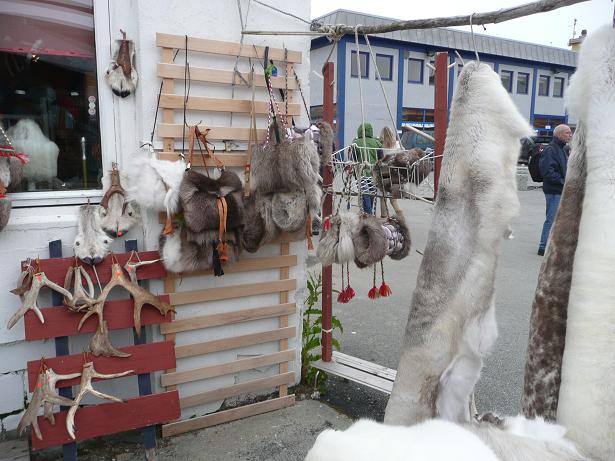
A Lappish shop in Honningsvåg: / Lapoński sklep w Honnigsvag:
Lapp shop in Honningsvag
CULINARY: The main culinary attraction is stockfish—dried, unsalted fish, usually cod. Cloudberries are also popular; these are fruits that resemble blackberries and raspberries in appearance but are orange.
KULINARIA: Główną atrakcją kulinarną jest stockfish, czyli suszona, niesolona ryba, zwykle dorsz. Popularne są też „cloudberries” (nie znam polskiego odpowiednika), owoce, które przypominają wyglądem jeżynę i malinę, ale są pomarańczowe.
Goodbye Honnigsvag / Do widzenia Honningsvag:
Goodbye Honigsvag
SHOPPING: It is worth buying wool products—including sweaters, though the latter were not particularly impressive—at the souvenir shops. Local artists craft leather belts, shoes, and wallets, as well as bone and stone carvings. You will certainly come across stalls run by Sami women in traditional attire; they primarily sell seal and reindeer hides, antlers and other animal by-products, small carved stones, and dolls dressed in traditional Sami clothing. Many shops display „Tax Free” signs, and you can claim a VAT refund at port offices or the airport before you leave.
ZAKUPY: w sklepach z pamiątkami warto kupić wyroby z wełny, w tym swetry, choć te ostatnie nie były za ciekawe. Lokalni artyści wykonują paski, buty, portfele ze skóry, rzeźby w kości i kamieniu. Na pewno będą kramy prowadzone przez lapońskie kobiety w tradycyjnych strojach. Można u nich kupić głównie skóry fok i reniferów, rogi i inne pozostałości zwierząt, małe rzeźbione kamyczki i lalki w lapońskich strojach. Wiele sklepów ma tabliczki „tax free”, a przed odjazdem można dostać zwrot podatku VAT w biurach w porcie, albo na lotnisku.
Even though it is warmer here than on Spitsbergen, it feels colder. It is the humidity—misty, cold, and grey—that is to blame. The greenery of the steep hills surrounding the town is lost within it.
Mimo że jest cieplej niż na Spitsbergenie, to jest zimniej. To sprawka wilgoci, mglistej, zimnej i szarej. Ginie w niej zieleń stromych wzgórz okalających miasteczko.
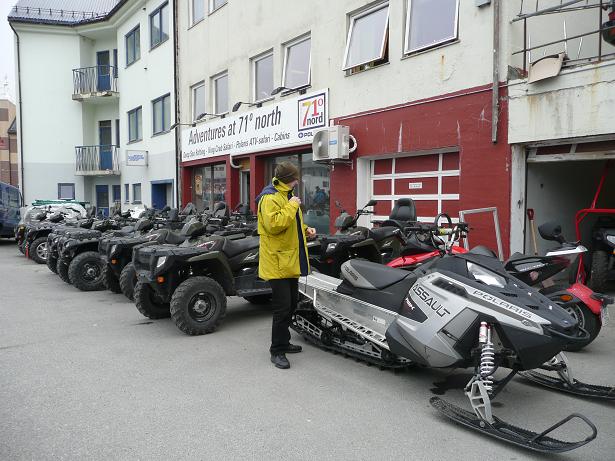
Z. admires marvels of motor sports—Ski-Doos (as they call them in Canada), and so on. The shop is called „Adventures at 71° North.” / Z. podziwia cuda motoryzacji – ski-doo (jak mówią w Kanadzie) itd. Sklep nazywa się „Przygody na 71* północ”.
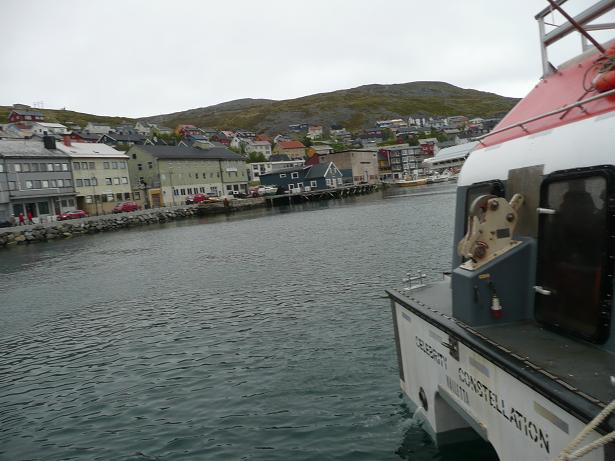
Honnigsvag
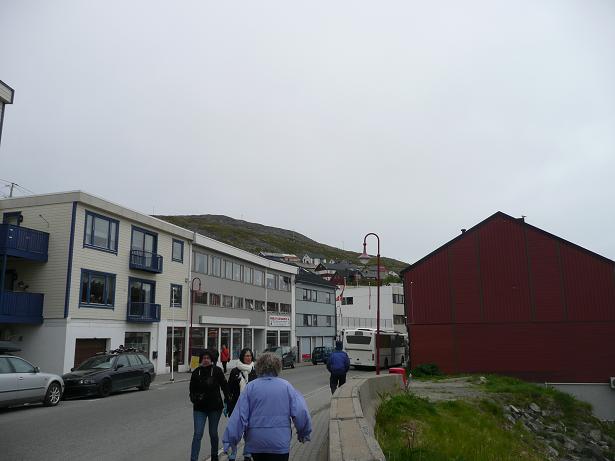
The tender boat docked at the pier right near the main street. Up close, Honningswåg doesn’t look quite so charming anymore. It is drab and grey, consisting of a single street riddled with potholes—reminiscent of Polish roads—and the colorful houses turn out not to be all that colorful after all. I may be nitpicking, but if a thousand ships packed with people arrive here during the season, and if just one in five visitors spends the equivalent of a mere five euros, that leaves at least five million euros in the settlement. For ten percent of that money, they could repair the plaster, patch the road, and paint over the unsightly stains on the walls—at least on the street-facing sides. Some windows feature pretty curtains and displays of flowers or figurines, while others are covered by old bedspreads and other hideous rags. The town could also invest in some greenery, given that the residents seem to cultivate nothing but weeds and assorted trash in their gardens.
Szalupa przybiła do pomostu prawie przy głównej ulicy. Z bliska Honningswåg nie wygląda już tak uroczo. Jest smutne i szare, składa się z jednej ulicy w której są dziury jak na polskich drogach, a kolorowe domki okazują się nie takie znów kolorowe. Czepiam się, ale jeśli przypływa tu w sezonie te 1000 statków wypełnionych ludźmi i jeśli co piąty z nich zostawi równowartość chociaż 5-ciu euro, to w tej osadzie zostaje co najmniej 5 milionów euro. Mogliby za 10 % tej kasy naprawić tynki, załatać drogę i pomalować paskudne plamy na murach chociaż od strony ulic(y). W niektórych oknach wiszą ładne firanki, stoją jakieś kwiatki czy figurki, a inne są zakryte jakimiś starymi narzutami i innymi paskudnymi szmatami. Miasto mogłoby też zainwestować w jakąś roślinność, bo mieszkańcy hodują w ogródkach chwasty i śmieci różnego pochodzenia.
The main street in Honningsvåg: / Główna ulica w Honnigsvag:
Main street in Honnigsvag
It seems like most residents couldn’t care less about aesthetics, and that really pisses me off, because this could genuinely be a lovely little town. Then again, maybe I’m just warped—spoiled by the breathtaking beauty of those German medieval gems, where every single detail is perfected to the nth degree. In this northern showcase of Norway, there’s precious little I’d call stunning.
Wygląda na to, że większość mieszkańców ma w dupie estetykę i strasznie mnie to wkurza, bo to naprawdę mogłoby być śliczne miasteczko. Ale może jestem spaczona i rozpieszczona przez zapierającą dech urodę niemieckich cudeniek średniowiecznej architektury, gdzie każdy szczegół jest dopieszczony do granic możliwości. A w tej północnej wizytówce Norwegii niewiele jest rzeczy, które uznałabym za zachwycające.
View from the hills surrounding Honningsvåg: / Widok ze wzgórz otaczających Honnigsvag:
On the other hand, right at the port, there is the Arctico Ice Bar; the alcohol there is the most expensive in the world, but everything is made from ice sourced from the lakes of Sápmi—the bar, sculptures, movie screen, fur-covered chairs, tables, and even the glasses. The ticket price includes a red thermal cape with a hood and two drinks—non-alcoholic ones, including one served in an ice glass that you cannot even keep as a souvenir.
Ale za to już w porcie mają tu Arctico Ice Bar, gdzie alkohol jest najdroższy na świecie, ale za to wszystko jest zrobione z lodu pochodzącego z jezior Sapmi: bar, rzeźby, ekran do filmów, krzesła przykryte skórami, stoliki, kieliszki… W cenę biletu wliczone jest: termiczne, czerwone ubranko w formie peleryny z kapturem i dwa drinki… bezalkoholowe, w tym jeden w szklance z lodu, której nawet nie można zabrać na pamiątkę.
INFO: Arctico Ice Bar is open: from April 1 to May 15, 11:00 AM – 4:00 PM. Between May 16 and 31: 10:00 AM – 7:00 PM. Between June 1 and August 15: 10:00 AM – 9:00 PM. Between August 16 and 31: 10:00 AM – 7:30 PM. From September 1 to October 10: 11:00 AM – 3:00 PM. The adult ticket price is 130 NOK.
INFO: Arctico Ice Bar jest otwarty: od 1 kwietnia do 15 maja w godz. 11 – 16. Między 16 a 31 maja: 10-19. Między 1 czerwca a 15 sierpnia: 10-21. Między 16 a 31 sierpnia: 10-19:30. Od 1 września do 10 października: 11-15. Cena biletu dla dorosłych to 130,- NOK.
We head right along the main street. We pass shops selling essentials for the locals, a few restaurants, and, of course, souvenir shops. Z. hates shopping, but since it’s bitterly cold, he graciously keeps me company—and discovers a beautiful, hand-woven blanket featuring stylized reindeer, but the price…
Idziemy główną ulicą w prawo. Mijamy sklepy z niezbędnymi dla mieszkańców rzeczami, kilka restauracji i oczywiście sklepy z pamiątkami. Z. nie cierpi łażenia po sklepach, ale ponieważ jest okropnie zimno, więc łaskawie towarzyszy mi i odkrywa przepiękny, ręcznie tkany koc w stylizowane renifery, ale cena…
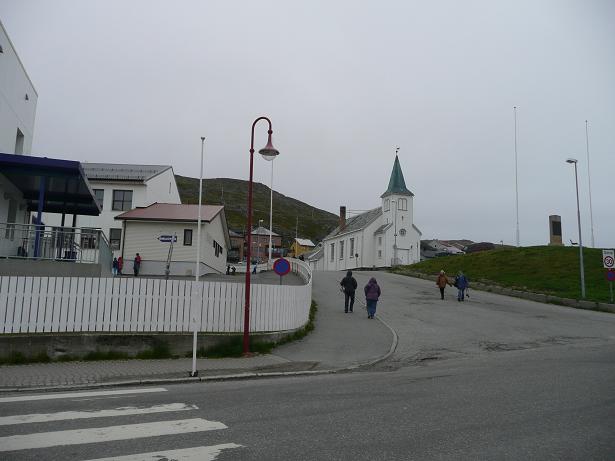
The „center” ends very quickly; the street grows narrower and more potholed. On the left stands a small white church, rebuilt after a fire during World War II.
„Centrum” kończy się szybciutko, ulica staje się węższa i bardziej dziurawa. Po lewej stronie stoi biały kościółek odbudowany po pożarze w czasie II wojny.
Little church in Honnigsvag
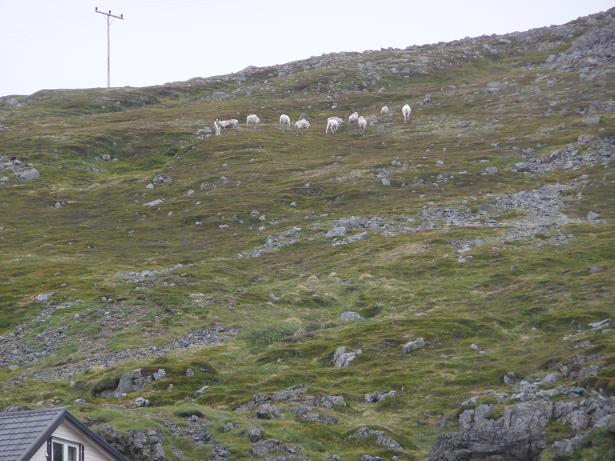
On the steep hillside, I spot a herd of grey-white creatures. / Na stromym stoku wzgórza dostrzegam stado siwobiałych stworzeń.
„Sheep!” I announce joyfully, for I am delighted by every live animal I encounter in its natural habitat.
– Owce! – oznajmiam radośnie, bo cieszy mnie każde napotkane żywe zwierzę w naturalnych warunkach.
„Sheep?” Zbig asks incredulously, his gaze following my finger as I point high up the hill.
– Owce? – nie dowierza Zbig, podążając wzrokiem za moim palcem, skierowanym wysoko na wzgórze.
„Not sheep?” A doubt crossed my mind, but then the synapses in my brain instantly connected with the right center. „Oh my god—reindeer!”
– Nie owce? – dopada mnie wątpliwość, ale zaraz synapsy w moim mózgu połączyły się z odpowiednim ośrodkiem. – O matko, renifery!
Reindeers in Honnigsvag
We leave the little church and the grazing herd behind and walk another kilometer to the edge of the town. The view of the bay is stunning—provided your gaze doesn’t snag on the nearby backyards (see above). The reindeer climbed to the top and soon disappeared, so that was the end of the show. We pass the marina and head in the opposite direction. Passing the port on our left, we reach the other end of town, where the landscape is wilder—and, unfortunately, the sidewalk comes to an end.
Zostawiamy kościółek i pasące się stado i idziemy kilometr dalej, aż na kraniec miasteczka. Widok na zatokę jest przepiękny, o ile nie zahacza się wzrokiem o przydomowe ogródki (patrz wyżej). Renifery wlazły na szczyt i wkrótce zniknęły, więc koniec atrakcji. Mijamy przystań i idziemy w drugą stronę. Po lewej mijamy port i dochodzimy na drugi kraniec miasta, gdzie jest bardziej dziko i niestety kończy się chodnik.
Honnigsvag
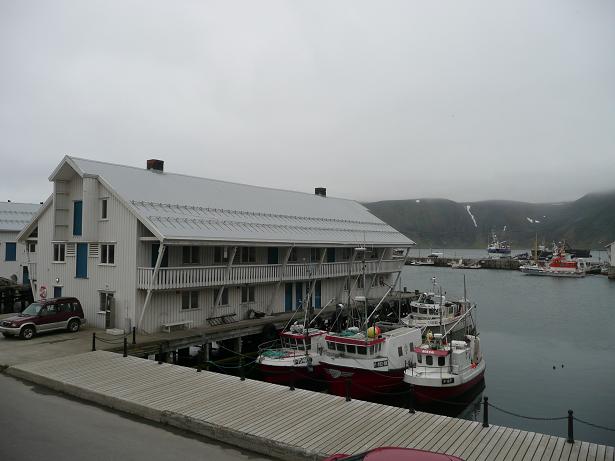
Since we don’t want to end up under the wheels of quad bikes and buses, we head to the port—a place of major attractions and unforgettable experiences. / Ponieważ my nie chcemy skończyć pod kołami quadów i autobusów, idziemy do portu – miejsca największych atrakcji i niezapomnianych wrażeń.
Honnigsvag and house by the bay.
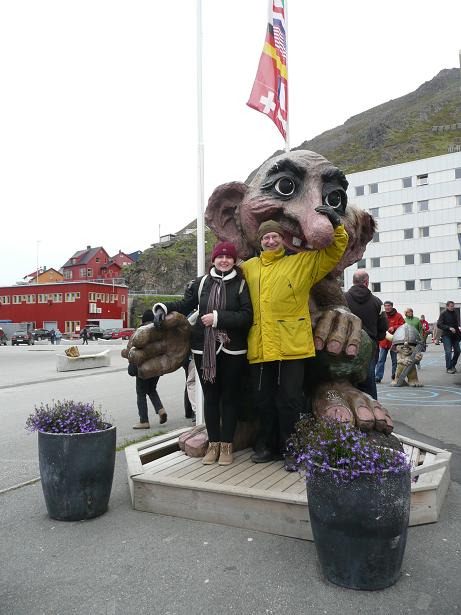
First and foremost, there is the museum, which features a single computer station. But never mind the museum! The port is teeming with trolls—creatures that presumably failed to hide from the daylight in time and turned to stone. And there they stand in the centers of many Norwegian towns, posing for tourists’ photos.
Przede wszystkim muzeum, gdzie jest jedno stanowisko z komputerem. Ale co tam muzeum! Port roi się od trolli, które zapewne nie zdążyły się schować przed światłem dnia i zamieniły się w kamień. I tak sobie stoją w centrum wielu norweskich miasteczek, dając się fotografować turystom.
Honnigsvag and Mr. Troll
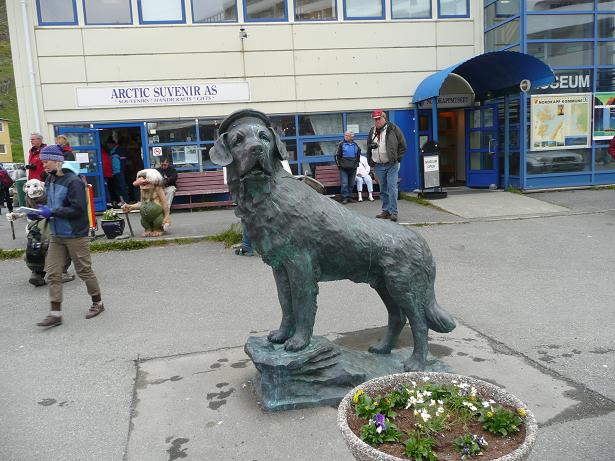
And there is a monument to a legend—the heroic dog Bamse (1937 – July 22, 1944). / No i jest pomnik legendy – bohaterskiego psa Bamse (1937 – 22 lipiec 1944).
Bamse, a St. Bernard, was enlisted for service on the ship Thorodd alongside his owner, Captain Hafto, prior to the German invasion of Norway. The Thorodd was one of thirteen Norwegian vessels that escaped to Great Britain following Norway’s defeat. The ship spent the war stationed in Dundee, operating as a minesweeper. Bamse’s exploits were remarkable: he saved a drowning sailor and defended another from an attacker armed with a knife. He had a habit of breaking up fights between sailors—resting his paws on their shoulders and waiting for them to calm down before escorting them back to the ship—and would fetch sailors from local pubs when their watch was due to begin. He would take the city bus to more distant locations, and the crew had to chip in to buy him a monthly pass. The crew even fashioned a helmet for him, as he preferred to spend his time near the ship’s guns during voyages.
Bernardyn Bamse, (norweski Misiek) został powołany do służby na statku Thorodd wraz ze swoim panem, kapitanem Hafto przed inwazją niemiecką na Norwegię. Thorodd był jednym z 13 statków norweskiej floty, które po klęsce Norwegii zwiały do Wielkiej Brytanii. Wojnę statek spędził w Dundee, pływając jako trałowiec. Dokonania Bamse są niebagatelne: uratowanie tonącego marynarza, obrona innego przed napastnikiem uzbrojonym w nóż. Miał zwyczaj rozdzielania walczących marynarzy (opierał się łapami na ich ramionach i czekał, aż się uspokoją, a potem prowadził ich z powrotem na statek), zabierał z knajp marynarzy, którzy mieli zacząć wachtę. Do odleglejszych miejsc jeździł miejskim autobusem i załoga musiała się złożyć na bilet miesięczny dla niego. Załoga zrobił mu również hełm, ponieważ w czasie rejsów przebywał najchętniej przy działach.
Bamse the Hero
Bamse died of a heart attack in the port of Montrose, Scotland. Hundreds of Norwegian sailors, Allied soldiers, and residents of Dundee and Montrose bade him farewell with honors at his funeral. His photograph—showing him wearing a Royal Norwegian Navy sailor’s cap made especially for him—appeared on Christmas and Easter postcards sent to „lift spirits.”
Bamse zmarł na atak serca w porcie Montrose w Szkocji. Na pogrzebie żegnało go z honorami setki norweskich marynarzy, żołnierze alianccy, mieszkańcy Dundee i Montrose. Jego zdjęcie w zrobionej specjalnie dla niego marynarskiej czapce Royal Norwegian Navy znalazło się na bożonarodzeniowych i wielkanocnych pocztówkach wysyłanych „ku pokrzepieniu serc”.
The Bamse statue in Honningsvåg faces southwest, whereas his statue in Montrose looks northeast…Bamse na pomniku w Honningsvag patrzy na południowy-zachód, gdzie jego postać na pomniku w Montrose spogląda na północny-wschód…
Sun: 24 hours above the horizon / Słońce: 24 godziny nad horyzontem
Temperature: 5°C, heavy cloud cover, and fog as thick as cream. / Temperatura: 5 st. C, duże zachmurzenie i mgła jak śmietana
Location: Port of Honningsvåg, Norway / Pozycja: port Honningsvag, Norwegia
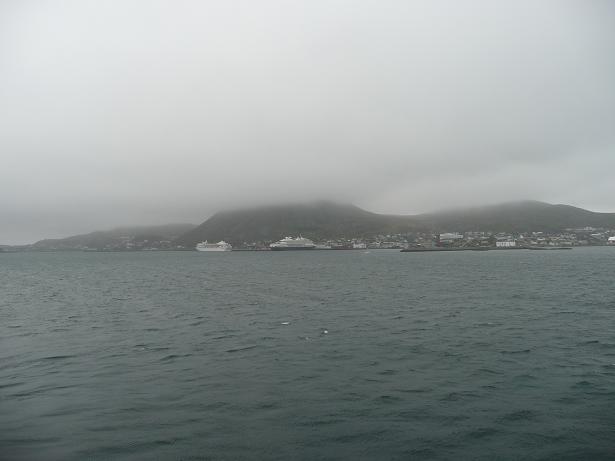
Honningsvåg roadstead: / Reda portu Honnigsvag:
Honnigsvag Harbour
We’ve been anchored off the port of Honningsvåg since 7:00 a.m. Unfortunately, there was no space at the quay because tourists had flocked in from everywhere. I counted four large passenger ships and several smaller ones. That means another trip by tender. It would be great—if only it didn’t smell so strongly of exhaust fumes.
Od 7:00 stoimy na redzie w porcie Honningsvag. Niestety, nie było miejsca przy nabrzeżu, bo nazjeżdżało się turystów zewsząd. Naliczyłam 4 wielkie statki pasażerskie i kilka mniejszych. Czyli znów czeka nas podróż szalupą. Byłoby super, gdyby tylko tak bardzo nie śmierdziało spalinami.
The city looks lovely from a distance. It sits picturesquely on steep, rocky slopes. There are no trees, but lichens are in full bloom. This gives the surrounding hills a dark green hue, making them appear more inviting than they actually are.
Miasto wygląda ładnie z daleka. Leży sobie malowniczo na stromych, skalistych zboczach. Nie ma drzew, za to porosty są w pełnym rozkwicie. To nadaje okolicznym wzgórzom ciemnozielony odcień, który sprawia, że wyglądają bardziej gościnnie, niż są w rzeczywistości.
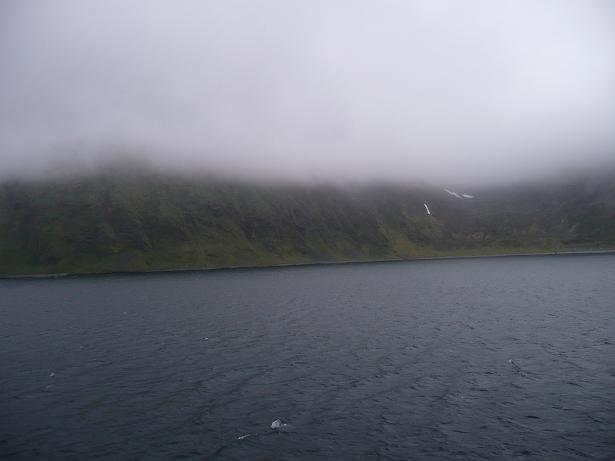
The hills around Honningsvåg: / Wzgórza wokół Honnigsvag:
Hills around Honnigsvag
Honningsvåg became a city in 1996—even though, strictly speaking, it shouldn’t have. Norwegian law requires a city to have a population of at least 5,000, yet Honningsvåg has only half that number. Perhaps the designation is based on the tourists visiting the North Cape; they arrive in such vast numbers that it reportedly takes 1,000 ships a year to transport them all. This makes the town one of Northern Europe’s hottest destinations.
Honningsvag stało się miastem w 1996 roku. Stało się miastem, choć nie powinno się nim stać. Norweskie prawo nakazuje, aby miasto liczyło co najmniej 5.000 mieszkańców. Honningsvag ma ich o połowę mniej. Być może chodzi tu o liczbę turystów, którzy co roku odwiedzają Nordkapp, a jest ich takie mnóstwo, że potrzebują ponoć 1.000 statków rocznie, żeby tu przybyć. To czyni miasto jednym z najgorętszych miejsc północnej Europy.
It all began in the 16th century, when Richard Chancellor—captain of the English ship Edward Bonaventure—was searching for a northern route to China. A storm drove him to this spot (1553), and he named it North Cape. Christian IV, King of Denmark, visited the site in 1599; Louis Philippe, King of France, in 1795; and Oscar II, King of Sweden, in 1873. He was followed shortly by Emperor Wilhelm II and, not long after, by King Rama of Siam. And in 2012, here we are.
A zaczęło się w XVI wieku, kiedy Richard Chancellor, angielski kapitan statku „Edward Bonaventure” szukał północnej drogi do Chin. Sztorm zapędził go w to miejsce (1553). Nazwał je North Cape. W 1599 roku odwiedził to miejsce Christian IV, król Danii, w 1795 Ludwik Filip, król Francji, w 1873 Oskar II, król Szwecji, zaraz po nim był cesarz Wilhelm II i niedługo potem król Syjamu Rama. A w 2012 jesteśmy my.
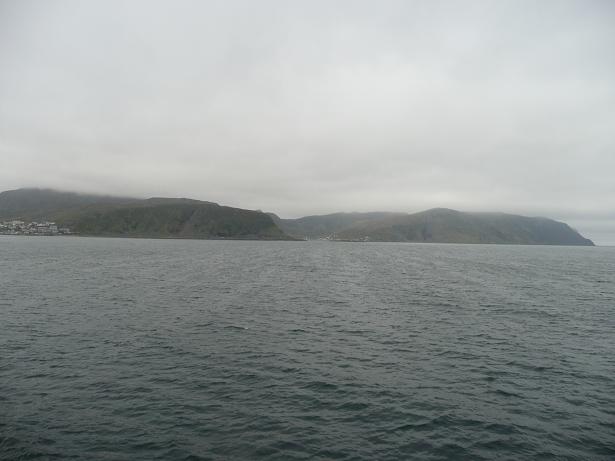
The mysterious island of Magerøy: / Tajemnicza wyspa Mageroy:
Honningsvåg is located on the island of Magerøya, at the same latitude as Siberia and Alaska, yet the climate here is much milder. The entire coast is warmed by the powerful Gulf Stream, making it possible—for instance—to raise reindeer at the mouths of the fjords. In summer, temperatures can reach as high as 20 degrees!
Honningsvag leży na wyspie Mageroy, na tej samej szerokości geograficznej co Syberia i Alaska, ale klimat jest tu dużo łagodniejszy. Całe to wybrzeże ogrzewane jest potężnym prądem Golfstrom i dzięki temu przy ujściu fiordów można tu np. hodować renifery. Latem temperatura może dochodzić do 20 stopni!!!
But not today. Today it is cold, foggy, and gloomy. / Ale nie dzisiaj. Dziś jest zimno, mgliście i ponuro.
I was woken by the rocking and creaking of the ship. Through the spray-splattered porthole, I could see huge waves and clouds of water whipped up by the strong wind. But was it a storm yet? My inner ear said yes, but my reason said no. The only thing that came to mind was:
Obudziło mnie kołysanie i skrzypienie statku. Przez zachlapany wodą bulaj/okno widać wielkie fale i chmury wody unoszone przez silny wiatr. Ale czy to już jest sztorm? Mój błędnik mówi, że tak, a rozum, że nie. Jedyne, co mi przychodzi do głowy to:
Way hay and up she rises, way hay and up she rises, way hay and up she rises early in the morning
What will we do with a drunken sailor, what will we do with the drunken sailor, what will we do with the drunken sailor early in the morning?
Shave is belly with the rusty razor, shave his belly with the rusty razor, shave his belly with the rusty razor early in the morning.
Way hay and up she rises, way hay and up she risies, way hay and up she rises early in the morning.
Put him in the bed with the capitain’s daugther, put him in the bed with the capitain’s daugther, put him in the bed with the capitain’s daughter early in the morning.
Way hay and up she risies, way hay and up she risies, way hay and up she rises early in the morning…
I have to get up soon and go scrub the deck. / Zaraz trzeba wstawać i iść szorować pokład.
8:10
Smaller waves, oh yes. But the fog is thick as milk. The ship lets out a deep, booming blast every ten minutes or so—I feel like they can hear it all the way in Nuuk. Still, I’m hoping this route isn’t too busy.
Fale mniejsze, o tak. Za to mgła jak mleko. Statek buczy basem co kilkanaście minut i mam wrażenie, że słyszą go nawet w Nuuk. Ale mam też nadzieję, że ta trasa nie jest zbyt uczęszczana.
For now, one needs to eat one’s fill. Grandfather used to say that a well-fed person has an easier time surviving than a hungry one. He was undoubtedly right.
Póki co trzeba się najeść. Dziadek mawiał, że najedzony człowiek przeżyje łatwiej niż głodny. Niewątpliwie miał rację.
I’ve discovered another place to stuff my face: they serve waffles, pancakes, and crêpes—but thankfully, they aren’t amazing! You can easily skip them and comfortably make room for another croissant au chocolat.
Odkryłam jeszcze jedno miejsce do nażarcia się: dają tam gofry, pacakes i naleśniki, ale na szczęście! Na szczęście nie są fantastyczne! Można odpuścić i spokojnie zmieścić kolejnego croissant au chocolat.
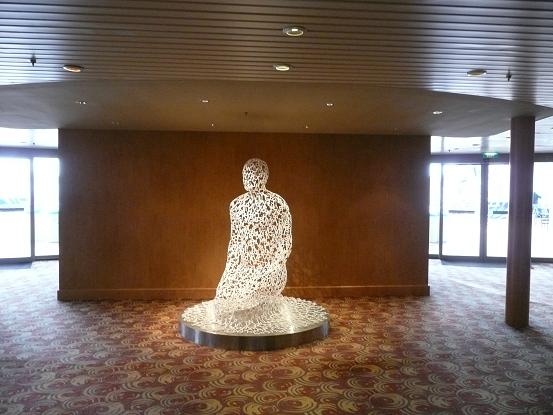
Celebrity Constellation – one of sculptures / jedna z rzeźb:
Celebrity Constellation – sculpture
ok. 12:00
We took a salsa lesson, but we aren’t satisfied. The Chinese, on the other hand—who learn classical dances en masse—are always happy, even though they lack a sense of rhythm. Unlike us—the sultans of merengue! Since we’ve lost our enthusiasm for physical activity, it’s time to head to Deck 10 and see if—just like every day at this hour—they’re serving Asian cuisine, pasta, and pizza, along with, of course, those dream-worthy soups, salads, and sandwiches.
Zaliczyliśmy lekcję salsy, ale nie jesteśmy usatysfakcjonowani. Chińczycy natomiast, którzy gremialnie i hurtowo uczą się klasycznych tańców są zawsze zadowoleni, mimo, że nie mają wyczucia rytmu. Nie to co my, sułtani merengue! Ponieważ jesteśmy zniechęceni do aktywności fizycznej, więc pora iść na 10 pokład i zobaczyć czy tak jak codziennie o tej porze będzie kuchnia azjatycka, pasty i pizze, oraz niewątpliwie rzecz jasna zupki, sałatki i kanapeczki jak marzenie.
21:20
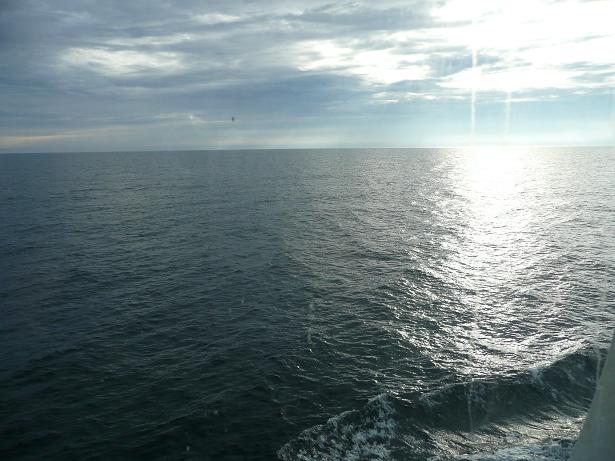
We are roughly halfway to the North Cape. The temperature is around 5 degrees, and a strong wind is blowing. The fog has lifted, and the horizon is visible. And whales. If there were any.
Jesteśmy mniej więcej w połowie drogi na Przylądek Północny. Temperatura około 5 stopni, wieje silny wiatr. Mgła się rozwiała, można zobaczyć horyzont. I walenie. Gdyby były.
The horizon on the way to the North Cape: / Horyzont w drodze na Przylądek Północny:
Barents Sea
Dinner tonight was a formal affair, so I had to wear my stretchiest dress. What they do with the food here goes beyond anything I could have imagined in terms of culinary wonders. Today’s menu: celeriac cream soup with caramelized apple, goat cheese cannelloni, and pistachio clafoutis with peaches.
Kolacja dziś była „formal” i musiałam włożyć najbardziej rozciągliwą kieckę. To, co robią tu z żarciem przechodzi moje wyobrażenia o kulinarnych cudach. Dziś: krem z selera z karmelizowanym jabłkiem, canelloni z kozim serem i pistacjowe clafoutis z brzoskwiniami.
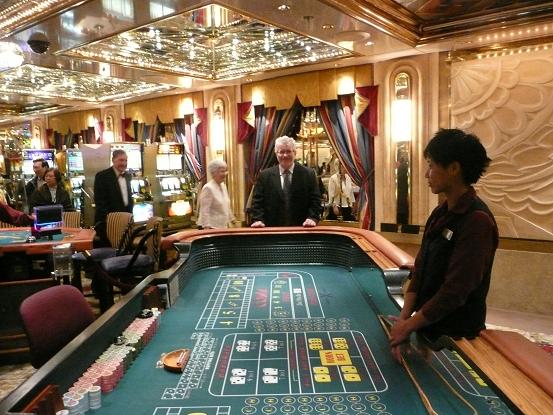
Z. plays roulette or baccarat at the casino: / Z. gra w ruletę, czy bakarata w kasynie:
We also caught the performances by the young artists in the Celebrity Constellation theater. I would have preferred to go for a walk, but Z. has recently developed a passion for so-called high culture and isn’t keen on skipping the daily shows. Oh well. As for me, today I attended a napkin-folding class and a lecture on navigation. I know everything there is to know about compasses now, so—heya, Norway!
Zaliczyliśmy też występy młodych ludzi w Teatrze Celebrity Constellation. Wolałabym w tym czasie pospacerować, ale Z. zapałał ostatnio miłością do kultury tzw. wysokiej i nie za bardzo chce odpuścić codzienne przedstawienia. Niech będzie. Ja dziś byłam na lekcji składania serwetek i na wykładzie o nawigacji. O kompasie wiem wszystko, więc heya Norge!