
We ventured a very long way—60 km to the northwest. Beg ar Raz—the Breton name for this place—means „strong current.” It is on the list of France’s „4 Great Sites.” And it looks fantastic, especially in fine weather.
Baaardzo daleko się wybraliśmy – 60 km na północny zachód. Beg ar Raz, bretońska nazwa tego miejsca oznacza silny nurt. Jest na liście „4 wielkich miejsc we Francji”. I wygląda fantastycznie, zwłaszcza przy pięknej pogodzie.

Pointe du Raz is located on the Cap Sizun peninsula, and some consider it to be the westernmost point of Europe. In fact, the name of this part of Brittany—Finistère—means „end of the earth” (finir = end, terre = earth), so it truly marks that very end.
Pointe du Raz jest na przylądku Sizun i niektórzy uważają, że jest to najdalej na zachód wysunięty punkt Europy. Zresztą nazwa tej części Bretanii – Finistère – oznacza „koniec ziemi” (finir = koniec, terre = ziemia), więc właśnie to jest to zakończenie.
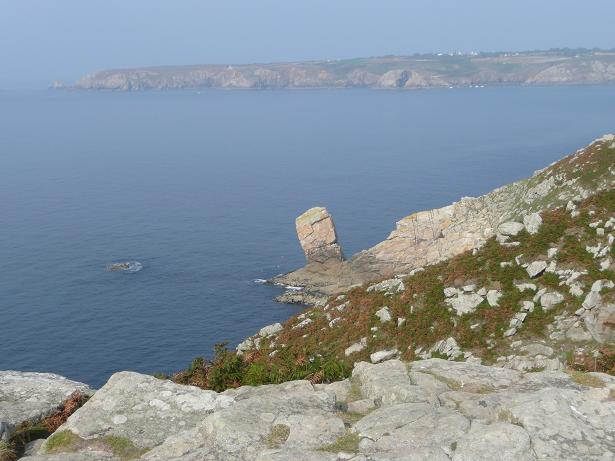
You need comfortable shoes for the walk starting from the parking area—which, in addition to a restaurant and souvenir shops, houses an information point and a modest museum. From there, it takes about 30 minutes to reach what is arguably the best view of the Atlantic in France; the route loops past the restrooms and a French Army radar station before taking about 20 minutes to return. I do not recommend this walk to the elderly during hot weather, even though the terrain is flat. For cliff-hiking enthusiasts, there is a roughly three-hour trail leading north to Pointe du Van, a spot that is perhaps even more rugged and rocky.
Trzeba mieć wygodne buty, żeby zawędrować od parkingu, przy którym oprócz restauracji i sklepów z pamiątkami mieści się punkt informacyjny i skromne muzeum. Stamtąd idzie się około 30 minut do najlepszego widoku na Atlantyk we Francji, zakręca się obok toalet i stacji radarowej Armii Francuskiej, i wraca się około 20 minut. Nie polecam tej trasy osobom starszym w upał, choć idzie się „po płaskim”. Dla uwielbiających piesze wędrówki na klifach jest trasa na około 3 godziny, która prowadzi na północ, do Pointe du Van, który jest chyba jeszcze bardziej skalisty.

What else is there to say about this place? Numerous flocks of birds inhabit the cliffs, enjoying undisturbed peace. The entire cape encompasses a protected area of approximately two thousand hectares.
Co jeszcze napisać o tym miejscu? Na klifach mieszkają liczne plemiona ptaków i mają tam święty spokój. Cały obszar przylądka to około dwa tysiące hektarów obszaru chronionego.
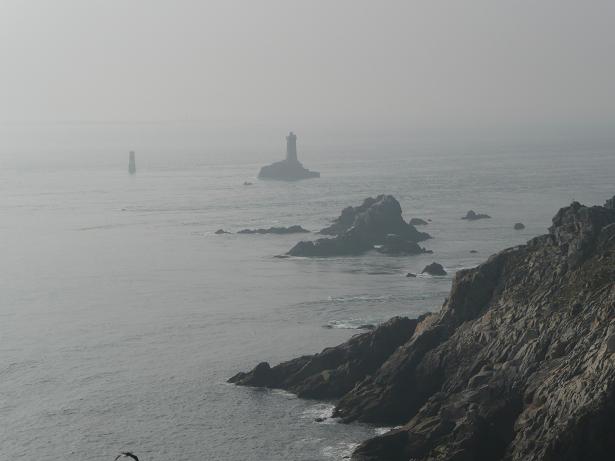
The lighthouse is called „La Vieille”—”The Old One.” It would be worth coming here during a storm to see huge waves crashing against the old lighthouse. I saw it in a video. It takes your breath away.
Latarnia morska nazywa się „La Vieille” – Stara. Warto byłoby tu przyjechać w czasie sztormu, żeby zobaczyć wielkie fale uderzające w starą latarnię. Widziałam na filmie. Zapiera oddech.
We are heading back to our Breton house. On the way, we still need to visit Pont-Croix (Pontekroaz in Breton). The town looks as if time stood still there somewhere around the Middle Ages. And that’s about it.
Wracamy do naszego bretońskiego domu. Po drodze musimy jeszcze zwiedzić Pont-Croix (po bretońsku Pontekroaz). Miasteczko wygląda, jakby czas zatrzymał się tam w okolicach średniowiecza. I tyle.

