Rejs statkiem wielkim lub małym. Kto o tym nie marzył, czytając o wielkich odkrywcach, dalekich lądach, skarbach ukrytych na bezludnych wyspach. Gdzie odnaleźć ślady romantyzmu ery żaglowców i odkrywania nowych lądów? Przecież nie w lotach samolotem.
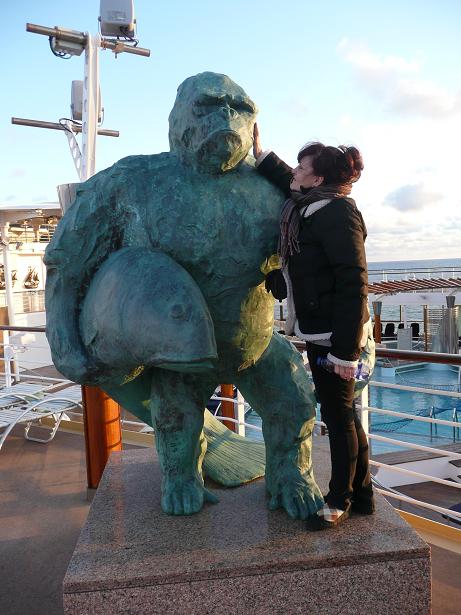
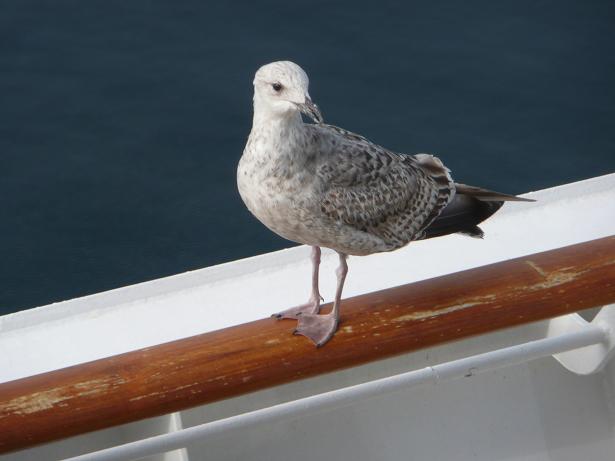
We wander aimlessly through the corridors of the seventh deck, trying to figure out what constitutes the luxury that costs a thousand bucks more than our cabin. The hallway looks just the same… The only thing I envy them is being able to open the windows – that’s probably the one thing that bothers me here. We wonder why we never once took a dip in any of the pools… Well, it’s too late now, but there’s only one reason: we just didn’t feel like it. Maybe next time – when we sail to the Caribbean, or at least to Madeira. But we’ll have a little animal as a souvenir – one of the several species that live around the pool area:
Włóczymy się bez celu po korytarzach siódmego pokładu, próbując odgadnąć na czym polega ten luksus, wart tysiąc dolców więcej niż nasza kajuta. Korytarz taki sam… Zazdroszczę im tylko, że mogą otworzyć okna, to chyba jedyna rzecz, jaka mi tu przeszkadza. Zastanawiamy się, dlaczego ani razu nie kąpaliśmy się w żadnym z basenów… Nie, teraz już przepadło, ale powód jest jeden – nie chciało nam się. Może następnym razem, kiedy popłyniemy na Karaiby, albo chociaż na Maderę. Ale będziemy mieć na pamiątkę zwierzaczka, jednego z kilku gatunków, które żyją w okolicy basenu:
Celebrity Constellation – Animal near the pool
The food. On the Celebrity Constellation, it’s one of the most amazing experiences—and one of the things I’m going to miss like crazy. I don’t know how much weight I’ve gained, but it was totally worth it. If I ever had the money for a round-the-world cruise (spending one to three months on a ship!), the ship’s draft would probably increase by at least a few centimeters. Zbig is delighted with the food too, of course, but for one thing, he gets used to luxury quickly, and for another, anything beats my cooking anyway.
Jedzenie. To na „Celebrity Constellation” jedno z najwspanialszych doświadczeń i jedna z rzeczy, których będzie mi brakować jak nie wiem co. Nie wiem ile przytyłam, ale i tak warto było. Gdybym kiedyś miała kasę na rejs dookoła świata (od miesiąca do trzech miesięcy na statku!), to pewnie zanurzenie wzrosłoby o co najmniej kilka centymetrów. Zbig wprawdzie też jest zachwycony jedzeniem, ale po pierwsze on szybko się przyzwyczaja do luksusu, a po drugie i tak wszytko jest lepsze od tego co ja ugotuję.
That’s it—10 p.m. We’re off to sleep; we’ve been told to clear out by 6:30 tomorrow. People on the upper decks probably don’t have to be up at the crack of dawn, but oh well. We have to get up at five and eat a huge breakfast. No, I don’t think I want to go home. Tomorrow we have to return to reality, starting with a big unknown in Amsterdam: will we get our car back or not? And if we do, what kind of life form will be waiting for us in the trunk, where we left (okay, fine—where I left) sandwiches, cottage cheese, and yogurt?
Koniec – 22-ga. Idziemy spać, jutro kazali nam się wynieść o 6:30. Wyższe pokłady nie muszą zapewne się zrywać skoro świt, ale co tam. Trzeba wstać o piątej i zjeść ogromne śniadanie. Nie, chyba nie chcę do domu. Jutro musimy wrócić do rzeczywistości, a zacznie się od wielkiej niewiadomej w Amsterdamie – odzyskamy samochód, czy nie? A jeśli tak, to jaka forma życia czeka na nas w bagażniku, gdzie zostawiliśmy (no dobra, ja zostawiłam) kanapki, biały serek wiejski i jogurt?
Sunrise 4:30 a.m., Sunset 10:16 p.m. / wschód słońca 4:30, zachód 22:16
Temperatura: 12°.
Position: North Sea / Pozycja: Morze Północne
Misty morning / Mglisty poranek
„You’ve lived the life” – that’s the slogan that appeared in today’s onboard newsletter. Maybe so. Besides, there’s a bit of a roll. That’s how the North Sea welcomes weary travelers. We’re likely catching some beam seas that the stabilizers can’t handle, because it’s far from steady. Many people are complaining that they couldn’t sleep last night because they felt „unsettled.” I feel unsettled too—because it’s the last day, everything has gone by so fast, and I’m left wanting more; I could easily keep sailing for another month. Life here is so simple and uncomplicated. For now, though, I’m off to say goodbye to my buddy:
„You’ve lived the life” – takie hasło ukazało się w dzisiejszej gazetce pokładowej. Może i tak. A poza tym kiwa. Tak Morze Północne wita strudzonych podróżników. Pewnie łapiemy jakieś boczne fale, na które nie działają stateczniki, bo nie jest stabilnie. Wielu ludzi narzeka, że nie mogli spać w nocy, bo czuli się „niepewnie”. Ja też czuję się niepewnie, bo to ostatni dzień i wszystko minęło tak szybko i czuję niedosyt i popływałabym sobie jeszcze z miesiąc. Życie tu jest takie proste i nieskomplikowane. Póki co, idę pożegnać się z moim kumplem:
Celebrity Constellation – my dude
At eleven, we’re off to our final dance class—Latin line dance. I know Z. doesn’t want to go; his mind is already consumed by the grim reality he has to face tomorrow. And then there’s the car, left in the hands of a stranger at the port of Amsterdam… Will we ever see it again? Will we have a way to get home? Not to mention the sandwiches left in the trunk… Has some sort of epidemic broken out in the city?
O 11-stej idziemy na ostatnią lekcję tańca – Latin line dance. Wiem, że Z. nie chce, bo jego myśli już zajęła ponura rzeczywistość, z którą przyjdzie mu się zmierzyć już jutro. No i samochód, pozostawiony w rękach obcego człowieka w porcie Amsterdam… Czy jeszcze go zobaczymy? Czy będziemy mieli czym wrócić do domu? No i kanapki zostawione w bagażniku… Czy w mieście nie zapanowała jakaś epidemia?
Noon / Południe
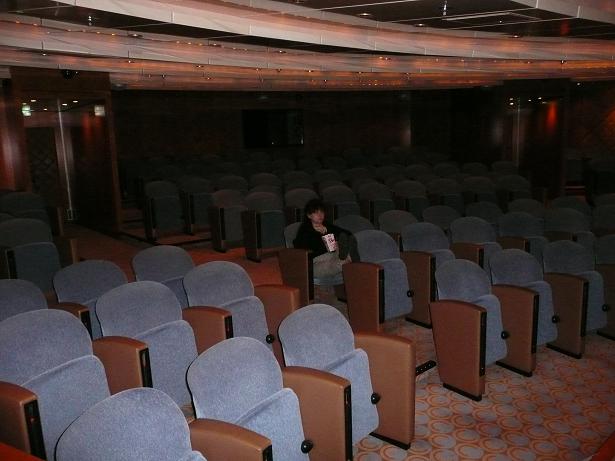
We use the last half-day to explore the ship one last time, return a book to the library, and visit places we hadn’t been to yet—such as the cinema, where two movies were shown daily. The cinema is cozy; portions of popcorn in cardboard boxes await on a table by the entrance. I decided to sit for a while in this quiet, dimly lit space:
Wykorzystujemy ostatnie pół dnia, żeby ostatni raz zwiedzić statek, oddać książkę do biblioteki, iść tam, gdzie jeszcze nie byliśmy, np. do kina, w którym codziennie można było zobaczyć dwa filmy. Kino jest przytulne, na stole przy wejściu czekają porcje popcornu w tekturowych pudełeczkach. Postanowiłam trochę posiedzieć w tym spokojnym, mrocznym miejscu:
Celebrity Constellation – cinema
Z. unexpectedly decided to visit the retail deck. Some time ago, he’d spotted a warm hoodie—one that wasn’t made in China—and decided it was exactly the one he wanted. In my stingy heart, I had hoped there would be sales on the last day—wild price cuts with an „everything must go” theme—but nothing of the sort happened. The hoodie cost 45 bucks, and it still does. But Z. is happy anyway, and that’s priceless.
Z. nieoczekiwanie postanowił odwiedzić pokład handlowy. Jakiś czas temu wypatrzył ciepłą bluzę z kapturem, która nie-została-wyprodukowana-w-Chinach i uznał, że taką właśnie chce mieć. Ja w moim skąpym sercu miałam nadzieję, że w ostatni dzień będą jakieś wyprzedaże, szalone obniżki cen pod hasłem „all must go”, ale nic takiego nie nastąpiło. Bluza jak kosztowała 45 dolców, tak kosztuje. Ale Z. i tak jest zadowolony, a to jest bezcenne.
All transactions on the ship are cashless; you pay for everything using your boarding pass. At the end of the cruise, the total is calculated and charged to the credit cards whose details were provided upon embarkation. It’s great that you can check all transactions and your running balance on the TV screen at any time. For a penny-pincher like me, that’s a real relief.
Wszelkie transakcje na statku odbywają się bezgotówkowo. Za wszystko płaci się kartą pokładową. Na koniec rejsu wszystko jest podliczane i ściągane z kart kredytowych, których numery trzeba było podać przy zaokrętowaniu. Fajne jest to, że wszystkie transakcje i ich bilans można w każdej chwili sprawdzić na ekranie telewizora. Dla mnie, skąpiradła, to prawdziwa ulga.
Afternoon / Po południu
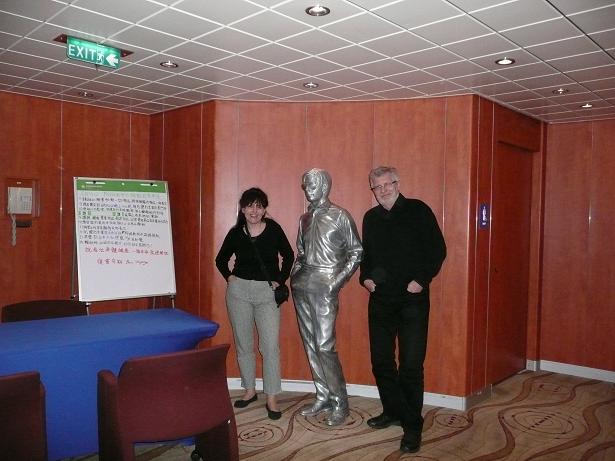
The dreaded moment of packing is fast approaching. I really don’t feel like doing it, but all luggage—except for carry-ons—has to be out in the hallway by 11 PM. Others likely have a longer to-do list: cashing in casino chips before the place closes, using up their remaining internet minutes before they expire at 7 AM tomorrow, or getting a massage to help reduce swelling during the long flight home. It’s a relief that we don’t have to do any of that. For now, we’re off to take a photo with the guy from Deck 3, right next to the Chinese plenary office.
Zbliża się straszny moment, kiedy trzeba się będzie pakować. Strasznie mi się nie chce, ale do 23-ciej wszystkie bagaże, oprócz podręcznych mają się znaleźć na korytarzu. Inni mają zapewne więcej obowiązków, bo trzeba: wymienić żetony z kasyna, zanim zostanie ono zamknięte, wykorzystać ostatnie minuty w internecie, bo przepadną jutro o 7 rano, zrobić sobie masaż, bo to redukuje opuchliznę w czasie długiego lotu do domu. Jak to dobrze, że nie musimy robić tego wszystkiego. Póki co, idziemy sobie zrobić zdjęcie z gościem z 3 pokładu, obok chińskiego biura plenarnego.
I don’t know who that is, but he’s always standing on the third deck. / Nie wiem, kto to jest, ale zawsze stoi na trzecim pokładzie.
Late afternoon; not very warm, but it’s not raining. / Późne popołudnie, niezbyt ciepło, ale nie pada.
Z. was struck down by a bad cold right after dinner—which was a „formal” affair tonight. He didn’t even grace the ship’s theater with his presence, nor did he head to the mess for his evening cup of chocolate or admire the magnificent views from the eleventh deck. I left him to his fate—surrounded by thousands of tissues—and made my way up the stairs to that very deck.
Z. padł rażony katarem zaraz po kolacji, która dziś była „formal”. Nawet nie zaszczycił swoją obecnością ulubionego teatru, nie udał się do mesy na wieczorny kubek czekolady, nie podziwiał wspaniałych widoków, rozciągających się z jedenastego pokładu. Zostawiłam go na pastwę losu z tysiącami chusteczek i udałam się schodami na rzeczony pokład.
Above all, I had wonderful company: / Przede wszystkim miałam wspaniałe towarzystwo:
Towarzysz podróży
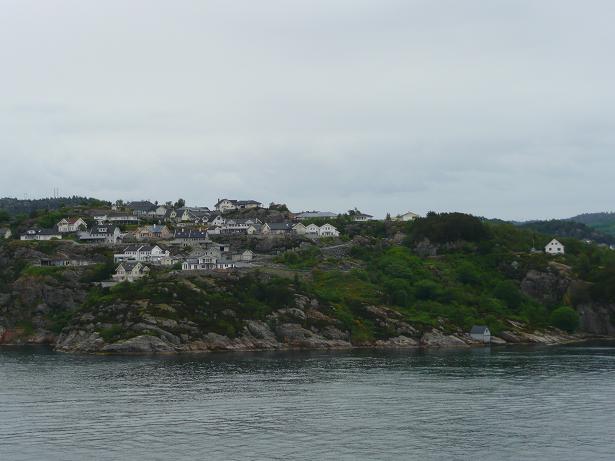
Secondly, I admired the „roadside” villages, where people live not only peacefully but also prosperously, and even rocky gardens don’t deprive them of happiness. And they have some pretty good views, too: / Po drugie podziwiałam „przydrożne” wsie, gdzie ludzie żyją nie tylko spokojnie, ale i dostatnio i nawet skaliste ogródki nie pozbawiają ich szczęśliwości. I jeszcze mają niezłe widoki:
Przydrożne wsie
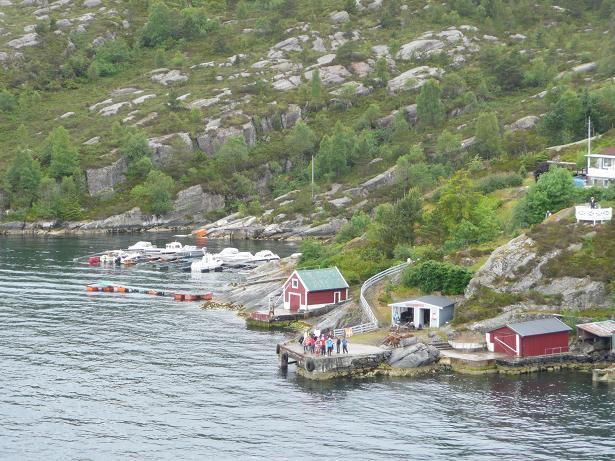
The people of Norway had come out in front of their houses. I would have loved to ask if they happened to have a small, secluded cottage where I could stay for a while: / Ludność Norwegii wyległa przed domy. Chętnie spytałabym, czy nie mają jakiegoś małego domku na odludziu, gdzie mogłabym pomieszkać:
Ludność Norwegii
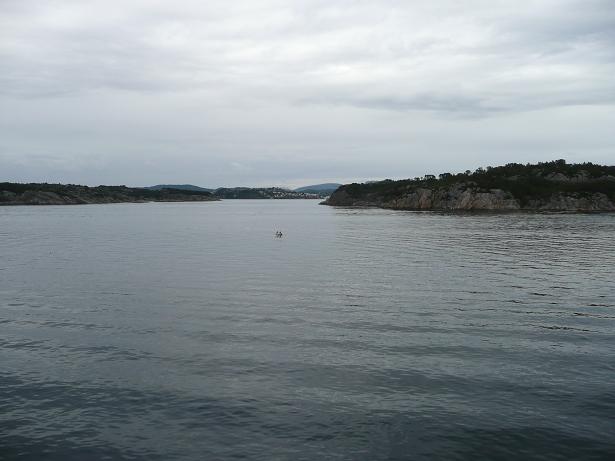
A solitary, small kayak amidst the vast expanse of waters: / Samotny, mały kajak wśród bezmiaru wód:
Samotny, biały kayak
around 11:00 PM, in the cabin / ok. 23.00, w kajucie
A notice about disembarkation in Amsterdam was slipped under the door, along with luggage tags for the bags we need to put out in the hallway by 10 p.m. tomorrow… Is that it? Really?
Pod drzwi wsunięto info o wyokrętowaniu w Amsterdamie, wraz z tagami do bagażu, który musimy wystawić przed drzwi jutro do 22-giej… To już? Naprawdę?
No matter—there are still 525 nautical miles to Amsterdam. / Nic to, do Amsterdamu jeszcze 525 mil morskich.
It started pouring in earnest, and Z. began to sneeze—which meant a runny nose was on the way. And when a guy gets a runny nose, heaven help us all. I’ll survive it somehow, but it won’t be easy. So, we’re fleeing the rain and the sniffles for our favorite ship—heading to our favorite spot, with its mountains of food and hot chocolate. We set sail right on time at 5:00 PM; the rain is still coming down and it’s 10 degrees out, but I’m staying out on deck anyway to bid farewell to Norway’s second-largest city.
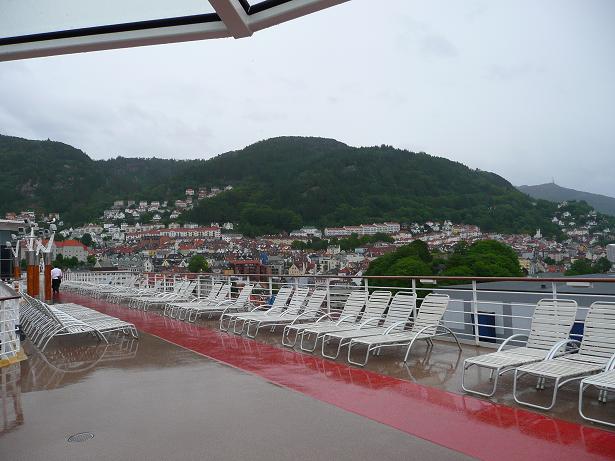
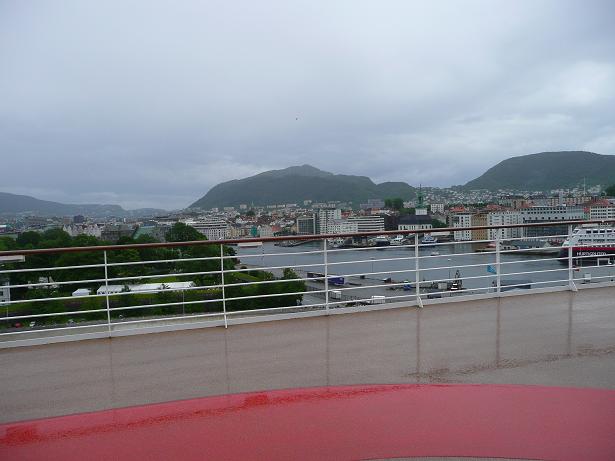
Rozpadało się na dobre, Z. zaczął kichać, znaczy będzie miał katar. A jak facet ma katar, to klękajcie narody. Jakoś to przeżyję, ale łatwo nie będzie. Uciekamy więc przed deszczem i przed katarem na nasz ulubiony statek, do naszego ulubionego miejsca z górami jedzenia i gorącą czekoladą. Odpływamy punktualnie o 17-stej, deszcz dalej pada, temperatura 10 stopni, ale i tak tkwię na pokładzie, żeby pożegnać drugie co do wielkości miasto w Norwegii.
By, by Bergen
Żegnaj, Bergen
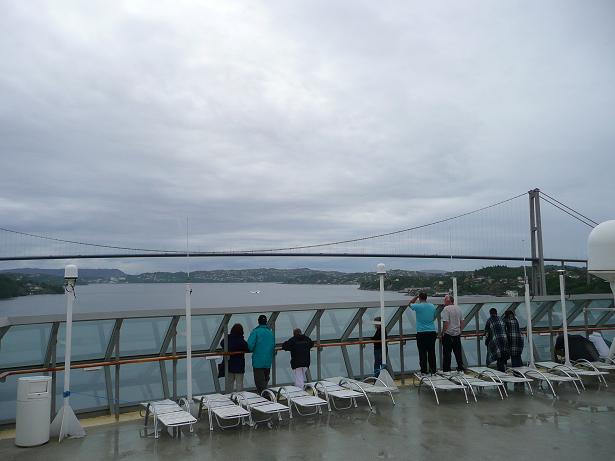
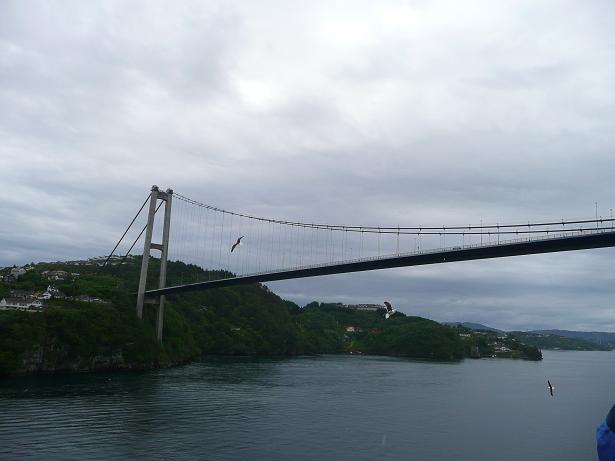
As we journey through the countless fjords, we will pass under the Askøy Bridge. Our ship is quite large, so we will barely fit beneath it—we might even graze it slightly with our funnel… No, Captain Peppas has promised that everything will be fine, especially since we have taken a pilot on board to guide us through the treacherous waters of Byfjorden and Hjeltefjorden. We have 32 nautical miles to cover before reaching the open sea.
W wędrówce przez niezliczone fiordy będziemy przepływać pod mostem Askøy. Nasz statek jest dość duży, więc ledwo się pod tym mostem zmieścimy. Może nawet zawadzimy lekko kominem… Nie, kapitan Peppas obiecał, że wszystko będzie dobrze, tym bardziej, że przyjęliśmy na pokład pilota, który ma nas przeprowadzić przez zdradzieckie skały Byfjorden i Hjeltefjorden. Mamy do przepłynięcia 32 mile morskie, zanim znajdziemy się na pełnym morzu.
There it is! It appeared like a thin line on the horizon: / Jest! Pojawił się jak cienka kreska na horyzoncie:
Askoy Bridge
We’re getting closer; we’ll soon know if we’ll fit—or if we’ll damage the chimney or the bridge… / Zbliżamy się, zaraz będzie wiadomo, czy się zmieścimy, czy nie uszkodzimy komina, albo mostu…
Askoy coraz bliżej
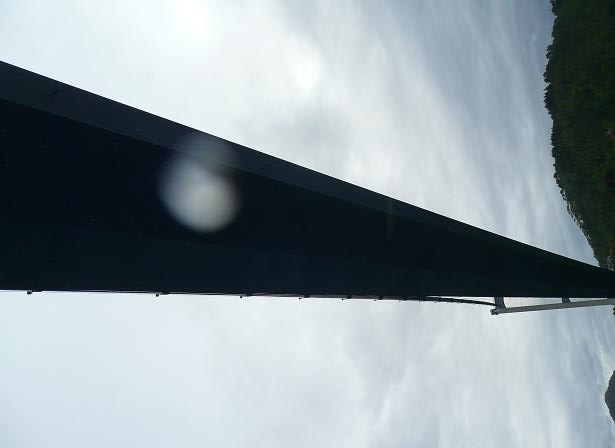
We made it! But it was a really close call. And the bridge looks nice from underneath, too: / Udało się! Ale naprawdę mało brakowało. A most od spodu też jest ładny:
Askoy bridge from below
We’ll be navigating through thousands of islands now. But right now, I have to go to a formal dinner. I love these galas, but today I’d rather be taking in the scenery. / Będziemy teraz lawirować wśród tysięcy wysp. Ale teraz muszę iść na kolację typu „formal”. Uwielbiam te gale, ale dziś wolałabym oglądać widoki.
The Fløibanen Funicular – a rail line up Mount Fløien – is located about 150 meters from the fish market and the Bryggen waterfront. The cars look like ordinary buses (perhaps they actually are?) and climb to an altitude of around 320 meters above sea level. The journey takes about 5–6 minutes, but the view from the top is magnificent. Round-trip ticket prices are 80 NOK for adults and 40 NOK for children; a ticket for two adults and two children costs 200 NOK. The cars depart every 15 minutes.
Fløibanen Funicular, czyli kolejka szynowa na górę Floien, jakieś 150 metrów od targu rybnego i nabrzeża Bryggen. Wagony wygladają jak normalne autobusy ( może to są normalne autobusy?), które wspinają się około 320 metrów nad poziom morza. Trwa to około 5-6 minut, ale widok ze szczytu jest wspaniały. Cena biletu w obie strony: 80,- NOK dla dorosłych, 40,- NOK dla dzieci. Dla 2 dorosłych z 2 dzieci: 200,- NOK. Wagony odjeżdżają co 15 minut.
Museums in Bergen / W Bergen jest kilka muzeów:
Permanenten, located on Nordahl Bruns Gate, is the Museum of Decorative Arts (of Western Norway). There, one can view exhibitions featuring items such as carpets, textiles, silverware, furniture, porcelain, traditional costumes, and toys.
Permanetan na ulicy Nordahl Bruns Gate to Muzeum Sztuk Dekoracyjnych (Zachodniej Norwegii). Możan zobaczyć tam ekspozycję m.in. dywanów, tkanin, wyrobów ze srebra, mebli, porcelany, tradycyjnych strojów i zabawek.
City Art Museum – primarily paintings, including several works by Edvard Munch. / Miejskie Muzeum Sztuki – głównie malarstwo, w tym kilka prac Edwarda Muncha.
Sjøfartsmuseet – The Maritime Museum and the Historical Museum are located in the southern part of the city, on the university campus. They house artifacts from the Bronze Age and the Viking Age. It speaks for itself. / Muzeum Morskie i Muzeum Historyczne na południu miasta, na terenie Uniwersytetu. Posiada zabytki z ery brązu i ery Wikingów. Nic dodać nic ująć.
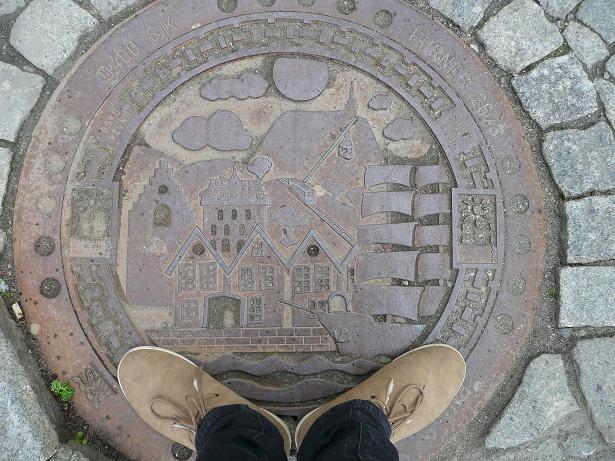
Never mind museums. In the photo below: art can be found everywhere, even at a sewer entrance: / Co tam muzea. Na zdjęciu poniżej: sztukę można znaleźć wszędzie, nawet na wejściu do kanału:
Troldhaugen – (Troll Hill) is located about 10 kilometers from Bergen. It is the home of composer Edvard Grieg and his wife Nina—a very cozy house in a beautiful setting. They lived there from 1885 until his death in 1907. Grieg achieved fame during his lifetime, so the house-museum displays his awards and trophies, as well as a Steinway piano. Hmm.Wzgórze Trola, około 10 kilometrów od Bergen. To dom kompozytora Edwarda Griega i jego żony Niny, bardzo przytulny i ładnie położony. Mieszkali w nim od 1885 do jego śmierci w 1907. Griegowi udało się zostać sławnym jeszcze za życia, więc dom-muzeum zawiera jego nagrody i trofea, a także fortepian Steinway. Hm.
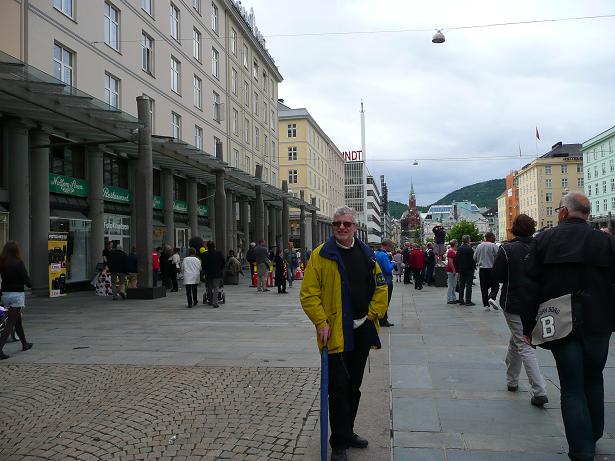
Time to head back to the city center. Below: Z. is really getting into the locals’ laid-back rhythm of life. Little does he know he’s about to catch a runny nose:Pora wracać do centrum. / Poniżej: Z. świetnie się wczuwa w luzacki rytm życia mieszkańców. Jeszcze nie wie, że za chwilę dostanie kataru:
Main street in Bergen
Once you’ve visited all the museums and cultural attractions, and taken in the sights of the surrounding fjords and wildlife, it’s time for… shopping! The best place for this is Torgalmenningen, a large pedestrian-only street. It’s easy to find from the fish market—if you stand facing the bay, it’s right there on your left. You can find everything Norway has to offer there, including local handicrafts. We recommend the trolls; they always make a lovely gift. 😉
Kiedy już odwiedzimy te wszystkie muzea, atrakcje kulturalne, napatrzymy się na okoliczne fiordy i inne zwierzęta, nadchodzi czas na … zakupy!!! Najlepszym miejscem do tego celu jest Torgalmeiningen, wielka ulica zamknięta dla samochodów. Łatwo na nią trafić z targu rybnego – stojąc przodem do zatoki mamy ją dokładnie z lewej strony. Jest tam wszystko co w Norwegii można kupić, łącznie z lokalnymi wyrobami rękodzieła. Polecamy trolle, są zawsze miłym prezentem 😉
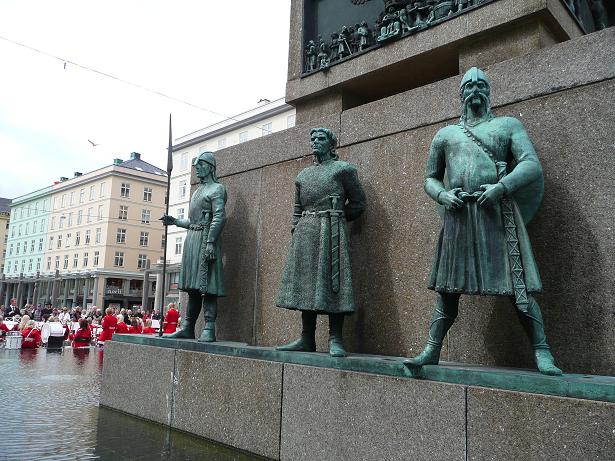
To be honest, we wouldn’t have come to Torgalmeiningen if the sound of wind instruments hadn’t drawn us in. It turned out the instruments were being played by a lovely orchestra made up entirely of blondes (where do they find all those blondes?) dressed in little red jackets. The cheerful sounds of marches, played one after another, lifted our spirits. The photo below shows the past and future of this wonderful country:
Szczerze mówiąc nie przyszlibyśmy na Torgalmeiningen, gdyby nie zwabiła nas muzyka instrumentów dętych. Okazało się, że na owych instrumentach gra śliczna orkiestra złożona z samych blondynek (skąd oni biorą te wszystkie blondynki?) ubranych w czerwone kubraczki. Wesołe dźwięki marszy, granych jeden po drugim sprawiły, że serca nam urosły. Na zdjęciu poniżej widać przeszłość i przyszłość tego wspaniałego kraju:
Above: Norway’s past and future – rugged warriors and a lovely orchestra on Torgalmeningen Street in Bergen. / Powyżej: przeszłość i przyszłość Norwegii – surowi woje i śliczna orkiestra na ulicy Torgalmeningen w Bergen
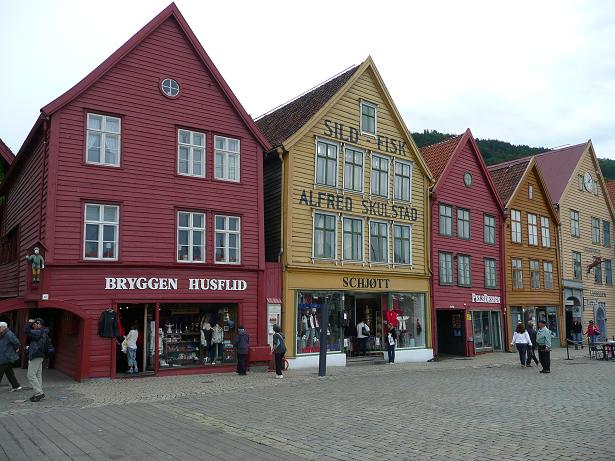
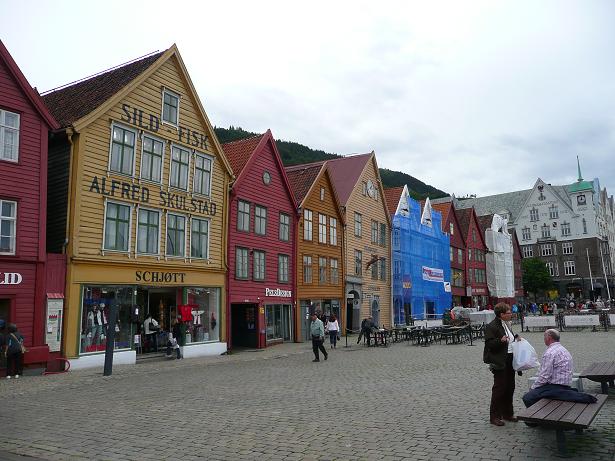
Bryggen and medieval houses / Bryggen i średniowieczne domy;
Bryggen
Bryggen in Bergen
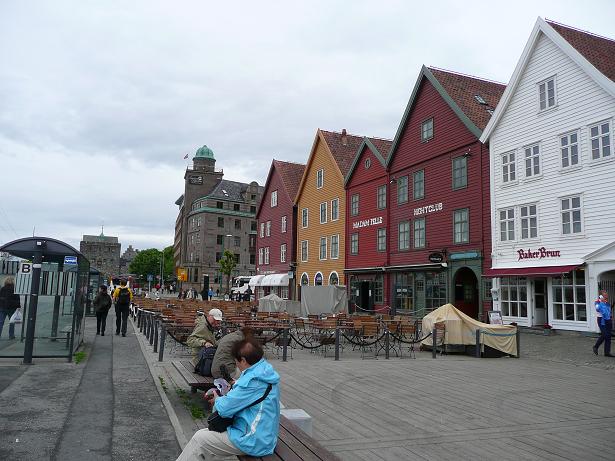
Bryggen has a truly special atmosphere. It turned out that behind the colorful facades of the houses lay a continuation of the medieval world…
Bryggen naprawdę ma klimat. Okazało się, że za kolorowymi fasadami kolorowych domów kryje się dalszy ciąg średniowiecznego świata…
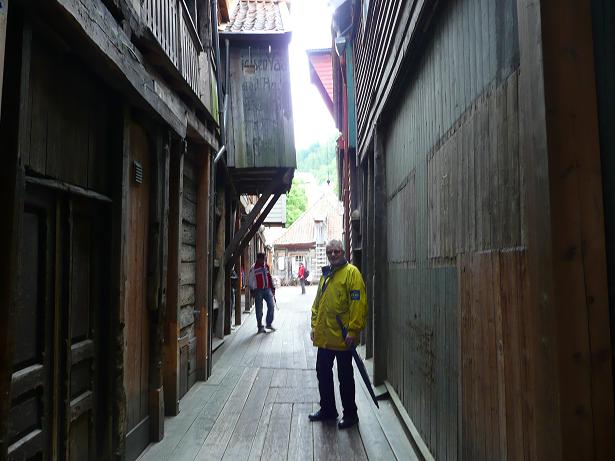
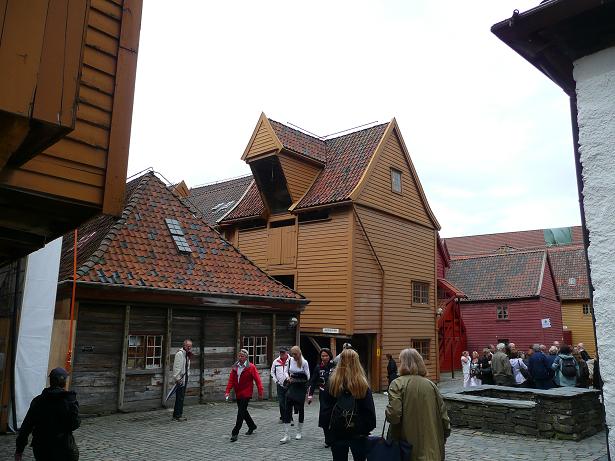
We had no idea—really. I spotted a narrow passageway at the last moment, having been busy looking at uninteresting shop windows. And suddenly… the entrance to Diagon Alley!
Nie mieliśmy o tym pojęcia, naprawdę. Zauważyłam wąskie przejście w ostatniej chwili, zajęta oglądaniem nieciekawych wystaw. I nagle… wejście na ulicę Pokątną!
Bryggen and it’s medieval word
A narrow street lined with tiny shops selling mostly handicrafts—ceramics, doilies, small tablecloths, figurines, and animal remains—and, of course, teeming with throngs of tourists who seem out of place there. A few stone wells, surrounded by tile-roofed cottages. The houses are all made of wood that smells like… old wood, yet this only adds to the place’s charm. It’s like walking past a pastry shop—you simply can’t resist.
Wąska uliczka z malutkimi sklepikami, sprzedającymi głównie rękodzieło: ceramika, serwetki, obrusiki, figurki, pozostałości z trupów zwierząt i oczywiście tłumy turystów, którzy tam nie pasują. Kilka kamiennych studni, otoczonych przez domki kryte dachówką. Wszystkie domki są z drewna, które pachnie jak… stare drewno, ale podnosi to atrakcyjność tego miejsca. To tak jak dla niektórych przechodzenie obok ciastkarni… nie oprzesz się.
The colorful Bryggen buildings seen from the waterfront. / Kolorowe kamienice Bryggen widziane z nabrzeża.
Nearby, at the very end of Vågen on its northeastern side, lies Torget – also known as Fisketorvet, or the Fish Market. In addition to fish, fruit and flowers are sold there. It is well worth soaking up the atmosphere.
Niedaleko, na samym końcu Vågen, po jego północno-wschodniej stronie umiejscowił się Torget, znany również jako Fisketorvet, czyli Plac Rybny. Oprócz ryb sprzedają tam też owoce i kwiaty. Warto p o c z u ć ten klimat.
Bergen greeted us with light rain and grey skies, and somehow it didn’t exactly inspire optimism. Z. decided to lug an umbrella around, as if we didn’t have warm jackets or anything. I’m more worried about the heat than a bit of drizzle.
Bergen przywitało nas lekkim deszczem i szarością i jakoś tak nie nastrajało optymistycznie. Z. postanowił targać parasol, jakbyśmy nie mieli ciepłych kurtek ani nic. Bardziej obawiam się gorąca niż jakiejś mżawki.
Not far from the harbor, on Slottsgate, lies Bergen’s first attraction: /Niedaleko portu, przy ulicy Slottsgate jest pierwsza atrakcja Bergen:
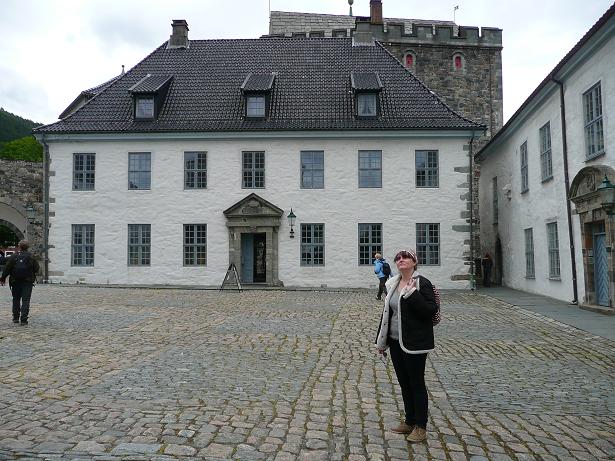
Håkonshallen is part of the Bergen fortress, built in the 13th century as a royal ceremonial hall. It was first used for such events by King Magnus Håkonsson and the Danish Princess Ingeborg; the celebration was quite a bash, lasting three days and two nights and attended by over a thousand guests. In the 16th century, the Danish governor Erik Rosenkrantz commissioned Scottish architects to build a stone tower housing both dungeons (grim) and the governor’s apartments (cozy), with cannon emplacements on the upper level. In 1944, a Danish ammunition ship exploded in the nearby harbor, causing extensive damage. Both the tower and the hall were subsequently rebuilt, and since 1966, the site has been one of Bergen’s tourist attractions.
Håkonshallen: część fortecy Bergen, zbudowana w 13 wieku jako dwór królewski służący do ceremonii. Pierwszy raz został użyty do tych celów przez króla Magnusa Håkonsson i księżniczkę duńską Ingeborg. Imprezka była niezła, bo trwała 3 dni i 2 noce, a gości przybyło ponad 1000. W 16 wieku duński gubernator Erik Rozenkrantz zlecił szkockim architektom budowę kamiennej wieży, w której zmieściły się i lochy (dzikie), i gubernatorskie apartamenty (przytulne), a na wyższym poziomie stanowiska armat. W 1944 roku duński statek z amunicją eksplodował w pobliskim porcie, co spowodowało ogromne szkody. Wieżę i dwór odbudowano, a od 1966 roku jest jedną z atrakcji turystycznych Bergen.
Below: Håkon’s Hall in Bergen. I’m staring at the Rosenkrantz Tower. / Poniżej: Bergen Hakonshallen. Gapię się na wieżę Rosenktantza.
Bergen – Hakonshallen
Near the fortress, also on the northern side of Vågen, stands the oldest building in Bergen: / Nieopodal fortecy, również po północnej stronie Vågen stoi najstarsza budowla w Bergen:
Mariakirke – St. Mary’s Church – was built in the 12th century in the Romanesque style, the only one considered proper and prevailing at the time. Over the centuries, it acquired a Gothic choir and a Baroque pulpit. For three centuries, it served as the parish church for Hanseatic merchants.
Mariakirke – kościół św. Marii. Zbudowano go w 12 wieku, w stylu romańskim, czyli jedynym słusznym i obowiązującym w tamtych czasach. W ciągu wieków istnienia dostał gotycki chór i barokową ambonę. Przez 3 wieki był kościłem parafialnym dla hanzeatyckich kupców.
We continue along the northern side of the harbor and unexpectedly find ourselves at Bergen’s biggest tourist attraction: the waterfront known as Bryggen. These are the warehouses and merchant houses from the era of the Hanseatic League. The original structures were destroyed by fire; the current ones are stone replicas. The Hanseatic Museum is housed in the only original building, which dates back to the 18th century. The ground floor served as a storage area for goods, while the first floor contained the living room and offices. The top floor held the merchants’ sleeping quarters—tiny cubicles that could fit nothing more than a bed.
Idziemy dalej wzdłuż północnej strony portu i niespodziewanie wkraczamy do największej atrakcji turystycznej Bergen: nabrzeża zwanego Bryggen. Są to magazyny i domy kupców z czasów Ligi Hanzeatyckiej. Te stare zostały zniszczone przez ogień, te obecne są ich replikami z kamienia. W jedynym oryginalnym budynku z 18 wieku mieści się Muzeum Hanzeatyckie. Parter był składnicą towarów, na pierwszym piętrze mieścił się pokój dzienny i biura. Na najwyższym piętrze były sypialnie kupców – malutkie kliteczki, w których mieściło się tylko łóżko.
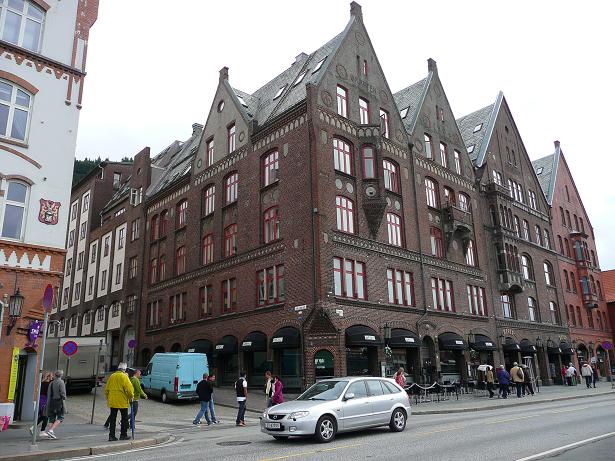
Below: behind Bryggen. / Poniżej: na tyłach Bryggen.
The guests were forbidden to heat their quarters or even light them, for fear of fire. Merchants remained celibate throughout their entire stay in Bergen. Well, it was a harsh law, but the law nonetheless.
Gościom nie wolno było ogrzewać pomieszczeń, ani nawet ich oświetlać, w obawie przed ogniem. Kupcy pozostawali w celibacie przez cały okres pobytu Bergen. Cóż, twarde prawo, ale prawo.
The city is known as the „Gateway to the Fjords,” though I prefer the name „City Between Seven Mountains”—a moniker intended to evoke a literary parallel to the seven hills of Rome. I am not sure if the comparison holds, however, as there is much debate about exactly which hills are meant; there seem to be more than seven of them.
Miasto nazywane jest „wrotami fiordów”, choć mnie bardziej podoba się „miasto między siedmioma górami”, co miało literacko nawiązywać do siedmiu wzgórz Rzymu. Nie wiem, czy nawiązało, bo wielu spiera się o to, o które właściwie wzgórza chodzi, bo jest ich chyba więcej niż siedem.
Like many Hanseatic cities, Bergen boasts a rich history. It was founded by Olav Kyrre (son of Harald—a detail for Scandinavian history enthusiasts) in 1070, reportedly five years after the end of the Viking Age (whatever that might mean, given that for some, the Viking Age never truly ends). In the 12th and 13th centuries, it served as the capital of Norway. This status was cemented by at least five royal coronations in the local cathedral—events of undeniable significance.
Bergen ma, jak wiele miast hanzeatyckich, bogatą historię. Zostało założone przez Olava Kyrre (syna Haralda – wiadomość dla pasjonatów historii Skandynawii) w 1070 roku, ponoć pięć lat po zakończeniu ery Wikingów (Cokolwiek to znaczy, bo dla niektórych era Wikingów nie kończy się nigdy). W 12 i 13 wieku stało się stolicą Norwegii. Fakt ten przypieczętowało co najmniej pięć koronacji królewskich w miejscowej katedrze, a obok takich wydarzeń nie można przejść obojętnie.
In the 14th century, Bergen became one of the major cities of the Hanseatic League, which was controlled by wealthy merchants from northern Germany. Even when the national capital was moved to Oslo and the Hanseatic League was in decline, nothing stopped the shrewd Norwegians from taking over the cod trade. The city flourished thanks to Catholics… but not in the way you might think.
W 14 wieku Bergen stało się jednym z największych miast Ligi Hanzeatyckiej, kontrolowanej przez bogatych kupców z północnych Niemiec. Kiedy stolica kraju została przeniesiona do Oslo, a Hanza chyliła się ku upadkowi nie przeszkodziło to sprytnym Norwegom w przejęciu handlu dorszem. Miasto rozkwitło dzięki katolikom… ale to nie to, co myślicie.
Bergen
Catholics in Europe were required to fast on Fridays. Since fasting called for fish, and having settled on cod for their Friday penance, they inadvertently lined the pockets of those nasty Lutherans and Protestants. Today, fish remain important to Bergen, but the city’s primary wealth comes from tourism and—who would have thought—oil extracted from the North Sea.
Katolicy w Europie musieli pościć w piątki. Do postu zaś potrzebowali ryb, a upatrzywszy sobie dorsza na piątkowe umartwienie się, niechcący nabijali kabzę tym brzydkim luteranom i ewangelikom. Dzisiaj ryby są nadal ważne dla Bergen, ale główne bogactwo pochodzi z turystyki i… kto by pomyślał – z ropy wydobywanej na Morzu Północnym.
Below: the Vagen marina and bay, and on the opposite side, the rest of Bergen: / Poniżej: marina i zatoka Vagen, a po przeciwnej stronie jest dalszy ciąg Bergen:
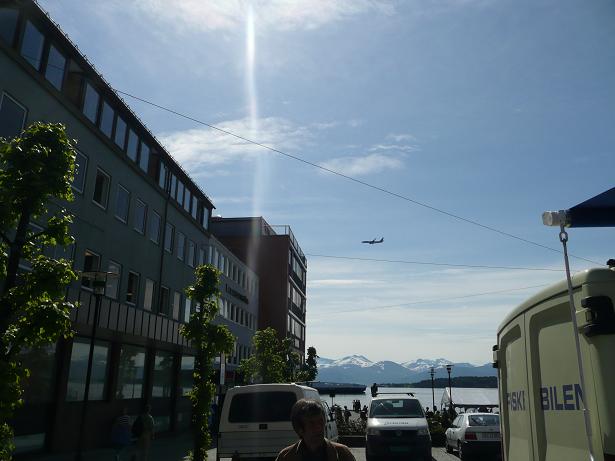
We bid farewell to Molde, its jazz festival, and its roses. / Żegnamy Molde, jej festiwal jazzowy i róże.
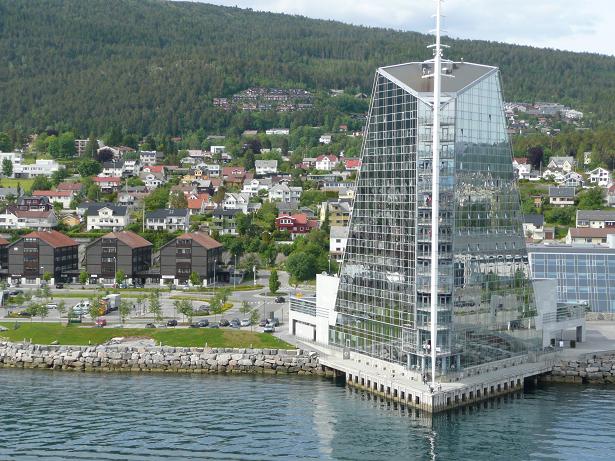
A final look at the city climbing up the hillside. The Rica Seilet Hotel is in the foreground. / Ostatnie spojrzenie na miasto wspinające się ku górze. Na pierwszym planie hotel Rica Seilet.
Molde – Rica Hotel
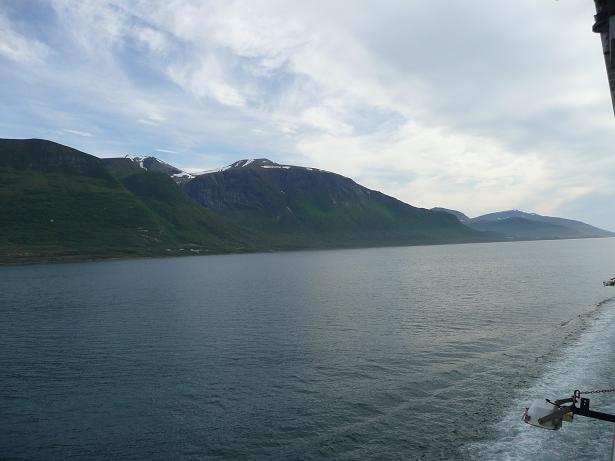
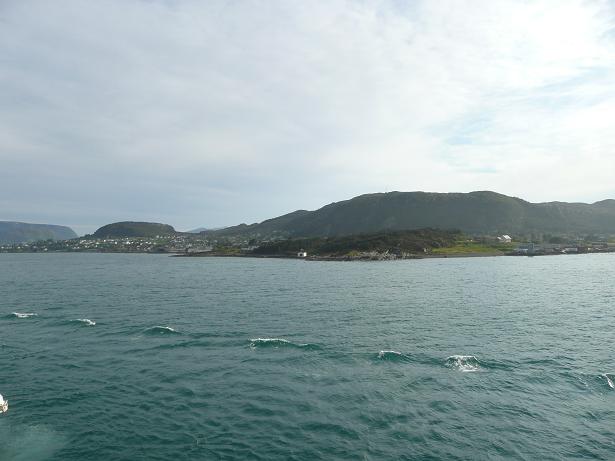
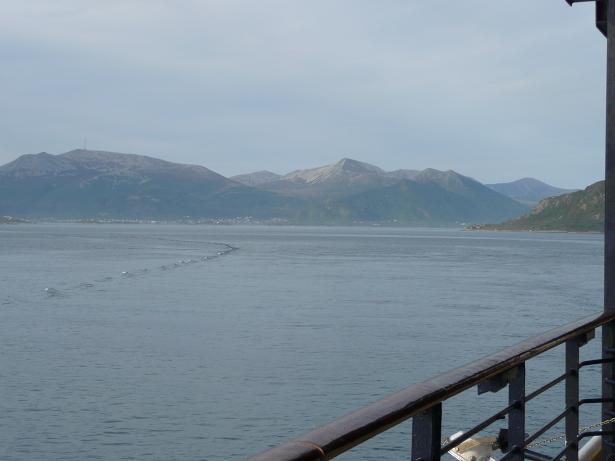
Among the dozens of islands, we must find our way to the open sea: / Wśród dziesiątek wysp musimy odnaleźć drogę na pełne morze:
Road to Alesund
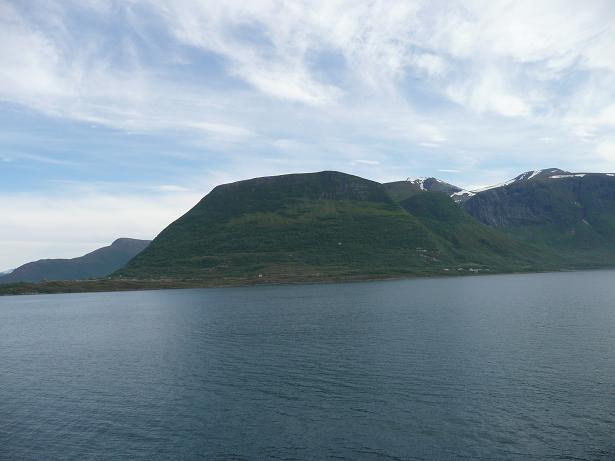
The waters of Midfiorden and the island of Otrøya: / Wody Midfiorden i wyspa Otroya:
Midifiorden waters
Otroya Island (I think): / Wyspa Otroya (chyba):
Otroya Island?
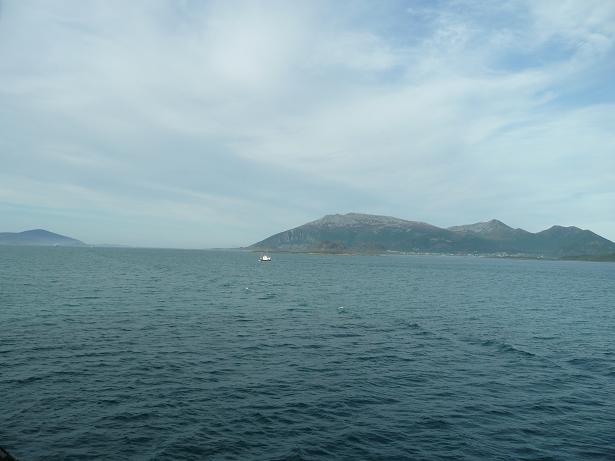
And further on, the islands of Midøya and Flemsøya, but I don’t know which is which: / I dalej wyspy Midoya i Flemsoya, ale nie wiem która jest która:
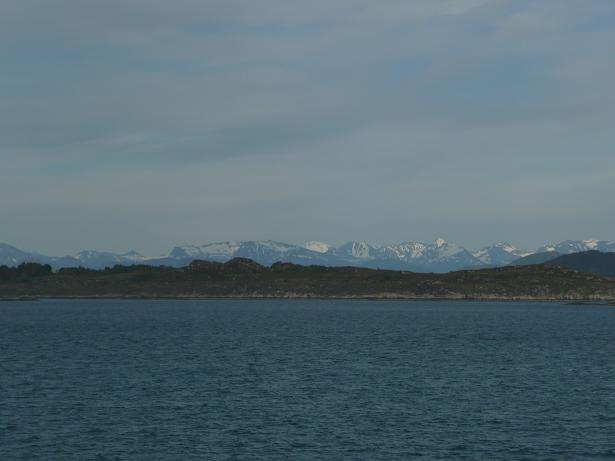
Fjords and islands on the way to Ålesund / Fiordy i wyspy w drodze do Alesund
The waters of two fjords merge here—hence the wave. / Tu zlewają się wody dwóch fiordów, stąd ta fala.
And here too – two fjords, one wave: / I tu też – dwa fiordy, jedna fala:
And once again / I jeszcze raz:
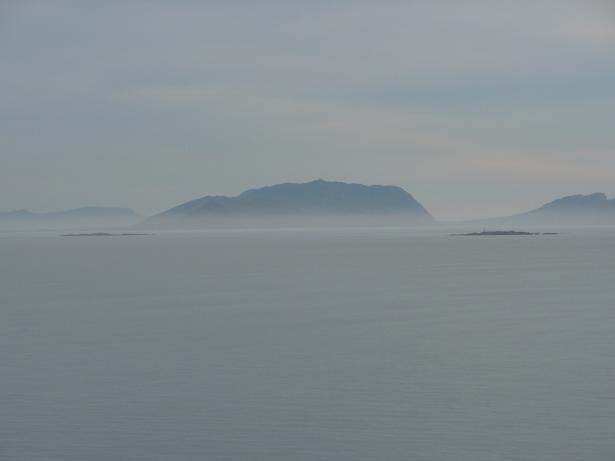
It is getting darker; the sun has slipped behind the clouds. That must be the island of Flemsoya, but really, what does the name of the next island matter? What counts is the landscape and the wonderful tranquility. / Robi się ciemniej, słońce schowało się za obłoczki. To chyba wyspa Flemsoya ale tak naprawdę jakie znaczenie ma nazwa kolejnej wyspy? Liczy się krajobraz i wspaniały spokój.
Evening mists look mysterious.Wieczorne mgły i tajemnicze fiordy
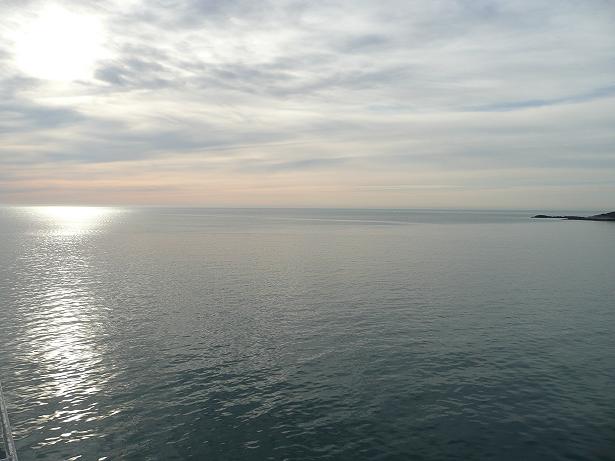
The sun had practically set, leaving a pink glow in the sky. We are passing the island of Norvoya, home to Ålesund. Here, we head out into the open sea: / Słońce już właściwie zaszło, zostawiając na niebie różową zorzę. Obok wyspy Norvoya, na której leży Alesund. Tutaj wypływamy na pełne morze:
The ship’s bow is still pointing west, but we will soon set a course for the south—to Bergen. We have only 133 nautical miles to cover. / Dziób statku skierowany jeszcze na zachód, ale wkrótce weźmiemy kurs na południe – do Bergen. Do przepłynięcia mamy tylko 133 mile morskie.
Above: the ship’s bow pointing west 🙂 / Powyżej: dziób statku skierowany na zachód 🙂
So, here’s the picture: looking west, you can see the majestic Atlantic. To the east lies a breathtaking panorama of the Romsdal Fjord, featuring forests and small villages that appear to be bathing in the water. Spread out at our feet is Molde, encircled by the Romsdal Mountains and their 222 snow-capped peaks. All of this is visible from the Varden viewpoint, situated 407 meters above sea level. You can hike there from the center of Molde—an uphill walk taking an hour and a half, or just one hour for the fitter among us (though it’s still an uphill climb).
Więc tak: kiedy patrzymy na zachód możemy zobaczyć majestatyczny Atlantyk. Na wschodzie jest zapierająca dech w piersiach panorama fiordu Romsdal z lasami i małymi wioskami, które wyglądają, jakby kąpały się w wodzie. U naszych stóp rozpościera się Molde otoczone łańcuchem Gór Romsdal i ich 222 ośnieżone szczyty. Wszystko to widać z punktu widokowego Varden, leżącego na wysokości 407 metrów n.p.m. Można tam dojść pieszo z centrum Molde w ciągu 1,5 godziny pod górę, dla bardziej wysportowanych w 1 godzinę, ale też pod górę.
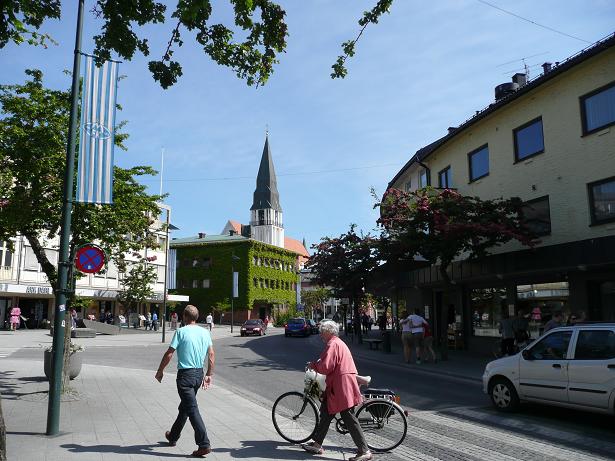
Molde: main street / główna ulica w Molde
Molde is delightful. It is attractive, generally well-kept, and pleasant. Behind the facades of its buildings lie industry (mainly textile), culture, theater, and even a jazz festival—not to mention a museum, galleries, and the makings of a university.
Molde jest milutkie. Jest ładne, w swej większości zadbane i sympatyczne. Za murami domów kryją się i przemysł (głównie tekstylny) i kultura i teatr i nawet festiwal jazzowy, nie wspominając o muzeum, galeriach i namiastce uniwersytetu.
Molde, center / Centrum Molde:
About 24,000 people live there – people who likely don’t worry about the cost of heating their homes in winter. In fact, they ought to be the most laid-back people on earth, if only because they have a government that, instead of squandering oil and gas revenues on a binge, decided to invest them. And invest them it did, pouring funds into ventures worldwide – ventures that, for some reason, actually turn a profit. These profits fund things like Norwegian pensions and education – items that any self-respecting government usually views as an unavoidable burden. The Norwegian government, however, lacks such „self-respect,” allocating only about 5% of those annual profits to cover such expenses, without ever touching the principal. This makes every Norwegian a shareholder in a fortune of a magnitude that the average – well, let’s say, Pole – simply cannot imagine.
Mieszka tam ok. 24 tysiące ludzi, którzy raczej nie przejmują się cenami gazu do ogrzewania domu zimą. W ogóle powinni być najbardziej wyluzowanymi ludźmi na świecie, choćby dlatego, że mają rząd, który zamiast przepić i przehulać kasę z ropy i gazu w jak najkrótszym czasie, postanowił ją zainwestować. Jak postanowił tak zrobił, pakując wszystko w przedsięwzięcia na całym świecie, które to przedsięwzięcia nie wiedzieć czemu przynoszą zyski. Z tych zysków pochodzą między innymi emerytury Norwegów, edukacja itd., czyli rzeczy, które przez każdy szanujący się rząd są traktowane jak dopust boży. Rząd norweski nie szanuje się do tego stopnia, że na te wszystkie wydatki przeznacza rocznie około 5 % tychże zysków, nie ruszając kapitału. To czyni każdego Norwega udziałowcem w kasie, której przeciętny hm, powiedzmy Polak nie jest sobie w stanie wyobrazić.
And for some reason, the people of the country known as Norway love their country—and actually feel happy there, too. On top of that, they have damn beautiful fjords…
I nie wiedzieć dlaczego mieszkańcy kraju zwanego Norwegią kochają swój kraj i w dodatku czują się w nim szczęśliwi. I jeszcze do tego mają cholernie piękne fiordy…
Molde
Returning to Molde (molde/moldar means „skull” or „fertile soil” in Old Norse) and its roses: the famous rose garden located on the roof of the town hall is overrated. There are plenty of roses, but they don’t look impressive; they resemble neglected, straggly stalks—green, certainly, but rather timidly so. Perhaps I caught them at the wrong time, but such scrawny plants shouldn’t be the symbol of the city.
Wracając do Molde (molde/moldar w staronorweskim znaczy czaszka albo żyzna ziemia) i jej róż: sławny ogród różany znajduje się na dachu ratusza jest przereklamowany. Róż jest dużo, ale nie wyglądają imponująco, przypominają zaniedbane badylki zieleniejące się wprawdzie, ale dość nieśmiało. Może trafiłam w zły moment, ale takie badylki nie powinny zostać symbolem miasta.
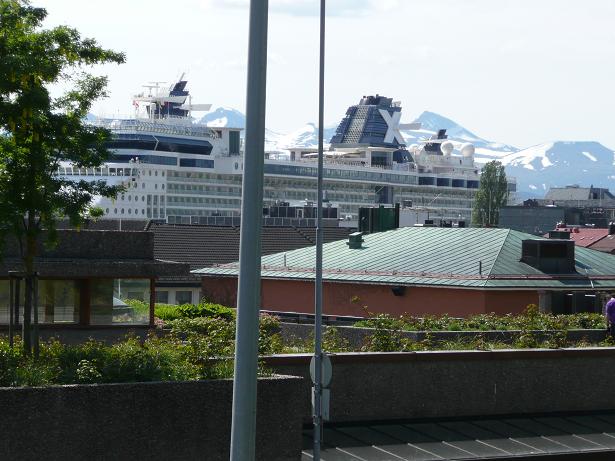
Rose garden on the roof of the Molde Town Hall. Above—our ship; above that—the mountains in June. / Ogród różany na dachu ratusza w Molde. Powyżej – nasz statek, powyżej – góry w czerwcu.
Molde
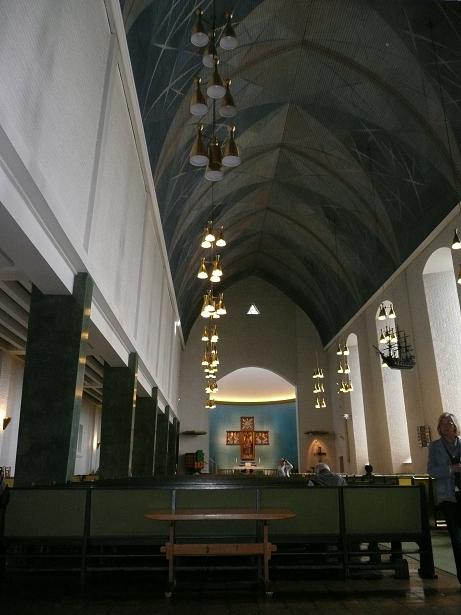
Right next to the town hall roof stands a small church with a modern bell tower. It is nothing impressive from the outside, but charming on the inside: modest and white, with a dark ceiling—devoid of gold or sculptures, yet featuring ship models suspended from the vault.
Tuż obok dachu ratusza jest niewielki kościół z nowoczesną dzwonnicą. Nic imponującego z zewnątrz, ale w środku jest czarujący: skromny, biały, z ciemnym sufitem, bez złota i rzeźb, za to z modelami okrętów zwieszającymi się ze sklepienia.
Molde – church
Another cool thing is that they have a female pastor there—she’s smiling beautifully in a photo in the church’s entrance area (I don’t go to church often, so I have no idea what that part is actually called). It was there that I discovered something that delighted me: a cross that doesn’t feature a bloodied man hanging from it—an image that always used to fill me with dread. Instead, fish hang from this Christian cross; and while I’m not sure I fully grasp the symbolism, it’s something that speaks to me far more than the sight of a tormented man.
Drugą fajną sprawą jest to, że mają tam pastorkę, która ślicznie uśmiecha się ze zdjęcia w pierwszym pomieszczeniu kościoła (nie jestem częstą bywalczynią świątyń, więc nie mam pojęcia jak się to nazywa). W tymże miejscu odkryłam coś, co mnie zachwyciło: krzyż, na którym nie wisi zakrwawiony facet, który zawsze budził we mnie grozę. Na chrześcijańskim krzyżu wiszą ryby i choć nie jestem pewna, czy dobrze rozumiem symbolikę, to jest to coś, co do mnie bardziej przemawia, niż udręczony mężczyzna.
Another attraction is the Romsdal Museum, one of the largest open-air museums in Norway. Founded in 1912, it showcases the region’s history from the 14th to the 20th century. Its collection includes residential buildings, barns and sheds, a chapel, and… outhouses.
Inną atrakcją jest Muzeum Romsdal, jedno z największych skansenów w Norwegii. Założone w 1912 przedstawia historię regionu od 14 do 20 wieku. Zgromadzono w nim budynki mieszkalne, stodoły i szopy, kaplicę i … wychodki.
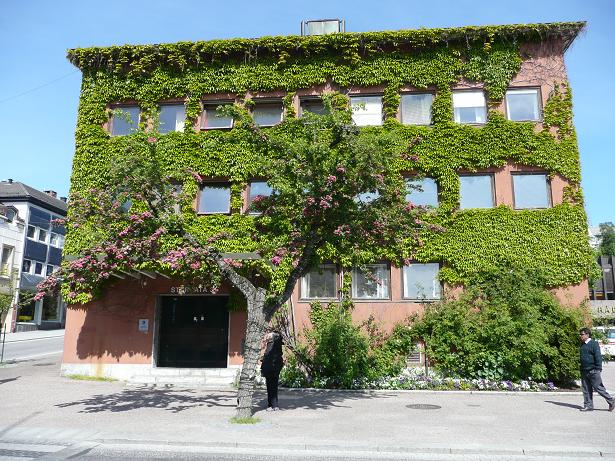
One of the most beautiful houses in Molde: / Jeden z najładniejszych domów w Molde:
Molde
On the island of Hjertøya, ten minutes from the center of Molde, lies another open-air museum—the Fisheries Museum, featuring a small fishing village preserved in its entirety, complete with fishing gear and boats. Boats to and from the island depart roughly every hour.
Na wyspie Hjertoya, 10 minut od centrum Molde jest kolejny skansen – Muzeum Rybołóstwa w postaci małej wioski rybackiej zachowanej w całości wraz ze sprzętem rybackim i łodziami. Statki na wyspę i z powrotem odpływają mniej więcej co godzinę.